
Wellbeing
Mr. John Ryan - Deputy Principal

Wellbeing
Mr. John Ryan - Deputy Principal
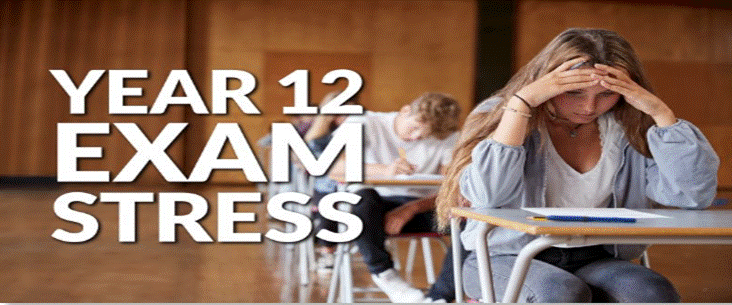
Supporting your teenager through their final school exams can be extremely daunting for parents. However, maintaining a calm household will ensure your child has the best chance of success.
To perform at their best, students will need regular and adequate sleep, a healthy diet, daily exercise and regular reassurance from parents that their success in life does not depend on their final mark. Many students will experience high levels of anxiety and depression during this time, so it is important that their mental health is looked after as well as their physical health.
Students should do plenty of practice exams, focussing on questions they don’t understand and always getting feedback from teachers. Parents should try not worry if they feel their child isn’t studying enough. Sometimes students need to experience the consequences of their choices as they do not have the maturity to associate effort with outcome. Getting a bad mark will not be the end of the world, but more of an inconvenience.
For further information please use the MMCRC SchoolTV site
https://mackillopleongatha.catholic.schooltv.me/wellbeing_news/year-12-exam-stress-special-report
Learning about consent and respectful relationships is a vital part of growing up. Consent extends beyond sexual activity and is closely connected to communication, empathy and mutual respect in all relationships. While it is often associated with adolescence, the foundations of consent begin much earlier through everyday experiences such as learning about personal space, asking permission and respecting boundaries. As children and young people mature, their understanding of relationships, boundaries and respect, both offline and online, continues to develop. Consent education is not a single conversation, but an ongoing process shaped by everyday interactions, social influences and guidance from trusted adults.
For many parents and carers, conversations about consent can feel uncomfortable. Teenagers may appear dismissive or embarrassed, yet research shows that calm, open and non judgemental discussions have a strong protective effect. While schools play an important role through respectful relationships education, classroom learning alone is not enough. Young people often report that consent education feels disconnected from real life situations involving peer pressure, alcohol, digital behaviour and social media. When families and schools work together to reinforce clear, consistent messages grounded in empathy and respect, young people are better equipped to navigate complex social and emotional situations with confidence.
The following strategies can help families turn these principles into everyday practice.
Consent is not just about sex. It is about respect. Use everyday moments to talk about personal boundaries, body autonomy and asking permission. When children are allowed to say “no” and are listened to, they learn that their boundaries matter.
Revisit the topic on consent and relationships regularly, adapting the discussion as your child matures. Consent education is not a single conversation, but an ongoing process shaped by everyday interactions, social influences and guidance from trusted adults.
Help young people understand that consent must be freely given, informed, mutual and reversible. A clear “yes” is required every time, and consent can be withdrawn at any point. Silence, hesitation or pressure never equal consent.
Young people need help recognising that consent can be undermined by power imbalances, peer pressure or fear of social consequences. Talk about situations where someone may feel pressured to agree, even if they are uncomfortable. Reinforce that consent must be freely given and that feeling unsure or uncomfortable is a valid reason to say no.
Consent is not a one-time agreement. Help young people understand that consent must be present every time and that anyone can change their mind at any point. Respecting boundaries means checking in, listening and responding appropriately, even within established or long-term relationships.
Understanding and managing emotions plays a key role in respectful relationships. Encouraging young people to recognise their feelings and communicate them clearly can reduce misunderstandings and support healthier interactions.
Young people need to understand that intoxication removes the ability to give legal consent. Reinforce that real respect means never pressuring someone who is unsure, fearful or under the influence.
Online behaviour is just as important as physical behaviour. Talk about the risks of sharing intimate images, privacy, and the legal and emotional consequences of distributing content without permission.
Conversations about consent should include challenging harmful stereotypes about gender, entitlement and expectations. Promoting equality and respect helps young people build relationships based on mutual understanding rather than pressure or assumption.
Children and teenagers learn as much from what they observe as what they are told.
Demonstrating healthy communication—listening, apologising and respecting boundaries—reinforces what respectful relationships look like in practice.
Seeking help is a step toward safety, not blame. If you or someone you know may be experiencing domestic or family violence, it is important to know that support is available. Watch the Special Report on this topic, which outlines trusted support services and professional pathways for assistance. In situations where someone is at immediate risk, emergency assistance should always be sought.
For further information, please use the MMCRC SchoolTV site: