
Wellbeing and Inclusion

Starting the Day Strong: Morning Routines That Support School Success
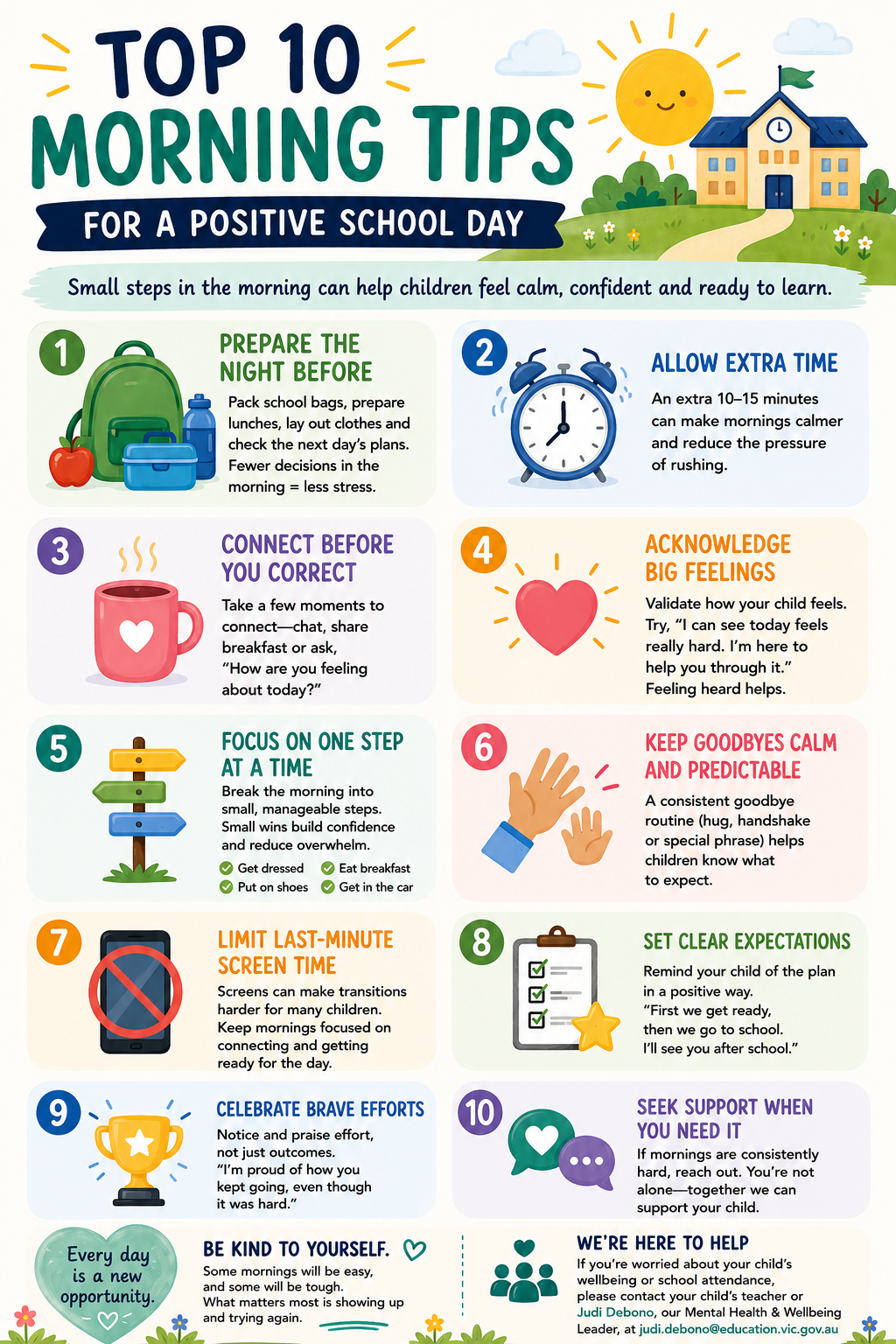
Most mornings don't look like the picture-perfect routines we sometimes see on social
media. There are forgotten lunchboxes, missing shoes, tired children, rushed adults and the occasional tears. That's normal.
For some children, however, getting to school each morning feels much harder. They may complain of headaches or tummy aches, become upset or withdrawn, argue, refuse to get dressed, or say they simply can't go to school. These behaviours are often signs that a child is struggling, not simply being difficult.
School refusal is complex. It can be linked to anxiety, friendship difficulties, learning challenges, changes at home, sensory differences, low mood or other underlying factors. There is rarely a single cause or a quick fix. While a positive morning routine won't solve every difficulty, it can reduce stress and help children begin the day feeling calmer, more prepared and more confident.
Be Ready the Night Before
Pack bags, prepare lunches, lay out clothes and check the next day's plans. Fewer decisions in the morning can reduce stress for everyone.
Allow a Little Extra Time
An extra 10–15 minutes can make mornings feel calmer and reduce the pressure of rushing.
Connect Before You Correct
Start the day with a few moments of connection—a chat over breakfast, a hug (if welcomed), or simply asking, "How are you feeling about today?"
Acknowledge Big Feelings
Instead of saying "You'll be fine," try:
"I can see today feels really hard."
"I'm sorry you're feeling worried."
"I know you wish you could stay home."
Then gently reinforce the expectation:
"We're going to get ready together, and I'll help you through it."
This approach validates the child's experience while maintaining consistent expectations.
Feeling heard helps children feel supported.
Focus on One Step at a Time
If your child feels overwhelmed, keep the focus on the next small step:
Get dressed✔ Eat breakfast✔ Put on shoes✔ Get in the car✔
Small successes build confidence.
Keep Goodbyes Calm and Predictable
A consistent goodbye routine helps children know what to expect and can make separating easier.
Save Screens Until Later
Reducing screen time before school can make the transition to leaving home smoother for many children.
Celebrate Brave Efforts
Notice your child's courage, not just the outcome.
"I know that was hard, but you kept going."
Every small step counts.
We're Here to Help
If your child is regularly having difficulty coming to school, please don't hesitate to reach out.
School "can't" is often a sign that a child needs support, not judgement.
By working together, families and schools can help children feel safe, connected and ready to learn.
Please get in touch with your child's classroom teacher or the Mental Health & Wellbeing Leader, (judi.debono@education.vic.gov.au), if you'd like to talk about how we can support your child.