
Respectful Relationships
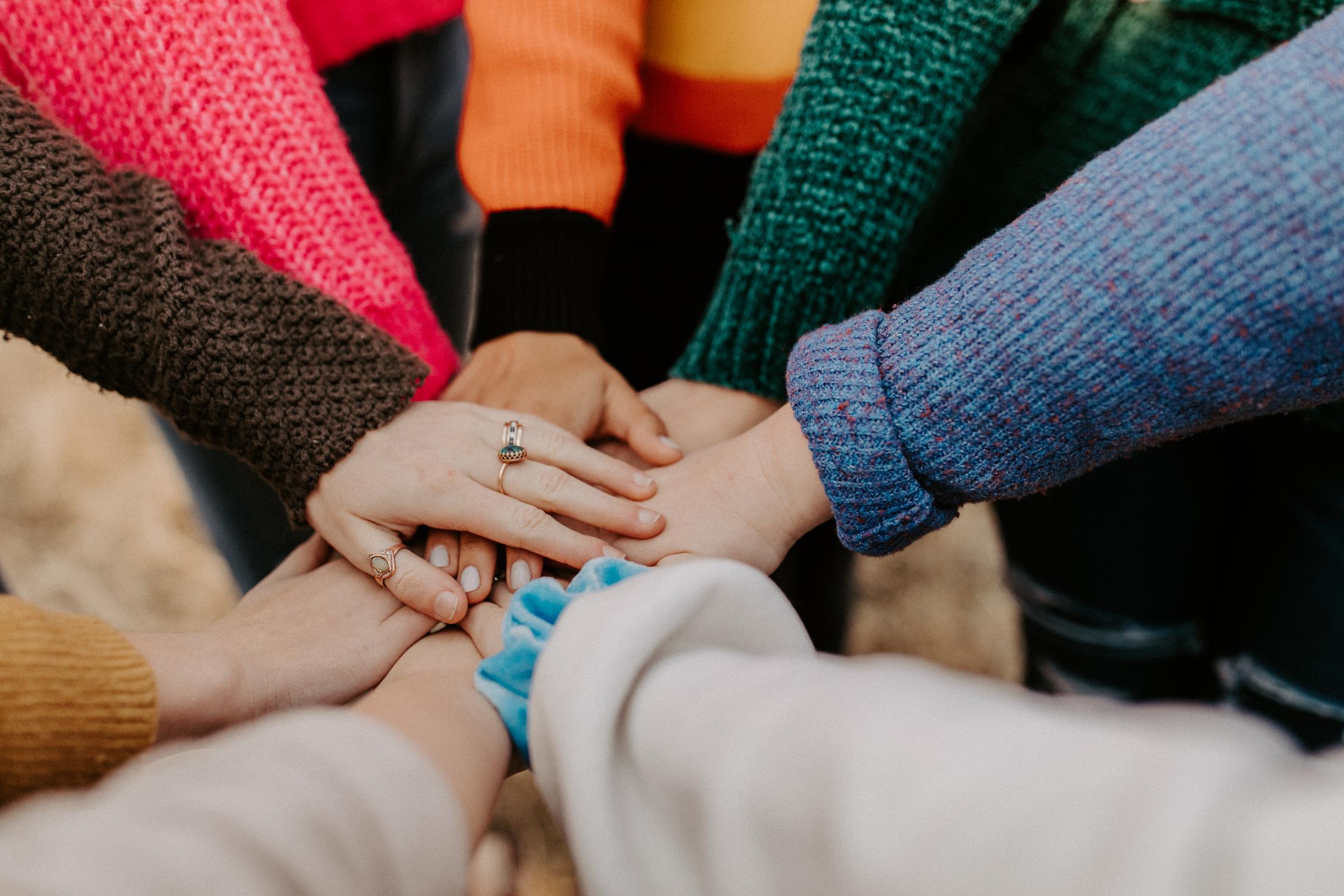
Respectful Relationships at Karoo Primary School
Everyone involved in our school community deserves to be respected, valued and treated equally.
We know that changes in attitudes and behaviours can be achieved when positive attitudes, behaviours and equality are lived across the school community, and when classroom learning is reinforced by what is modelled in our school community.
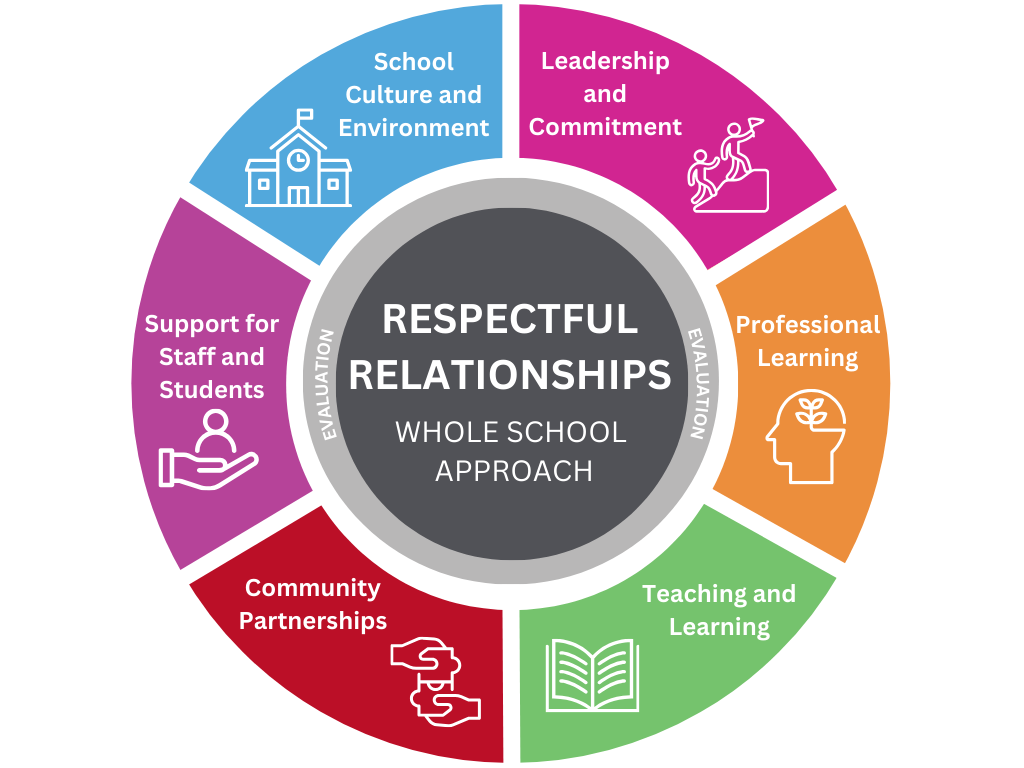
A whole-school approach
A whole-school approach encourages schools to review their existing procedures and culture to ensure that they model respectful relationships and gender equality practices across the entire school community.
Cultural and procedural change, means schools and their communities look at staff practices, classroom management, school events, sport programs, formals and other occasions, to ensure all aspects of a school’s operation and culture are underpinned by respect and equality.
A whole-school approach to Respectful Relationships recognises that schools are:
a workplace where all staff should feel equally respected, safe and valued and have equal opportunities
a safe space where young people can learn about gender equality and respectful relationships, in and out of the classroom
- part of the wider community that can model gender equality and respectful relationships .
The evidence for Respectful Relationships
Family violence is complex and multifaceted but research shows that gender inequality is a key driver. VicHealth, 2007
More than 1 in 3 Australian women aged over 18 has experienced violence since the age of 15 (Australian Bureau of Statistics, 2012). A 2013 VicHealth study found that of Australian young people aged 16–24:
almost a quarter believe that partner violence can be excused if the person is so angry they lose control
only half knew where to get help if they were faced with a problem about violence against women (VicHealth, 2013).
The evidence supporting Respectful Relationships is overwhelming and comes from respected institutions such as the World Health Organisation and The Royal Commission into Family Violence. Helping children develop an understanding of healthy relationships and respect is key to preventing family violence in the future.
In 2014-15, Respectful Relationships education in schools was trialled across 19 schools, reaching 1700 teachers and 4000 students and was found to have had a positive effect on students’ attitudes, knowledge and skills, and school policies, culture and ethos.
Source: https://www.schools.vic.gov.au/respectful-relationships-whole-school-approach
Respectful Relationship Myths
Myth: It's inappropriate for early childhood settings to include Respectful Relationships in their programs
Fact: Early childhood settings have an important role in building the foundations for respectful relationships with young children.
The professional learning is designed to strengthen the capacity of early childhood educators to promote respectful relationships, positive attitudes and behaviours within their teaching approach, to enable children to build healthy relationships, resilience and confidence.
Further supporting information can be found in the Belonging, being and becoming early years learning framework resource.
Myth: This initiative is trying to say that boys can’t play with trucks and girls can’t play with dolls
Fact: Absolutely not. This initiative is not seeking to make children ‘gender neutral’ or trying to prevent girls from playing with dolls, or boys with trucks.
Respectful Relationships is about creating an environment in which children are not restricted by gender stereotypes and are free to explore and play as they choose.
Source: Respectful Relationships, https://www.vic.gov.au/respectful-relationships

RRRR information is available on the Arc platform. Please scan the QR code above.
Keep an eye on future newsletters to learn more about what your child’s year level is exploring through the RRRR curriculum.
If you have any questions or concerns please do not hesitate to reach out via the Compass protal.
Mrs. Karen Corrales