
Online Safety Hub

Online Safety Hub
The Hub includes expert advice on the most pertinent cyber safety issues and frequently asked questions around platforms like TikTok, Fortnite, Instagram, and more. There are app reviews with age and safety recommendations, a range of guides and resources to help ensure healthy boundaries around screen time and gaming, and step-by-step instructions for using parental controls and filtering out inappropriate content.
What are loot boxes? Randomised rewards and their risks to kids

If your child plays online games, chances are they will run into loot boxes – a common feature in many popular titles, including Madden NFL, Counter Strike 2, and Call of Duty: Mobile.
It’s important for parents to know what loot boxes are, the risks they pose, and what to do if they become a problem in their child’s online life.
What are loot boxes?
A loot box, sometimes called a loot crate or prize crate, is a virtual item in a video game that contains randomised rewards – taking the form of a box, chest, crate, or, in digital card games, a pack of virtual cards.
Players can earn loot boxes through gameplay, for example, when a player levels up, or they can buy them with real or in-game currency. Players don’t know what rewards wait inside, which might be character or weapon skins, new characters, player cards, in-game currency, and other virtual items. Some rewards are purely for cosmetic purposes, such as skins, but others are sometimes needed to progress in a game, or allow players to advance faster. While many rewards are common, some are extremely rare – turning up the excitement dial as the player hopes they’ll get the item they’ve been waiting for.
Should parents be concerned about loot boxes?
The excitement of not knowing what you’ll get until you open the box, and the prospect of scoring a rare and valuable item, has led to criticism that video games are increasingly resembling gambling platforms and that loot boxes are “structurally and psychologically akin to gambling.” Gambling among young people has been described as a “massive public health problem,” with children as young as 10 showing signs of addiction.
Buying loot boxes might not seem the same as betting on football matches or playing slot machines, but as they rely on similar chance-based mechanics, they can lead to overspending and potentially feeding a budding gambling problem. Especially for kids and teens, who are less equipped to resist the lures of gambling, and can access loot boxes in their favourite games, and not via age-restricted gambling sites.
Loot boxes and their legality
Loot boxes being officially classed as gambling is a grey area. While the use of random chance to gain items after spending real-world funds can be considered a form of gambling, the inability to swap the contents from a box back into real-world money (at least officially) spares loot boxes the strict label of gambling.
Laws vary from country to country, but many are cautious about loot boxes’ gambling-like mechanics. For example, China requires many games to disclose the odds of receiving items from loot boxes, while Belgium has taken a stricter approach by effectively banning paid loot boxes in many games. In Australia, games containing paid loot boxes must carry an M (Mature) rating, and games featuring simulated gambling are restricted to players aged 18 and over.
In the UK and USA, there are currently no national laws specifically regulating loot boxes – but there is growing agreement that children need greater protection and that players should have clearer information about how these systems work.
Some developers have changed their approach to loot boxes in response to the criticism. The original Overwatch helped popularise loot boxes in mainstream gaming, but they were removed when Blizzard released Overwatch 2 in 2022. In 2025, Blizzard reintroduced loot boxes as gameplay rewards only – meaning they can’t be purchased with real money.

Why are kids more susceptible to gambling risks?
Research has shown that 2% to 7% of young people may develop a gambling disorder as opposed to around 1% of adults. Some attribute this to young brains being more sensitive to dopamine, the “feel-good” neurotransmitter released during gambling wins. This heightened response can make gambling feel even more addictive for teens.
Kids are also more likely to lack effective ways to cope with turbulent and stressful situations and may turn to gambling activities as a way to escape.
How to navigate loot boxes with your child
As with many features of the digital world, it’s hard to completely remove loot boxes and their risks from your child’s life – especially when they’re part of their favourite games – but you can take a proactive approach to minimise their harm.
1. Talk about how loot boxes work
Explain that loot boxes contain random rewards, so spending money doesn’t guarantee getting the item they want. Help your child understand the difference between paying for a specific item and paying for a chance to win one.
2. Set spending limits (or disable in-app purchases)
Agree on a monthly gaming budget and encourage your child to think carefully before making purchases. For younger kids, consider disabling in-app purchases or requiring approval for every purchase – these options are sometimes available in a game’s settings or parental controls.
3. Play with them
Spend time playing games with your child to familiarise yourself with the games they play and the kinds of virtual items they offer. By taking an interest in their gaming world, you’ll make it easier for them to come to you if something troubles them online or they’re feeling pressured to spend.
4. Learn the warning signs of problem gambling
As the mechanics of loot boxes are so similar to gambling, they can lead to the same kinds of compulsive and problematic behaviour. If you suspect your child is struggling with such issues, keep an eye out for these signs – note that these aren’t exclusive to gambling and may point to something else.
- Frequently asking for money or your credit card information
- Increased time spent online
- Behavioural changes such as mood swings, aggression, and depression
- Increased interest in gaming and competition
Less engagement in school and other activities
5. Use parental controls
While it’s worth exploring the safety settings offered by gaming platforms, they’re often limited when it comes to specifically reducing exposure to loot boxes. For example, Steam allows parents to manage purchases, screen time, and access to individual games – but doesn’t restrict loot boxes within games.
To better protect your child from loot boxes, as well as other risks that come with online gaming, we recommend using comprehensive parental control tools, like those offered by Qustodio.
With Qustodio, you can:
- Block games that feature loot boxes.
- Set time limits for gaming apps.
- Receive alerts when your child searches for something related to loot boxes or gambling.
- Monitor voice chat on gaming platforms like Roblox, Fortnite, and Steam, and get alerts if your child has a conversation about gambling or other concerning topics.
Loot boxes and other randomised rewards are common features in many modern games loved by kids. They’ve come under fire due to their similarity with gambling and their availability to young children, who may be more likely to overspend, and even develop compulsive gambling habits.
Platforms and governments have taken steps to limit kids’ exposure to loot boxes, while some developers have changed their mechanics to make them less comparable with traditional gambling – but they still exist in various forms in online games.
By taking an interest in their child’s gaming life, setting boundaries around gaming and in-app spending, and using parental controls where possible, parents can reduce the risks associated with loot boxes and help their child enjoy their favourite games safely.
Reference: What are loot boxes? Randomized rewards and their risks to kids | Qustodio
The trust trap: navigating friendships, pressure and manipulation online
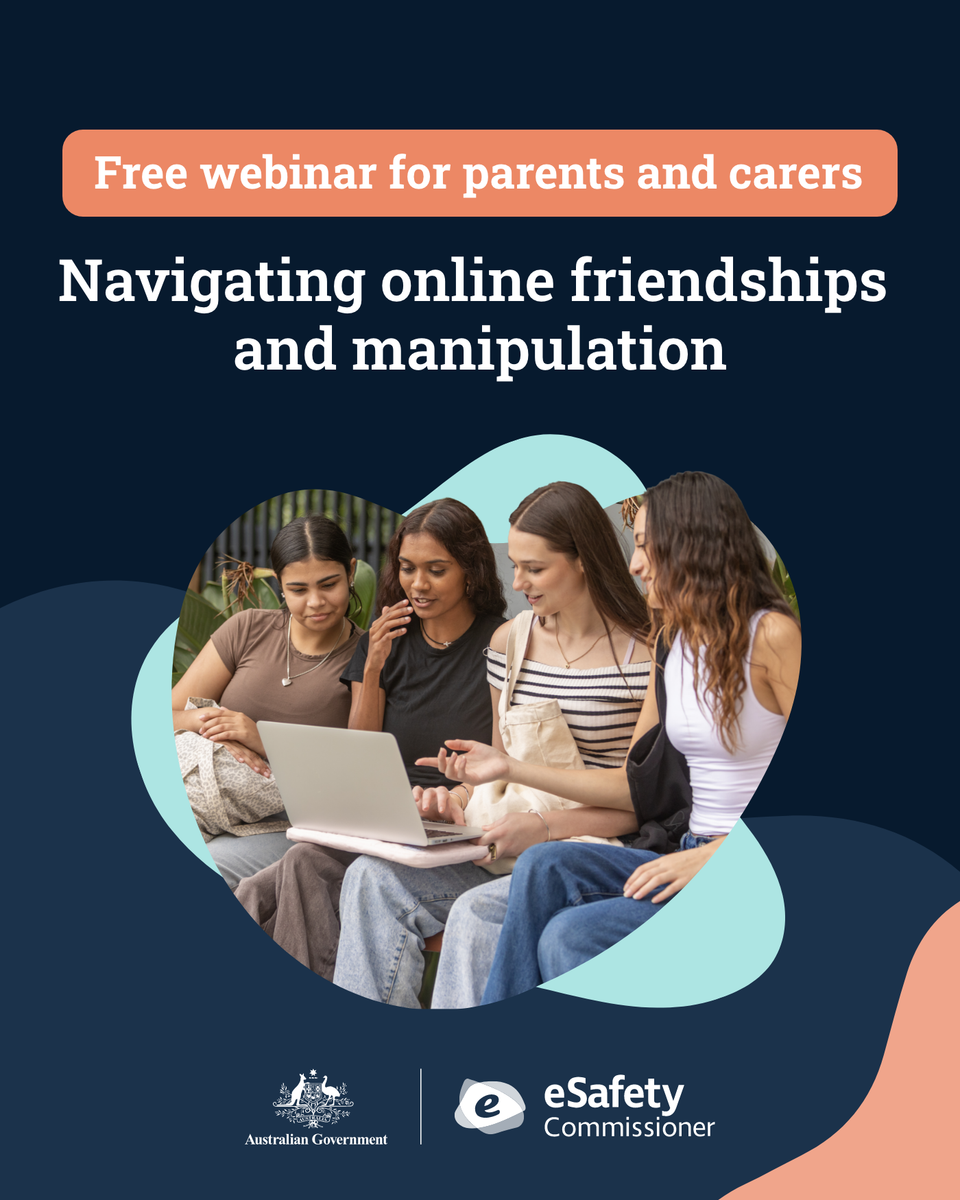
Children and young people experience subtle forms of online manipulation that can shape their friendships, identity and wellbeing. Behaviours like exclusion, controlling dynamics, and emotionally loaded 'just joking' interactions are common and may be difficult to spot. This webinar unpacks online manipulative behaviours and harmful friendships dynamics.
This 45-minute webinar is also designed for parents and carers to watch alongside young people (13+), supporting a shared understanding of these behaviours and encouraging meaningful conversations at home.
In this webinar for parents, carers and teens:
- learn the common signs of online manipulation and understand the challenges young people face with friendships online
- understand the common harmful friendship dynamics and why young people may feel trapped, responsible or unable to set boundaries
gain simple, practical strategies to start supportive conversations to help set healthy online boundaries and feel safer navigating digital friendships.
Suitable for parents and carers of young people 13+ in secondary school.
Term 3 (AEST)
29 July 2026, 12.30pm
Register here.
Influencers, ideology and impact: how algorithms influence and reinforce harmful beliefs
This webinar explores both the benefits and risks of recommender algorithms and offers practical strategies to help parents and carers to support young people build more positive and safer online feeds.
You will learn about:

- the role of algorithms and recommender systems in driving engagement and shaping online experiences
- how platforms and online communities keep young people engaged, expose them to harmful content and reinforce gendered stereotypes
- strategies to shape algorithmic feeds and build more positive and safe online experiences
- how eSafety can support people experiencing serious online harm.
Term 3 (AEST)
4 August 2026, 12:30pm
Register here.
Exploring the online experiences of boys and young men
For boys and young men, the internet can be a place where they seek connection, validation and guidance as they explore what it means to be a man today. However, it also exposes them to risks like harmful content, online exploitation and the growing influence of misogynistic ideologies.
This 45-minute webinar will help parents and carers understand:
- social and cultural influences shaping boys and young men
- how boys engage online, build relationships and how they may be vulnerable to manipulation or exploitation
the impact of social media, gaming, and influencers on their attitudes, behaviours and sense of identity.
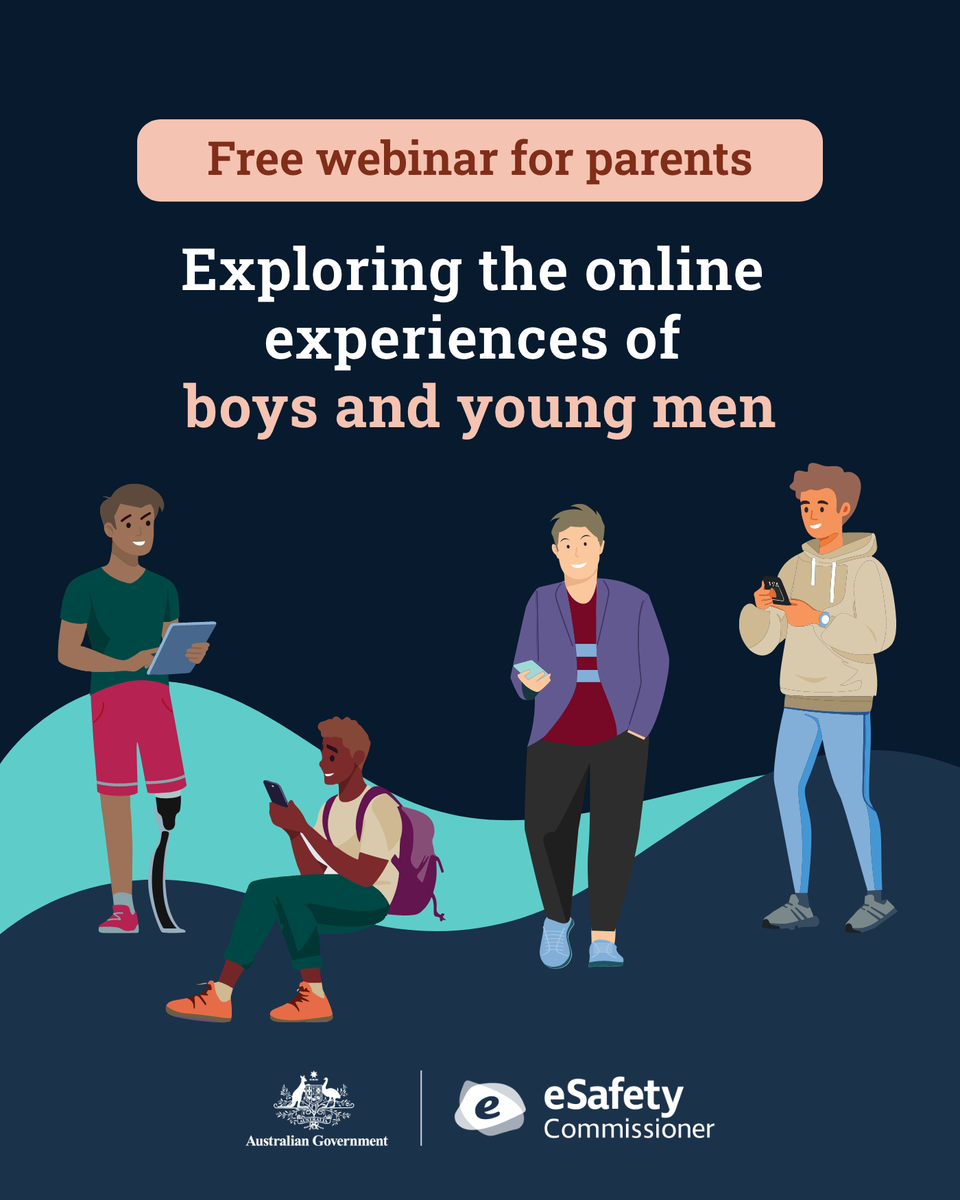
This presentation will share practical strategies to build critical thinking, challenge harmful narratives, and create open conversations that empower boys and young men to navigate the online world safely and respectfully.
Suitable for parents and carers of young people in upper primary and secondary school.
Term 3 (AEST)
13 August 2026, 12.30pm
Register here.