
Wellbeing
Fiona Dandie & Robert Pain
Wellbeing
Fiona Dandie & Robert Pain
Lunchtime clubs have commenced for Term 4 this week. There are several positive benefits of lunchtime clubs, including helping to build student engagement, social skills, and inclusion for all students. They support students who may struggle with a lack of structure in the school playground or need an outlet from the traditional playtime setting.
Lunchtime clubs can also benefit our students by:
reduction in playground behaviour incidents.
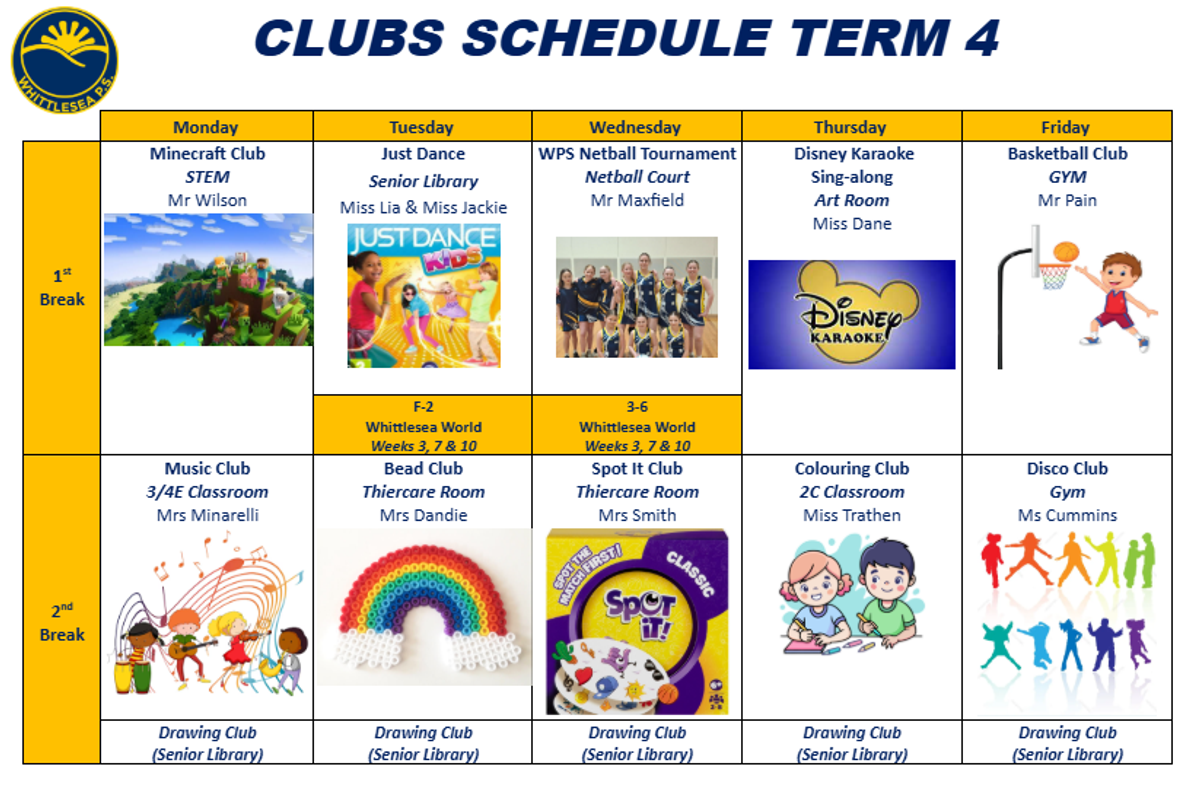
Below is our Term 4 Lunchtime club schedule. These have already commenced this week. We are fortunate to have a variety of staff members volunteer their time to run a club, as we know that students at WPS love engaging with them.
Invisible Disabilities Week (18–24 October 2026) is an opportunity to build awareness and understanding of disabilities that may not be immediately obvious to others. It reminds us that we cannot always tell what someone might be experiencing simply by looking at them.

What is an invisible disability?
An invisible disability is a disability that may not be immediately apparent. It can affect how a person learns, communicates, manages emotions, moves through their day or participates in everyday activities. Examples include ADHD, autism, dyslexia, anxiety disorders, epilepsy, chronic pain, diabetes and some hearing or vision impairments. Invisible disabilities vary greatly from person to person, and a person's needs may also change from day to day.
Let's bust a few myths!
Myth: If someone can do something one day, they should always be able to do it.Fact: Energy, concentration, pain and other challenges can fluctuate, even throughout a single day.
How can we support children with invisible disabilities?
At school and at home, small acts of understanding can make a big difference. We can:
A message for our children
We don't need to know everything about another person's experience to treat them with respect. We can choose to be patient, curious and kind rather than make assumptions or judgements. This Invisible Disabilities Week, let's remind our children that we cannot always see someone's challenges, but we can always choose to show understanding. When we look beyond what is visible, we create a more inclusive community where every child feels valued, understood and supported.
To learn more, visit the Invisible Disabilities Association for information and resources for Invisible Disabilities Week.