
The power of music in education
The brain benefits of learning music
Nicole Bull, Head of Performing Arts
"Music produces a kind of pleasure which human nature cannot do without," Confucius famously remarked. More than just a creative medium, music is a potent instrument that fosters better learning, self-assured leadership, and well-rounded personalities. Participating in music helps students develop critical abilities like memory, concentration, and problem-solving, all of which can improve their academic performance.
Additionally, learning music fosters traits that great leaders possess, such as discipline, teamwork, and resilience. Music helps students become well-rounded, adaptable individuals who can thrive in both academic and social contexts because it blends creativity with critical thinking abilities and individual expression with teamwork. Kilvington Grammar School has led the way in creating music programs to foster and develop music programs to nurture and guide the students to achieve success not only in music but a range of academic subjects and leadership opportunities.
Music and Brain Development
Your genes and life experiences have an impact on the continuous process of brain development that occurs throughout your life. Your brain rapidly produces new nerve cells when you're very young and then eliminates connections that aren't being used. During adolescence, your brain grows from the back to the front, accumulating white matter to facilitate faster information processing. Because of neuroplasticity, which enables your brain can adapt and grow depending on what you do most frequently, even as an adult.
Because it simultaneously activates several brain regions and strengthens the neural connections that underpin learning, memory, and emotional development, music has a significant impact on brain development.
Children practise skills like pattern recognition, coordination, and auditory processing when they listen to or make music. These skills also aid in reading and language development. A more encouraging atmosphere for cognitive development is created by music's ability to control emotions and lower stress. Over time, these combined effects make music a particularly rich tool for fostering creativity, focus, and confidence as well as moulding a developing brain.
The Link Between Music and Academic Achievement
Academic performance and music are consistently positively correlated, particularly when students actively participate in music through singing, listening, or picking up an instrument. Core cognitive abilities like memory, attention, and pattern recognition are strengthened by music, and these abilities directly support academic tasks like reading comprehension, problem solving, and mathematical reasoning. Students who participate in music frequently exhibit enhanced executive functioning and better language development, which facilitates better time management, planning, and concentration.
Many of the award winners on Kilvington's Celebration Night are frequently members of an instrumental ensemble or choir.
Additionally, music increases motivation and lowers stress, fostering a more positive emotional learning environment. Music fosters the mental and emotional underpinnings that increase the likelihood of strong academic performance, even though it isn't a magic formula for high grades.
Music, Mathematics and Great Thinkers
In addition to their revolutionary contributions to science and mathematics, Einstein and Pythagoras' profound interest in music influenced their way of thinking, learning, and creating. By identifying the numerical ratios underlying musical harmony and demonstrating that sound follows predictable, mathematical patterns, Pythagoras is frequently credited with being the first to connect music and mathematics. His contributions established the groundwork for mathematical acoustics and Western music theory.
In contrast, Einstein employed music and his violin playing as a means of thinking. When working through challenging scientific problems, he frequently turned to music, which he described as a way to inspire creativity and make concepts clearer. Their experiences demonstrate that music and intellectual success are not mutually exclusive; rather, music can foster the creativity, pattern recognition, and abstract thought that drives significant scientific advancements.
During periods of exams or high stress for Kilvington students, our musicians continue to attend rehearsals, as playing an instrument or singing provides a valuable opportunity for relaxation and stress relief before important assessments.
Building Confidence Through Music
Singing or playing an instrument provides a tremendous combination of accomplishment, skill, and self-expression, which boosts confidence. You notice yourself getting better when you practice on a regular basis. You can master rhythms that previously seemed unachievable and strike notes you were previously unable to, and you can see that development inevitably increases your confidence in your skills.
You can learn to control your anxiety and have confidence in front of others by performing, even in small situations. Additionally, music allows you to communicate thoughts and feelings in a meaningful and intimate way, which enhances your sense of self. These encounters eventually produce a powerful internal message. Students are proud of their work, take on challenges, and share their voice or instrument.
Music as a Training Ground for Leadership
Learning an instrument and being a great leader are surprisingly closely related, and this relationship goes way beyond just having a hobby. Many of the traits that successful leaders use on a daily basis are developed through playing an instrument. Discipline is taught through music. Like musicians who practice often to become experts at their art, leaders must dedicate themselves to long-term objectives. It also increases focus, patience, and the ability to persevere through challenges. Individuals who perform music develop confidence and learn how to maintain composure under duress.
These skills are directly transferable to decision-making, public speaking, and mentoring others.
Music also nurtures creativity and flexible thinking, helping leaders approach problems from new angles. Because music is often collaborative, it teaches empathy, listening, and teamwork. All of these are critical traits of leaders who inspire and involve others. Learning to play an instrument is, in many ways, an early training ground for the attitudes and actions required for successful leadership.
A Decade of Evidence at Kilvington
Over the past ten years at Kilvington, I have looked into the correlation between music ability, academic ability and leadership skills. In that time, eight students who earned the title of Dux were also musicians, showing a clear pattern between musical involvement and high academic performance.
The same trend appears in student leadership. Every single year, at least one of the four school captains played an instrument or sang in a choir. That is a 100% success rate for musicians and school captaincy roles.
Altogether, out of forty student leaders across the decade, 70% were musicians.
This long-term pattern suggests that music doesn’t just enrich students’ lives, but it helps shape disciplined, confident, and high-achieving individuals who step naturally into leadership roles.
The Kilvington Music Experience
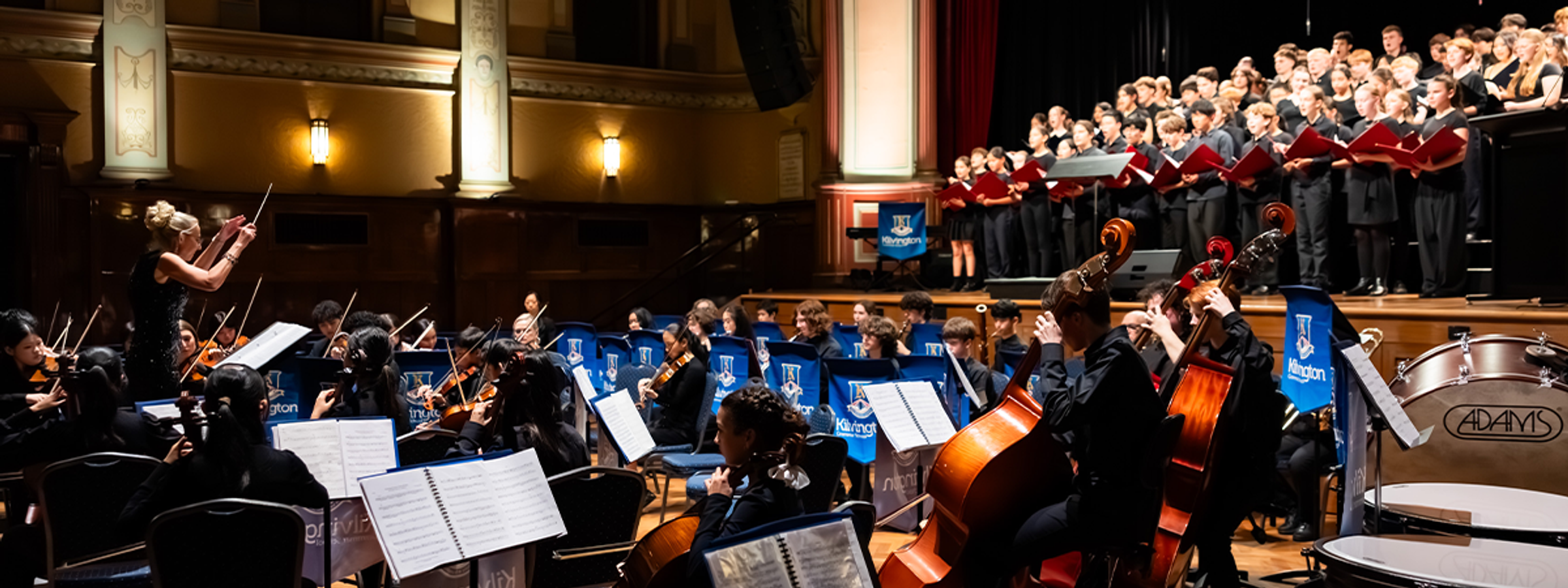
Kilvington has personally witnessed how music instruction enhances children's life and adds to a really well-rounded education. Long-running initiatives like the Year 2 and 3 Strings Program, the Year 5 Band Program, and the Massed Singing experiences in Years 7 and 8 provide students with organised, enjoyable chances to enhance their musical abilities in addition to their academic learning.
These programs foster self-assurance, discipline, teamwork, and creativity in addition to teaching students how to sing or play an instrument. Teachers have regularly seen that students who participate in music exhibit higher levels of engagement, better focus, and a stronger sense of belonging.
The school has established a setting where music fosters learning habits, promotes personal development, and is integrated into the curriculum from early primary through middle school and the elective system in the Senior School.
More Than Music
Music turns out to be much more than just a creative expression as it also plays a significant role in fostering leadership and intellectual development. Stronger memory, more focus, and better problem-solving abilities are among the cognitive advantages that give children the tools they need to succeed academically and pursue lifelong learning.
However, the discipline, teamwork, and perseverance that are developed via musical training are similar to the traits that are usually present in successful leaders. Research on Kilvington duxes and school captains demonstrates that music engagement fosters the development of more intelligent students and skilled leaders, making it a crucial part of a well-rounded education.
Kilvington music education creates people who are flexible, self-assured, and able to succeed in both academic and social settings by fusing creativity with critical thinking and individual expression with teamwork.