
The Wellbeing Team
Collingwood College views student health, sense of belonging, and wellbeing as integral to their learning and future success. As such, we have an experienced, multidisciplinary Student Wellbeing Team to support the school’s community. Students in the secondary school can approach members of the wellbeing team at Recess or Lunch if they would like to make a time for a chat.
If you have any questions, please speak to your child’s Classroom Teacher or Year Level Coordinator, who can assist by helping you make a referral to the wellbeing team. You can also contact Josh Whelan (Student Wellbeing Coordinator) at the school on 9417 6681.
- Josh Whelan (Student Wellbeing Leader) – Mon-Fri
- Linh Tran (Social Worker) – Fri
- Libby Shaw (School Counsellor) – Tue-Wed
- Michele Waters (Mental Health Practitioner) – Mon and Wed (Blue Week)
- Hussein Ibrahim (Cultural Liaison Officer) Mo, Tu, Th, Fr
- Badria Mustafa (Cultural Liaison Officer) – Tue
- Fatuma Abukar (Cultural Liaison Officer) – Mon-Wed
Student Counselling
The Wellbeing Team would like to remind secondary students that we are available for support if needed. The Student Counselling Service is a voluntary, short-term, no cost service that can provide confidential support to students one-on-one.
- Secondary students can schedule appointments by visiting us in one of our offices (during recess/lunch), calling the school, or by speaking to their Year Level Leader.
- Secondary students are also able to book appointments online by visiting the following links:
- Libby - https://calendly.com/elisabeth-shaw-education/30min
- Josh - https://calendly.com/josh-wellbeing/appointment
- Parents are also welcome to contact the team at the school on 9417 6681 to discuss if the service is suitable.
- All conversations are confidential (with some exceptions).
Mental Health Practitioner Service
- Collingwood College is also a part of the Mental Health Practitioner program.
- This service can provide short-term mental health support to Secondary Students with low-level mental health concerns.
- Available via referral only. Please contact Josh at the school on 9417 6681 to discuss.
Collingwood College is a proud Respectful Relationships school
Respectful relationships education is provided by all Victorian government schools and supports students to develop the knowledge, attitudes and skills needed for respectful relationships and helps to build respect and equality across the entire school community.
Research tells us that providing Respectful Relationships education at school can lead to positive impacts on students’ academic outcomes, their mental health, classroom behaviour and relationships.
Our school uses the Department of Education’s evidence-based teaching and learning resources to teach our students about Respectful Relationships from Foundation to Year 10.
The Resilience, Rights and Respectful Relationships resources have 8 topics that teach students about emotional literacy, personal and cultural strengths, resilience, problem-solving, stress-management, help-seeking, gender norms and stereotypes and positive gender relations. Please see below for summaries on each topic.
Each week/ fortnight in class we explore a different topic which helps students to develop key skills and understandings through, discussions, role-play and hands on learning. Topic learning develops in complexity with each successive year level to meet the age and stage of student needs.
If you have any questions about Respectful Relationships education, you can contact Mary Utter for Secondary Mary.Utter@education.vic.gov.au and Bianca Maxwell for Primary Bianca.Maxwell@education.vic.gov.au and Melanie Singleton for CAS Melanie.Singleton@education.vic.gov.au or visit the Victorian Government’s Respectful Relationships page: https://www.vic.gov.au/respectful-relationships
Respectful Relationships topic summaries F-10
Topic 1: Emotional Literacy helps students to learn how to be aware of, understand and use information about their own emotions and the emotions of others.
Topic 2: Personal and Cultural Strengths helps students to learn how to recognise and understand their own and others’ strengths and positive qualities, and how to identify how the values and strengths they learn from their family and culture help them to treat others with respect.
Topic 3: Positive Coping supports students to develop language around coping, reflect on their coping strategies and build a range of positive coping strategies.
Topic 4: Problem-solving helps students to learn a range of problem-solving techniques to manage personal, social and ethical dilemmas.
Topic 5: Stress Management supports students to consider the causes of stress and develop a range of self-regulation and coping strategies they can draw on to manage stressful situations.
Topic 6: Help-seeking helps students to develop skills and knowledge for peer support, peer referral and help-seeking.
Topic 7: Gender norms and stereotypes helps students consider the influence of gender norms on attitudes, opportunities and behaviour, and to learn about gender equality, inclusion, human rights and the importance of relationships that respect people of all genders.
Topic 8 Positive gender relationships helps students develop an age-appropriate understanding of gender-based violence, safe and unsafe behaviours and consent. Students also develop self-care, peer support and help-seeking skills they can use in response to situations involving gender-based violence.
Mary Utter
Respectful Relationships Co-ordinator
Gaming and Young People
Recent studies through the eSafety Commissioner into the online gaming experiences of young people found that most play and enjoy online video games. There were several listed benefits including :
- Skill building
- Learning new things
- Confidence building
- Forming social connections
- Team work
- Problem solving.
Headspace have provided several useful tips to help manage your child’s gaming habits. These include:
1. Lead by example
A young person will notice if you are telling them one thing and doing the opposite. Model the kind of behaviours you would like to see in the young person by aiming for balance in your own life. Set limits around your own device use and demonstrate other ways of connecting and taking care of yourself.
2. Select the right games
Depending on the age of the young person, you might help them choose games that best suit their needs. Consider game classifications and age restrictions, the features of the games, and their potential positives and negatives. If possible, watch some game play together before choosing new games. If relevant, find out what parental, family or user controls are available. These can act in a range of ways to help support healthy gaming.
The eSafety Commissioner’s eSafety Guide provides detailed information and safety tips on a range of specific games, apps and other online sites.
3. Set limits together
Team up with the young person to talk through potential issues and set rules (or make agreements) around gaming that are acceptable to both of you. Giving a young person some say in setting limits will help them learn to take responsibility for their wellbeing and be proactive in staying safe.
Listen to what’s important to the young person about the games they play, and how restricting their gaming might affect other aspects of their lives (such as their relationships with their friends or their ways to relieve stress). Aiming to reduce harm is likely to be more effective than trying to make a young person stop gaming completely. Show interest in their ideas about how to reduce unwanted impacts. Discuss the ideas in this article for staying safe while gaming.
Revisit any rules and agreements made with the young person as often as needed.
4. Be interested. Get involved or co-play
Showing interest in the games a young person is playing sends a message that you are open to talking with them about their gaming, and can pave the way for conversations about how they can protect themselves from possible harm. We know that most young gamers are keen to take steps to be safe online, and want more to be done to keep gaming safe.
If the young person is open to it, ask them to introduce you to their games and teach you to play. Ask them what they enjoy about their games, what the challenges are, how they’ve gotten better at the game and what they are learning through playing. You could also ask for their ideas on what the downsides to the games might be, and how they would know when to take a step back. Stay tuned in to their experience of gaming and maintain your interest over time.
When is my child’s gaming becoming a problem?
- They are continuing to game when they no longer enjoy it, or spending more time gaming than they want to
- They are feelings of anger, frustration, and/or aggressive behaviour, especially when asked to moderate or step away from their gaming
- You notice them feeling sad, worried or more easily upset than usual; seeming anxious when not using their device
- They are not getting enough sleep due to gaming, or not sleeping well
- Their gaming is affecting their schooling, cultural activities, study or work
- You notice changes in energy levels or appetite
- They are finding it hard to concentrate
- They are experiencing unexplained headaches, muscle soreness or stomach aches
- You become aware of unexplained spending or need for money
- They are not wanting to spend time with close friends and family
- They are avoiding or not wanting to do things they usually enjoy
If you notice these or other changes in the young person, share your concerns with them and try to understand their experience. Even if the young person isn’t comfortable opening up at first, checking in with them shows you care and you’re willing to talk.
The changes you’ve noticed might have nothing to do with gaming and could mean something else is going on for the young person. Gaming can be a way for some young people to escape other challenges in their lives, so a curious, non-judgmental approach is important.
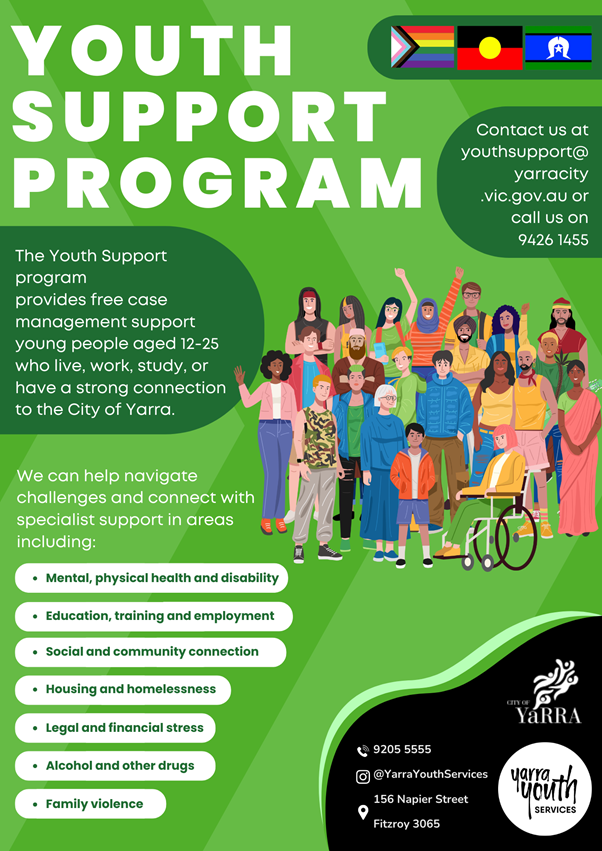
If you are concerned about your child’s wellbeing and think they need professional support, support them to reach out:
- At their local headspace centre
- Online or by phone with eheadspace
- Talk to a GP about options for counselling
- Speak to the wellbeing team at Collingwood College
- 13YARN / 13 92 76 provides 24/7 support for Aboriginal and Torres Strait Islander people
- QLife / 1800 184 527 (3.00pm – 12.00am) provides counselling and support for LGBTQI+ people
For more information on this, you can read further at Headspace

Your GP
Your family GP will be able to support you on accessing the support you need.