
RE News

Class Masses
Week | Date | Class | Chosen theme |
Term 3 2026 | |||
7 | 28 August | 0 W | God Loves me |
8 | 4 September | 0 C | Father’s Day |
9 | 11 September | 0 L | God’s Creation |
10 | 18 September | 3/4 AL | Jesus the Good Shepherd |
Term 4 2026 | |||
1 | 9 October | 3/4 L | World Teacher's Day |
Scripture Reflection
Matthew 16:21-27
Jesus reveals his future death, rebukes Peter.
Gospel Reflection
This week’s gospel is the first of three predictions of Jesus’ death and resurrection in Matthew’s gospel (see also Mark and Luke). Despite Peter’s confession of faith that immediately precedes this passage (see last week’s gospel), the disciples still do not have a very solid understanding of Jesus’ purpose. They may regard him as the Messiah, but still do not fully understand what that means. In this passage, Jesus is beginning to prepare them for the events of the passion – his death and resurrection. He is trying to lead them to a greater understanding of his mission and message. But Peter abruptly ‘rebukes’ Jesus and tells him not to speak like that. One can almost hear Peter saying, ‘Look, Jesus, you’ve got a good thing going here, don’t spoil it by talking about dying!’ However, Jesus responds to Peter very sharply, suggesting that his lack of understanding is inspired by evil and reflects human thought, not divine wisdom.
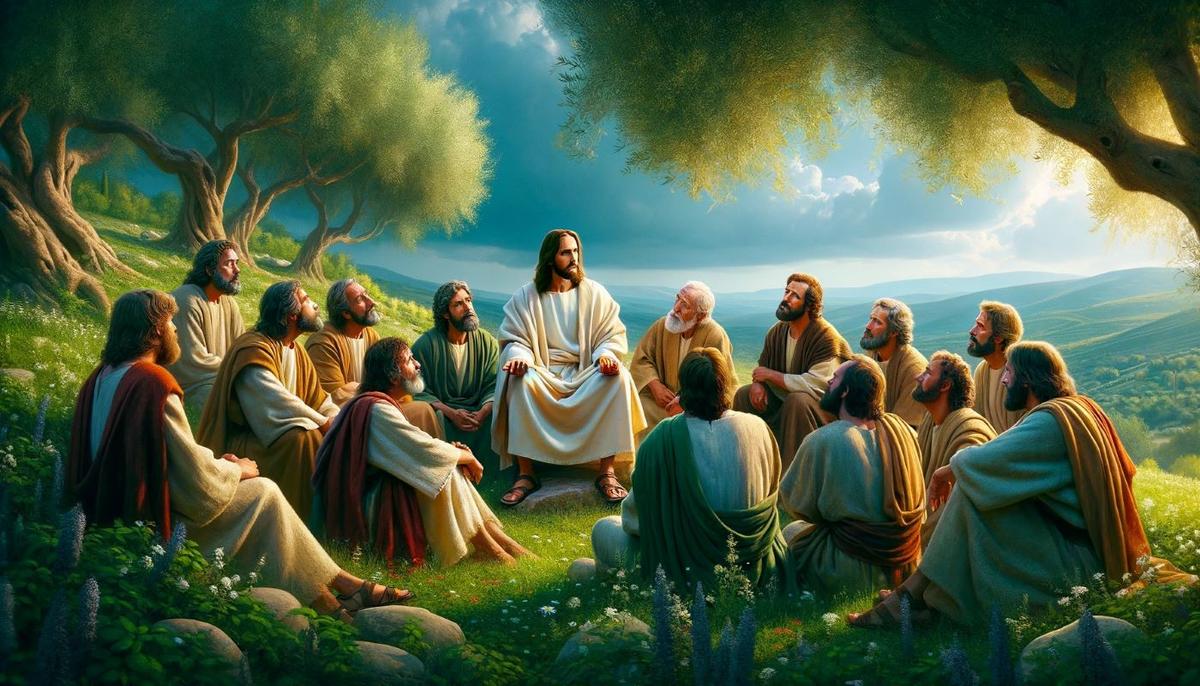
The passage then leads in to a description of the challenge of discipleship. To be a follower of Jesus means to ‘deny’ oneself, take up one’s cross and follow Jesus. In the context of this passage, to ‘deny’ oneself means to not be concerned about ‘I’ but to be concerned about ‘You’ – to put others before self. To be a follower of Jesus means to be selfless, not self-centred. In the ultimate example of this, Jesus tells his disciples that whoever wishes to save their life will lose it, but whoever loses their life for Jesus’ sake will find it. To ‘save’ your life is to hold back from giving yourself fully to the message of Jesus – to be ‘half-hearted’ in your faith. But to ‘lose’ yourself in the message of Jesus is to fully give yourself over to living the reign of God and through ‘losing’ yourself in this way, Jesus tells us, is how to truly find life.
Historical Context. Whoever loses his life for my sake...
At the time of the writing of Matthew’s gospel (around 75-80 CE), Christians were being persecuted and put to death for their beliefs. They were literally giving up their lives for their faith. These persecuted Christians saw Jesus’ triumph over death as a sign of great hope and trust in the future for themselves. Jesus’ words in the gospel – ‘whoever loses his life for my sake will find it’ – would give hope to those under persecution that ultimately they too would triumph and that the deaths of their friends were not in vain.
Scriptural context. Not quite there...
This passage immediately follows the passage of last week’s gospel which featured Peter’s confession of faith – his inspired revelation that ‘You are the Messiah, the Son of the Living God.’ The reader might think, ‘Aha, the disciples have finally got it!’ But in a very clever piece of writing, the author of Matthew’s gospel follows this revelation of faith immediately with an example of the lack of clarity that the disciples, including Peter, still possess. This happens throughout the gospels. Whenever the disciples have a bit of an insight, they are almost immediately shown to only have a partial understanding of the truth. The full revelation of Jesus’ mission and ministry is not easy to grasp and even the disciples were not quite there until they had seen the ‘full story’ played out before and within them.
Living the Gospel. Have you got what it takes?
For some people, to be a Christian is a ‘soft option’ – they see being Christian as being a bit ‘fluffy’. This week’s gospel is a reminder of the real challenge of being a Christian. Jesus reminds us that to be one of his followers we must be prepared to pick up our cross – whatever our particular cross might be – and still follow his example. To be a Christian means that we don’t fall in a heap when difficulty comes our way; we take up the burden – our cross – and continue to look forward with hope. To live like Jesus is no easy option.