Assistant Principal
Mr Jon Cullerton
Assistant Principal
Mr Jon Cullerton
This term, our College community will engage in a sustained wellbeing focus centred on caring for ourselves and others. Through our ongoing partnership with The Resilience Project, students will continue developing the everyday habits that strengthen emotional resilience and support positive mental health.
Across the term, each fortnight will highlight one of the three core GEM principles—Gratitude, Empathy and Mindfulness. Through class activities, reflections and practical strategies, students will explore how these habits can be woven into daily life to build stronger relationships, improve emotional awareness and foster a culture of kindness and connection.
This wellbeing journey will culminate in our recognition of two significant national initiatives:
Bullying No Way Week — 17–21 August
R U OK? Day — Thursday, 10 September
By engaging with these initiatives, we reinforce the message that wellbeing is not a one‑off event but a shared responsibility we carry throughout the year. We look forward to working together—students, staff and families—to continue building a community where every young person feels supported, valued and connected.
THE RESILENCE PROJECT - UPDATE
Each year as part of our partnership with the Resilience Project our student body participates in the Resilient Youth Survey - which is the largest survey of students in the area of mental health and wellbeing in Australia with over 140,000 students being surveyed.
The Resilient Youth Survey, an evidence‑based wellbeing assessment used nationally to help schools better understand the strengths and challenges facing young people. The survey explores key areas such as emotional wellbeing, connectedness, help‑seeking behaviours, resilience and students’ perceptions of their safety and engagement at school. The data collected provides a clear picture of how students are feeling, what protective factors are present, and where additional support may be needed. These insights directly inform our wellbeing planning and strengthen our ongoing work with The Resilience Project, ensuring our programs remain responsive, targeted and grounded in the real experiences of our young people.
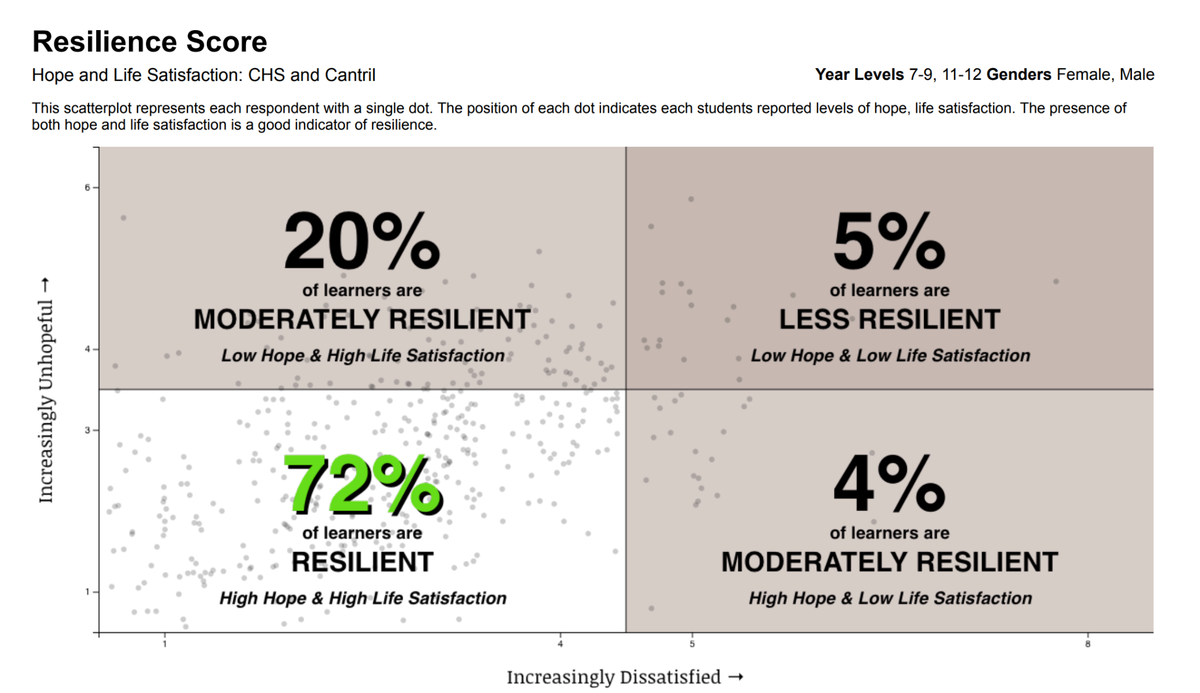
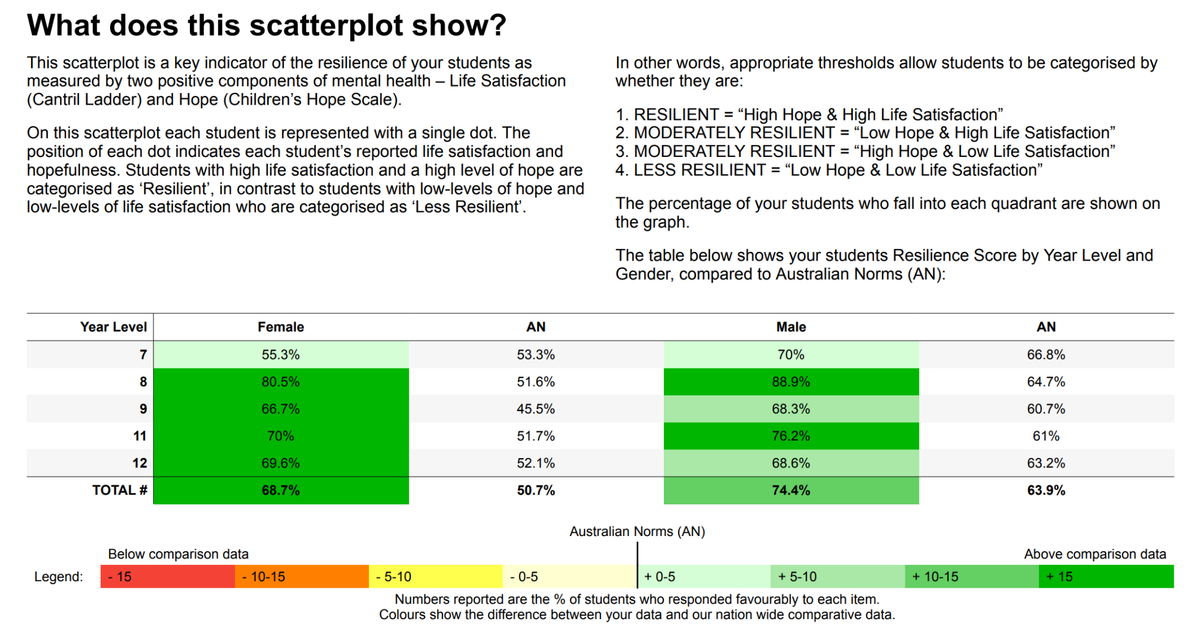
Below are some snapshots of the data as a whole represented into a scatter-plot scoring graph. The resilience score is based upon questions that assess a student’s sense of hope, life satisfaction and ability to bounce back from adversity (coping strategies). We are very proud that our resilient mind score has been improving from year to year and despite the growth of the school and rapid change of the College.
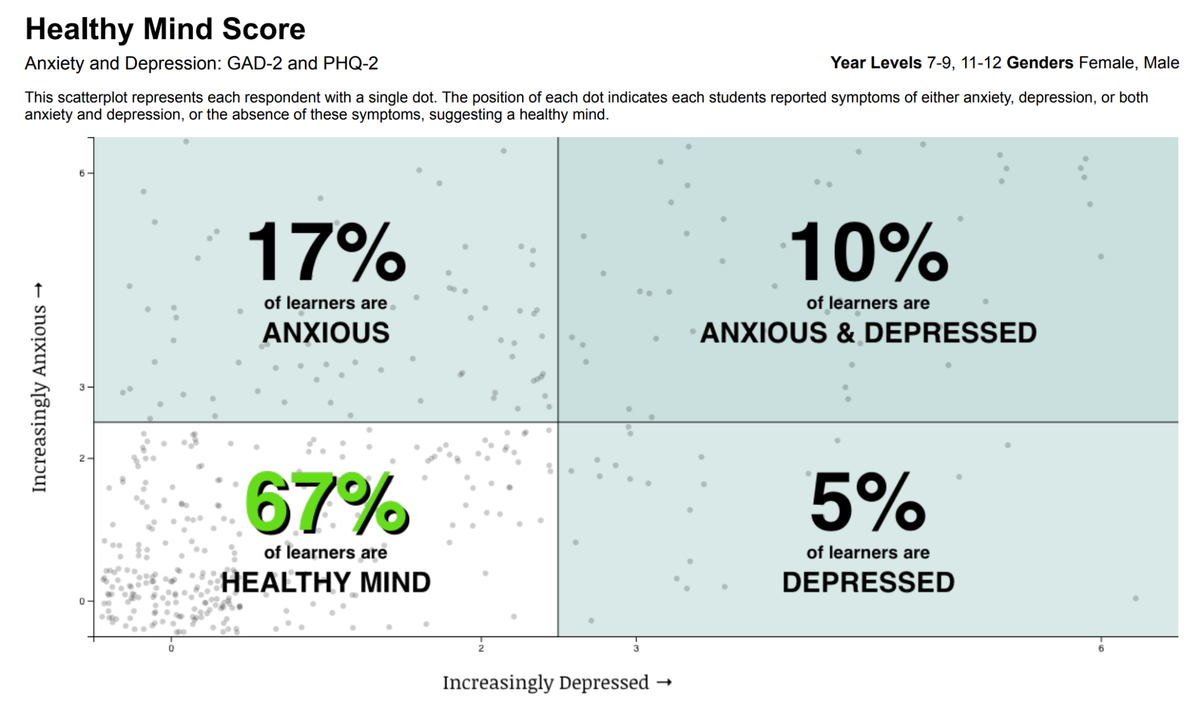
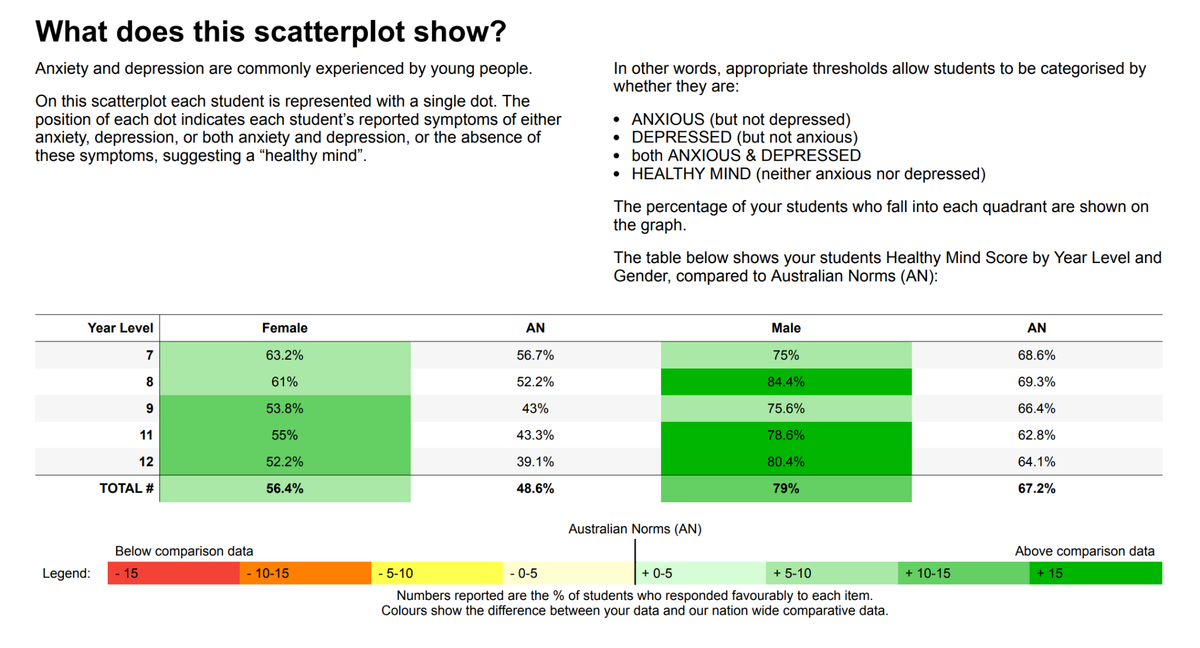
The second graph shows the Healthy Mind Score - which reflect questions that look at student levels of anxiousness and feelings of low-mood or depressive outlook. This data has also reflected positive moves with our College being consistently above national averages and has been improving with our results mirroring the national impact of working with the Resilience Project which has been proven to lower the rates of depression and anxiety in students by two independent university studies, most notably from Monash University in Melbourne.
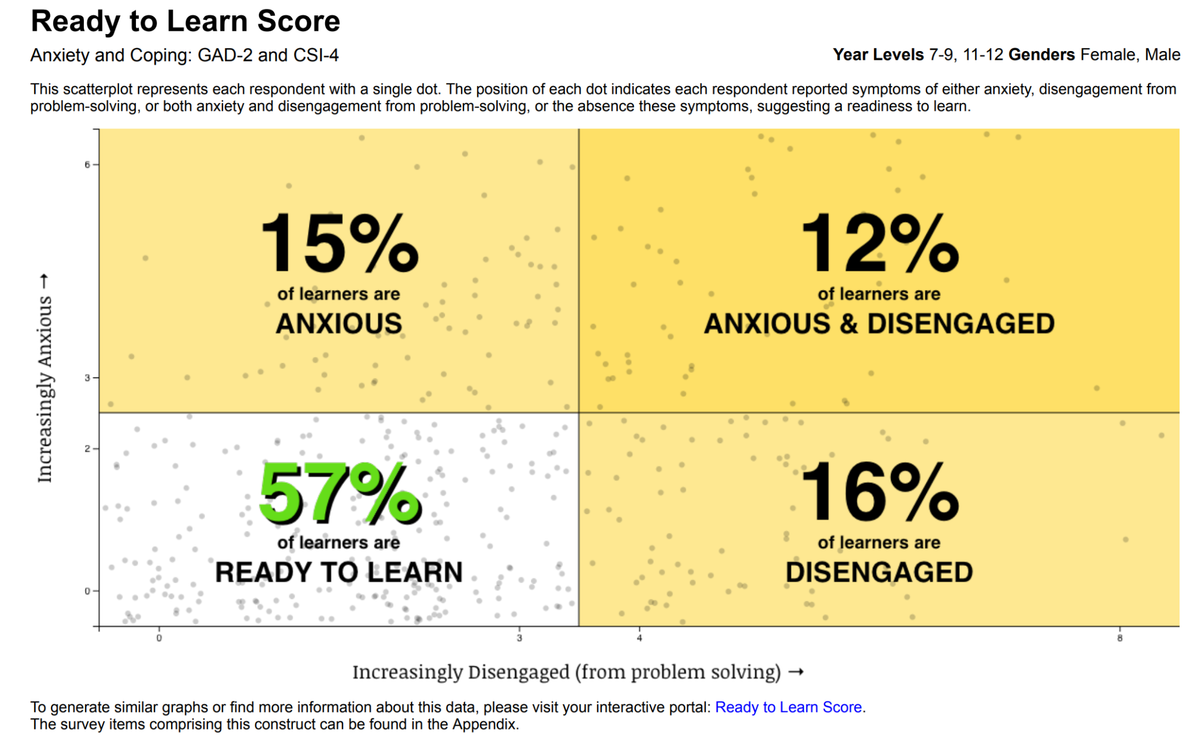
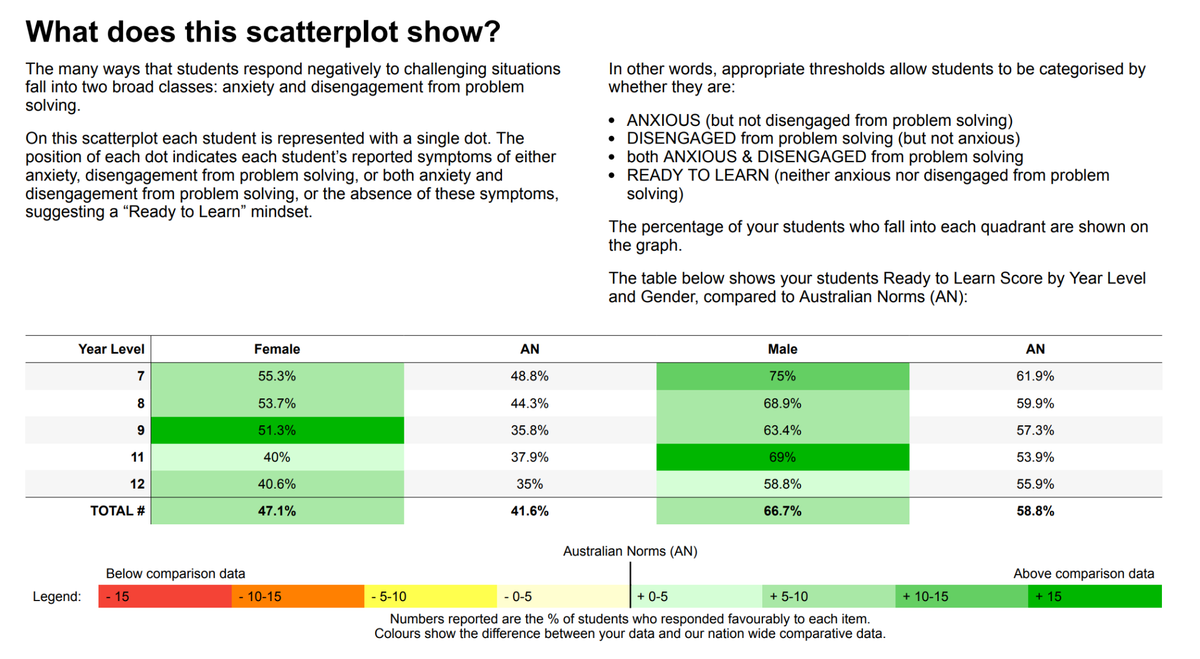
The third scatter plot shows the Readiness to Learn data and reflects questions that assess a student’s readiness to learn when they arrive at school each day. This readiness to learn is impacted by many things such as home life, friendships, healthy habits, technology, and the impact of the other two areas (healthy mind and resilience). While this statistic seems low, and somewhat distressing, this is being reported around the nation as one of the biggest problems facing educators not just in high schools but all levels of education from early learning to tertiary education. This is more of a concern for our female learners who reported lower readiness to learn levels than their male counterparts. It is important to note that we are still well above the national average but it is an area we are keenly aware of and are constantly looking to improve.
THE RESILIENCE PROJECT - PARENT HUB
A reminder that our partnership with the Resilience Project offers families access to the Parent Hub of the Resilience Project, which is packed with information, tips and tricks, and useful resources for families about how to implement and incorporate GEM practices at home.
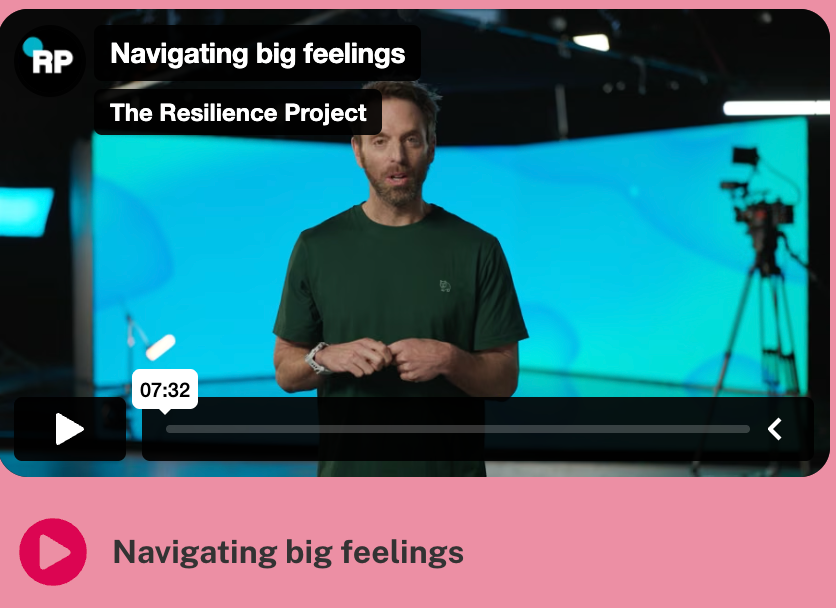
An example of the resources available is this insight into dealing with “Big Feelings” - I know as a parent my wife and I are often dealing with some very big feelings of our three children and Hugh’s insight and resources are definitely useful for us in helping us to be better parents in these moments. Check out the clip below for more.
Currently SCS is reviewing the role E-bikes play in the transportation of students to our schools across Sydney. They aim to develop a system-wide policy which may come into effect from next year. Until this time St Aloysius would like to remind all students and families about their responsibilities to keep themselves, others and our community safe.
This includes:
Failure to abide by these expectations may result in a student or students receiving disciplinary action at the College and having the opportunity to ride to school being removed.
The College leadership has listened to concerns expressed by our students regarding the tracksuit pants as part of our uniform. While the ‘tapered’ style is appealing to some students and will stay as an option, the College is looking into adding a more ‘straight-legged’ pant and is working with Noone to add this into uniform options.
This will be conducted with as much speed as possible but until such time as these are available, students are reminded that other tracksuit pants are not permitted at the school. Nor is any other jumper/hoodie to be worn in conjunction with our sport uniform.