
Careers Corner

So you want to be a Pharmacist?

From 2027, Monash University will offer the Bachelor of Pharmacy (Honours)/Doctor of Pharmacy, an innovative degree addressing the shifting healthcare landscape and the expanding scope of practice for pharmacists.
Click here for more information
What to ask at a job interview

If you’ve been contacted for an interview, you've probably practised answers to all the questions you might be asked. But have you thought about what you want to ask? Interviewers often end by asking if you have any questions, so having a couple ready shows you're interested and prepared. Asking the right questions can also help you work out if the job's a good fit.
Good questions to ask:
What can I do to succeed in this role?
What are some of the challenge aspects of the role?
What do people enjoy most about working here?
Avoid asking questions about:
Pay or promotions.
If you can choose your own hours or days off.
Information you could've found online.
Before you leave an interview, ask when you're likely to hear back. If that date passes without word, it's fine to follow up, but hold off until then, as chasing too early can come across as impatient.
Should I apply for Scholarships?

Scholarships 101
Further study can be expensive when you add up books, rent, transport and other everyday costs. Scholarships help take some of that pressure off and they’re available for a wide variety of students.
What is a Scholarship?
Money to support your studies that you don't need to pay back. Depending on the type of scholarship you receive, you can use the money on things like tuition, living costs, textbooks or other general expenses while you study.
Am I eligible?
Scholarships are offered for a wide range of circumstances.
You may be eligible if you:
Live in a regional or remote area
Are facing financial hardship
Have a disability or long-term medical condition
Identify as LGBTQIA+
Are from an Aboriginal or Torres Strait Islander background
Play sport at a high level
Have leadership, volunteering or community experience
Are studying a specific degree, like teaching, nursing or engineering
Need help with accommodation costs
Identify as female entering a traditionally male-dominated industry
Are the first person in your family to attend university
What's on offer?
Common types of scholarships include:
equity scholarships (for personal or financial hardship),
academic merit scholarships,
degree-specific scholarships,
accommodation scholarships,
and scholarships for Indigenous students.
How do I apply?
Each institution runs its own process and timeline, so check application windows directly on their websites as some close before the start of the academic year. Applications are usually either through the state’s Tertiary Admission Centre (TAC) or directly through the institution’s online portal. Depending on the type of scholarship you’re applying for, you might need to submit a personal statement or other supporting documents. You can apply for every scholarship you're eligible for, so it's worth checking broadly.
Please visit our Community News page in this Newsletter for some more information on scholarships.
The Teenager of 2026: What are they thinking about their future?
Today's young people are thinking about their future in a world that feels less predictable than the one their parents entered. They hear constantly about the cost of living, housing affordability, climate change, artificial intelligence, skills shortages, changing university expectations and jobs that may not even exist in another ten years. And then somewhere in the middle of all that, we ask a 15 or 16 year old: "So, what do you want to do when you leave school?"
Perhaps we shouldn't be surprised when the answer is, "I'm not sure." They are concerned but they haven't given up.
The latest Mission Australia Youth Survey provides an interesting picture of young Australians aged 14-19. Cost of living is now overwhelmingly their biggest national concern, nominated by 64% of respondents, followed by mental health, climate change and the environment and housing and homelessness. School and study problems are also the most commonly reported source of personal stress. (Mission Australia) These are quite grown-up concerns.
Teenagers are hearing conversations at home about mortgage repayments, rent, grocery prices and whether buying a homem will ever be affordable. Yet there is another important part of the story. They remain ambitious.
In the same Mission Australia research, employment and career goals were the most commonly identified hopes for the future, nominated by 59% of young people. (Mission Australia) So perhaps the right description of today’s teenager isn’t pessimistic. It is cautiously hopeful. They want a good future. They are simply less certain about how to get there.
New Zealand teenagers are telling us something similar
The picture is remarkably familiar. Youthline’s 2026 State of the Generation research found mental health was the most important issue identified by young New Zealanders, while 52% nominated a lack of job opportunities and 38% identified money worries. Almost half of 12–17-year-olds said they worried because their parents or whānau were stressed about money. (Youthline NZ)
There is also genuine anxiety around employment. New Zealand’s seasonally adjusted proportion of 15–24-year-olds not in employment, education or training reached 14.4% in the March 2026 quarter. (Stats NZ)
Australia's labour market is stronger overall, but young people still face a harder entry point than experienced workers. The Australian youth unemployment rate was 10.4% in July 2026, compared with an overall unemployment rate of 4.5%. (Australian Bureau of Statistics)
And then there’s AI
Artificial intelligence adds another layer of uncertainty. Teenagers are simultaneously fascinated by AI, using AI, experimenting with it and wondering whether it will eventually take their job.
In New Zealand, Youthline found 69% of young people were either a little or very worried about AI. Among their concerns, 57% identified its potential effect on future job opportunities. (Youthline NZ)
That anxiety is understandable. But it also creates an important opportunity for career education.
The evidence coming from Jobs and Skills Australia is considerably more reassuring than some of the headlines. Its major study into generative AI concluded that AI is more likely to augment human work than replace it, automating some tasks while changing how many occupations are performed. (Jobs and Skills Australia) That is an enormously important message for students. The conversation should therefore move from: “What jobs will AI destroy?” to: “What will humans contribute when AI is everywhere?” The personal strengths we have sometimes called “soft skills” may increasingly become some of the hardest skills to replace.
Career choice is becoming less about choosing one job. Perhaps the biggest change we need to make in career education is our language. For generations we have asked students to choose a career. Increasingly, we should be helping them prepare for a career journey.
A student leaving school today may work across several industries, occupations and employment models during their lifetime. Some will go to university. Others will choose TAFE, apprenticeships, traineeships, employment, micro-credentials or combinations of all of them.
Technology will change their jobs along the way. That makes self-understanding enormously valuable. Before asking young people “What do you want to become?”, perhaps we should spend more time helping them answer:
“Who are you?” What are you naturally good at? Because occupations change, but personal strengths travel with us.
Careers advisers have never been more important
Ironically, at the very moment students have almost unlimited information available to them, good career guidance has become more important rather than less important. Google can give a teenager 10,000 career options. AI can give them another 10,000. The challenge isn’t information. It is helping a young person make sense of it.
That means helping students connect who they are with the enormous range of opportunities available to them. It also means giving teenagers permission not to have everything figured out at 16. Our job isn’t necessarily to help every student choose the perfect career before they finish Year 12 or 13.
It is to help them understand themselves, recognise their strengths, explore possibilities and make their next good decision. That feels like a much more realistic ambition. And looking at what young Australians and New Zealanders are telling us in 2026, it may also be exactly what they need.
With thanks to MyCareerMatch for this article: Home | MYCAREERMATCH AI
Monash University Campus Tours and Events
Find out all that Monash University has to offer, whether you are seeking general insights, tailored course advice, a campus experience, or the chance to connect with students and staff - click here to find out all of the events available and to book.
If you are particularly interested in their Holiday Campus Tours, please click here.
The Monash Design Prize
Calling all budding designers in Years 10 to 12
Submit your entry to the Monash Design Prize for your chance to win a $1,000 VISA voucher and a two week paid internship with one of our design research labs.
The world is confronting numerous challenges that designers can play an active role in resolving, and Monash University are keen to encourage their ‘design for good’ philosophy beyond the university.
They would like to invite the budding designers of the future, to join them in this mission and show them how you apply design to respond to some of the most urgent challenges.
What’s involved?
Show them what you’ve designed to address a particular challenge. You can address any issue from sustainability and climate action, to social equity and healthy communities. And you can choose any format; a poster campaign, product design, interior or public space, wearable device, digital platform... the choice is yours. You don’t need to produce anything specifically for this competition. You may have the winning design already from a previous class project, or be working on a suitable project right now.
The prize
The winning entrant will receive the Monash Design Award, judged by a panel of leading university and industry designers. The award will consist of a certificate, $1000 VISA/Mastercard voucher and a two week paid internship with one of their Design Research Labs. The prize is valued at approximately $3000. Runners up will receive a certificate and a $200 VISA/Mastercard voucher.
Who can enter?
If you’re in Year 10 to 12 in Australia you’re eligible to enter. At Monash, they believe anyone can think, act and make like a designer so you don’t need to have undertaken any specific subjects – you just have to have the ability to show them your ideas visually.
How to submit
Click here to find out more and to submit your application. There is also information about Monash Design courses on this page.
University and TAFE Open Days

Attending open days is an important step towards making decisions about your future education and training. Open days allow you to find out about an institution’s courses and programs, explore campus facilities and speak with current students about their experience.
This year institutions are offering a mix of virtual and on-campus experiences. Do your research for specific details and dates and register so you don’t miss out!
University of Melbourne future students events calendar
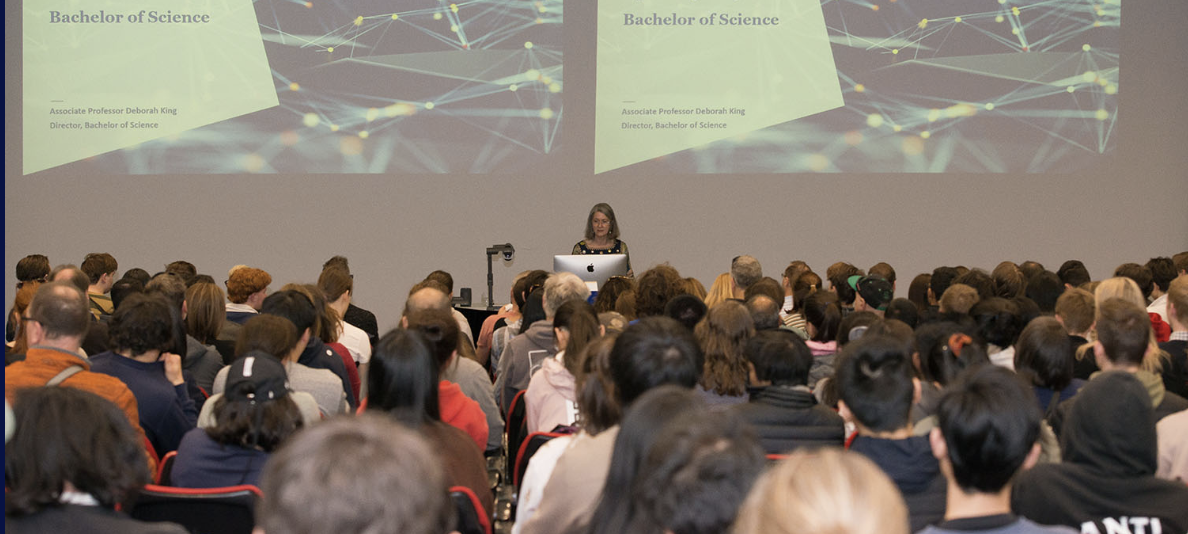
Upcoming events on campus , in-person or online in 2026 - click on the button below
PSC Careers Website

We have a fantastic resource available for students. The PSC Careers Website provides you with all of the latest information that will help you make decisions about your future career and your life beyond school.
You can visit this site to find out about university or TAFE courses and any other type of course available across Australia. The site also has information about VCE, you can search for job vacancies and much more.
In addition to this, please do feel free to drop into the Careers Office if you have any questions.
Information reproduced with permission from Career Tools.