Wellbeing
Friendship
I recently heard Australian author and speaker Michelle Mitchell discuss how children today are growing up in a far more complex social world than previous generations. While friendships were once largely formed through family and local connections, many children now build relationships both in person and online with peers whose families we may never meet. Although technology has increased connection, it can also leave young people feeling disconnected and unsure of how to navigate friendships.
Friendships are essential for a child's wellbeing. They provide companionship, support, laughter, trust and a sense of belonging. Good friends do not need to share all the same interests; what matters most is how they treat one another.
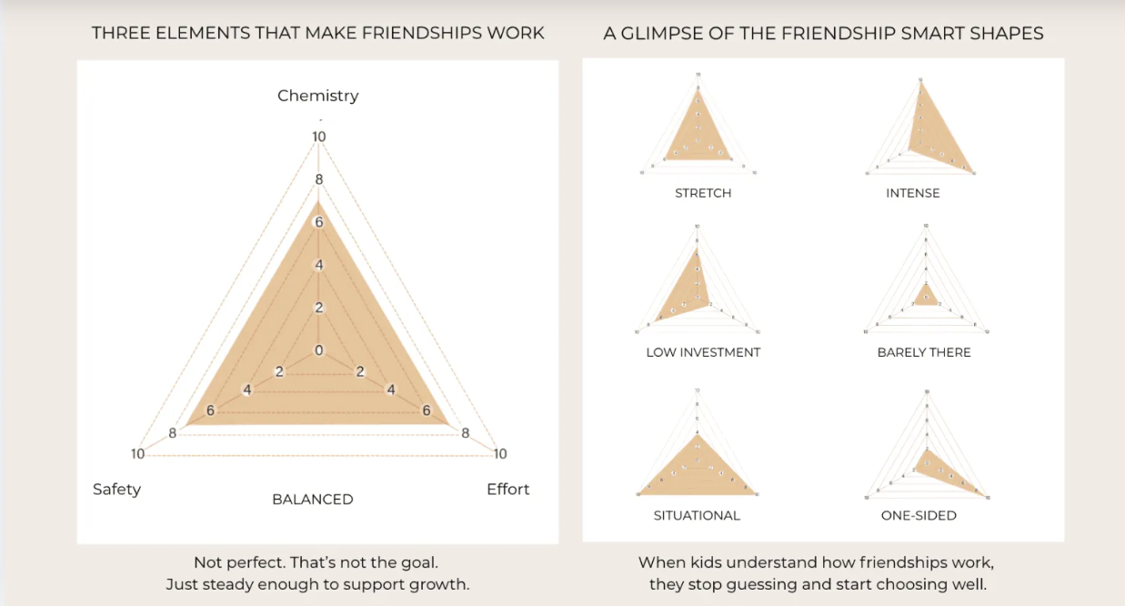
As parents and educators, our role is to help children develop the skills to build and manage healthy relationships. This includes recognising positive friendships, navigating peer pressure, and understanding that strong friendships are built on safety, chemistry and effort. As Michelle Mitchell explains, “every friendship is a unique combination of these elements and can change over time depending on the investment each person makes.”
Rather than directing our children’s friendship choices, we can support them through ongoing conversations and by equipping them with the skills they need to make wise decisions when we are not there.
We have a copy of Michelle Mitchell’s book, Friendship Smart, available in the office library for anyone who would like to borrow it. The book explores these key elements of friendship in greater detail.
Have a great week of wellbeing.
Juliette Hancke
Wellbeing Leader
From ‘Friendship Smart’ by Michelle Mitchell