
Pastoral Care
"We have to nourish in order to flourish"
— Anon

Pastoral Care
"We have to nourish in order to flourish"
— Anon
Paul Dillon: Empowering students to make safe choices
Our Year 10 and Year 11 students, together with Marcellin College, had the privilege of attending a powerful and practical presentation by Paul Dillon, founder of Drug and Alcohol Research and Training Australia (DARTA). For over 25 years, Paul has been one of Australia’s leading voices in youth health education - delivering honest, evidence-based information to young people.
His presentation can be summarised as follows:
Updates: Current drug and alcohol concerns in the community.
Paul’s presentations always spark important conversations. We encourage parents and carers to use this visit as an opening to discuss social safety and peer dynamics with their teenagers at home. See his website https://darta.net.au/
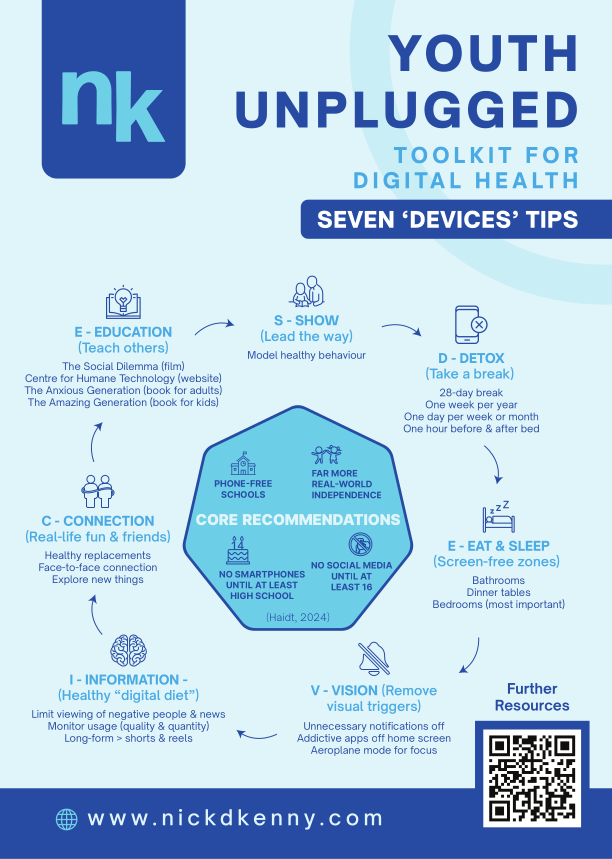
Nick Kenny: Youth Unplugged - Digital Detox
Recently in Pastoral care, our Year 8 students had the privilege of attending an empowering presentation by guest speaker Nick Kenny, focusing on the crucial topic of "Youth Unplugged" where he inspired students to disconnect to reconnect. This session had practical advice that any student in any grade would benefit from applying.
In an era where technology, social media and constant connectivity dominate daily routines, Nick’s presentation served as a timely reminder of the importance of balance and connection, and their links to sleep and mental well-being.
Nick engaged students through relatable stories, interactive discussions and eye-opening insights into how digital devices impact developing brains and daily habits.
His key tips can be summarised as follows:
"Unplugging isn't about throwing your phone away - it's about making sure your device isn't running your life, so you have space for what truly matters."
Nick Kenny
Nick emphasised that developing healthy digital boundaries is a team effort. Here are a few simple strategies parents and guardians can implement together with their teens:
Risk Taking Behaviours
We have been providing knowledge and awareness around measures to consider as preventative action in regards to safety and risk taking.
Year 11 recently attended bstreetsmart, a road safety workshop. The message to students is that whether you're behind the wheel or in the passenger seat, safety should always be a top priority. Road safety is not just about following the rules; it's about cultivating habits that protect everyone in the vehicle. This content was delivered via a full scale, live demonstration of a crash and rescue scenario, proving to be instrumental in showing the critical issues that are faced by the driver, passengers and emergency services. This was followed by personal stories from those impacted by accidents on the road; survivors, onlookers, medical teams, and families.
bstreetsmart's key tips can be summarised as follows:
Road safety is a shared responsibility. As a driver, you hold the lives of your passengers and others on the road in your hands. As a passenger, you play a key role in supporting safe driving practices. By staying alert, making smart choices, and always prioritising safety, we can all contribute to making our roads safer for everyone.
Student wellbeing and life skills are a key part of a students’ education and well-rounded upbringing. In addition to the content learned in Pastoral Care, guest presenters bring fresh energy, lived experiences, and specialised expert knowledge and perspectives to inform our girls. By connecting our students with voices beyond the classroom, we equip them with practical tools to navigate challenges/pertinent issues in their lives; and the ability to apply these practical suggestions, empowering them to make wise decisions and to support one another long after the presentation ends.
Sarah Charles
Director of Pastoral Care