
From the Assistant Principal
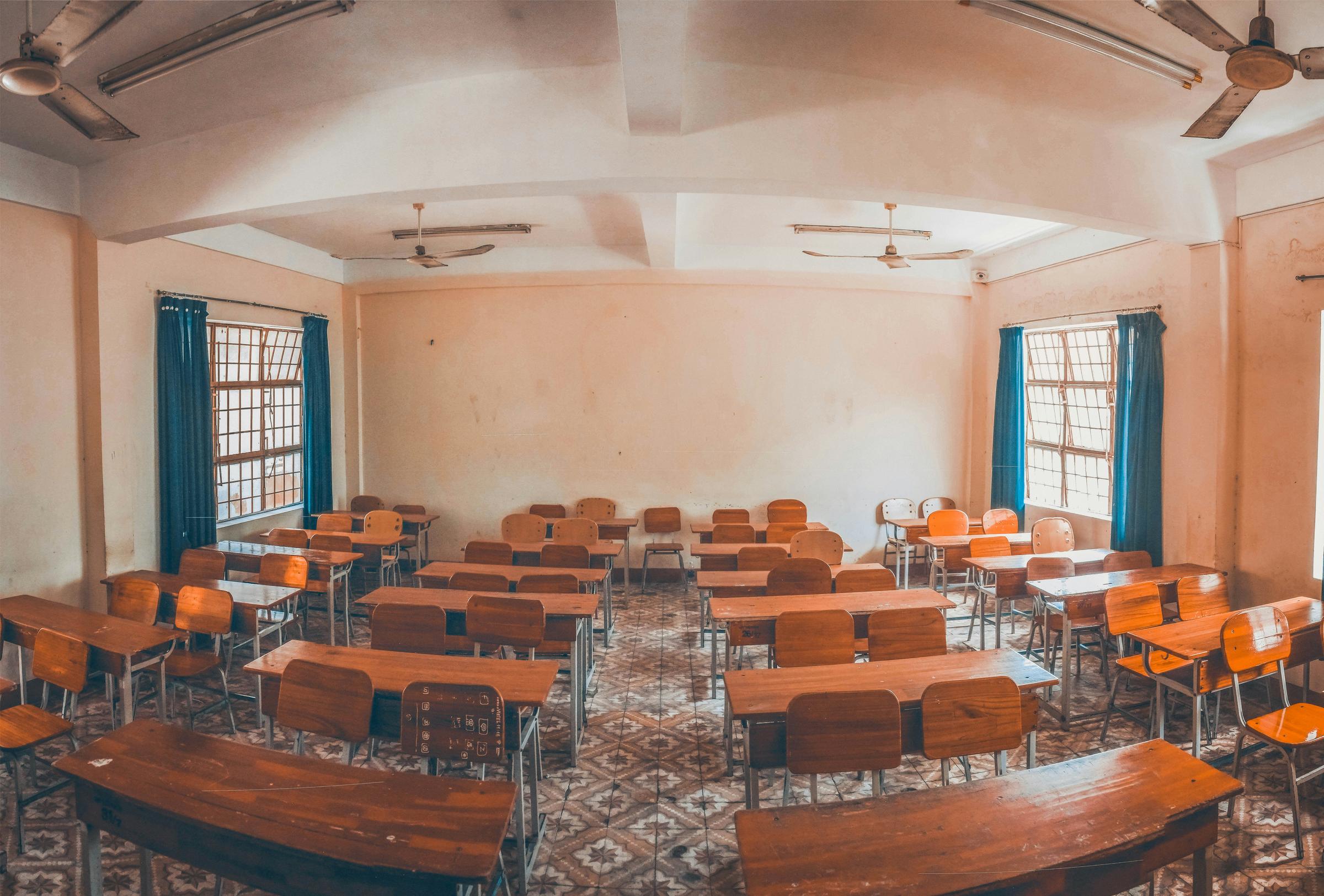
Hands up who had a detention while navigating the perils of high school.
🙋
I remember having to write, “I must complete my Indonesian homework” a hundred times during one lunchtime, while the sun was shining and my friends were kicking the football.
“I must complete my Indonesian homework.”
I must remember to do that.
All the research suggests - educational or otherwise - that punitive measures and punishments have little impact on changing attitudes or behaviour. Detentions don’t work. Suspensions don’t either. Handled poorly, these kinds of consequences can actually have the opposite effect to the one intended.
So why then, Mat, has the school introduced the Make It Right Room this year?
It’s a wondering many have had after their child has had to spend twenty minutes of their lunch break making it right.
Carly wrote about the Make It Right Room back in March. It would have been easy to miss, so here it is again:
At Newport Lakes, as always, we are committed to supporting all students in both their learning and social-emotional growth. To further this commitment, and in response to feedback from staff and students, we have introduced the ‘Make It Right’ Room. Open during the first half of lunch times, the room provides a supportive environment for students to finish learning tasks and reflect on their choices.
The ‘Make It Right’ Room is part of our suite of student and classroom management strategies and aligns with our Restorative Practices approach. This space and time allows students to finish learning tasks they may have been too distracted to complete during class time or provides them with an opportunity to reflect on their behavioural impact as part of ‘fixing the problem’ in a restorative discussion — e.g. they may write an apology letter to the person harmed, create a list of things they could do differently next time, or draw a poster to remind others of our school values.
The room runs for only the first half of lunch, so students still get to stretch, play and socialise with peers after they ‘fix the problem’. Students are not writing lines, sitting silently, being yelled at or shamed. They are supported by a teacher in the room to complete the tasks that have been set by their classroom or specialist teacher.
Rest assured that time in this room to complete unfinished learning is only set after the student has been given multiple reminders and other interventions in class. The ‘Make It Right’ Room provides a positive, supportive space for students to take responsibility, complete their work or reflect on their choices before returning to their peers ready to learn and enjoy the rest of their lunch break.
The justification for the introduction of the Make It Right Room might seem hidden in Carly’s response, so let’s blow it open. That way, everyone can be on the same page.
The Department’s Positive Classroom Management Strategies (PCMS) are a set of eight evidence-informed practices designed to create safer, more purposeful learning environments. They recognise an important principle: behaviour can be taught. This means we need to explicitly teach and reinforce the behaviours we expect, while also providing clear, constructive feedback when students get it wrong. Disciplinary measures alone don’t teach students what to do instead.
Practice Number 4 is Discouraging inappropriate classroom behaviour. It recognises that specific, corrective feedback is a necessary part of the learning process. Students need to know when they have made an error, understand what the expected behaviour is, and be supported to get back on track. Timely, constructive feedback can also prevent behaviours from escalating and protect the learning environment for everyone.
And this is where the Make It Right Room fits.
It isn’t a detention.
It isn’t a punishment.
It isn’t about making a child pay for doing the wrong thing.
It is a consequence - but a consequence designed to teach.
Sometimes that means finishing work that wasn’t completed because a student chose not to engage with it. Sometimes it means having a restorative conversation. Sometimes it means writing an apology, thinking about who has been impacted, or working out what they could do differently next time.
Because there is another part of this conversation that is important.
The Make It Right Room was introduced partly in response to feedback from our staff and students.
Over the past couple of years, when we have spoken with students about behaviour, one of the clearest messages we have heard is that we can be ‘too soft’. Not necessarily in those exact words, but students have told us that consequences aren’t always followed through and that sometimes, students who make poor choices don’t seem to be held accountable.
Our staff have told us something similar. They are seeing an increase in behaviours that disrupt learning, relationships, and the sense of safety in classrooms and playgrounds. They are also telling us that they need clearer, more consistent ways to respond.
That matters.
Because schools have to balance competing needs.
We need to support the student who has made the poor choice.
But we also need to support the student whose learning has been disrupted.
The student who has been hurt.
The student who has been called a name.
The student who has watched a classroom descend into chaos.
For those students, “Nothing happens” can feel pretty unfair.
Sometimes, making it right is actually part of restoring that sense of justice.
And that is why we don't frame the room as a negative place. We don't send students there to be shamed, embarrassed, or made an example of. We send them there because something needs to be fixed, finished, discussed, or learned - and we want to give them the time, space, and adult support to do that.
There is an important distinction between punishment and consequence.
Punishment says: You did something wrong, so something unpleasant will happen to you.
A teaching-focused consequence says: Something has gone wrong. Let’s work out what happened, who has been impacted, and what we need to do to make it right.
One is about making a student suffer for a mistake.
The other is about helping them learn from it.
And, ultimately, that is what we are trying to do.
Student behaviour takes up a lot of my time.
I wish it didn’t.
But I also know that when behaviour isn’t in line with our values, we can’t simply ignore it and hope it goes away. And we can’t rely on punishment and hope students learn their lesson.
Our job is to teach.
That includes teaching reading, writing, and mathematics, but as I’ve written about before. It also includes all the hidden stuff: teaching students how to manage frustration, repair relationships, respond to feedback, make better choices, and take responsibility when things go wrong.
Sometimes, that teaching happens in the classroom.
Sometimes it happens in the playground.
And sometimes, for twenty minutes of lunchtime, it happens in the Make It Right Room.
Mat Williamson
Assistant Principal (and apparently still carrying the consequences of unfinished Indonesian homework)