
Literacy - the Grandest Bookshop
Year 5 students in Reading, will focus on:
- continuing to give and receive feedback during paired fluency sessions and record themselves to reflect further on the following four areas; accuracy, rate, punctuation and expression.
- expanding their vocabulary with targeted word study which covers the meaning, history, and use of words, empowering students to employ a variety of language for various purposes
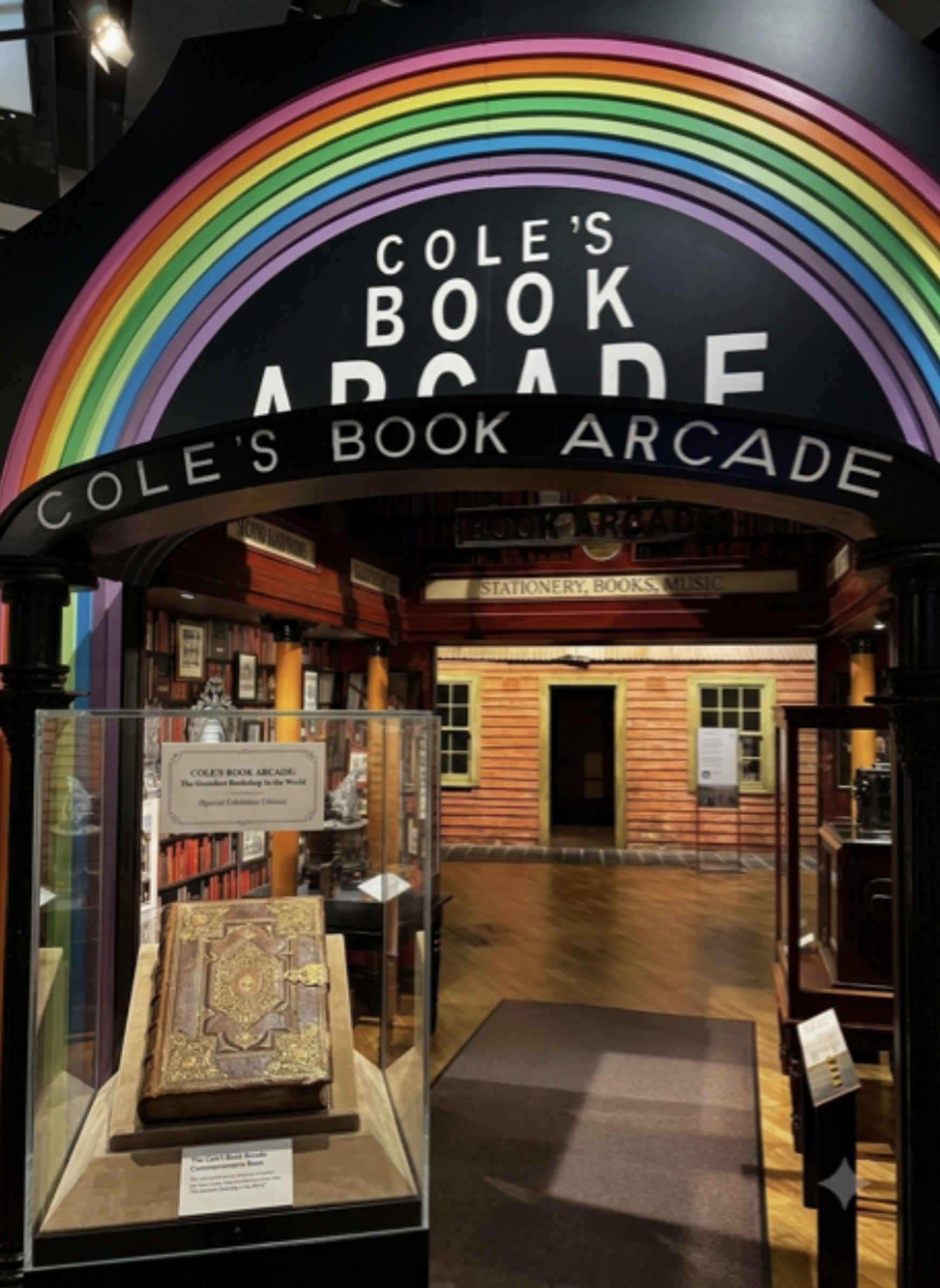
- being part of the collaborative experience of our serial read, The Grandest Bookshop in the World where they will be invited to draw on their perspective and make comparisons to their own lives in an inferential way.
- identifying aspects of literary texts that represent details or information about historical, social and cultural contexts in literature by Aboriginal and Torres Strait Islander authors, First Nations Australian, and wide-ranging a wide range of Australian and world authors
- forming and share present an opinion on a literary text using specific terms about metalanguage to describe relevant literary devices, text structures and language features, and reflect on the viewpoints of others
- recognising that the point of view in a literary text influence how readers interpret and respond to plots, characters and events and characters
- creating and edit literary texts, experimenting with vocabulary, figurative language, storylines, characters and settings from literary texts they have encountered
- examininthe effects of imagery, including simile, metaphor and personification, and sound devices in prose and poetry narratives, poetry and songs
Year 5 students in Writing, will focus on:
- describing the ways in which a text reflects the time and place in which it was created
- using appropriate interaction skills including paraphrasing and questioning to clarify meaning, make connections to own experience or a text, and present and justify an opinion or idea
- explaining characteristic features used to meet the purpose and audience in different types of texts
- using phonological, morphological and vocabulary knowledge to read and spell words that share common letter patterns but have different pronunciations
- building and spell new words from knowledge of known words, base words, prefixes and suffixes, word origins (etymology), letter patterns and spelling generalisations
- creating different types of texts, written and spoken, with relevant, elaborated and sequenced ideas, using text structure appropriate for topic, purpose and audience, and multimodal elements as appropriate
- exploring less common plurals, and understand how a suffix changes the meaning or grammatical form of a word
- re-reading and edit their own texts and the texts of others using agreed criteria for text structures and language features
Year 6 students in Reading will:
- Develop their background knowledge, vocabulary, language structures, verbal reasoning, and literacy skills through listening and responding to our class serial read, Us Mob Walawurru, making connections to similar texts, their own experiences, and personal perspectives while drawing inferences and comparing aspects of the story to their own lives.
- Read, spell, and analyse words with Greek and Latin roots.
- Take part in daily Paired Fluency sessions to strengthen reading fluency, focusing on accuracy, reading rate, and prosody, while building overall reading ability through regular opportunities to give and receive constructive feedback with a peer of similar reading ability.
- understand the uses of objective and subjective language, and identify bias
- explain how different kinds of texts are typically organised into characteristic stages and phases depending on purposes, recognising how authors often adapt text structures and language features
- examine how authors use vivid vocabulary and figurative language, such as metaphors, similes, personification, idioms, imagery and hyperbole
Year 6 students in Writing will:
- understand how embedded clauses can expand the variety of complex sentences to elaborate, extend and explain ideas, identify and add appositives in their sentences
- understand how the choice of verb, elaborated tenses and a range of adverb groups can expand and sharpen ideas
- identify the ways still images (such as figures, tables, diagrams, maps and graphs), moving images and sound are used in texts to create point of view
- compare language choices, modality, emphasis, repetition and metaphor, and topics, themes or plots in a range of literary texts. Use single Paragraph outline (SPO) to summarise a text