
Class 5/6 S
Kii Class 5/6 Families,
It was lovely meeting with so many of you during this week's parent-teacher interviews and having the opportunity to discuss your children's learning and progress. If you weren't able to attend an interview but would still like to meet, please feel free to send me an email, and we can arrange a time that suits us both over the coming weeks.
Main Lesson – Ancient Rome
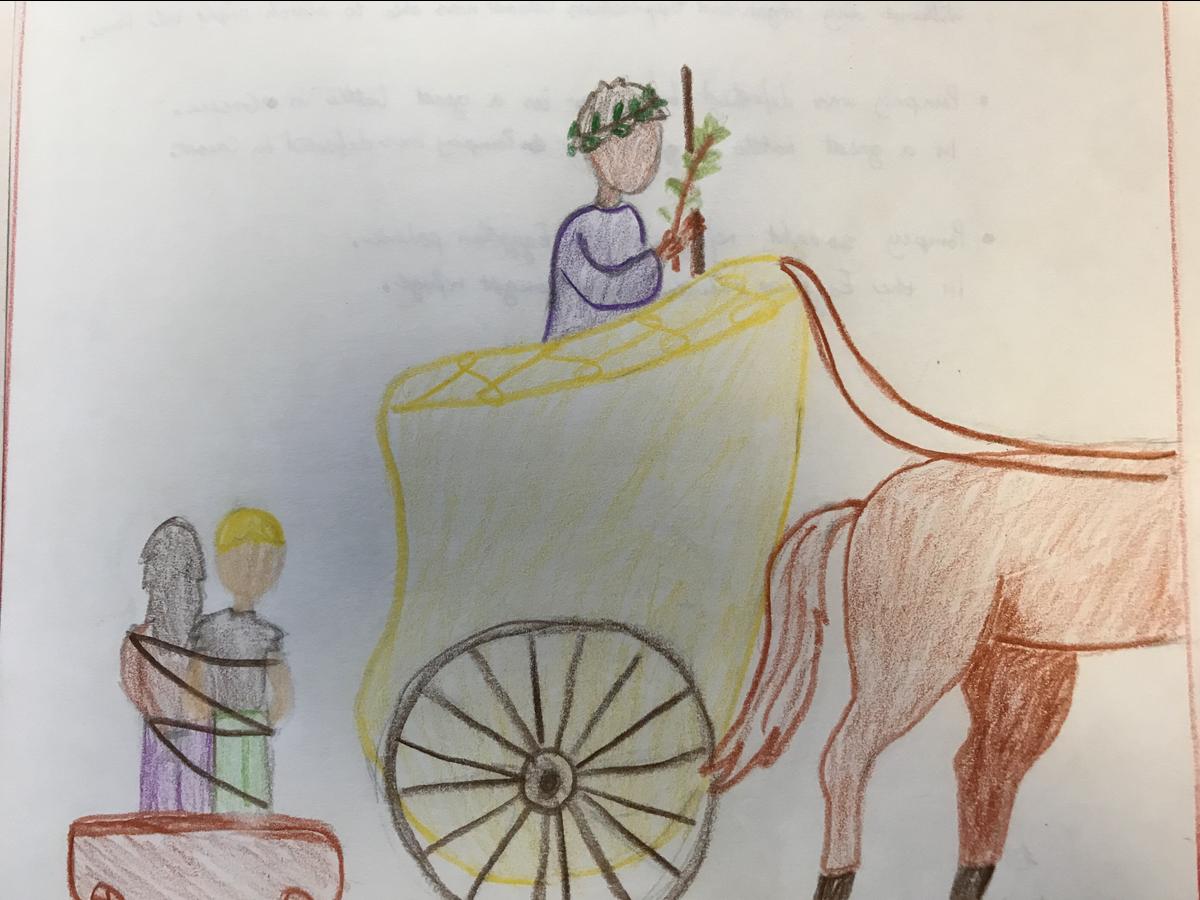
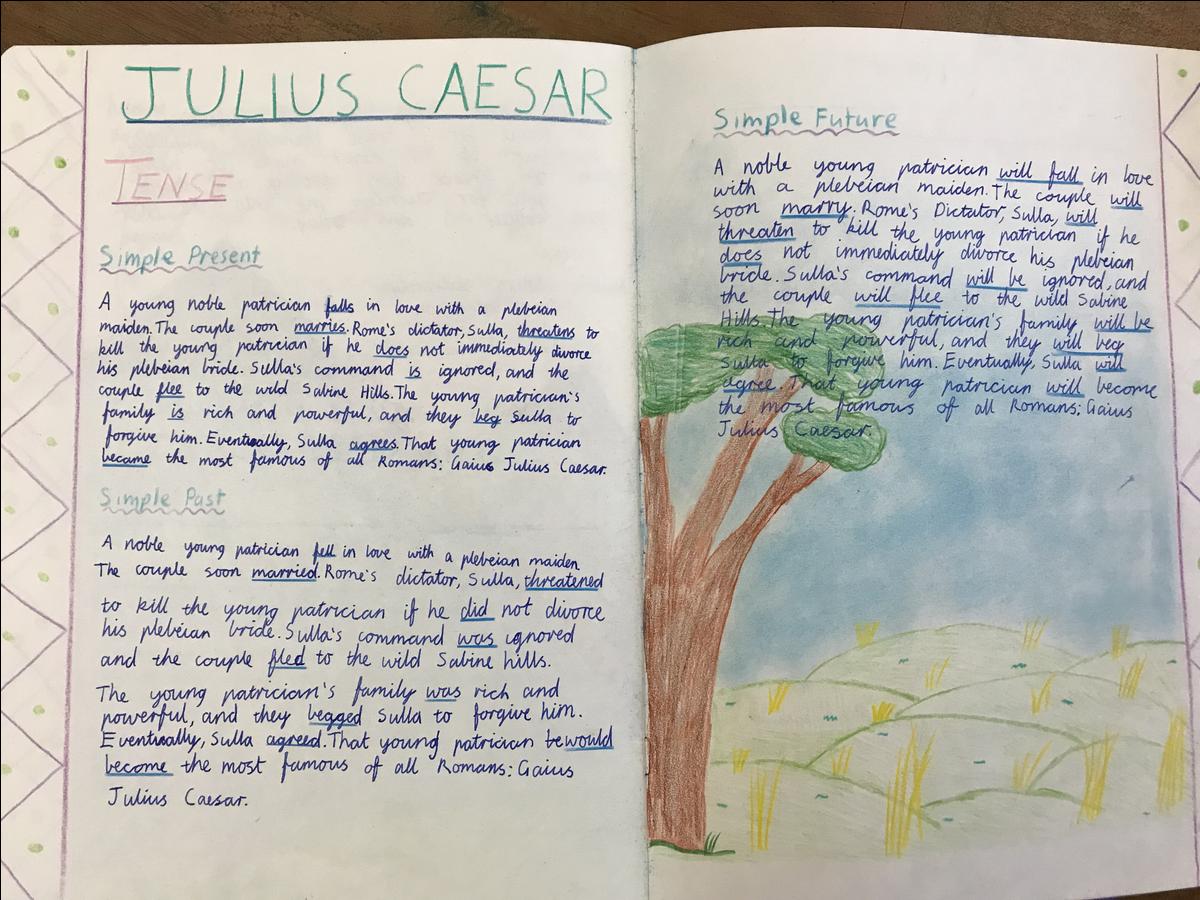
This week, we learned how Julius Caesar's political alliance with Crassus and Pompey came to an end. After Crassus' death, Pompey joined forces with the Senate and ordered Caesar to disband his army and return to Rome. We explored the difficult decision Caesar faced at the Rubicon River and why he chose to cross with his loyal soldiers, beginning a civil war. We then followed Caesar's pursuit of Pompey to Greece, Pompey's flight to Egypt, and how Caesar was deeply saddened when his former ally was murdered.
We also learned how Caesar became dictator for life and why many Romans feared he would make himself king. Finally, we examined the events leading to Caesar's assassination on the Ides of March, before concluding with the struggle for power that followed, ending with the defeat and deaths of Mark Antony and Cleopatra.
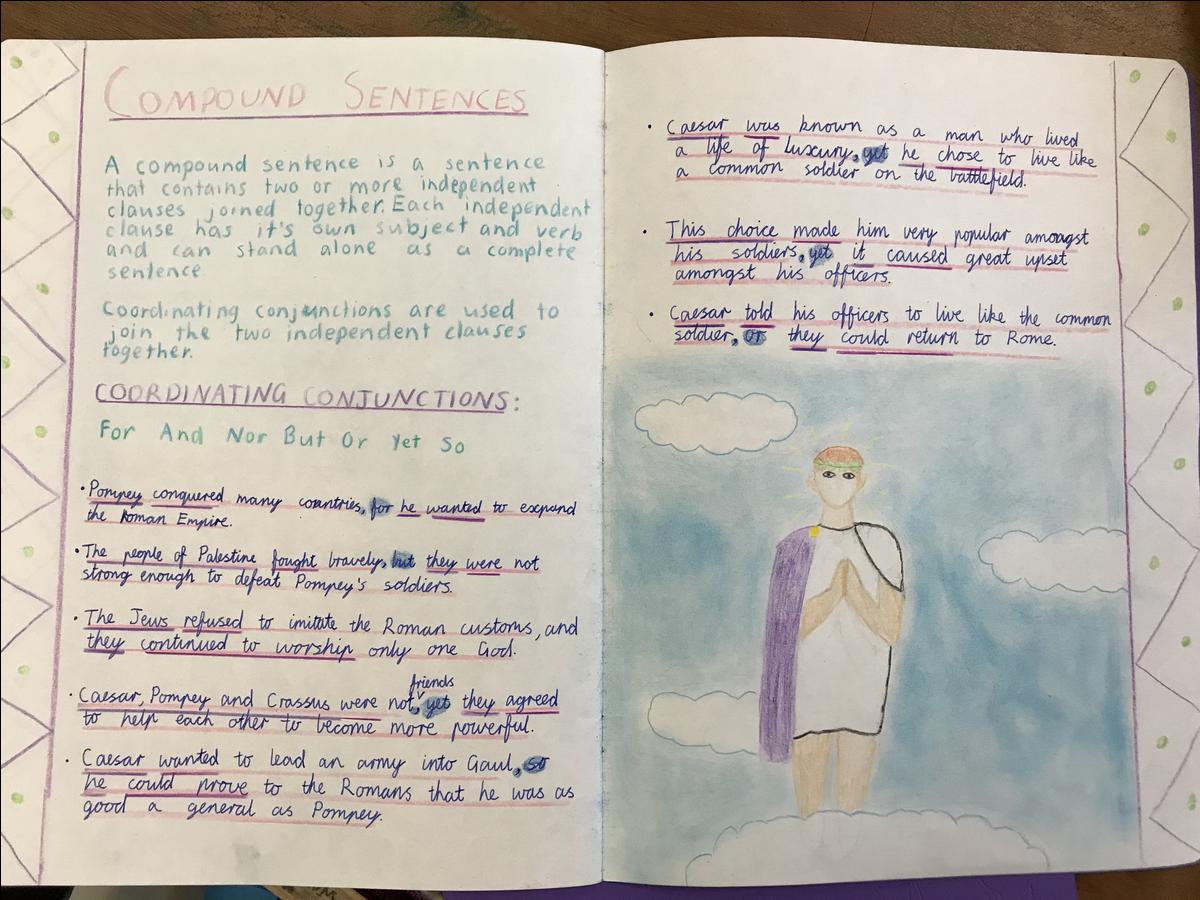
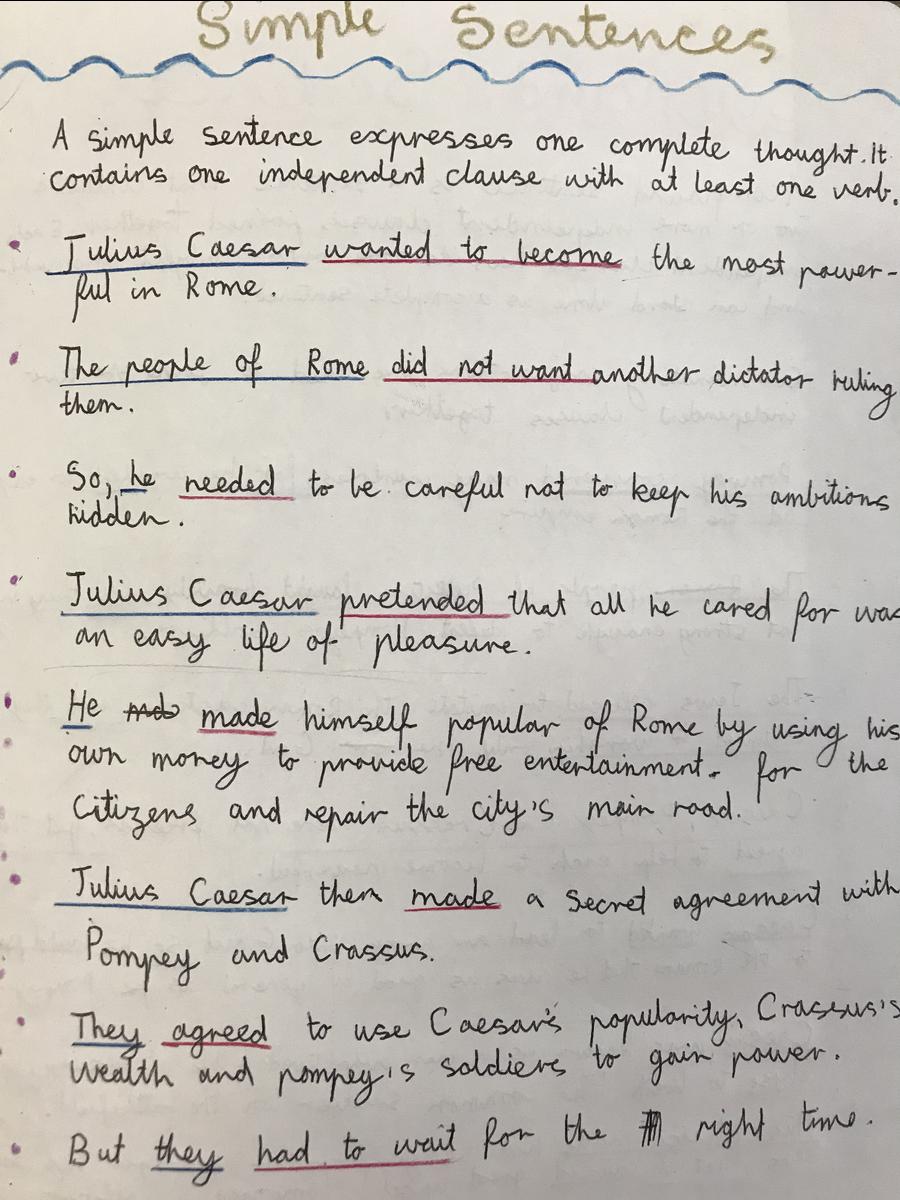
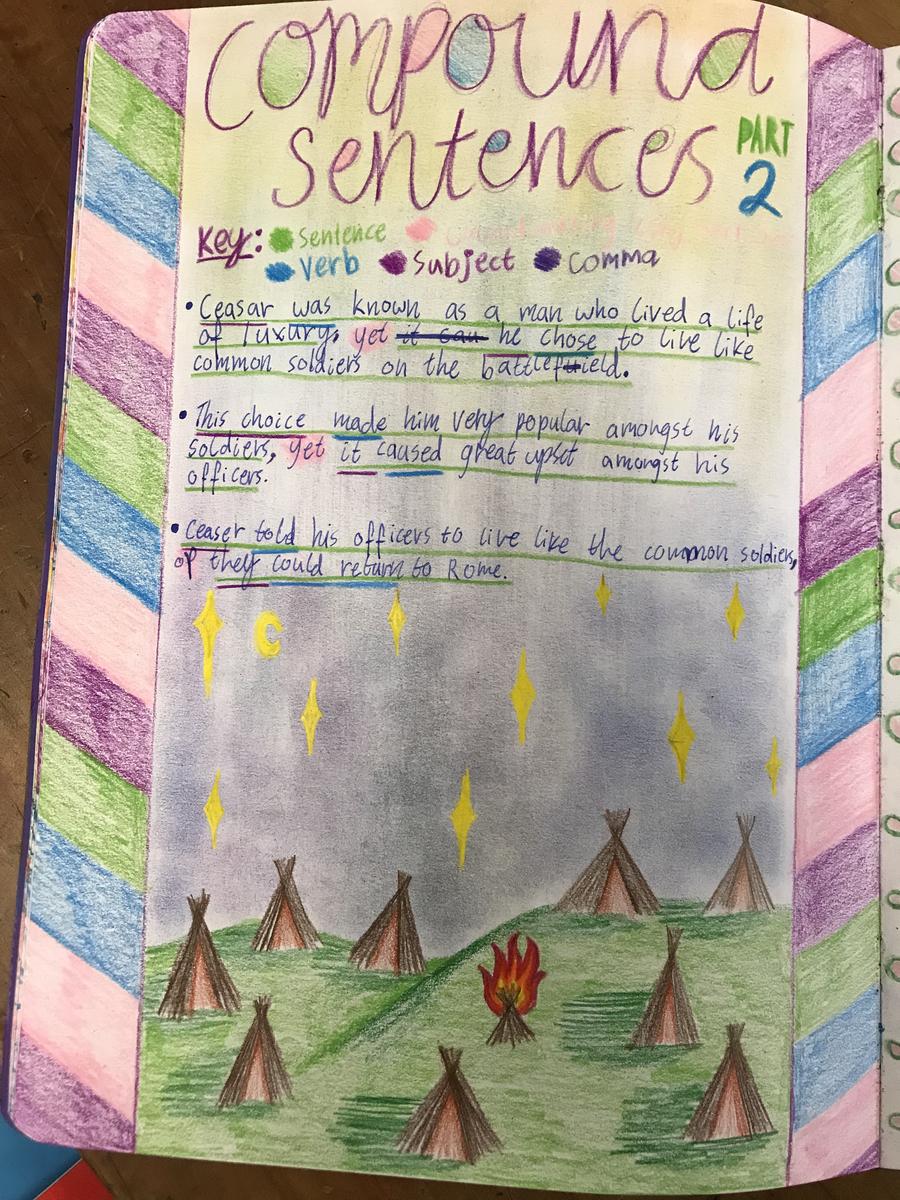
We continued our grammar focus this week in Main Lesson, building on our understanding of sentence structure by exploring complex sentences. Students learnt that a complex sentence contains an independent clause and one or more dependent clauses, and that these sentences can often be "flipped" by placing the dependent clause at the beginning or end of the sentence. They also learnt the punctuation rule that a comma is needed when the dependent clause comes first.
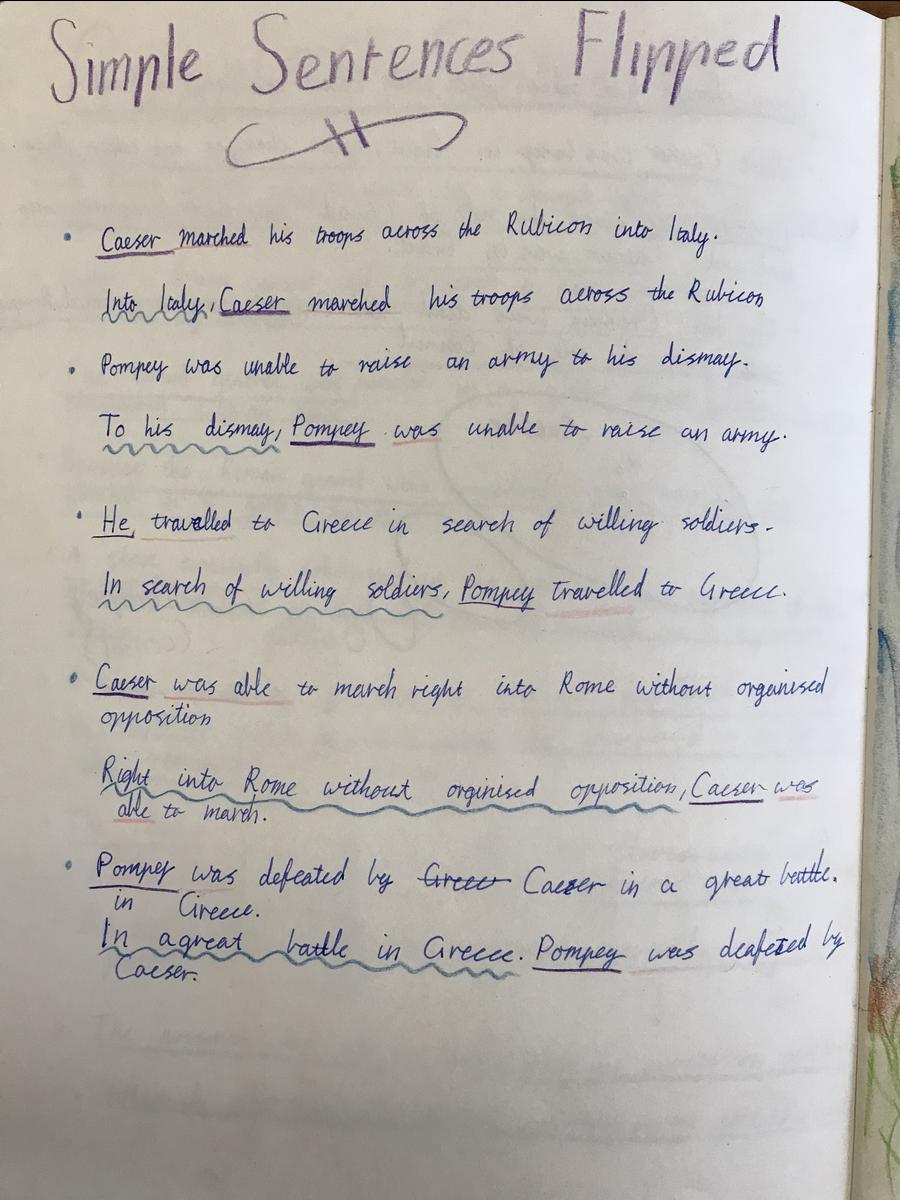
Students then explored how some simple sentences can be "flipped" by moving an introductory phrase to the beginning, which also requires a comma. Throughout the week, we discussed how using a variety of simple, compound, and complex sentences makes writing more engaging, improves flow, and helps emphasise important ideas.
Reading
This week, we began our Literature Circles, with students reading and discussing their own novel in small groups. It has been a real joy to see the enthusiasm with which the Grade 6 students have returned to this process while the Grade 5 students have embraced it for the first time. Each week, students take on a different discussion role, encouraging them to think deeply about the text from a range of perspectives. Through these discussions, students are developing their reading comprehension by summarising, making connections, analysing vocabulary, asking thoughtful questions, and supporting their ideas with evidence from the text.
Mathematics
This week, students learnt to convert improper fractions into mixed numerals, building on last week's work by representing their thinking with diagrams before applying efficient calculation strategies. They also represented fractions with related denominators on parallel number lines, strengthening their understanding of fraction size and equivalence.
Students also learnt to simplify fractions by finding the highest common factor of the numerator and denominator. Next, we explored how to convert fractions to a common denominator, allowing students to compare and order fractions more easily. This understanding was then applied to adding and subtracting fractions with different denominators. Throughout the week, students continued to develop both their conceptual understanding and their confidence when working with fractions.
Ngoongodjin,
Robin