First Aid














 Kalinda Primary School
Hay fever in children
https://www.rch.org.au/kidsinfo/fact_sheets/hay_fever/
Key points
- Hay fever is a common allergic reaction to a harmless substance known as an allergen.
- It affects the nose, eyes, throat, ears and sinuses.
- Pollen causes seasonal hay fever; it is most common in spring and summer.
- Allergens like dust mites, mould spores, animal fur or dander can trigger perennial hay fever any time of year.
- Avoiding triggers is the best way to prevent and reduce hay fever symptoms in children.
- Medicine may help manage your child’s symptoms.
What is hay fever?
Hay fever, or allergic rhinitis, is a common allergic reaction in the nose that can also affect the eyes, throat, ears, and sinuses. It is a reaction to substances like pollens or dust mites. Depending on the cause, hay fever symptoms can last from a few hours to days or weeks.
What causes hay fever?
Hay fever happens when an affected person comes in contact with an environmental trigger known as an ‘allergen’ – usually pollen. When their eyes or nose touch this trigger, their body thinks it is dangerous, and their immune system tries to fight it off, causing a reaction.
There are two main types of hay fever:
- Seasonal hay fever, also known as seasonal allergies, usually starts in spring or summer. It affects people allergic or sensitive to pollen from plants, grasses, and trees.
- Perennial hay fever can develop whenever an affected person contacts an allergen they are sensitive to, such as dust mites, mould spores, animal fur or dander (tiny skin flakes).
Many children with hay fever also have other allergic conditions like asthma, eczema, or food allergies. The genetic tendency to develop these diseases is called ‘atopy.’
Signs and symptoms of hay fever in children
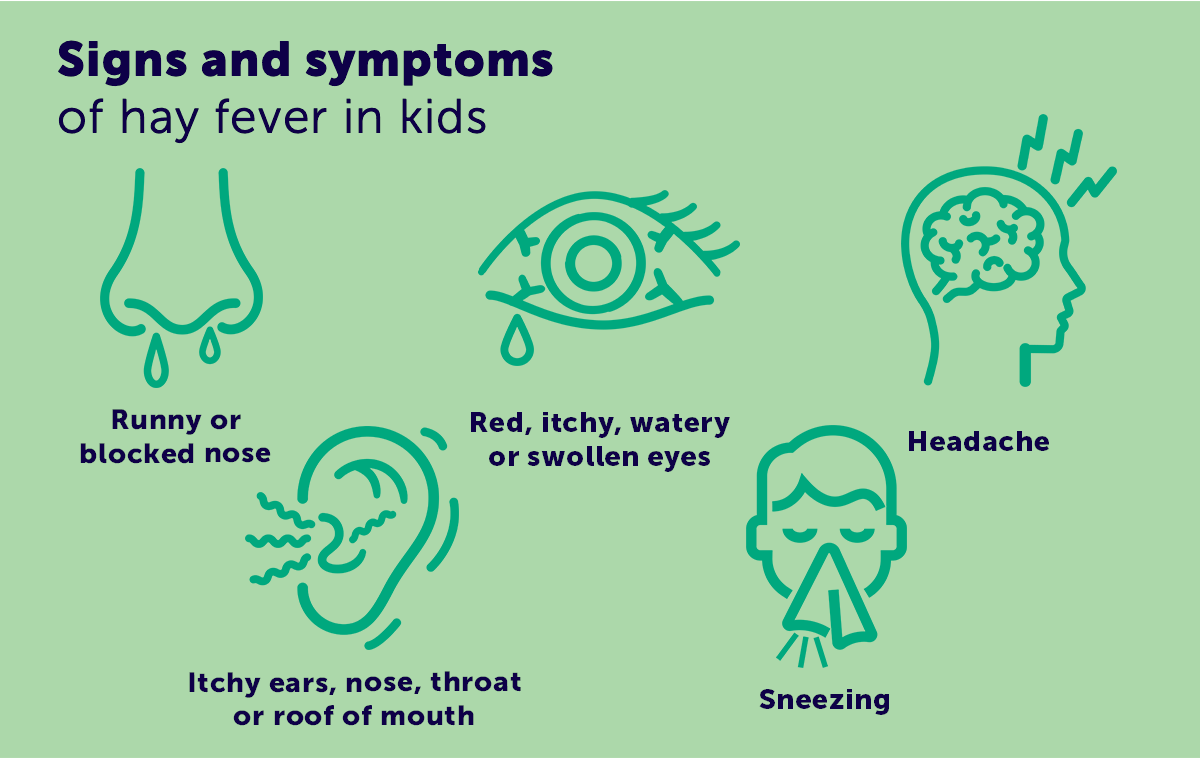
Signs and symptoms of hay fever in children include:
- runny or blocked nose (one or both nostrils)
- red, itchy, swollen or watery eyes
- itchy ears, nose, throat and roof of the mouth
- sneezing
In some cases, hay fever can also:
- cause headaches
- make it harder for your child to sleep
- worsen asthma symptoms
- impact your child’s ability to concentrate and learn
- lead to bad breath, a husky voice, or a sore throat
- cause eye infections due to rubbing itchy eyes.
Thunderstorm asthma
Thunderstorm asthma is a serious condition linked to hay fever. It is caused by high pollen levels and stormy weather. During a thunderstorm asthma attack, the airways swell or tighten, making it hard to breathe.
If your child has hay fever, it is important to prepare for thunderstorm asthma season.
- Check the pollen levels daily during the grass pollen season
- Watch your child closely on high-pollen days
- Call an ambulance (000) immediately if your child struggles to breathe or talk.
You can learn more about thunderstorm asthma on the fact sheet linked at the bottom of this page.
How to prevent hay fever in children
The best way to prevent your child from getting hay fever is to help them avoid the substance causing their reaction. The less contact they have with their triggers, the less likely they will have a hay fever reaction.
If your child has seasonal hay fever from pollen:
- check the pollen levels during spring and summer so you know what to expect
- try to keep them inside with doors and windows shut on high-pollen days
- dry clothes inside
- reduce their contact with triggers like freshly mowed grass
- avoid letting them play outdoors during and after thunderstorms
- bathe or shower them after outdoor play – particularly if they feel itchy.
If your child has perennial hay fever:
- talk with a doctor about testing for possible triggers, such as pollens and dust mites
- reduce their contact with triggers – for example, if they react to dust mites, it may help to vacuum carpets and sofas weekly and keep them out of the room for 20 minutes after vacuuming
- prompt them to wash their hands regularly.
Often, you will not know what is causing your child’s hay fever. If the cause is not clear, talk to a doctor for advice. They may suggest allergy tests, medicine or a hay fever treatment plan based on the symptoms.
Treatment for hay fever
There is no cure for hay fever, but there are proven ways to manage the condition and reduce its effects.
If your child has hay fever that impacts their quality of life, you may wish to speak with a doctor or pharmacist. They can give you advice based on your child’s symptoms.
There are three main types of hay fever medicine recommended for children:
- Non-drowsy antihistamines help with itching, runny nose and sneezing.
- Steroid nasal spray reduces swelling and sensitivity in the nose.
- Combination antihistamine and steroid nasal spray helps with both nasal symptoms of hay fever and swelling in the nose.
The best treatment for your child will depend on their age and symptoms. Speak with a pharmacist or doctor before starting treatment.
For more information
- Speak with your child’s doctor
- Kids Health Info fact sheet: Thunderstorm asthma
- The Royal Children’s Hospital: House Dust Mites and Allergic Diseases
- Kids Health Info fact sheet: Allergic and anaphylactic reactions
- Kids Health Info fact sheet: Asthma
- Kids Health Info fact sheet: Asthma – videos (for instructions on how best to use a nasal spray)
- Australasian Society of Clinical Immunology and Allergy: Is it allergic rhinitis (hay fever)?
- AusPollen: pollen forecast website