Level 1 & 2
Reminders and Updates
Gymnastics - We are full swing with our gymnastics sessions and the students are loving the experience. A reminder to ensure your child is in appropriate clothing i.e no skirts or stockings.
Melbourne Zoo - What an exciting excursion our students had today :). Thank you for all your support in preparing your child and ensuring a smooth process for all.
CURRICULUM
Literacy
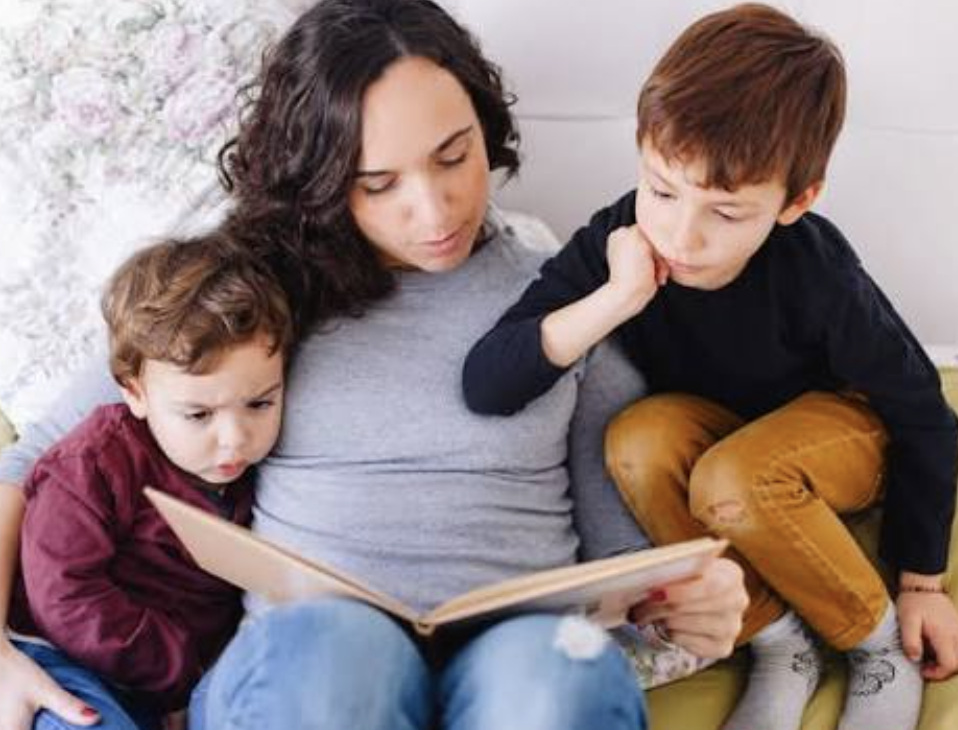
Thank you for your continued support with home reading. Reading together each night, even for just 10–15 minutes, is one of the most valuable ways you can support your child's learning. Regular reading helps build confidence, fluency, vocabulary and comprehension, while also fostering a lifelong love of books. We encourage students to continue recording their reading in their log books each evening, as this helps us celebrate their efforts and monitor their progress. Thank you for partnering with us to make reading a positive and enjoyable part of your child's daily routine.
UFLI: Grade One Students
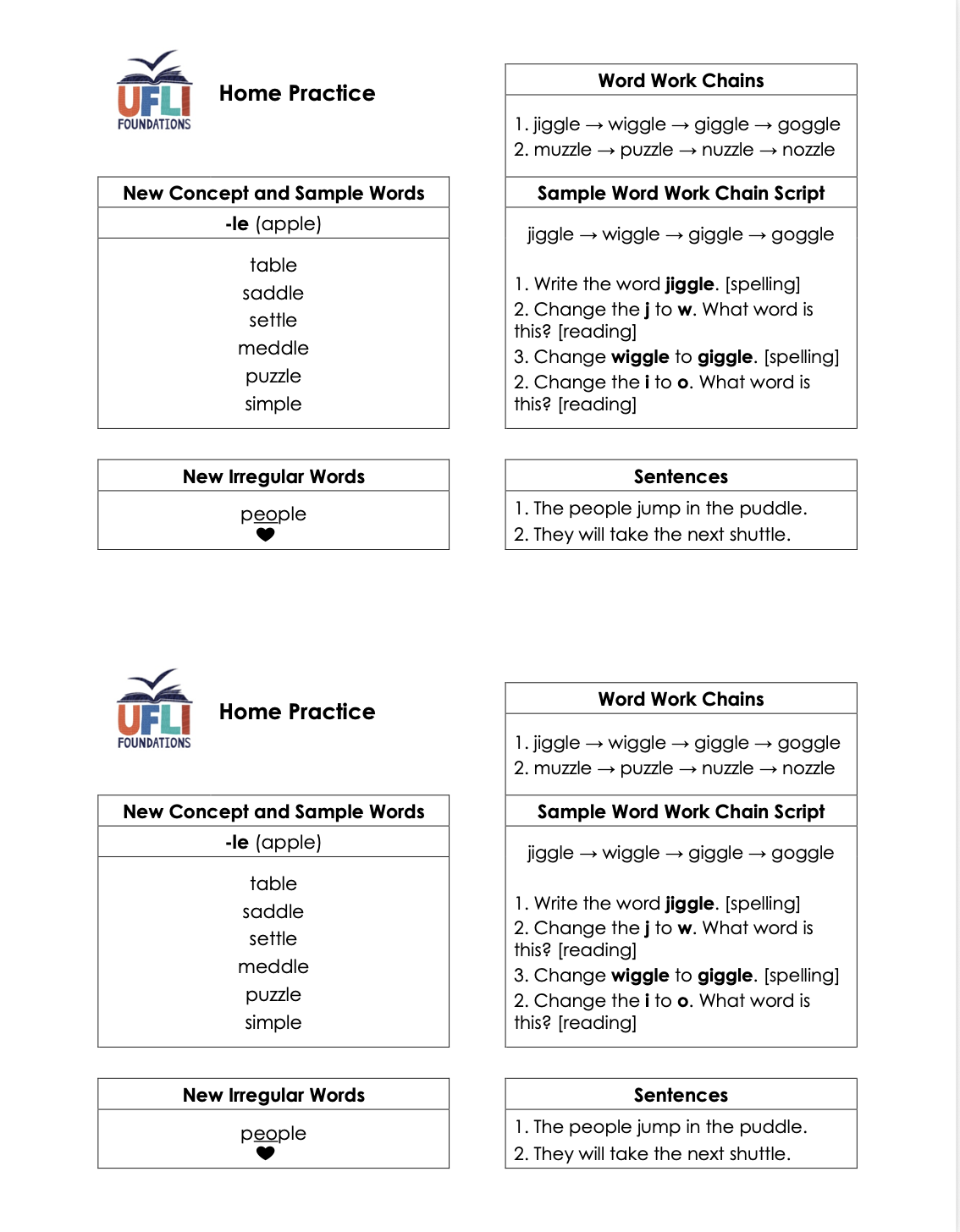
This week Grade Ones will learn that y replaces the long e sound at the end of a word e.g in the word party or happy. They will also focus on 'le' as an ending sound, known as the 'final stable e', this includes words such as table, staple where a consonant follows 'le' to end the word.
UFLI: Grade Two Students
Grade Twos will begin their week exploring silent letters k, w , and b when combined with the consonants 'kn, wr, mb'. This can be found in words like comb, knot, and wrist. Later in the week they will focus on plurals such as 's,es' as in stamps and lunches.
What can you do at home?
- Optional UFLI Home Practice pages found in their home learning book.
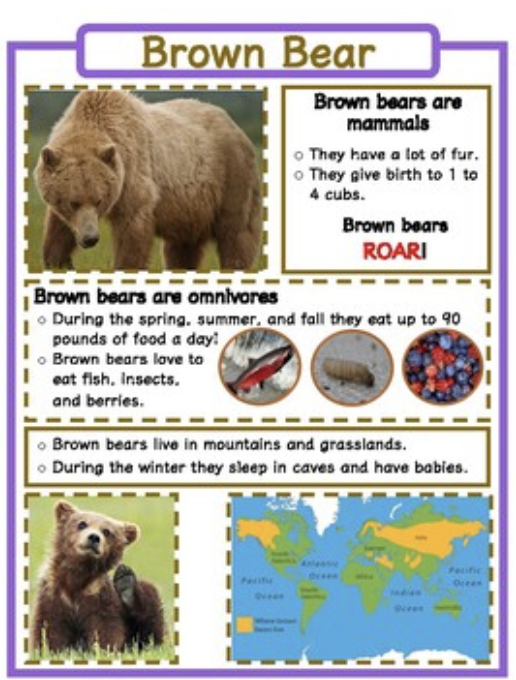
Writing: This week we will continue our focus of non-fiction texts. We will start with a zoo reflection to spark our curiosity and connect in with our CBL challenge. Students will begin exploring what is important information to find out about when learning about an animal. With a main focus on 'diet, habitat, features, behaviour, and other interesting facts.'
What can you do at home?
Exploring non-fiction texts with a main focus on animals and important information we learn from reading these texts.
Maths
Grade One Students
Grade One students have begun exploring patterns in Mathematics. Through hands-on investigations, games and problem-solving activities, students are learning to recognise, describe, extend and create repeating and growing patterns using objects, numbers, colours and shapes. They are developing their mathematical thinking by explaining the rules they notice, making predictions about what comes next and identifying patterns they see in the world around them. Building strong patterning skills helps students develop logical thinking and lays an important foundation for future learning in number, algebra and problem-solving.
What can you do at home?
You can support your child's understanding of patterns by looking for them in everyday life. Encourage your child to spot and create patterns using toys, LEGO, coloured blocks, beads or natural materials such as leaves and sticks. You might also look for patterns in clothing, wrapping paper, music, or around the home and ask questions like, "What comes next?", "How do you know?" or "Can you make your own pattern?" These simple conversations help strengthen your child's observation skills, mathematical thinking and confidence.
Grade Two Students
Students will continue their learning of multiplication through working out worded problems by demonstrating their understanding of inverse operations, repeated addition, arrays and written equations.
What can you do at home?
- Continue using Mathletics.
- Practise skip counting by 2s, 5s and 10s and using their double facts to solve unknown skip counting patterns. E.g 4 rows of 6 is 24 and I know that double 6 is 12 and double 12 is 24.
WELLBEING
This week, students will explore practical ways to support their wellbeing by learning strategies to help them feel calm, safe and ready to learn. Through engaging discussions, stories and hands-on activities, students are building a "toolbox" of calming strategies to use when they experience big emotions or face everyday challenges. Our focus is on helping children recognise their feelings, develop resilience and confidently choose strategies that support their learning, friendships and overall wellbeing.
What can you do at home?
Continue the Conversation at Home...
Here are some questions you might like to ask your child to reinforce our wellbeing learning:
- What was something that made you feel happy today?
- Did anything feel tricky today? What helped you get through it?
- What helps your brain and body feel calm when you're upset or worried?
- Can you show me one of the calming strategies you've been learning at school?
- Who is someone you can talk to when you need help?
- What is one thing you're proud of yourself for today?
- When you notice a friend having a hard day, how could you help them?
- What is one strategy you could use next time you feel frustrated or overwhelmed?
What are three things that made you smile today?
Taking just a few minutes each day to talk about emotions, challenges and successes helps children build confidence, resilience and a strong understanding of the strategies they can use to support their wellbeing both at school and at home.
CBL
Our Big Idea for Term 3 is Power. This week, students will begin exploring how animals use their unique adaptations to survive and thrive in different habitats. Through hands-on investigations, rich discussions and engaging texts, students will discover how features such as camouflage, sharp claws, thick fur and specialised beaks help animals find food, stay safe and adapt to their environment. In preparation to our challenge, students will think critically about the relationship between an animal and its habitat, considering how these adaptations give animals the "power" to meet their needs and overcome challenges in the natural world. We look forward to seeing students make connections between living things, their environments and the important role adaptations play in survival.
Guiding Questions
What is power?
What responsibilities come with having power?
How does our power impact living things?
How do living things become endangered?
Essential Question
How does our power influence our choices?
Challenge
Prep – 2s Pledge to Do!
Educate the community about how they can use their power to support endangered animals.