Kilvington's Writer in Residence Program

We can often take for granted what we know. We forget that our ability to absorb novels or news articles, identify bias in writing, or effectively communicate an argument are all skills that we began learning in the earliest years of our education, not something we intrinsically know how to do. While we might not have known it at the time, there was lifelong value in learning how to deduce why the author chose to make the curtains blue.
At Kilvington we believe that teaching our students to write clearly and succinctly is a vital skill that will empower them in their learning and in their lives. This core belief has served our students incredibly well. Last month we celebrated another outstanding set of NAPLAN results, with Kilvington students outperforming both the national and Victorian medians across all areas.
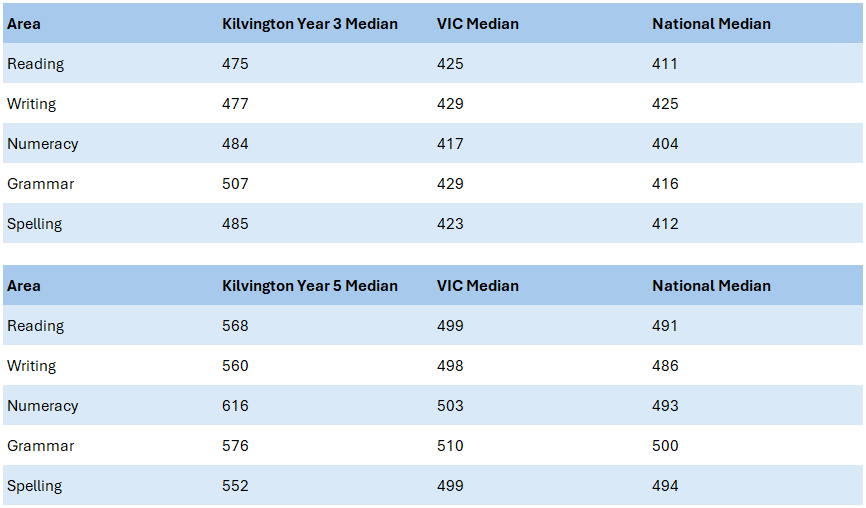
Kilvington's 2026 NAPLAN results
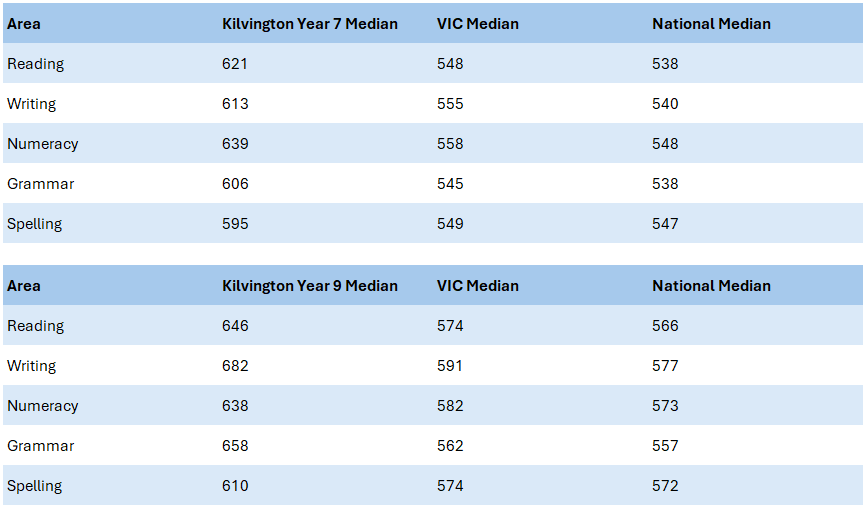
Kilvington's 2026 NAPLAN results
At Kilvington we give students a huge breadth of opportunities to develop their writing skills and, importantly, enjoy the process along the way. Our Junior and Senior School students engage in writing workshops run by experienced authors, attend writing festivals and events, visit exhibitions and more.
A new way that we have brought this learning to life in 2026 has been through our Writer in Residence program, which gives students the opportunity to learn alongside a published writer. This newly established role, which has been brilliantly filled by Mr Ernest Price, is designed to support students with their writing across the curriculum.
“It’s a unique position in schools. It’s not often that you have somebody who is both a teacher and a writer as part of the staff,” Mr Price said.
While Writers in Residence do exist in schools, the role is often structured as a visiting position for a day a week rather than having a writer embedded within the school community.
“There’s a real faith that the School has put into the position by having somebody who is also a teacher and a writer. It means you’re not just coming in to run a workshop and then leaving.”
And while the title might suggest that Mr Price spends his days tucked away in the English Department, the role reaches considerably further than that. English and writing are skills that students need across every area of the curriculum, which is an important part of the thinking behind the Writer in Residence role. Rather than working solely within English, the role also works alongside other subject areas to help students get the most out of their learning.
“English helps students communicate in any subject. It’s a skill that will take them far in life because they can effectively express themselves. If they can communicate what they’ve learned better, they’re going to be able to demonstrate their knowledge better,” says Mr Price.
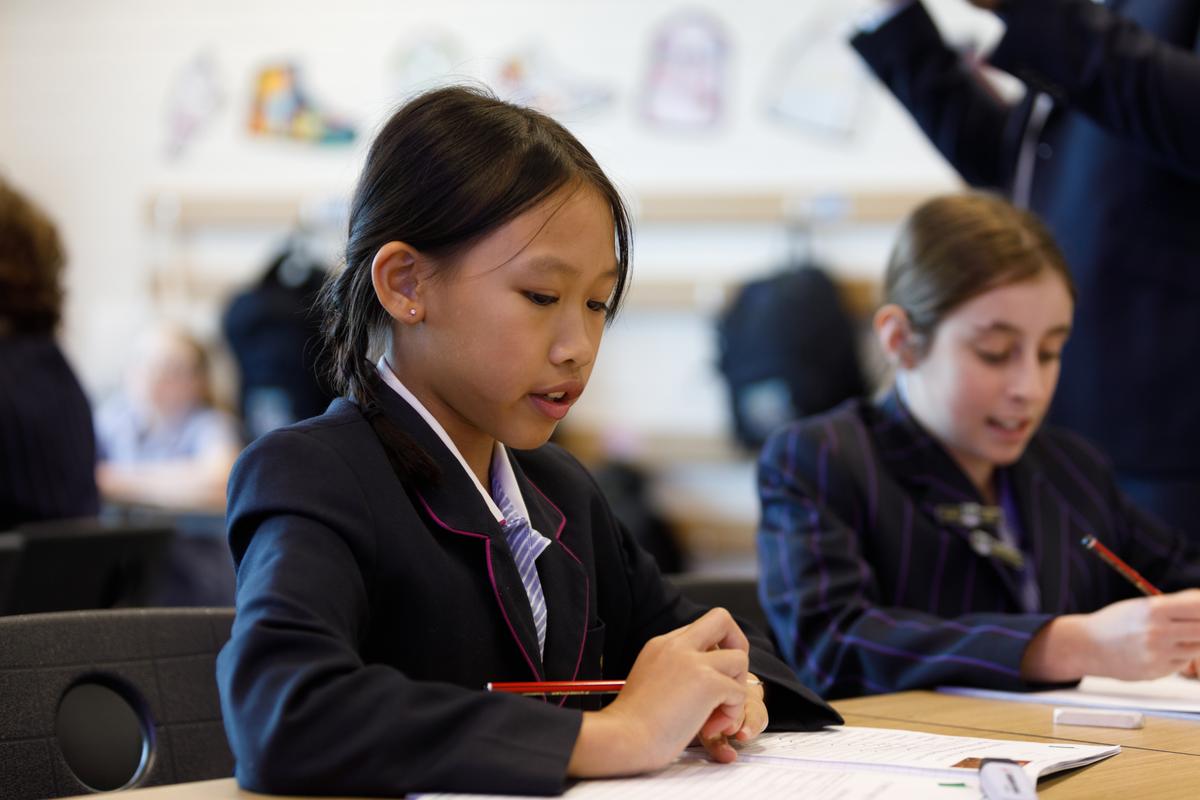
At Kilvington we have a highly individualised approach to education with small class sizes and a focus on meeting the needs of each student. That gives teachers the opportunity to really know their students and help them to grow. For Mr Price, this belief in the importance of good teaching is something that has been shaped by his own experiences as a student.
“My English teacher in Year 12 had very high standards. She was very supportive and kind, but she also had high expectations. She really influenced my own perspective on what people’s potential can be.”
“She taught me that you don’t have to do your best every single day, but you should keep improving. I think that’s probably the most important part of writing: editing. You take feedback and keep going and see what you can produce.”
When it comes to creative writing, the research is conclusive: it is in incredible mental workout, boosting problem solving skills and memory and even improving mental health. In a world of AI generation and short form content, creative writing is a skill we need to nurture now more than ever.
For Mr Price, part of the value of creative writing is giving students a place to find their own voice and perspective and to develop their unique talents. While AI can be a useful tool, he believes we need to be careful not to hand over the very skills we are trying to develop.
“People say that AI is fine to use for brainstorming but brainstorming is a valuable skill. We need to grow the skill of thinking creatively and coming up with ideas too.”
“AI can lift the floor but also lower the ceiling,” he says. “You can get something that is good enough, but it can flatten your tone of voice. I’d rather something be imperfect but genuine.”
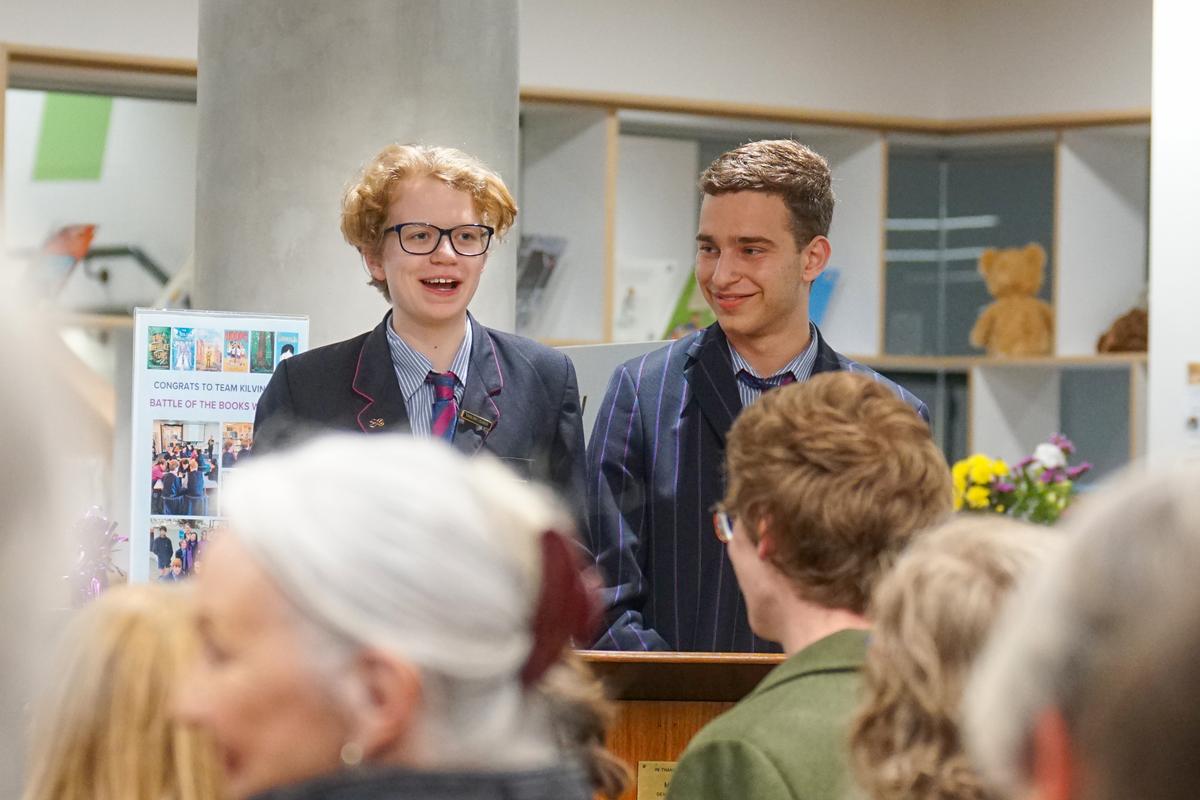
English Captains, Emma Gracey and Liam Eliav, at our recent Kilvington Authors event.
English Captains, Emma Gracey and Liam Eliav, at our recent Kilvington Authors event.
One of the most enjoyable parts of Mr Price's role has been seeing the calibre of writing and learning coming from Kilvington students. Our English Captains, Emma Gracey and Liam Eliav, have been leading the Writers Club where students have experimented with different genres and forms of writing to really stretch their skills. The club has also given students the opportunity to hear from working writers, with an author and poet joining the group during LitFest to share their own experiences and perspectives on writing.
For Mr Price, the students’ own work has been just as impressive:
“Emma has written a novel and she has a very funny voice. Liam writes poetry and prose and it’s incredibly mature and beyond his years. They have these really unique takes on the world. The calibre of the students at Kilvington is incredible.”
Writing is one of those skills that stays with us long after we have forgotten the finer details of what we learned at school. By giving our students the opportunity to work alongside a published writer and to keep pushing their English skills further, we are helping our students build a skill that will serve them well in almost every part of their lives. As Mr Price’s experience with our students has shown, they have plenty to say, so let’s give them the skills to say it.