
Principal's Message
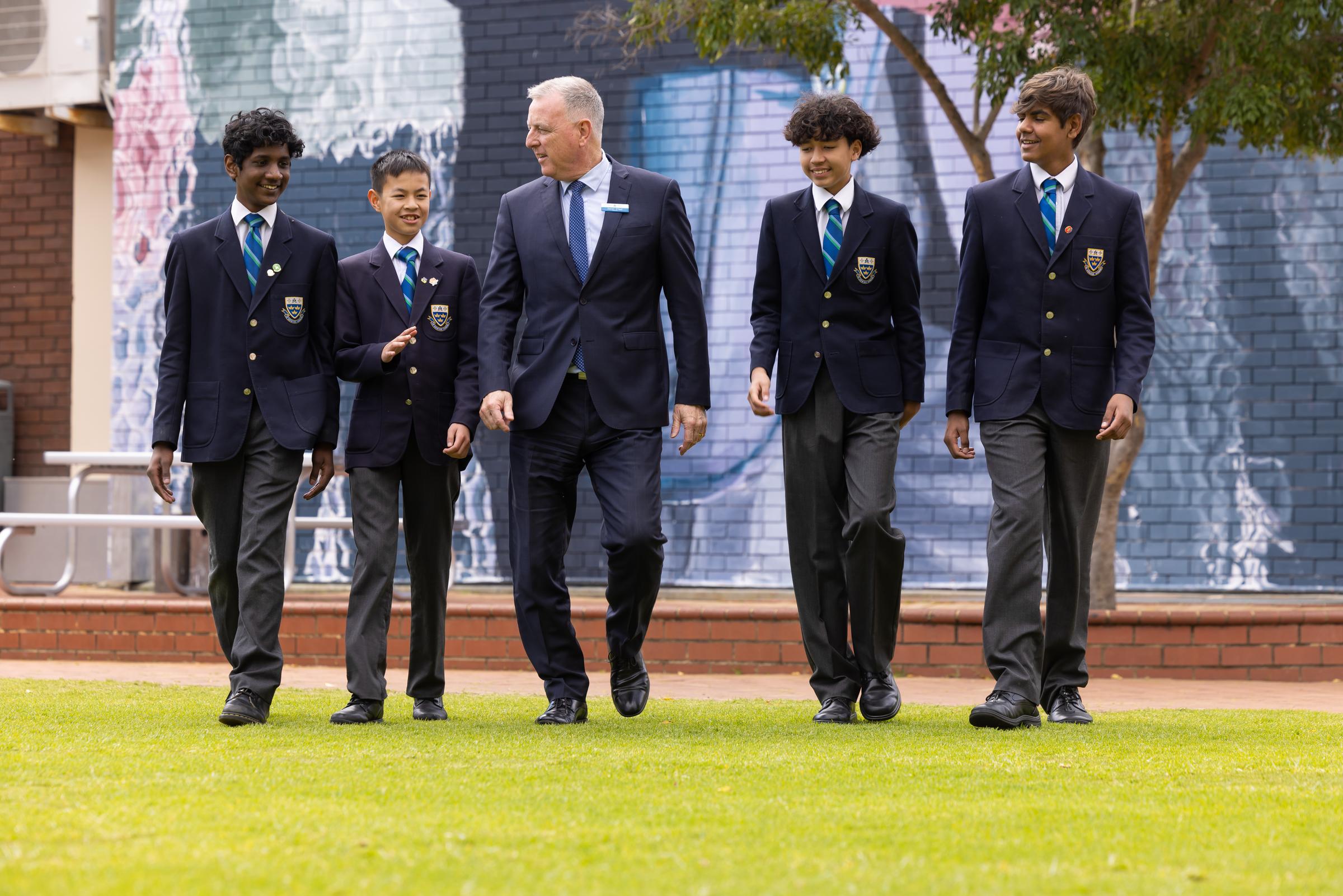
Developing Resilience in Our Young Men

At about this time every year, the release of NAPLAN data, OLNA results and the schedule for upcoming WACE examinations is often accompanied by the ongoing debate about the merit of such standardised testing. Of note is the focus placed on the ‘possible effect that such measures may have on the self-esteem and wellbeing of students. Various Educationists and Child Development Specialists present all too often conflicting ‘expert opinions’ that contrast the perceived benefits of always giving praise to students, compared to the life lessons that can be gained from occasionally failing or experiencing disappointment.
Within our Trinity College context, establishing safe conditions and learning environments for our boys to experience both praise and occasional disappointment, presents opportunities to present reality and build resilience as an important aspect of their formation as good young men.
A focus on the positive rather than the negative is an admirable one as it promotes a positive mindset. However, it is equally important to be realistic. At school, and in life, difficult situations will present themselves and at times, negative outcomes will result. Encountering disappointment and failure is likely to happen at some point in every person’s life journey. It is the ability of our boys to bounce back from such situations – to demonstrate resilience, that will determine their formation as young men and greatly add to their character as people.
While it is vitally important that children consistently receive praise and affirmations for their efforts, such recognition must be genuine and appropriate. The College Pinder Boor Certificate of Excellence which awards excellence in effort and application (as reflected in Semester APA data) is an example of this. This has become a wonderful and much celebrated occasion for those students who consistently commit themselves to their studies and the learning process. However, it is equally important that we do not establish systems that artificially praise; or programs in which competition is totally removed; or always direct situations in which hardship or failure never occurs. It is impossible to always get what we want, or what we apply for, or to win every time. That is not how life works!
Affirming every child’s self-worth is certainly an important role for parents and schools. However, we must equally encourage situations where young people may have to work through some struggles and develop a real and genuine sense of resilience. Experiencing both failure and success helps develop such resilience. Making mistakes, and even occasionally failing, are important mechanisms for our overall development. History is marked with many examples of great discoveries and important initiatives that emerged after many failed efforts. Developing determination, showing perseverance and appreciating the importance of remaining committed to the task are all important aspects of building resilience.
Resilience in children can be enhanced by the approach adopted by the significant adults in their lives. I refer to their parents, families, teachers and coaches. Parenting has always required an exceptionally strong set of skills such as caring, encouraging and negotiating. Similarly, parenting is also about leading, teaching and modelling behaviours and attitudes. When moments of hardship or failure do occur, and experience would suggest that they probably will, we need to view such situations as ‘teachable moments’ – as real opportunities for adults to help children grow and learn from challenges. Recognising and grasping these teachable moments is how parents, indeed all significant adults, can help children become resilient and better deal with setbacks they will encounter now and no doubt into the future.
When children are experiencing hardship, frustration and difficulty, our natural instinct as parents (and as teachers) is to step in to protect them. However, when we focus solely on a quick fix, we may miss valuable opportunities to help children learn and grow. The big learning opportunities are often found within situations such as missing out on team selection, or failing a topic test, or receiving a consequence for consistently being late. While we never wish these things upon any child, such occasions do afford us with a chance to explorelessons about the value of striving for your best, turning difficult situations around and appreciating that hard work and commitment ultimately bring rewards.
At Trinity College, an important aspect of our vision is to form good young men for others. Establishing resilience is an ongoing task and a vitally important aspect of such formation. The respective Formation Programs, guest speakers, focused character development initiatives and the ongoing work around The Resilience Project (TRP) and Wellio Program, has certainly added to this pastoral focus.
While we can enjoy and celebrate moments of success, it is equally important to use those occasional moments of hardship as an opportunity to learn and grow. We hope, and indeed we pray, that developing resilience is an important part of every boy’s journey into manhood.
Live Jesus in our Hearts.
Mr Darren O’Neill
Principal