Religious Education
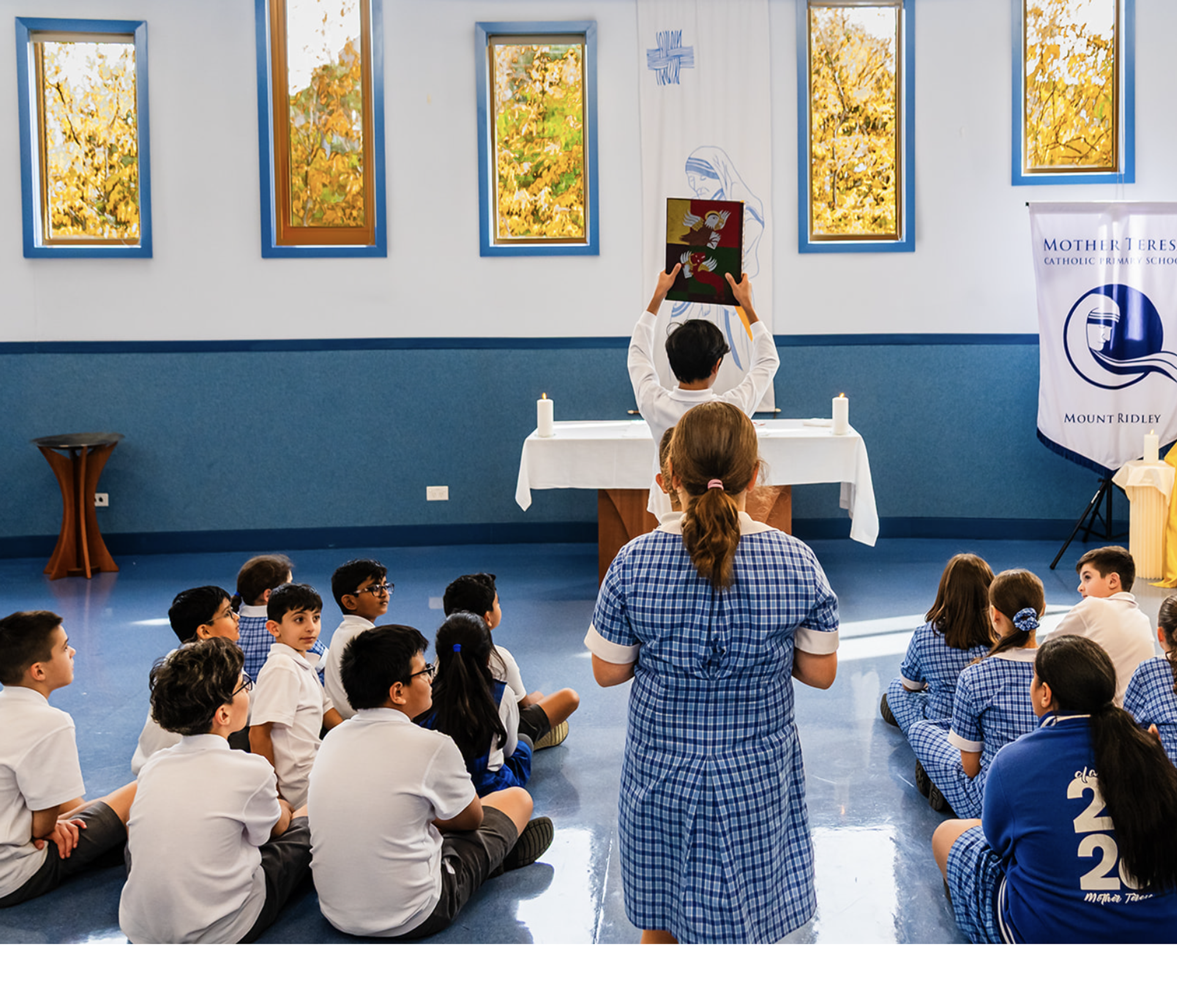
In Religious Education, Term 4 will commence by introducing students to the Bible as our Sacred Scripture, the inspired and living Word of God. Students will discover how the Bible developed from ancient oral traditions into a structured, two-testament library. Students investigate foundational covenant relationships in the Old Testament through major figures like Noah, Abraham, Moses, and King David. Moving to the New Testament, they explore the Incarnation and discipleship through The Parable of the Sower and Jesus' early ministry. Through multi-sensory storytelling, timeline mapping, and liturgical rituals, students learn to navigate different scriptural genres—Gospels, Acts, Letters, and Revelation—while cultivating a deep, lifelong reverence for God’s sacred word.
Students will then commence exploring prayer as a living relationship with the Triune God, guided by the Holy Spirit to transform faith into action. Students will discover diverse ways to communicate with God, dive into Jesus’ own prayer life—including traditional prayers and practices like Christian Meditation—and reflect on how the Holy Spirit empowers the Church to live justly. Through scripture, 3D storytelling, and wondering, students learn that prayer nurtures the courage needed to follow Jesus in their daily lives.
Finally, towards the end of this term, students will explore the liturgical seasons of Advent and Christmas. They will discover how Advent marks the beginning of the Church’s liturgical year and serves as a journey of hope and preparation. Students will examine Old Testament prophecies from Isaiah, explore Mary's courageous response to God's call, trace the journeys of Joseph, Mary, and the Wise Men, and reflect on the joyful news proclaimed to the shepherds. Through prayer, Scripture, and traditional symbols—such as the Advent Wreath and Nativity—students will learn how the Catholic community gives witness to and celebrates the gift of Jesus today.