
First Aid
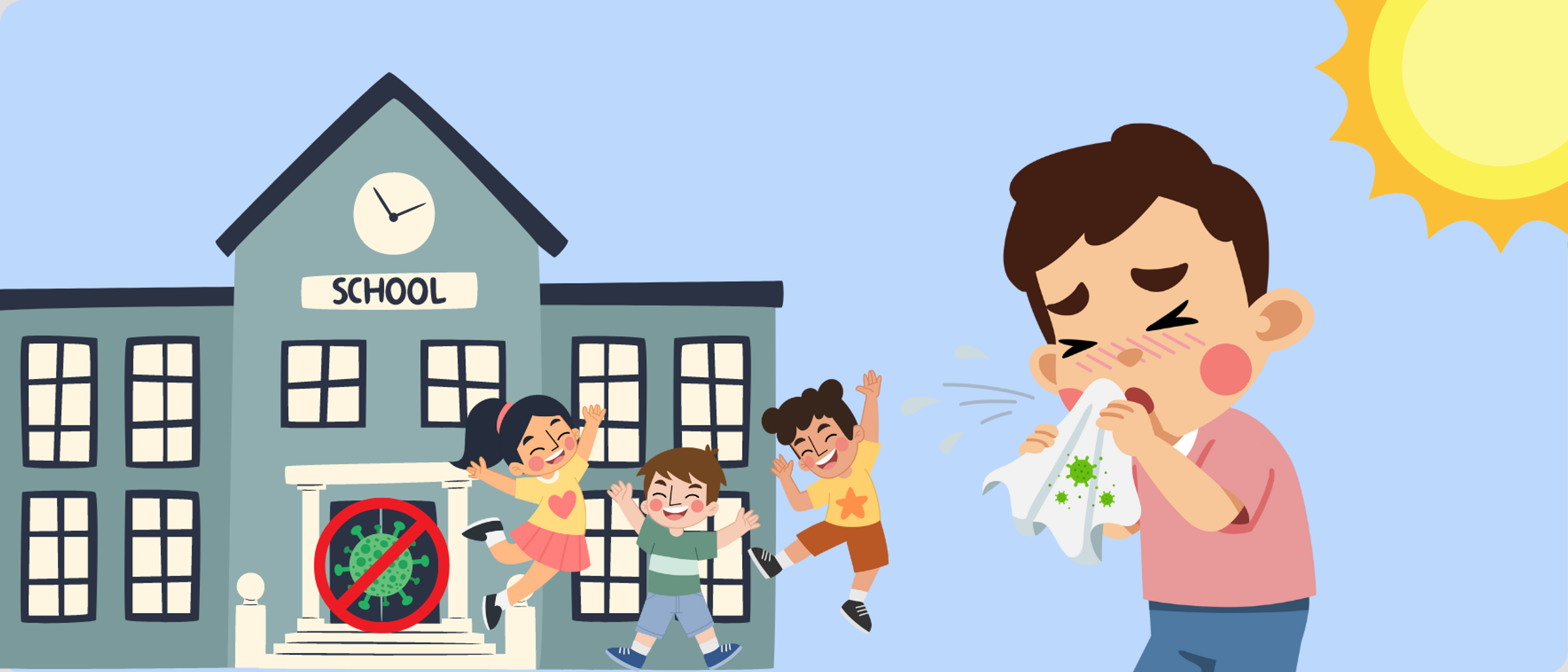
Should I keep my child home from school?
Viral illnesses are very common in children and it's easy for germs to spread from one person to another when children touch the same surfaces. This can happen at home, in school or at the playground. Germs can stay on surfaces, toys and play equipment.
It can be hard to know whether to keep your child at home when they are not feeling well. There are some signs to look out for. Please keep your child home if they have:
- fever (a temperature above 38ºC)
- diarrhoea or vomiting
- sore eyes with pus or mucus
You should also consider keeping your child at home if they have:
- sore throat
- cough
- runny nose
- a rash — this may be due to a viral infection
It is very important to keep children home to rest and recover when they are sick. This helps to lower the chance of spreading disease to other children. It also protects staff members and their families too.
Small children are not good at covering their mouths when they cough or sneeze. This can spread germs.
When children get older, they can learn to cover their mouth when they sneeze. You can also teach your child not to share food or utensils and how to wash their hands well.
When to seek urgent care
Seek medical care immediately from your doctor or nearest hospital if your child:
- is very pale or is difficult to wake up
- is having trouble breathing
- has a fever with back or neck pain
- has a rash with red or purple ‘pin prick' spots or blotches that don't turn white when you press on them — this may be a meningitis rash
If your child's symptoms don't get better after 2 days or if you are concerned about their health at any time, it's always best to take them to see a doctor.
Looking after a sick child - symptoms, care, illnesses | healthdirect