Junior School Literacy | Students To Turn The Page
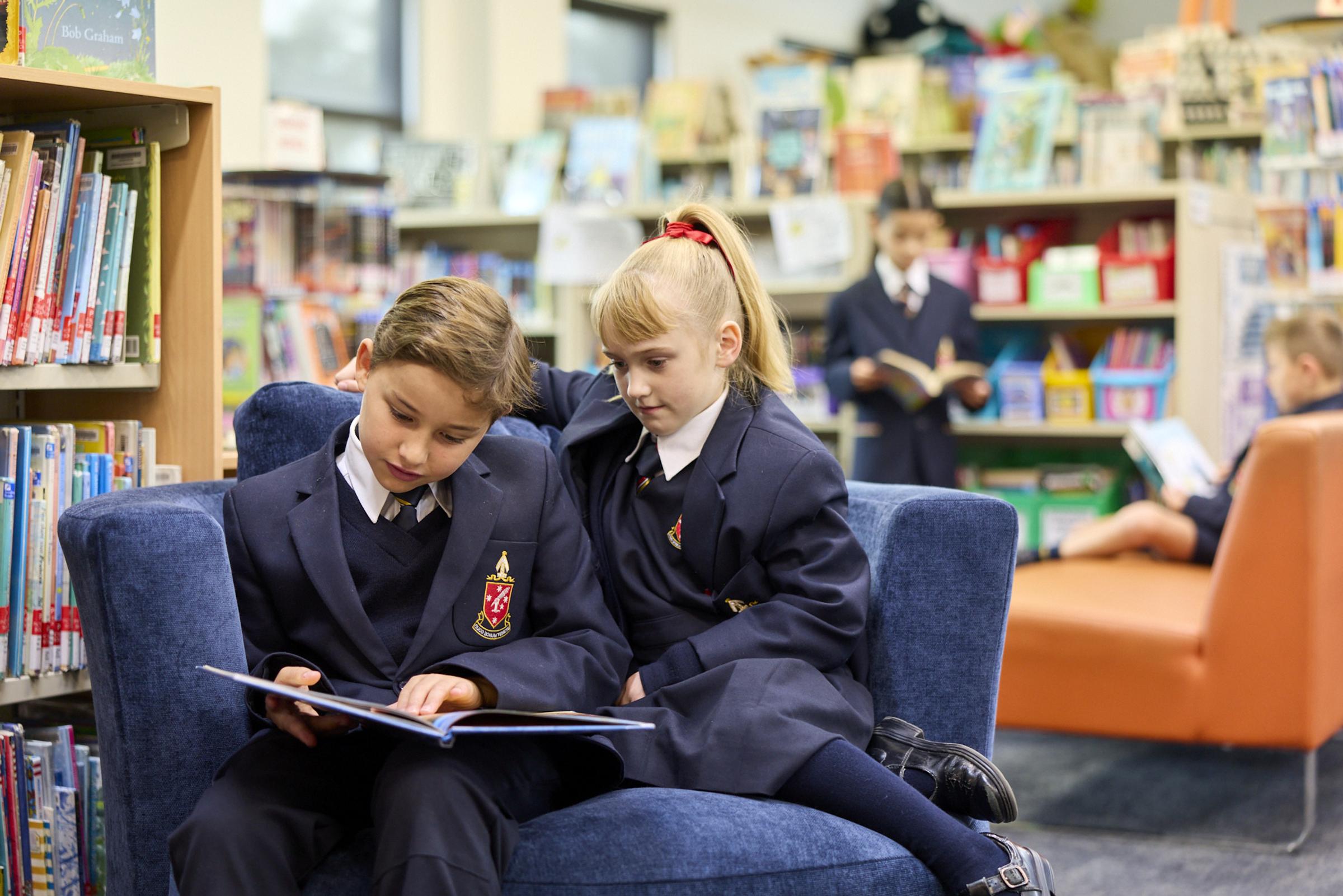
As an educator, it feels particularly timely to reflect on reading, having recently dusted off our Book Week costumes and celebrated the wondrous world of books. A good book can create connection, provoke thought, and provide an opportunity to see the world from a perspective beyond our own.
It is equally rewarding to watch students develop their own relationship with reading from the early effort of decoding their first words to the point where they can engage with ideas, question perspectives, and read independently to learn.
At Peninsula Grammar, we recognise that becoming a reader is a gradual process. Learning to read is not something that simply ‘clicks’, nor is it about guessing words from pictures. Students need explicit teaching to understand how spoken sounds connect to letters and letter patterns, and how these combine to form words. Our approach in the Junior School is informed by evidence about how children learn to read, including the Science of Reading, and continues to evolve as we reflect on the effectiveness of our practice.
There are distinct stages in the journey from learning to read to reading to learn, and our teaching is deliberately sequential, explicit, and purposeful.
In our early years, the priority is to establish strong foundations. Students are explicitly taught the knowledge and skills required to decode words accurately, while also developing fluency, vocabulary, and comprehension. As decoding becomes increasingly automatic, students can devote more attention to meaning, enjoyment, and ideas. Our aim is for students to read with growing confidence, curiosity, and independence.
In Years 3 and 4, students begin applying these foundations to increasingly complex texts. Early novel studies allow them to remain with a text over time, exploring characters, themes, vocabulary, and the choices authors make. Students learn to summarise, infer, make connections, and support their thinking with evidence, while beginning to develop their own interpretations and reading preferences.
By Years 5 and 6, reading becomes an increasingly important way of learning across the curriculum. Novel studies connect with areas such as Humanities, allowing literature to deepen students’ understanding of history, culture, identity, place, and perspective. Students consider an author’s purpose, examine different viewpoints, and engage critically with ideas. Reading becomes not simply the focus of a lesson, but a pathway to acquiring knowledge and making sense of the wider world.
This progression requires purposeful teaching. Across Prep to Year 6, we explicitly teach the knowledge and strategies students need, while using assessment, observation, and our understanding of each learner to provide appropriate support or challenge. At the same time, we want reading to retain its joy. Books should inspire curiosity, create connection, and introduce students to people, places, and ideas beyond their own experiences.
Ultimately, reading provides access; access to knowledge, imagination, different perspectives, and increasingly independent learning.
At Peninsula Grammar, we want every student to be able to turn the page with the knowledge, confidence, and curiosity to understand what comes next.
Diana Bothe
Acting Head of Curriculum and Pedagogy Prep - Year 6