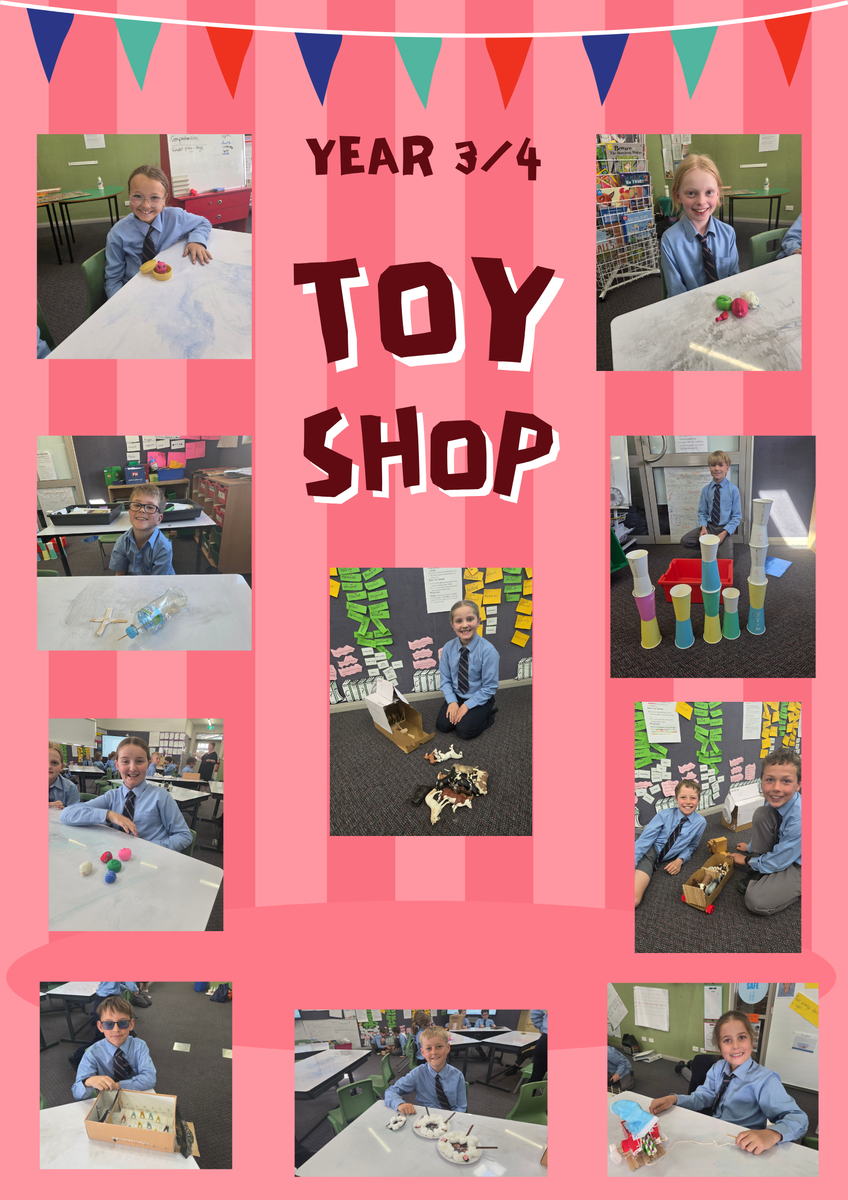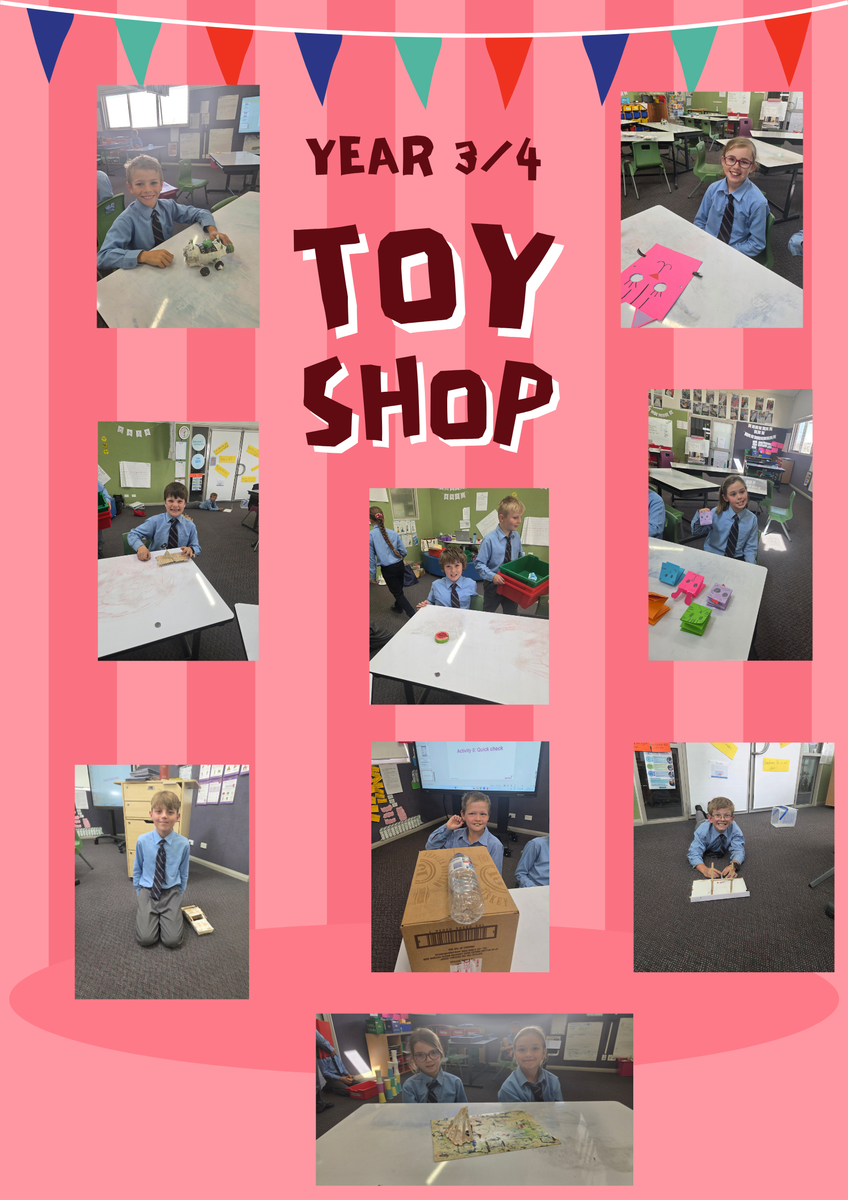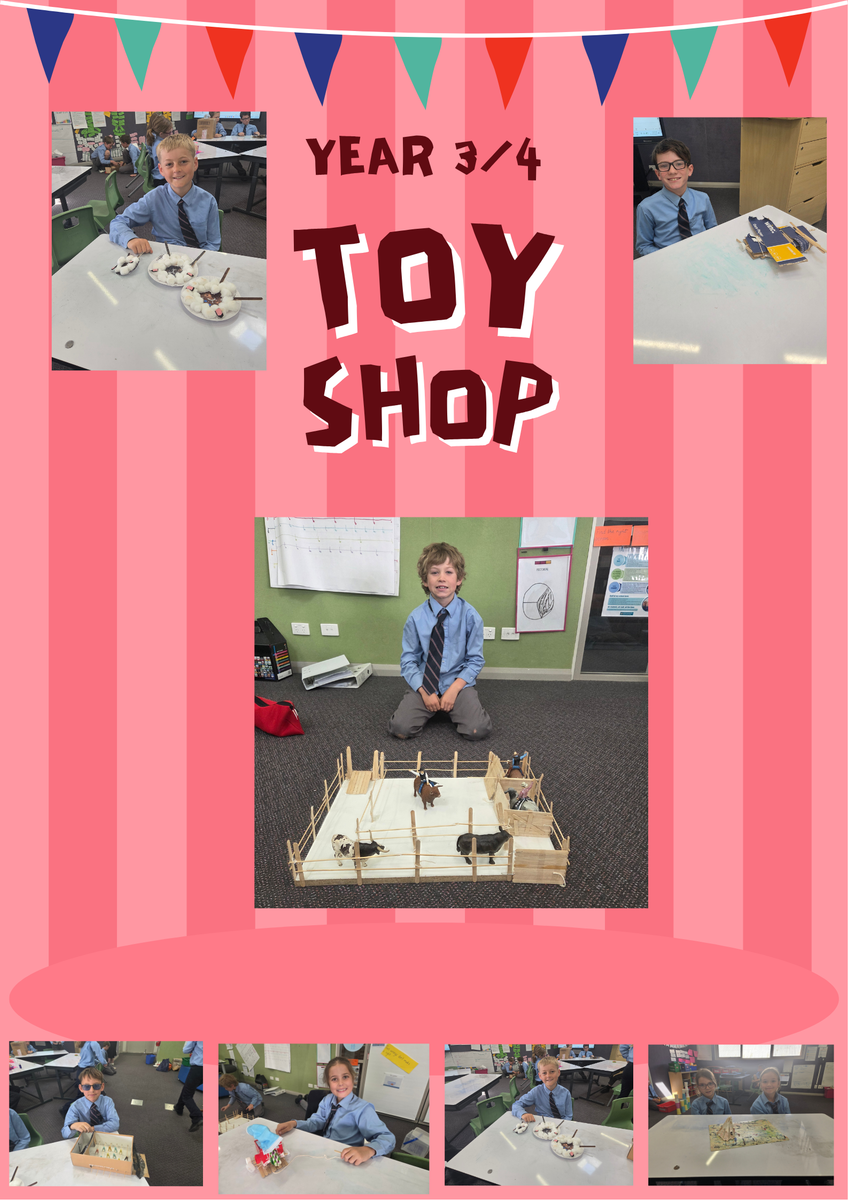
Classroom Gallery

Year 5/6 are our leaders of learning
Religion
In Religion, Year 5/6 have been learning about the seven Sacraments of the Catholic Church: Baptism, Confirmation, Eucharist, Reconciliation, Anointing of the Sick, Holy Orders and Matrimony. We have explored how the Sacraments are important signs of God’s grace and presence in our lives and how they mark significant moments in a person’s journey of faith. Students have been discussing the symbols, rituals and meaning associated with the Sacraments and considering how they help Catholics grow in their relationship with God and with others.
English
Our reading focus has continued to develop students’ comprehension skills. Before reading, students are learning to activate their prior knowledge – thinking about what they already know about a topic and connecting this knowledge to new information in a text. We have also been explicitly building vocabulary before and during reading. A strong vocabulary helps students understand increasingly complex texts and allows them to express their own ideas with greater precision.
During guided reading, students are encouraged to talk about the texts they are reading, explain their thinking, make connections and justify their responses using evidence from the text. These discussions are an important part of developing deeper comprehension.
We have also continued our focus on oral reading fluency and expression. Fluent reading is more than simply reading quickly. Students need to read accurately, at an appropriate pace, group words into meaningful phrases and use expression that reflects the punctuation and meaning of the text. When students read fluently, less attention is required for decoding individual words, allowing them to concentrate more fully on understanding what they are reading.
As we wrap up our spelling work for the term, students are consolidating their understanding of the different ways words can be analysed. This includes recognising syllables and graphemes, identifying phonemes (sounds), and investigating word origins and derivations. We have also continued to explore morphology – how words are built using base words, prefixes and suffixes. Understanding these patterns helps students move beyond simply memorising individual words and gives them strategies for spelling and understanding unfamiliar words.
Writing
In Writing, we continue to develop students’ understanding of the sentence structures required for effective narrative writing. Students are working with simple, compound and complex sentences and learning how varying sentence length and structure can improve the flow, pace and impact of their writing. We are also continuing to develop vocabulary, description and literary devices to create engaging characters, settings and events.
Recently, students put these skills into practice by creating stories for the Library Writing Competition. The finished pieces demonstrated wonderful imagination and some genuine creative writing talent. It was particularly pleasing to see students experimenting with ideas, vocabulary and sentence structure while developing their own individual writing voices.
Mathematics
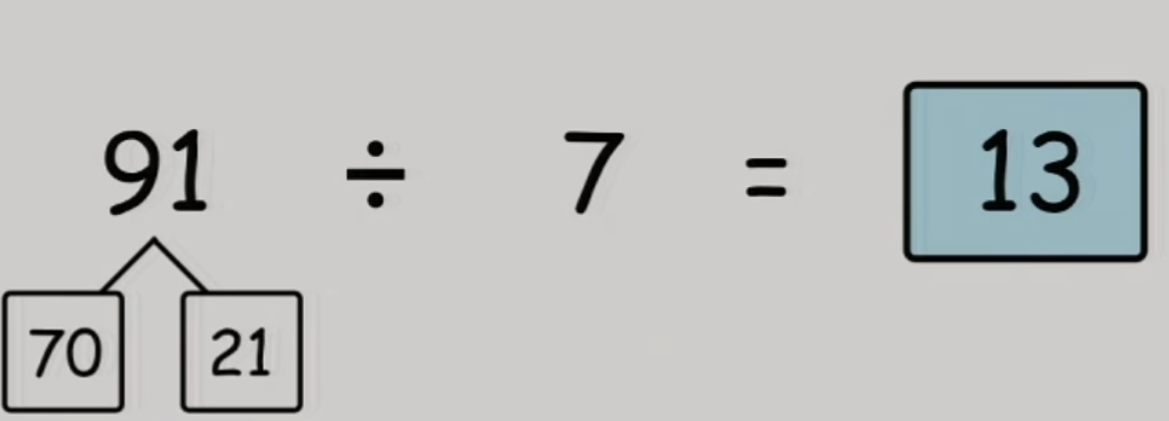
We have recently completed a three-week unit focusing on division and its relationship with multiplication. In Year 5/6, students develop an understanding that multiplication and division are inverse operations. Knowing multiplication facts and recognising factors and multiples therefore provides an important foundation for solving increasingly complex division problems.
Students have also been using strategies such as the area model to represent and solve multiplication problems. The area model breaks larger numbers into smaller, more manageable parts using place value. Students multiply each part and then combine the partial products to find the total. This visual representation helps students understand why multiplication strategies work rather than relying solely on a memorised procedure.
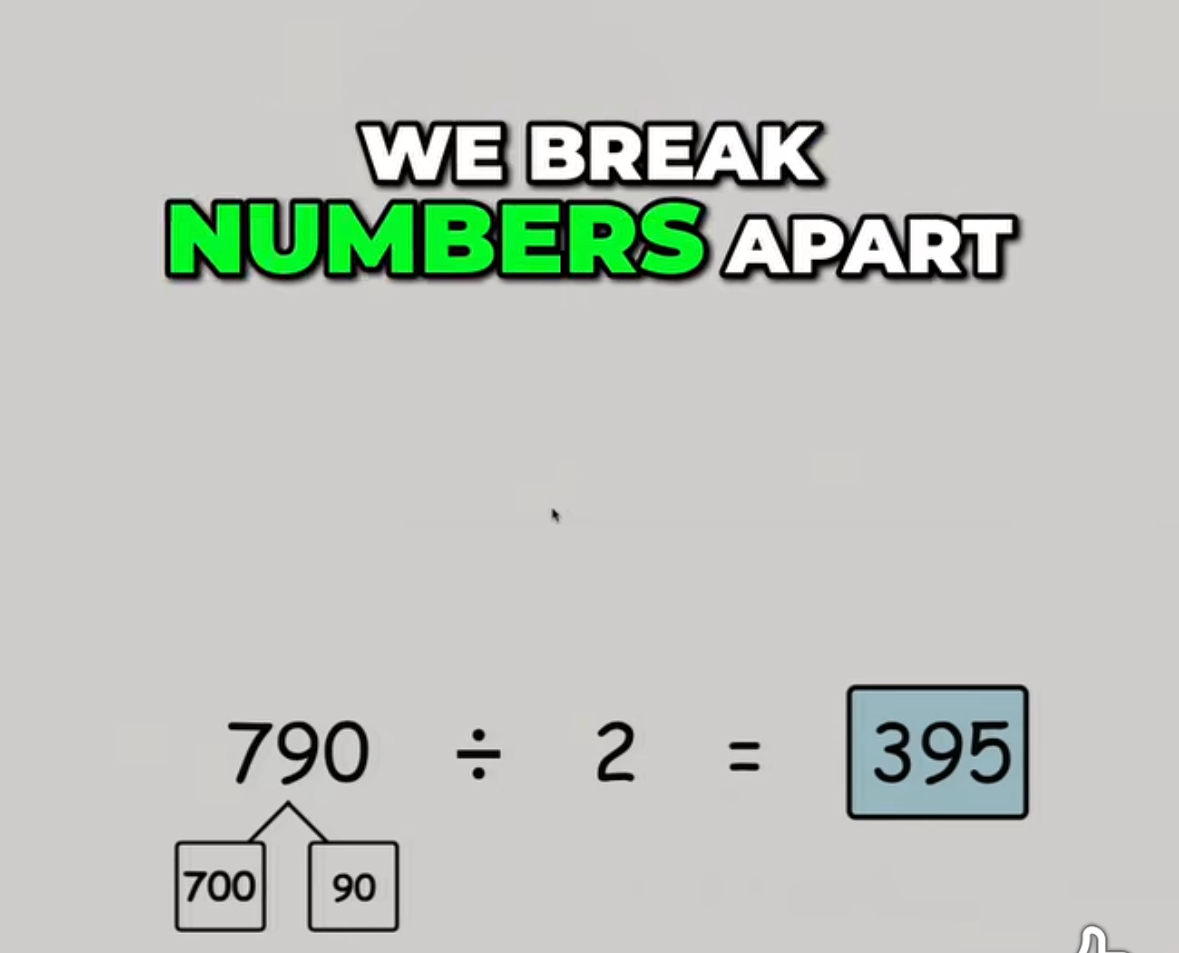
Looking at number bonds:
Our focus has now shifted to Angles. Students are learning to identify, estimate, measure and construct different types of angles. They are also investigating relationships between angles on a straight line and angles at a point.
An important tool in this learning is the protractor. Students are developing accuracy in positioning the centre point of the protractor on the vertex of an angle, aligning the baseline correctly and selecting the appropriate scale when measuring. They are also learning to construct angles of a given size. These skills encourage students to estimate first and then use measurement to check whether their mathematical thinking is reasonable.
Sport
Throughout the last four weeks, our Year 5 and 6 students have been preparing during their Sports lessons for the Armidale Catholic Schools Gala Day, which took place in Inverell last Friday. Under the guidance of Mrs Rizzi and Mr Hyatt, the students honed their skills, teamwork, and awareness in both netball and soccer.
Science
This term in Science and Technology, our students have been immersed in a unit on Earthquakes and natural disasters. Through hands-on learning, they used playdough to model tectonic plate boundaries, demonstrating how overlapping, sliding past one another, and pulling apart create seismic activity. Students located the Pacific "Ring of Fire"—the region where the majority of global earthquakes occur—and examined the mechanics of Primary (P) and Secondary (S) waves, alongside how underwater seismic events generate tsunamis.
Applying their knowledge through research and engineering, students investigated major historical earthquakes, evaluating and ranking them against key impact criteria. They then put their structural engineering skills to the test by designing, building, and testing prototype structures engineered to withstand major earthquake conditions.
Creative Arts
In Creative Arts, students have been exploring Optical Art, or Op Art. This style of art uses lines, shapes, patterns, contrast and repetition to create optical illusions. Although the artwork itself is still, clever arrangements of shapes and patterns can make an image appear to move, bend, bulge or disappear into the distance.
We have looked at how artists use mathematical ideas such as pattern, symmetry, shape and perspective to influence what our eyes and brains perceive. One of the best-known Op Art artists is Bridget Riley, whose striking black-and-white and coloured works use repeated geometric patterns to create a sense of movement and vibration. Students have enjoyed experimenting with these techniques to create their own optical artworks.
HSIE – History
In HSIE, History we are preparing for our Term 4 excursion to Canberra. Students have been exploring how Australia is governed and how our system of democracy developed.
We have been learning about Australia’s system of parliamentary democracy, which draws many of its traditions from the Westminster system developed in Britain. An important feature of this system is responsible government: the government is formed from Parliament and must maintain the confidence of the House of Representatives. Australia adapted these traditions to create its own federal system under the Australian Constitution.
Students are also learning about the two houses of the Australian Parliament. The House of Representatives, often called the lower house, represents Australians according to electorates. The political party or coalition with the support of the majority of members in this House normally forms government, and its leader becomes Prime Minister.
The Senate, or upper house, represents Australia’s states and territories. There are currently 76 senators – 12 from each state and two from each of the ACT and Northern Territory. The Senate plays an important role in reviewing proposed laws and scrutinising the work of government. Most proposed laws must be agreed to by both the House of Representatives and the Senate before they can become law.
Understanding these ideas before our excursion will give students some valuable background knowledge so that when we visit Canberra and Parliament House, they can connect what they see with what they have already learned in the classroom.
Did you know?
- Parliament House opened on 9 May 1988 and was officially opened by Queen Elizabeth II.
- Parliament House sits on Capital Hill and was designed so that people can actually walk over parts of its grass-covered roof – a symbolic reminder that in a democracy, Parliament belongs to the people.
- The enormous flag mast is 81 metres tall, and the Australian flag flying above Parliament House measures approximately 12.6 metres by 6.4 metres.
- Parliament House contains more than 4,500 rooms and around 22 kilometres of corridors!
- When Parliament is sitting, approximately 5,000 people may be working inside the building.
- It took around 10,000 workers to help construct and fit out Parliament House, and construction took seven years.
The House of Representatives chamber is green, while the Senate chamber is red – colours inspired by the traditions of the British Parliament, but adapted with distinctly Australian shades.
Our Canberra excursion will provide a wonderful opportunity for students to see many of the places and institutions we have been discussing in class and to deepen their understanding of Australia’s history, democracy and system of government.
Living Well, Learning Well
Alongside our academic learning, students continue to work within the Living Well, Learning Well framework. As our Year 5 and Year 6 students grow as the senior members of our school community, we continue to emphasise the importance of being safe, valued, respected and cared for while also recognising the responsibility each student has in contributing positively to our school.
Students have been setting goals not only for their learning but also for responsibility and leadership. Leadership can be demonstrated in many ways – through kindness, initiative, organisation, perseverance, including others, making good choices and being a positive role model. We encourage our students to reflect on their progress, take increasing responsibility for their learning and recognise that everyday actions provide opportunities to lead by example.
Time for a holiday.
We wish everyone a happy, safe and relaxing holiday. We look forward to seeing everyone again in Term 4.
Year 3/4