Specialist

Performing Arts
Our School Production Is Coming Together
Excitement is building as we prepare for our whole-school production, “The Fairytale Fixers”. The children have been busy learning songs, rehearsing dances, practising speaking roles and bringing our wonderful collection of characters to life. It is lovely to see the different elements of the production gradually coming together.
Beyond the excitement of performing, the children are developing valuable skills in creativity, confidence and self-expression, while strengthening their performance skills and learning the importance of teamwork, perseverance and responsibility. One of the most rewarding aspects of a whole-school production is seeing children across the school working towards a shared goal.
Concert Date Reminder
Wednesday 18 November 2026
5.00 pm – 7.30 pm
Backup date: Wednesday 25 November 2026
Practising at Home
To help the children to continue building their confidence, I have posted the song lyrics, music and written choreography for the class concert performances on Compass. Families and carers are encouraged to access these materials and, where possible, support their children with some practice at home. Even a few minutes spent listening to the music, singing along or remembering dance movements can make a real difference.
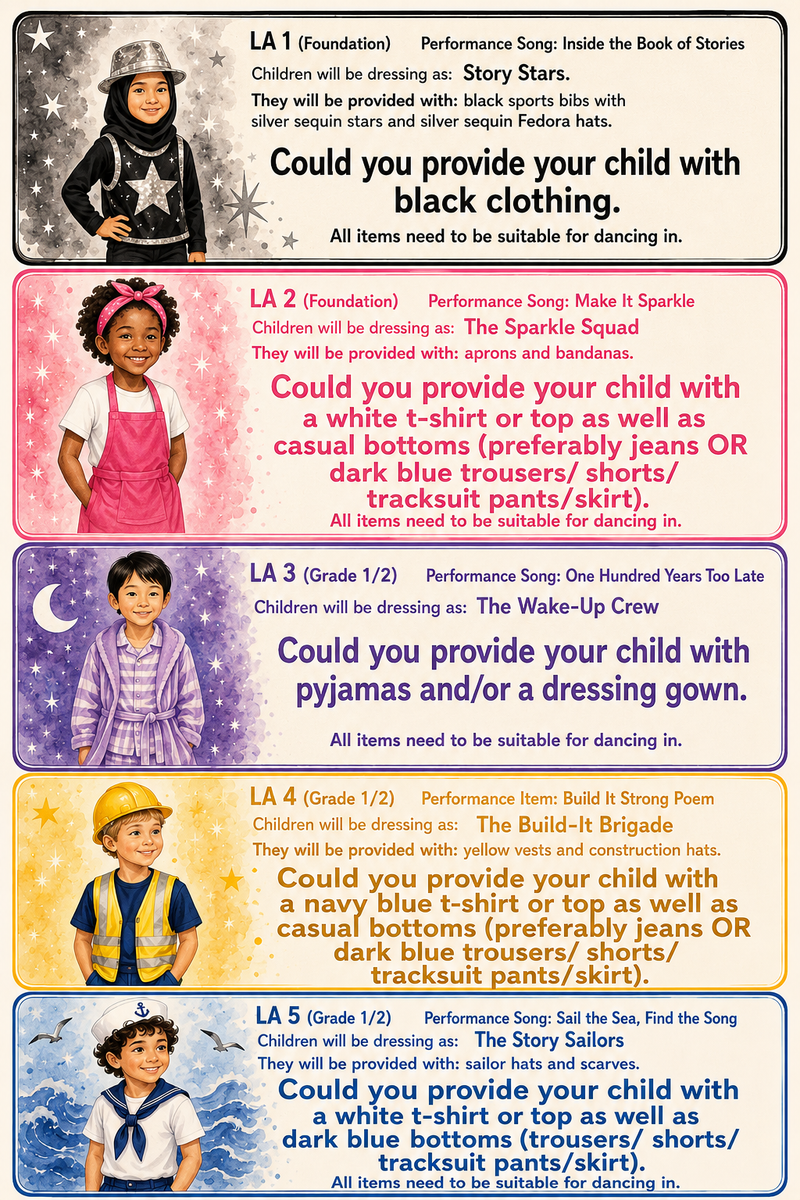
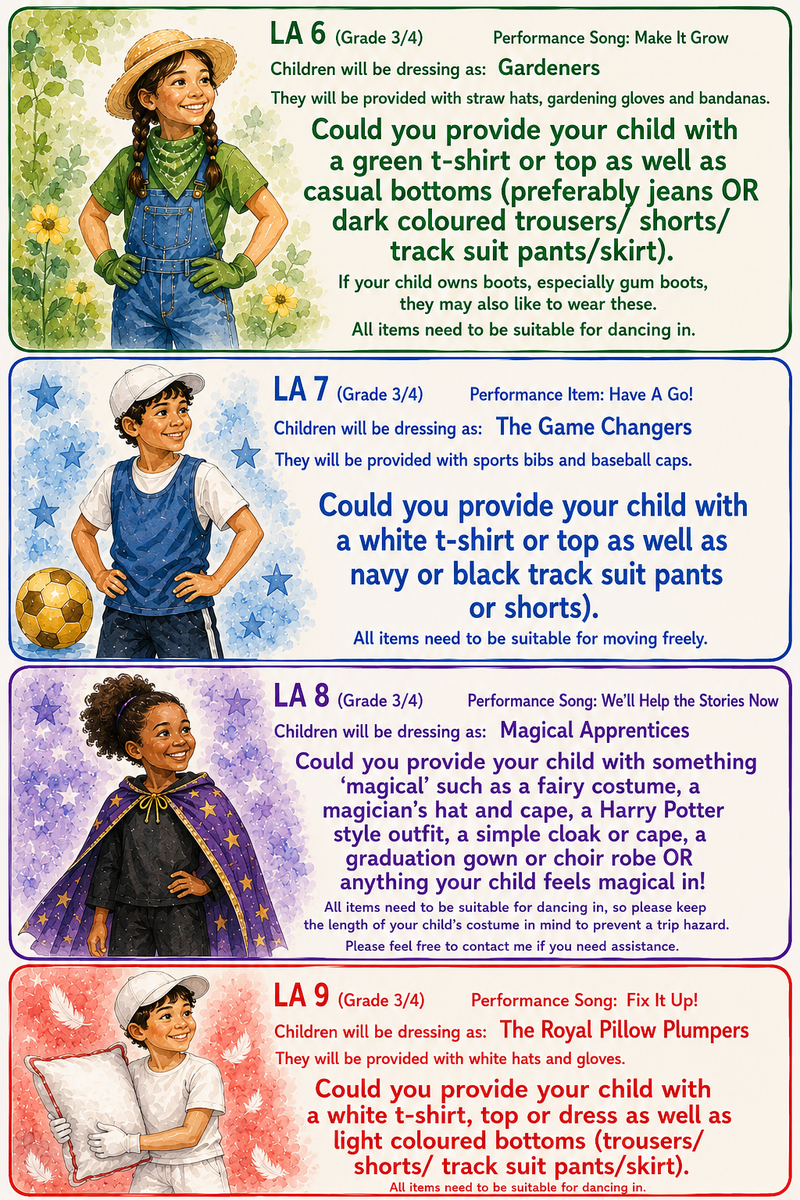
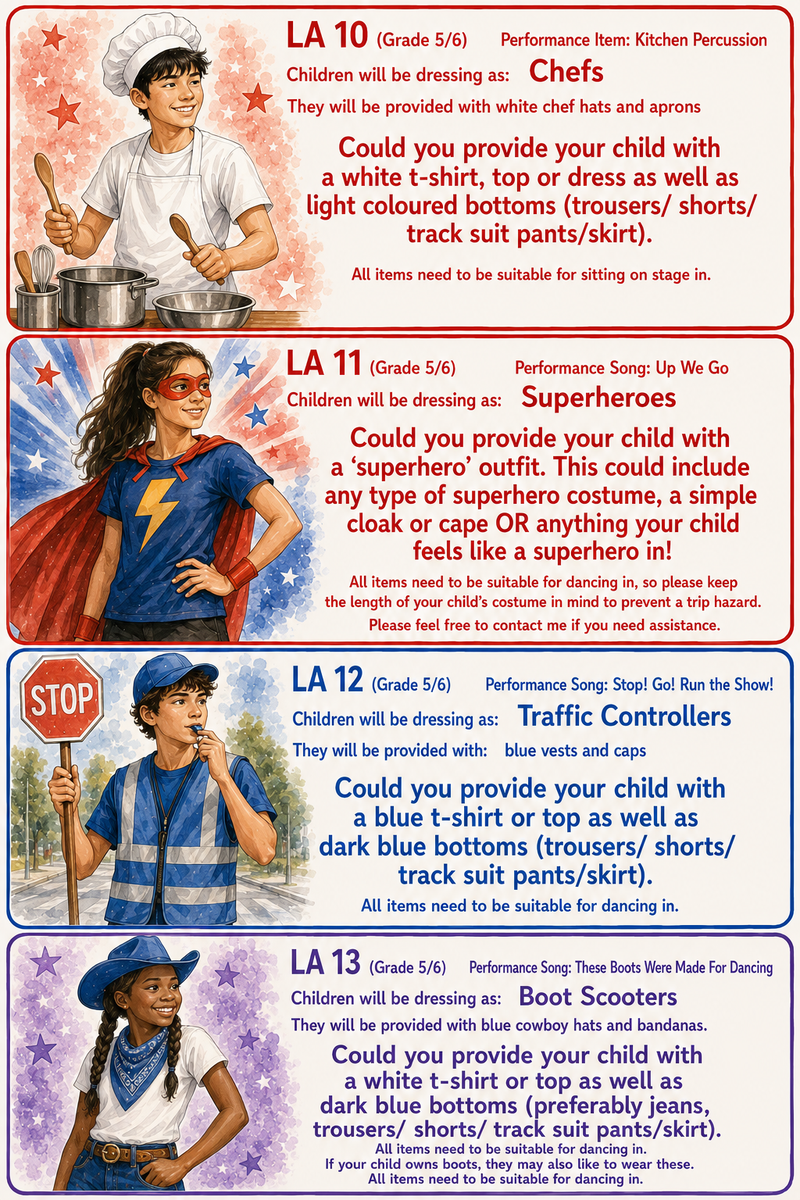
Costume Reminder
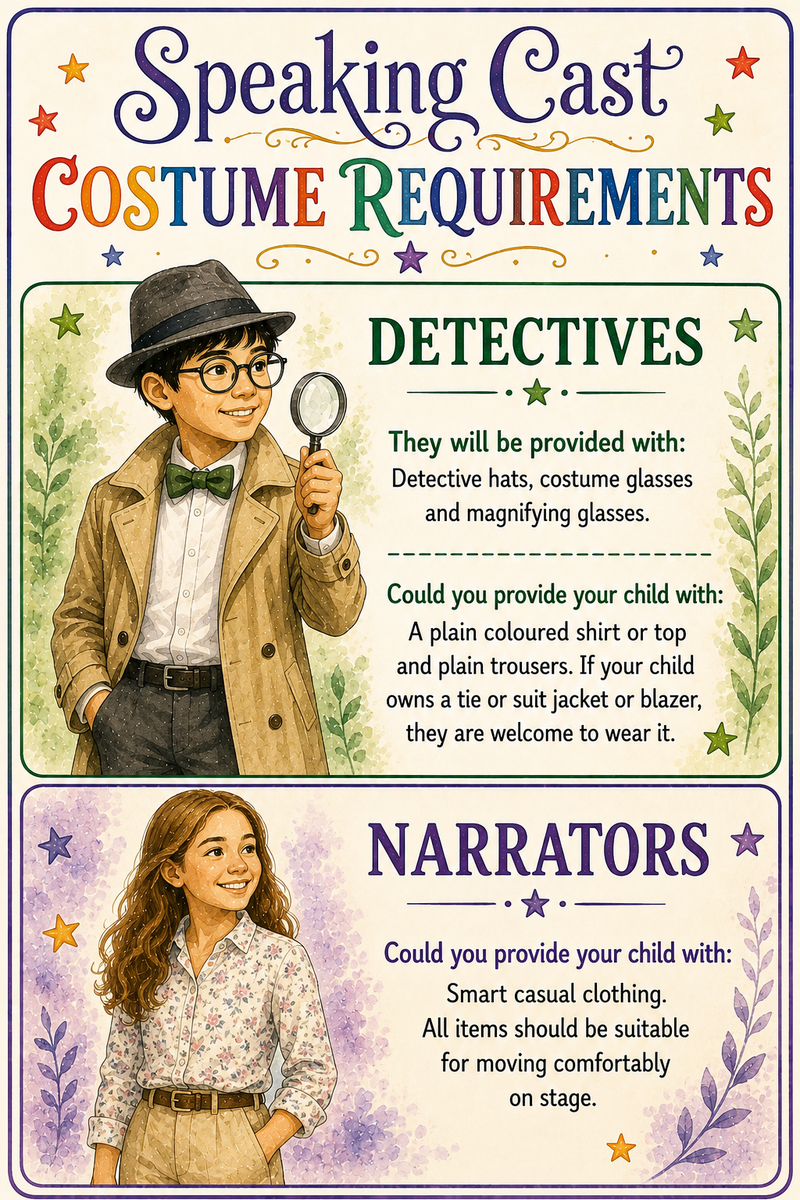
I have included the costume requirements posters again with this newsletter.
The costume items that families have been asked to provide are due at school by Wednesday 28 October.
Thank you for your continued support as we prepare for this exciting event. We are looking forward to sharing the children's hard work, creativity and enthusiasm with you when “The Fairytale Fixers” finally takes to the stage!
STEM News – Term 4
Welcome back to Term 4! This term, STEM classes will focus on Digital Technologies. Students will explore the digital systems they use every day, learn how computers follow instructions, and create and test their own digital solutions.
Prep
Prep students will explore familiar digital systems such as tablets, laptops, cameras and phones. They will learn about the parts of a device they can touch, the apps and programs people use, and the ways digital systems can help us communicate.
Students will also look at how video calls and photographs are used to share information. They will practise asking permission before taking or sharing a photo. Later in the term, students will plan and build a model of a digital system and explain what it can help people do.
Year 1/2
Year 1/2 students will learn about algorithms, or sets of steps used to complete a task or solve a problem. Through robot challenges, picture sequencing and arrow activities, students will practise giving and following clear instructions.
They will use words such as first, then, next and finally to explain their thinking. Students will also test their instructions, identify steps that are missing or in the wrong order, and make changes to help their robot complete a challenge.
Year 3/4
Year 3/4 students will begin learning how to create simple programs using block coding. They will explore how algorithms are turned into code and how on-screen sprites can respond to instructions from a user.
As the term continues, students will use decision blocks and repeat blocks to make their programs work in different ways. They will test their code, find bugs and make changes when their program does not behave as expected.
Year 5/6
Year 5/6 students will be designing and creating their own 2D games in Scratch. They will begin by playing and discussing familiar games, looking at what makes a game easy or difficult to use.
Students will plan a game goal, controls and screen layout before building their game in Scratch. Their games will include player input, variables, decisions, repeated actions and feedback for the player. Towards the end of the term, students will play one another’s games, give feedback and make improvements before sharing their finished projects.
We are looking forward to seeing students’ ideas take shape throughout the term.
VISUAL ARTS
Subject Overview Term 4 2026
Foundation
Visual Storytelling: Then and Now
In this unit, students explore how visual images, objects, photographs and stories can communicate ideas and memories. Through drawing, painting, collage and mixed-media experiences, students investigate their own experiences and begin to explore how life, people, places and objects can change over time. The unit culminates in students creating a simple visual story showing “long ago, change and now”.
Year 1/2
Earth Care
Students explore the idea of environmental sustainability and investigate how artists can communicate messages about caring for the environment. They explore natural materials, discarded objects and recyclable materials as sources for artmaking. Students learn about Aboriginal and Torres Strait Islander perspectives of caring for Country, including the importance of connection, respect and responsibility for land, waterways, plants and animals. Students experiment with a range of materials and techniques before creating a sustainable artwork using predominantly reused and recycled materials.
Year 3/4
Nature’s Resources
Students explore how artists can use visual communication to advocate for sustainable resource use and positive environmental decision making. Students investigate environmental issues including waste, water conservation, biodiversity, habitat protection and responsible use of resources. They explore how First Nations Australians have long practised sustainable approaches to Caring for Country, including relationships with land, waterways, plants and animals. Students respond to these ideas through drawing, painting, collage, printmaking and mixed-media techniques.
Year 5/6
World Challenges
In World Challenges, students explore global sustainability challenges through visual arts. They investigate how artists communicate environmental and social issues, including climate change, pollution, deforestation, biodiversity loss and the responsible use of resources. Students experiment with a range of materials, techniques and visual conventions to develop artworks that communicate a message, raise awareness or inspire positive change. Students explore Indigenous knowledge and perspectives as important contributions to global environmental solutions.
PE Overview
Foundation
In Term 4, students will learn how to strike a ball with a bat while continuing to develop their throwing accuracy and catching skills. Later in the term, they will be introduced to the basic skills of tennis, working towards hitting a ball over the net.
Grades 1 and 2
In Term 4, students will revisit and refine their striking skills through cricket and tee-ball activities. They will also focus on developing their throwing, catching and fielding skills.
Students will explore what makes games fun and enjoyable while working collaboratively to create their own games. They will then share their creations and enjoy playing them with their classmates.
Grades 3 and 4
In Term 4, students will refine the skills required for cricket, including batting, throwing and catching. They will also develop their understanding of game tactics and strategies.
Later in the term, students will participate in a tennis unit, building on the skills they have developed in previous years.
Grades 5 and 6
In Term 4, students will participate in a racquet sports unit, developing and transferring skills across tennis, badminton and bat tennis.
They will also participate in a cricket unit, further developing their skills and understanding of the game.