
Classroom News
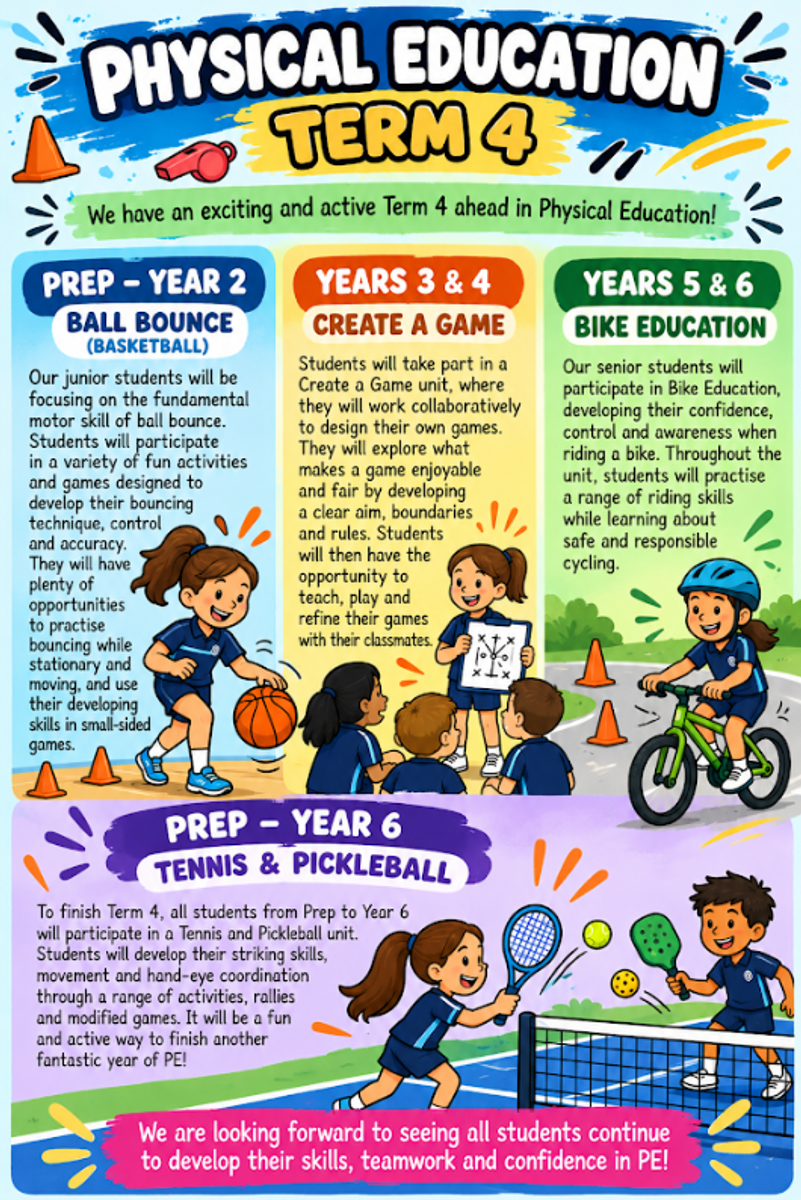
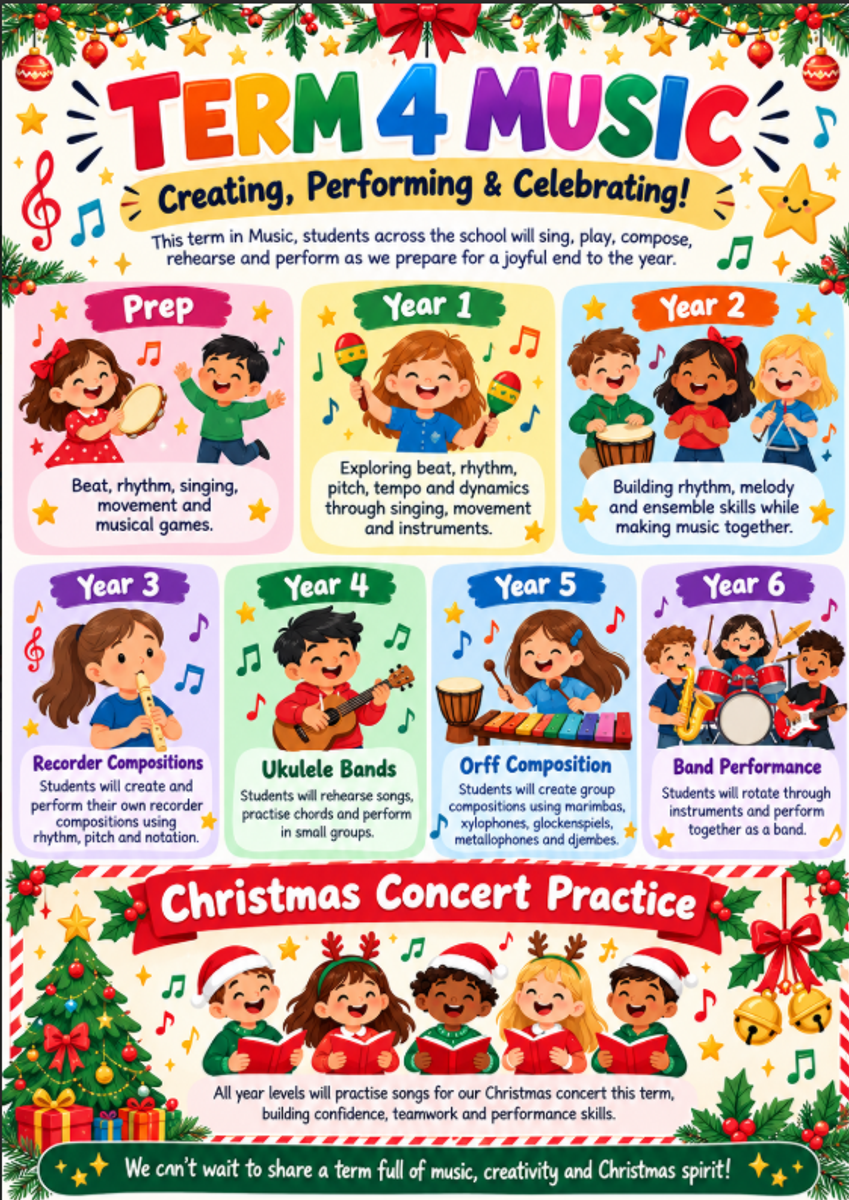
Specialist Learning Overviews Term 4
Japanese Learning Overviews Term 4
Year 4 Japanese
In Term 4, students will continue to develop their Japanese language skills by revising familiar vocabulary, conversations and Hiragana characters. They will explore different aspects of Japanese culture, including traditions, festivals, school life and everyday customs. Students will also participate in hands-on cultural activities such as origami to further develop their understanding and appreciation of Japanese culture.
Year 5 Japanese
In Term 4, students will strengthen their Japanese communication and literacy skills through a variety of speaking, reading and writing tasks. They will consolidate their knowledge of the A-line and K-line Hiragana, practise previously learned vocabulary and conversations, and finalise their Japanese culture research project. Students will further explore Japanese culture through hands-on activities such as origami and learning about daily school life in Japan.
Year 6 Japanese
Throughout Term 4, students will build on their Japanese language skills through speaking, reading and writing activities. They will practise the A-line and K-line Hiragana, revisit familiar vocabulary and conversations, and complete their Japanese culture research project. Students will also explore Japanese traditions and everyday life through cultural activities, including origami and learning about schools in Japan.
Term 4 Visual Arts Overview
Term 4 will be a creative and colourful time in Visual Arts. Through activities connected to the Victorian Curriculum, students will explore drawing, painting, collage and clay. They will develop confidence, communicate ideas and discover how artists and cultures inspire artworks. All students will practise using materials safely, caring for equipment and respecting others’ creations.
Prep
Prep students will develop drawing and painting skills through animal artworks, including hippos and giraffes. They will combine simple shapes, add details and use watercolour paints. These activities will encourage careful observation, brush control and colouring within outlines.
Year 1 and 2
Year 1 and 2 students will strengthen their drawing and painting skills through tree and cat artworks. They will plan pictures using grey lead pencils before adding colour and detail. Discussions will encourage students to describe artworks using vocabulary such as line, shape and colour, and explain their choices. Inspired by artist Kim Donaldson, students will also draw and paint cats using acrylic paints, experimenting with details and imaginative choices.
Year 3
Year 3 students will explore artistic and cultural inspiration through pop art paintings. They will sketch expressive faces and familiar symbols before painting, considering how bold colours and designs communicate feelings and ideas.
Year 4
Year 4 students will investigate line and texture through pop art artworks. They will experiment with outlines, patterns and painted details to develop expressive designs.
Years 5 and 6
Senior students will sketch and create clay objects inspired by ancient Mesopotamia and ancient China, exploring shape and decoration. Year 5 students will also continue their Mother Mary artworks, combining drawing, collage and colour to communicate religious ideas and meaning.
Term 4 STEM Overview
Prep
In Term 4, the Prep students will have the opportunity to explore fundamental coding concepts such as sequencing, patterns, loops and debugging by using visual blocks and age-appropriate, picture-based instructions. They will learn how to follow and create simple algorithms, predict outcomes and persevere when solving problems.
Year 1
In Term 4, the Year 1 students will have the opportunity to create and sequence simple sets of coding blocks to control characters and events. They will design and animate digital stories or games using sprites, backgrounds, and recorded sounds.
Year 2
In Term 4, the Year 2 students will have the opportunity to give precise instructions to the robots by creating simple algorithms involving sequencing, directional commands and repetition. They will investigate how robots respond to different inputs and test, modify and improve their programs to achieve desired outcomes.
Year 3
In Term 4, the Year 3 students will have the opportunity to program robots by creating algorithms that incorporate sequencing, repetition and simple decision-making processes. They will investigate how robots respond to commands, test and refine their programs and develop an understanding of the importance of debugging to improve outcomes.
Year 4
In Term 4, the Year 4 students will have the opportunity to design and build their own interactive video games using block-based coding. Through Gamefroot, students will become digital creators — developed skills in problem-solving, algorithmic thinking and user interface design. They will learn how to plan and develop user-friendly game environments, design characters and implement game mechanics to achieve specific outcomes.
Year 5
In Term 4, the Year 5 students will have the opportunity to be able to create and design games from concepts to publish using a program called BLOXELS. Students will design their own characters, art and backgrounds, fostering creativity and original thinking. Throughout the unit, they will explore the game design process by creating characters, environments and game mechanics to produce engaging digital experiences.
Year 6
In Term 4, the Year Six students will have the opportunity to use Tinkercad tools to plan, design and modify digital objects, applying measurement and problem-solving skills throughout the design process. Students will investigate the principles of 3D printing and consider how digital designs can be transformed into physical products to meet specific purposes and user needs.
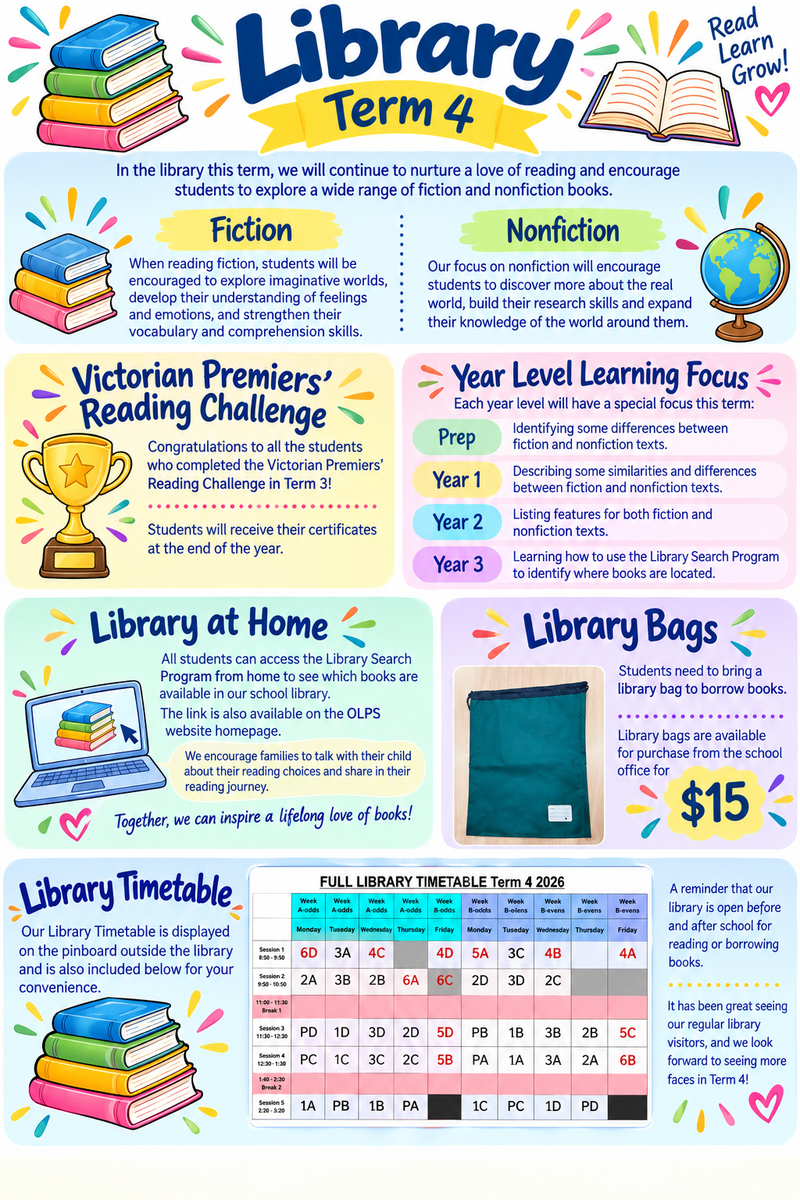
.