First Nations Connections
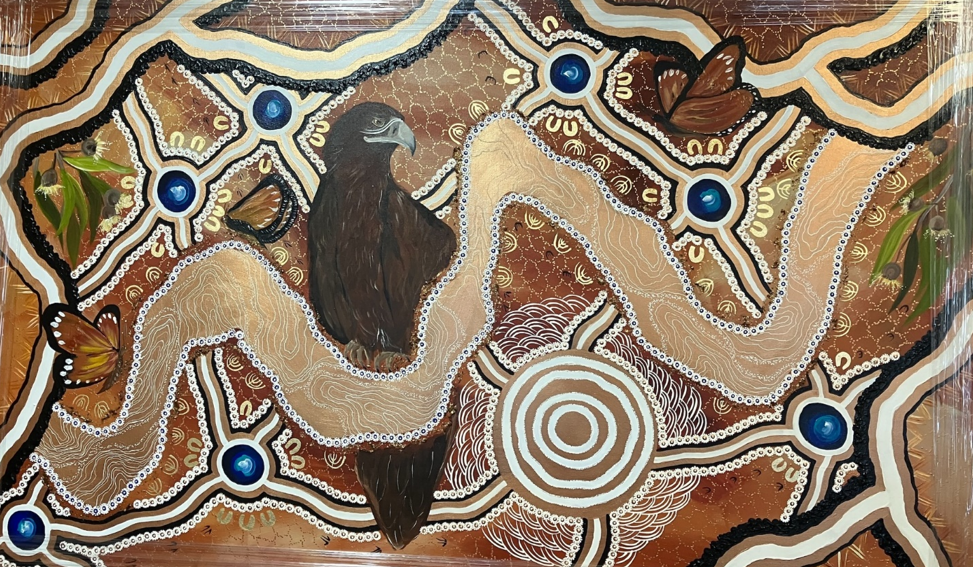
Bunjil Biik, Bunjil’s Country
Simone Thomson
Wurundjeri Woi-Wurrung, Yorta-Yorta, Wiradjuri
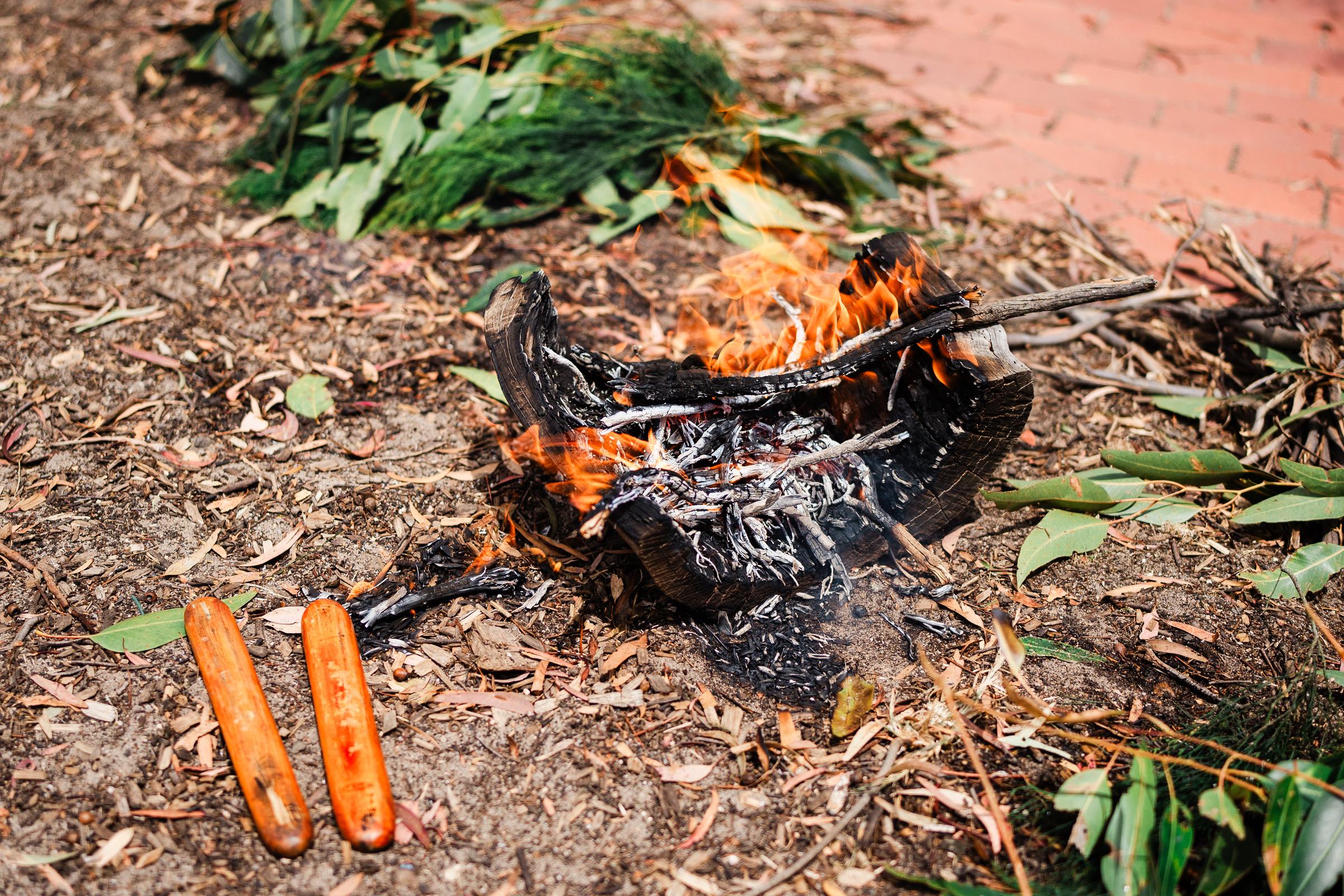
The traditional language of the Wurundjeri people is Woi-Wurrung. In the Woi-Wurrung language, the name Wurundjeri is in two parts. ‘Wurun’ meaning the manna gum tree, and ‘djeri’, the white grub that lives in the tree – the witchetty grub. Flourishing gum leaves symbolise deep respects to the Traditional Custodians of the lands and waterways in which Bell Primary School sits – Wurundjeri Country.
Merri Creek – merri merri; meaning very rocky, was a significant meeting place at the junction of the Birrarung, the majestic river of mist and shadows known as the Yarra. Ceremonies were regularly held in the evening here to remove sickness and disease by people smearing red ochre all over themselves. The site was used for trade amongst clans and was a place where marriages were arranged with different tribal groups.
The environment surrounding Merri Creek and its tributaries were resource rich with materials for shelter and provided abundant plant life for restorative and medicinal purposes including vital food source of various river fowl, fish and wildlife. Wurundjeri-willam lived on the offshoots of these waterways including Birrarung, Edgars and Darebin Creeks, as well as the Plenty and Maribyrnong Rivers. Merri flows into Birrarung at present day Dights Falls, an important meeting place for the Wurundjeri-willam where women would wade in the water with string bags around their necks hunting for shellfish.
Merri Creek represents Bell Primary School’s relationship with the local waterways and its vegetation symbolising their commitment to caring for Country and its wildlife; the shared commitment to protecting the environment ensuring healthy land and waterways for future generations just as Wurundjeri people have done for thousands of years.
Arced shaped moundsline the waterways. The motiffor campsite; these homelands represent all First Nations Peoples and their sacred knowledge systems and acknowledges the profound and deep-rooted connection all Aboriginal and Torres Strait Islander Peoples have with their traditional lands and waterways and symbolise the families and community of Bell Primary School.
Mountain ranges border Merri Creek from the aerial map of Naarm, the place known as Melbourne. Mountains to the eastsymbolise Mt. Baw Baw, said to be ‘echo’ or ‘ghost’ in Woi-Wurrung and Corhanwarbul, known as the Dandenong Ranges. Geboor – the Macedon Ranges are to the north-west, and the You Yangs are to the west, each symbolised by long black bands. Mountains were used as fixed points to gauge the position of the Sun for seasonal calendars, which also assisted in the tracking of stars, predicting weather and animal mating seasons. Each layer of Country speaks to the relevance of seasonal knowledge systems in predicting wind patterns critical for firestick burning and maintaining the land and symbolise Bell Primary School’syear-round commitment to reconciliation to create a more equitable future.
Connected circles link across Country. Meeting places symbolise the importance of community, kin and story, and represent the talking circle, accompanied by people on the outer circle – the ‘u’ and ‘n’ symbols. From the bird’s eye view, this is the shape a person makes whilst sitting on the ground with their knees crossed and represents the students of Bell Primary.
Various animal tracks walk beside these pathways. No animal footprint is the same yet all creatures tread carefully on Country and live in harmony with the environment symbolising the diverse community of Bell Primary School and each student’seducational journey tracks.
The tracks lead to the large meeting place.
The Gathering Circle is a place of meeting, learning and celebration. In the traditional way, Elders and Senior Leaders and Lore men and women would gather to discuss matters of importance and cultural business and share knowledge to the next generation. It is a place of community and communication and takes the circular form from the bird’s eye view and signifies welcoming and belonging for those at Bell Primary School and intergenerational knowledge.
Butterflies dance in celebration. The symbol for transformation, power and rebirth – three dancing butterflies signify the past, present and future and represents Bell Primary School’s continued journey with reconciliation acknowledging that the past helps them make thoughtful decisions that support healing and positive change.
Bunjil, is the Creator Spirit for the Wurundjeri Tribe and he comes in the form of the Wedge-tail Eagle. Bunjil represents protection over the land and waterways in which Bell Primary School sits and symbolises celebration of Wurundjeri Woi-Wurrung culture and the deep history of Merri Creek, Bunjil’s Country – Bunjil Biik.
Artist Bio
Simone Thomson is a Wurundjeri, Yorta Yorta and Wiradjuri multidisciplinary artist, designer and maker. Grounded in her connection to Country andculture, Simone’s work is deeply intertwined with storytelling, identity, and heritage, reflected across her diverse practice spanning public art, painting,design commissions, fashion, and textiles. In public art, Simone transforms spaces into culturally rich experiences, embedding First Nations stories and perspectives into the urban landscape. Her public sculptures and installations often serve as points of reflection and connection, bridging traditional knowledge with contemporary expression. Her bespoke paintings and sculptural commissions combine her intricate linework with layered storytelling.
Throughout her practice, Simone’s works inspire broader conversations about the vitality and significance of First Peoples storytelling to us today. At the heart of Simone’s practice is a commitment to cultural storytelling and Country, weaving together past, present, and future through her work. Whether in public spaces, galleries, or community settings, Simone’s work honours her ancestors while embracing new opportunities for expression and innovation.
“My artistic practice stems from my deep spiritual connection to Culture and Country, and a creative urge to produce evocative works which connect people of all walks of life and cultural backgrounds to Aboriginal storytelling. I draw inspiration for my art from the abundant textures and colours of this beautiful land along with the ancestral bonds I have to the Birrarung (Yarra River), Dhungala (Murray River) and Murrumbidgee River. My people are river people, so I find that waterways often interweave into my art along with dreaming and creation stories of the sky.”