
3. Media and Marketing

AU: July keeps First National in the headlines
👓 1 minute read





July has delivered another strong month of media coverage, with First National appearing across Australian and New Zealand industry publications on topics ranging from market commentary and consumer advice to recruitment, office growth and member success stories.
Highlights included:
- The launch of FN Prom Country
- The appointment of Bec Turner at FN Cleveland
- A feature celebrating one of New Zealand's longest-serving real estate professionals
- Thought leadership on pricing psychology during changing market conditions from Ryan McCann.
The network also featured in Australian Conveyancer Magazine, reinforcing First National's voice on the issues shaping the profession.
Thank you to every member who contributed their stories, expertise and achievements. Every article strengthens the profile of both your business and our cooperative.
AU: Why facts, not flattery, win in real estate
👓 1 minute read

In real estate, price isn’t just a number, it’s a decision layered with psychology, data, and trust. When Elite Agent’s editor wanted to know how agents can best manage a changing market, First National directed her to one of Queensland’s leaders.
Ryan McCann, Director at FN Cleveland (Qld), has spent nearly 30 years refining how to guide these conversations. For him, it’s not about talking sellers down, it’s about showing them the truth before the market does. More…
Estimated Advertising Media Equivalency $1,500
AU: Tunnel projects create winners and losers
👓 30 second read


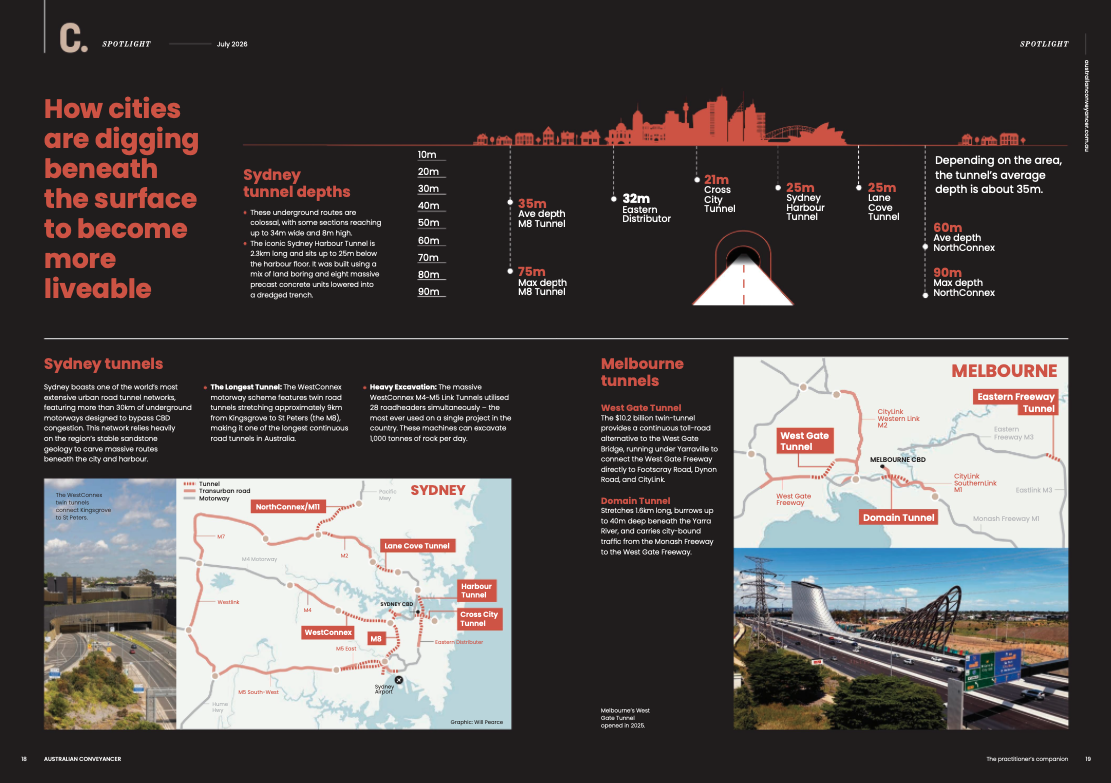

Speaking with Australian Conveyancer Magazine on behalf of First National, Communications & Corporate Affairs Mgr Stewart Bunn said major transport projects rarely lift every property equally.
While improved connectivity often boosts demand around new infrastructure, some homeowners bear the cost through increased traffic, noise or changed neighbourhood amenity. He commented that buyers and sellers respond quickly to infrastructure announcements, with markets often pricing in future benefits well before projects are completed. More…
Estimated Advertising Media Equivalency $2,500
AU: Prom Country launch earns widespread industry coverage
👓 30 second read

First National Prom Country's Brent Harriage and Janine Pepyat
First National Prom Country's Brent Harriage and Janine Pepyat
The launch of FN Prom Country (Meeniyan, Vic) generated strong industry attention across multiple leading real estate publications and social media channels.
Coverage in Elite Agent, The Real Estate Conversation, Movers & Shakers and Real Estate Business profiled co-founders Brent Harriage and Janine Pepyat, highlighting their combined 39 years of local experience, deep South Gippsland knowledge and commitment to personalised service.
The breadth of editorial reinforces the strength of the First National brand in attracting positive industry recognition for new offices and member milestones.
Estimated Advertising Media Equivalency $9,000
AU: Listing kits flyers explain why agents now need to ask AML questions
👓 30 second read

Get on the front foot with AML/CTF compliance obligations by dropping one of First National’s ‘Why we need your ID’ flyers into your pre-listing or listing kits.
Available in the new brand for pilot rebrand offices on request via your SMM.
Add an explananatory note to your website
Why Your Real Estate Agent Now Needs to Verify Your Identity
From 1 July 2026, buying, selling or leasing certain properties in Australia will involve a new step that many people have never encountered before. Your real estate agent may ask you to provide identification, confirm who owns a company or trust, or explain where funds are coming from.
If that sounds surprising, you're not alone.
These new requirements aren't unique to real estate. They're part of Australia's expanded Anti-Money Laundering and Counter-Terrorism Financing (AML/CTF) laws, which now apply to professional service providers including real estate agencies.
Why are these laws changing?
Money laundering allows criminals to disguise the proceeds of illegal activities by making money appear legitimate. According to AUSTRAC, more than $68 billion in crime-related funds is laundered through Australia each year. The updated legislation is designed to make it much harder for organised crime to use property transactions to hide illicit money, while bringing Australia into line with international standards.
Property transactions can involve significant sums of money, making them attractive targets for criminals seeking to legitimise illegally obtained funds. The new laws introduce additional safeguards to help protect buyers, sellers and the wider community.
Why is my real estate agent asking for ID?
Your agent isn't asking because they suspect you've done anything wrong.
The law now requires real estate professionals to apply the same identity verification process to every client. That means whether you're buying your first home, selling an investment property or acting on behalf of a family trust, you'll likely be asked to provide documentation before the transaction can proceed.
These checks are designed to be consistent, fair and applied equally to everyone.
What information might you need to provide?
Depending on your circumstances, your agent may ask for:
- A current photo ID, such as a passport or driver's licence
- Proof of your residential address
- Company, trust or self-managed superannuation fund documentation, where applicable
- Details of the people who ultimately own or control a company or trust
- Information about the source of funds for higher-risk transactions
Not every transaction will require every document. Your agent will explain exactly what's needed for your situation.
What if I'm buying through a company or trust?
The new laws require real estate agencies to identify the people who ultimately own or control an entity, not just the person signing the contract.
If you're purchasing or selling through a company, trust or another legal structure, you may be asked to provide additional documentation so ownership can be verified.
Why do you need to know where my money came from?
For some transactions, the law requires agents to understand the source of funds being used.
This doesn't mean you need to justify your wealth. It simply means confirming whether the money has come from legitimate sources such as savings, the sale of another property, an inheritance or another lawful source.
Haven't I already given this information to my bank or solicitor?
Possibly, but each organisation involved in the transaction has its own legal obligations.
Your bank, solicitor, accountant and real estate agency cannot always rely on one another's checks. As a result, you may be asked to provide similar information more than once throughout the buying or selling process.
Will this slow down my sale or purchase?
In most cases, no.
Identity checks can usually be completed quickly when the requested information is supplied promptly. Delays are most likely to occur when documents are incomplete or additional clarification is required. Providing your information as early as possible will help keep your transaction moving smoothly.
How will my information be protected?
Real estate agencies are required to collect only the information necessary to meet their legal obligations.
Your personal information must be handled securely, stored confidentially and used only for regulatory purposes. Agencies should also explain why they're collecting the information and guide you through the process if you have questions.
A new part of buying and selling property
For most Australians, providing identification will simply become another routine step in the property transaction process, much like signing contracts or arranging finance.
While it may involve a little extra paperwork, these measures are designed to protect the integrity of Australia's property market and help prevent criminals from exploiting it.
If you're unsure why certain information has been requested, don't hesitate to ask your real estate agent. They'll explain exactly what's required, why it's needed and help you complete the process as simply and efficiently as possible.