
Curriculum
Carolyn Platt | Mathematics Learning Specialist

Curriculum
Carolyn Platt | Mathematics Learning Specialist
Supporting children’s Mathematical development at school and at home
Maths gives our students a means to quantify, compare, communicate and make sense of situations. Maths learning is a beautiful, interconnected web of concepts, skills, procedures and processes, so our work at school continuously circles between and interleaves the 6 strands of Number, Algebra, Measurement, Shape, Statistics and Probability from Year 3.
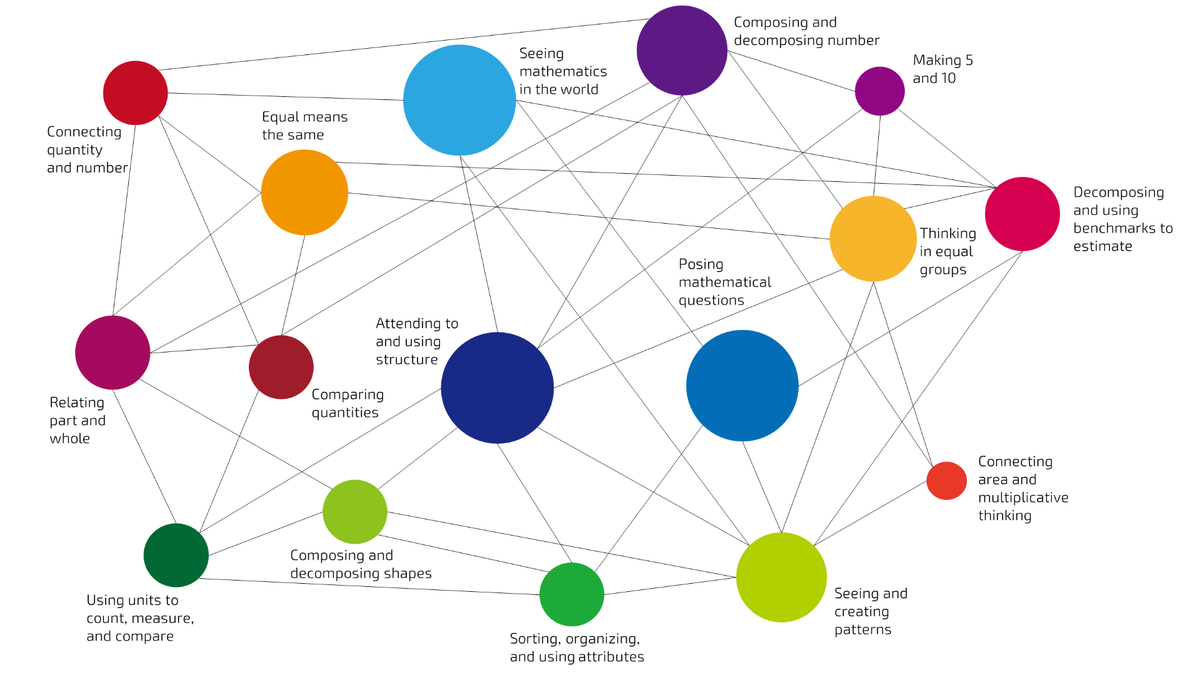
In addition to the six strands, our curriculum also addresses the expectation of developing the four proficiencies of understanding; reasoning; problem solving; and fluency across all six strands. At Hampton we add a fifth proficiency of developing a positive learner-disposition towards challenge, perseverance and the application of what students already know to new situations. Mathematics learning, like all learning, is most effective when done in a safe and supportive environment where mistakes are viewed as an important part of the process and participation and perseverance are encouraged.
Children benefit from repeated, meaningful opportunities to practise and consolidate new skills not only at school, but also at home, and this has a great impact on building their confidence and understanding. If you want to support their Maths learning or if you are concerned your child has a less than positive attitude towards Maths, here are six suggestions from Professor Jo Boaler, of Stanford University:

Encourage your children to play Maths puzzles and games. Award winning Mathematicians have reported that their achievement and enthusiasm came not only from school, but from engaging with puzzles and games; anything that helps children enjoy Maths and develop their critically important number sense.

Always be encouraging and never tell children they are wrong when they are working on a Maths problem. Instead, find the logic in their thinking - there is always some logic to what they say! For example, if your child multiplies 3 by 4 and gets 7, say ‘Oh, I see what you are thinking, you are using what you know about addition to add 3 and 4. When we multiply we have 3 groups of 4… You may well find they are using strategies that are very different from what you learnt at school.

Never associate Maths with speed. It is not important to work quickly and research has shown that forcing fast work in Maths is the best way to start Maths anxiety in children. Please don’t use flashcards or other speed drills at home. Instead use visual activities, conversations about noticing and wondering, puzzles and games.

Never share with your child that you were bad at Maths at school or that you dislike it. Research has shown that as soon as parents (especially mothers) shared that idea with their children (especially daughters), their children’s achievement went down.

Encourage number sense; this is what separates high and low achievers. Number sense is having an idea of the magnitude of numbers and being able to separate and combine them flexibly. For example when working out 9 + 6 or 29 + 56, it is easier to take one away from the 6 or 56 to make 10 or 30 and then add the 5 or 55.

Perhaps most important of all, encourage a “growth mindset". Let your child know they have unlimited Maths potential and that being good at Maths is all about working hard and persevering. When children have a growth mindset they do well with challenging problems and do better at school generally. When children constantly hear they are clever or smart, they can become very upset, anxious or work avoidant once they feel school is difficult; they then feel they are definitely not clever at all. If your child tells you something is hard for them or they have made a mistake, tell them ‘that is wonderful, your brain is growing and you are learning! If everything was easy and we knew all the answers already we would never learn anything new!’.
We encourage you to enjoy, celebrate and use the Maths that is all around us; whether that be in craft and building, cooking and sharing, reading maps or creating them, playing games and keeping score or timing, Lego creations and instructions, drawing with shapes and patterns, planning events as well as simply noticing and wondering about the world around us. There is a great website here with loads of Maths games that your children are already familiar with as we use many of them at school to consolidate the learning. Not only do activities and games help you help your child build their Maths skills at home without stress, they are also a fabulous opportunity to have some wonderful family time together!
If you have any questions, please feel free to contact me or your child’s Teacher. In the meantime enjoy your positive, powerful and playful Maths experiences with your children!
Carolyn Platt,
Mathematics Learning Specialist.