Teaching & Learning Page
Ms Charleston & Mr Chapman (Learning Specialists)
Teaching & Learning Page
Ms Charleston & Mr Chapman (Learning Specialists)
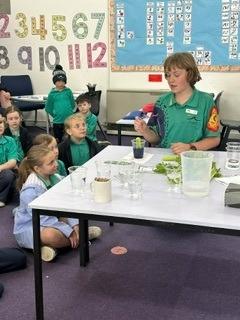
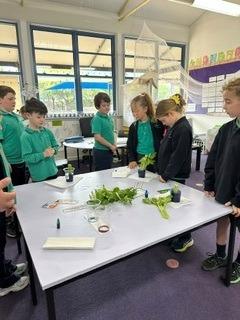
Seeds of Science Week is a fun week where students get the chance to become scientists and spend an hour taking part in a hands-on science experiment. The week is all about getting students excited about science by giving them the chance to experiment, make predictions, observe what happens and discover the science behind everyday things.
This year, our theme was Seeds of Science, which was basically all about nature and the science happening in the world around us. Each year level took part in a different experiment, starting with our Preps and working all the way up to our Grade Sixes. We had a huge variety of experiments, including seed bombs, dancing grapes, coloured celery, nectar slime, rain cloud in a jar, red cabbage colour match and, lastly, spoiling speed.
The best part was that we weren’t just watching science happen — we got to actually do it! Some experiments worked perfectly, some surprised us and some definitely didn’t go according to plan, but that’s all part of being a scientist!
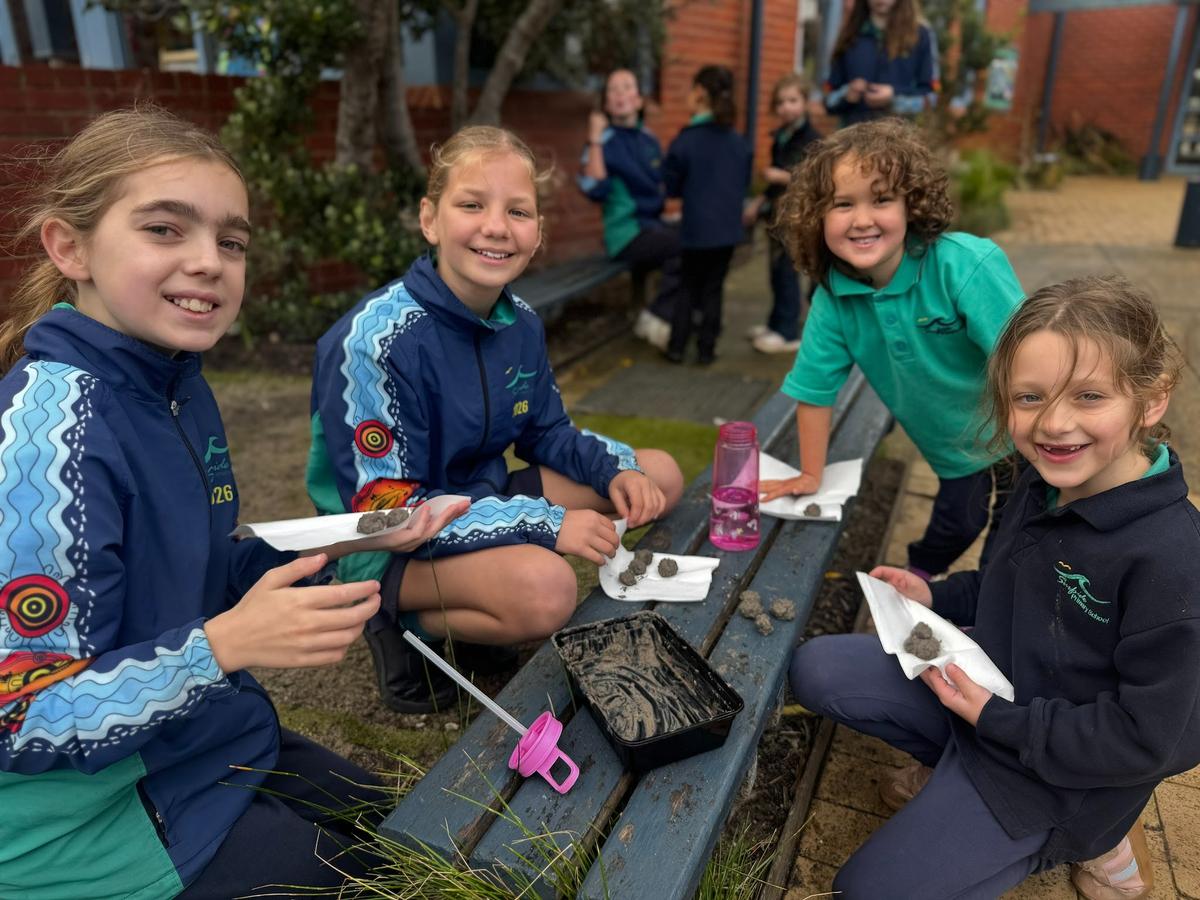
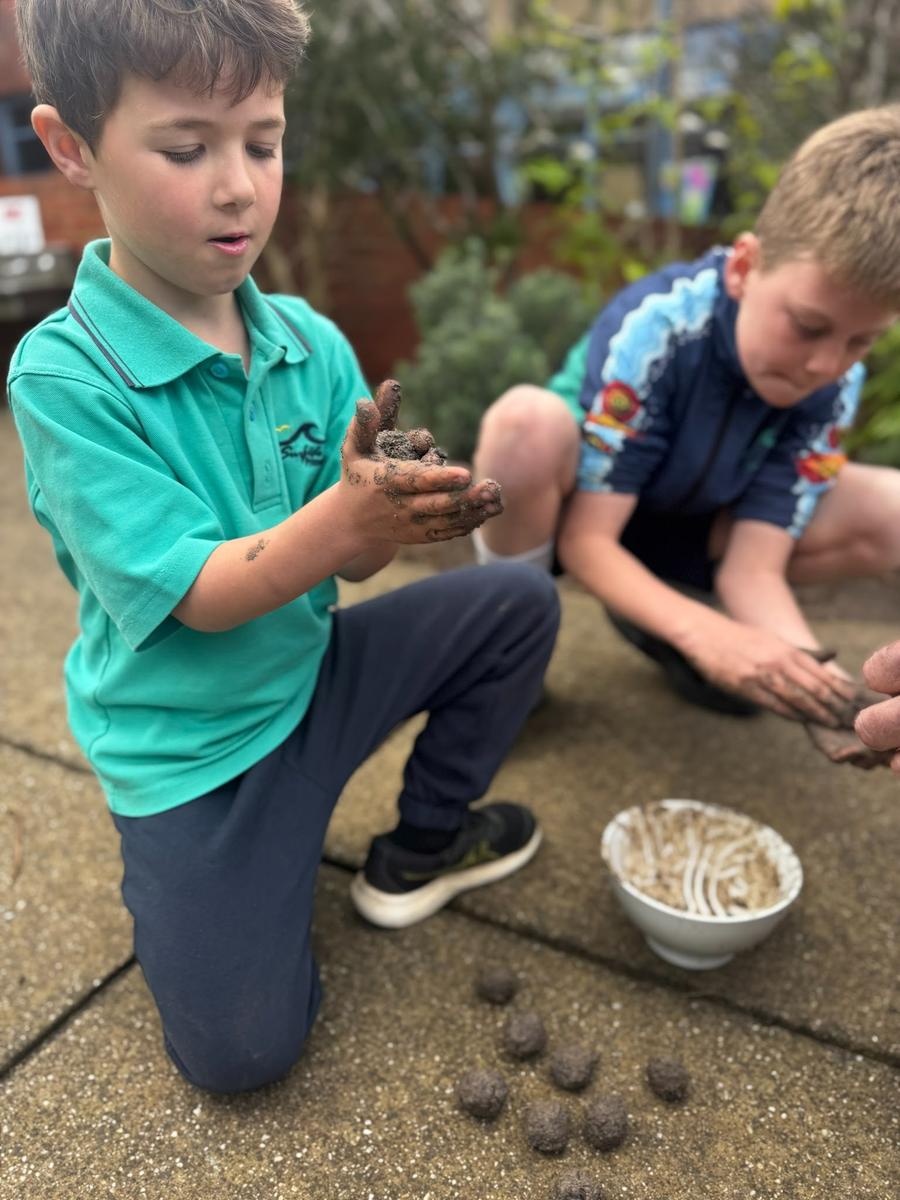
Seed bombs are balls of clay, dirt and seeds. These form into the size of a marble and are thrown into the garden, ready to grow. Because the seeds are covered in clay, birds cannot eat them. This is the perfect way to grow a plant, and I would definitely learn how to make these at home if birds keep repeatedly eating your seeds. Believe me, it 100% works and it is really efficient! It seemed that the kids loved getting their hands dirty and working hard.
In the dancing grapes experiment, every table had a glass of soda water. Then we dropped a grape into the glass and had no luck. But we weren’t giving up, so we dropped another grape into the glass, but it still didn’t work! We predicted it was because some of the gas escaped when the bottles were opened, so there weren’t enough bubbles. But when we moved to the next class, we had learned from our mistakes and made it work.
In this experiment, we dipped celery into coloured water. The celery would then suck up the water and become coloured. The students loved it! Afterwards, we did another experiment where we used coloured water and tissue paper. We started with red, blue, yellow and green, but some of the colours mixed and turned brown in the cups. We had to leave before we could see a significant difference in all the colours.
In this experiment, we showed everyone how to make slime using nectar as the theme. All of the kids joined in and made their own slime to take home. During the hour, we also did tons of experiments with the slime, including a stretch test where you see how long it can stretch, a shape test where you test how long it can hold its shape, a bounce test and many more!
We all had lots of fun with this experiment — the Grade 3s and the STEAM Captains!
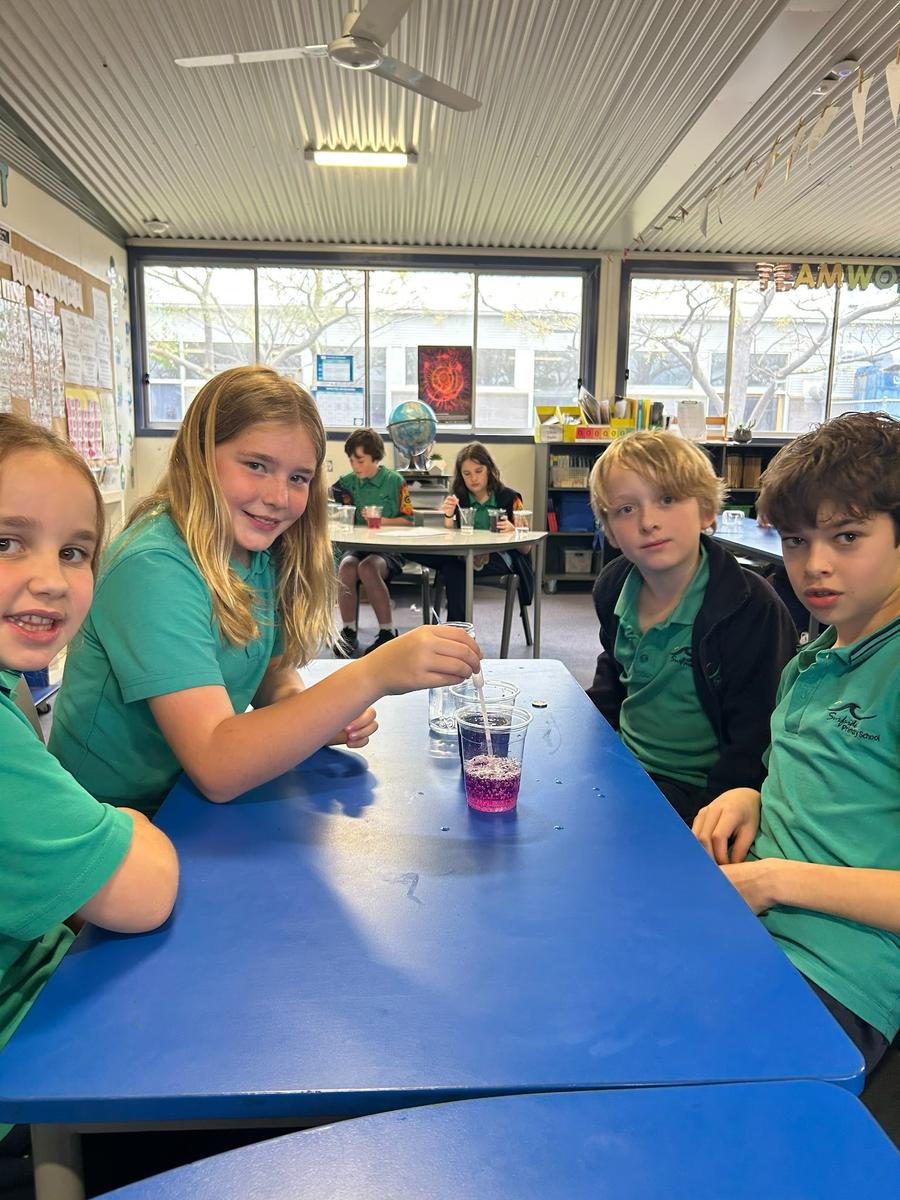
Rain cloud in a jar is an experiment where you can represent rain falling from a cloud inside a jar using any colour. When we were making this, the available colours were red, blue, green and yellow. We had shaving cream as the cloud and food colouring as the rain.
This is truly an easy experiment to do at home. Also, the end result is incredibly cool and interesting to watch!
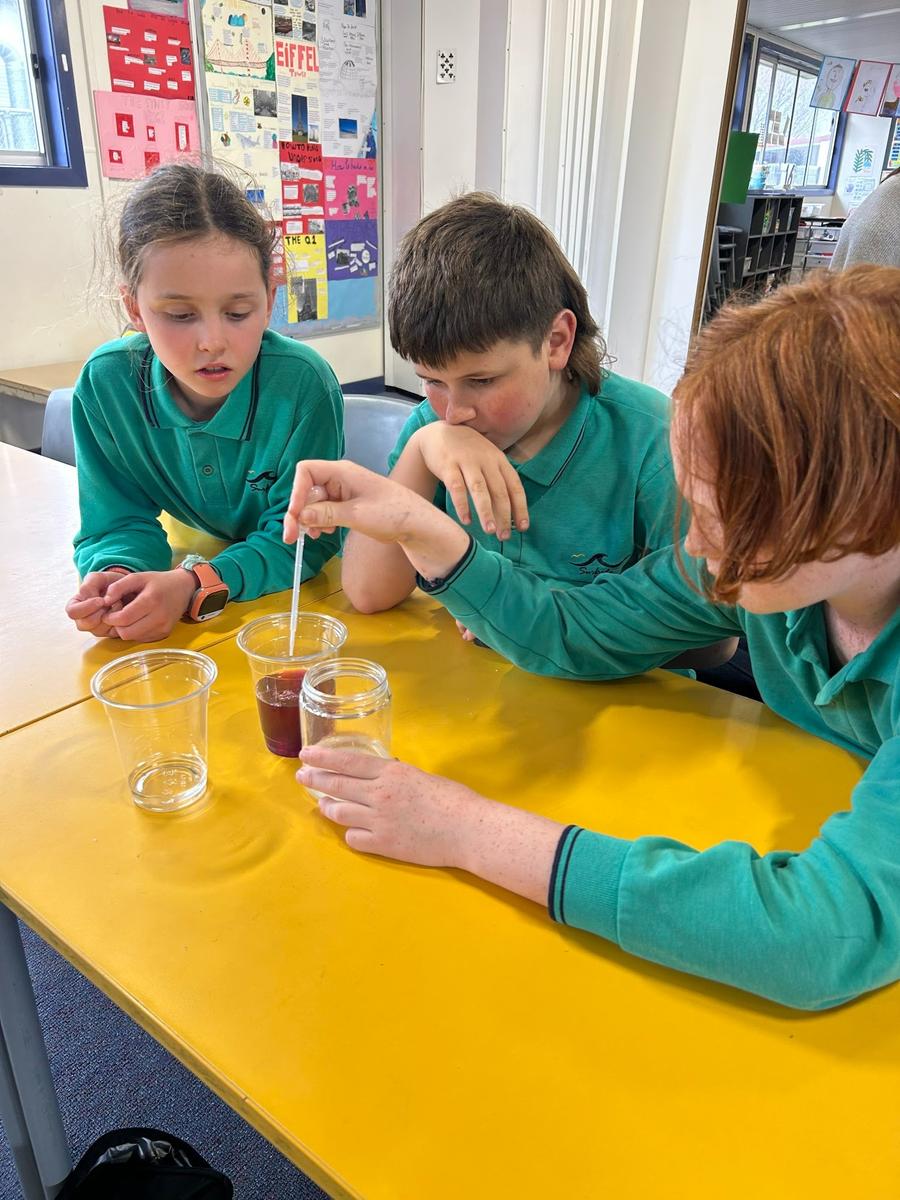
Red cabbage colour match is an experiment where everyone had bicarbonate soda (bicarb soda), vinegar and red cabbage juice. Using these ingredients, we could change the colour of the red cabbage juice.
The red cabbage juice acts as a natural pH indicator. The bicarb soda increases the pH, causing the red cabbage juice to go blue, while the vinegar decreases the pH, resulting in the red cabbage juice turning pink.
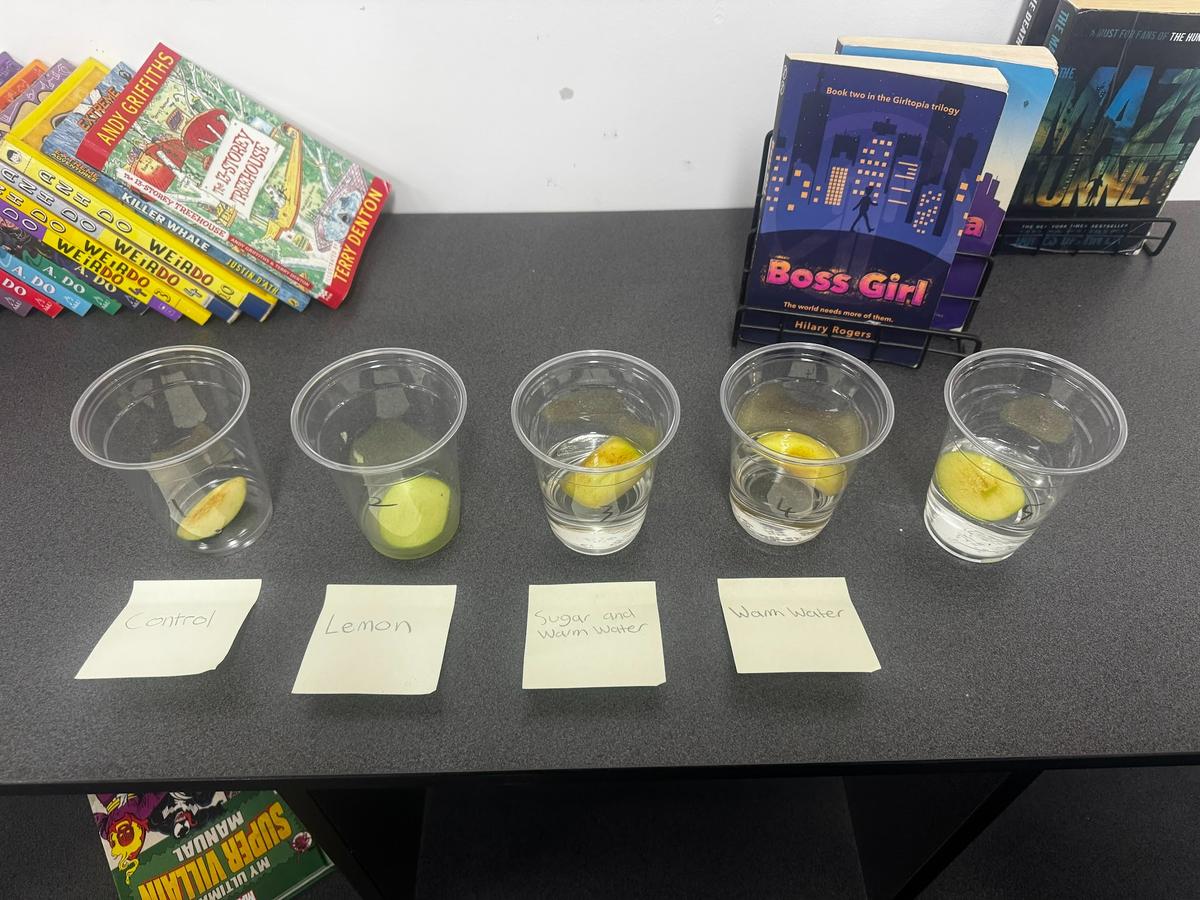
Spoiling speed is an experiment where you put apple slices into different liquids and see how quickly they start to spoil. The things we put the apple slices in were an empty cup, lemon juice, water and sugar, warm water and soda water.
We predicted, on a scale of 0–4, how much each apple slice would spoil and then wrote down the actual results. Surprisingly, the lemon juice kept the apple from spoiling for a week and counting! But some of the others started to change almost immediately, reaching a score of one in only five minutes.
Overall, the week went really well and the kids had a lot of fun. Only one experiment didn’t work as planned. No one sat out of the experiments and no one complained!
The teachers made all the experiments way easier for the STEAM Captains and made the experience much more enjoyable. We hope we inspired many young kids to become future STEAM Captains — maybe even better than us!
The seed bombs worked really well. Dancing grapes did not work at first, except for three people in Mr Santilli’s class, but we had more success later.
Nectar slime worked really well — so well, in fact, that everyone got to take some home! Rain cloud in a jar worked and everyone got to choose a colour. In red cabbage colour match, everyone had to try to match the colours red, bluey-green and pink, and it worked.
Finally, spoiling speed worked surprisingly well and everyone loved it!
What a great week full of fun, excitement and lots and lots of science. Hopefully we have planted a seed of science for a future generation!
The STEAM Team
Digby, Jimmy and Rory