Local Community News




 Elsternwick Primary School
Thunderstorm asthma – be prepared this pollen season
Grass pollen season in Victoria usually runs from October to December. During this time, asthma and hay fever symptoms can get worse. There is also an increased risk of thunderstorm asthma.
Ten years ago, Melbourne experienced the largest thunderstorm asthma event in the world. Thunderstorm asthma can be sudden and serious. It can be life-threatening, especially if a person’s asthma or hay fever is not well controlled.
Elsternwick Primary School will have measures to keep our school community safe.
Many of our staff are trained in asthma first aid. We will monitor VicEmergency for thunderstorm asthma warnings. When needed, we will keep students indoors if the weather forecast shows a higher risk.
Managing asthma and allergies matters. During this pollen season, there are some things you can do to protect yourself and your family:
- If your child has ever had asthma, talk to your doctor about your Asthma Action Plan and to make sure symptoms are well controlled.
- If your child has hay fever, talk to your pharmacist or doctor about a hay fever plan and check if you need an asthma reliever puffer.
- If your child has cough or wheeze with hay fever, talk to your doctor to make sure they don’t also have asthma.
- Take asthma medication as directed by your doctor, as the good control of symptoms can prevent thunderstorm asthma.
- Follow the VicEmergency website or app. Where possible, avoid being outside during thunderstorms – especially during the winds that come before the storm. Go inside and close your doors and windows. If you have your air conditioning on, turn it to ‘recirculate’.
Know asthma first aid. If you are not sure if someone is having an asthma attack, you can still use a blue asthma reliever puffer.
Find out more
For more information, speak to your doctor. You can also:
- speak with an asthma educator on 1800 ASTHMA (1800 278 462). This is a free service from 9 am to 5 pm, Monday to Friday
- refer to Better Health Channel. This includes information in different languages.
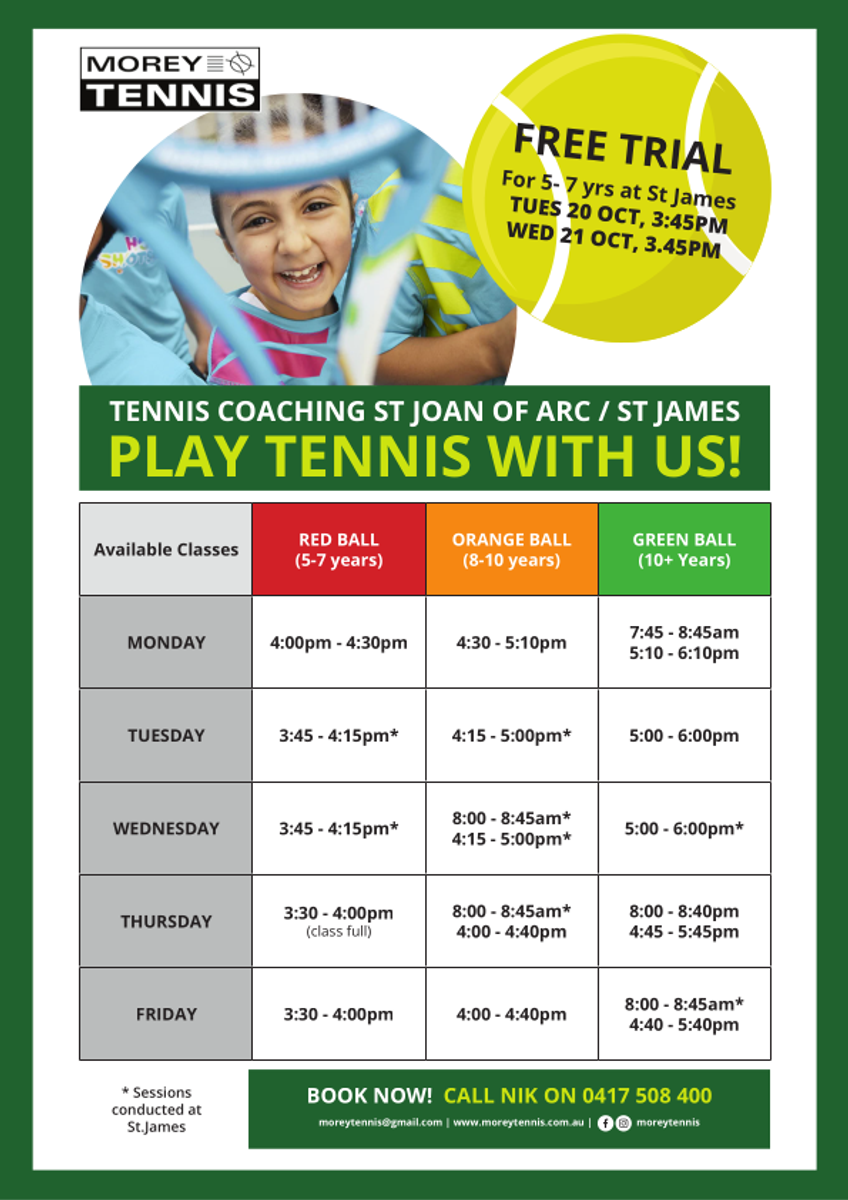
Tennis - Morey
Work at the Victorian State Election
The Victorian state election will be held on Saturday 28 November 2026.
The Victorian Electoral Commission (VEC) is looking for people to staff voting centres in paid roles.
Roles suit a range of skills, experience and availability. Some involve several weeks of work before or after election day. Others are just for election day.
Working at an election is a chance to:
- earn extra income
- gain valuable work experience
- meet new people
- support your community
- play a role in Victoria's democracy.
The VEC provides training and support. Hear more about the experience from casual staff at youtube.com/electionsvic
Find out more and register at vec.vic.gov.au/electionwork
To help the VEC place you at a local voting centre, please take 2 extra steps when you apply:
- write our school's name in the free-text section of your application
email workingatelections@vec.vic.gov.au with our school's name to confirm you've registered.
If you are a school staff member interested in this work, the department’s Other Employment policy and Conflict of Interest policy apply to you. This includes the requirement to declare and seek approval for employment outside the department, as well to declare and manage any conflict of interest that may be caused by this form of other employment.
For enquiries about state election employment opportunities, contact the VEC at workingatelections@vec.vic.gov.au
Scholarships for students
The Department of Education manages a range of student scholarships. These are available for students who:
- complete Grade 4 to Year 11 in 2026
are enrolled in Year 12 in 2026 and plan to do tertiary studies in 2027.
The department will evaluate applicants on their:
- academic achievement
- participation in school and community activities
financial need.
Scholarships are either one-off payments or cover the duration of the student’s course.
Applications for these scholarships open on Thursday 1 October 2026 and close on Monday 1 February 2027.
To view all available scholarships and for more information on each, including how to apply, refer to Student scholarships.
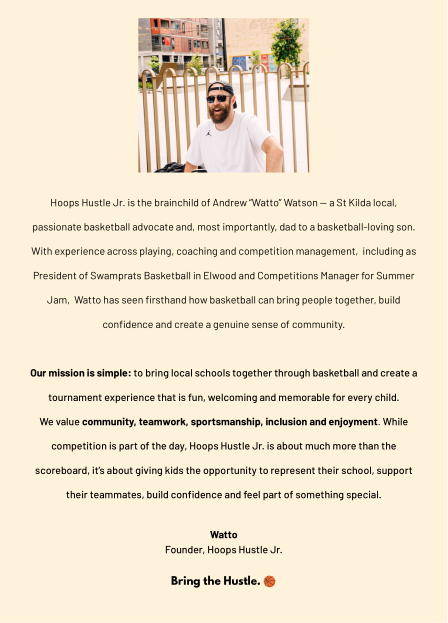
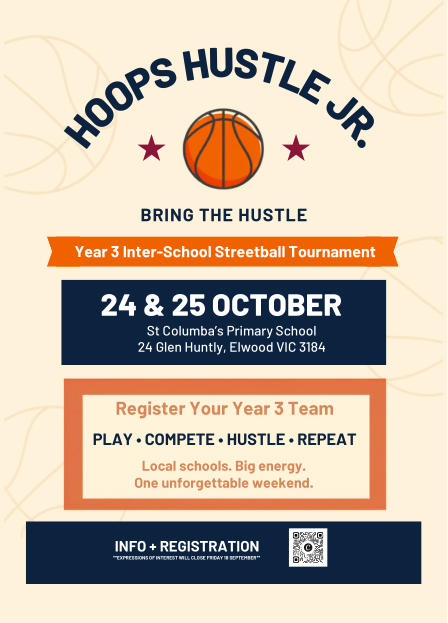
Year 3 - Hoops Hustle
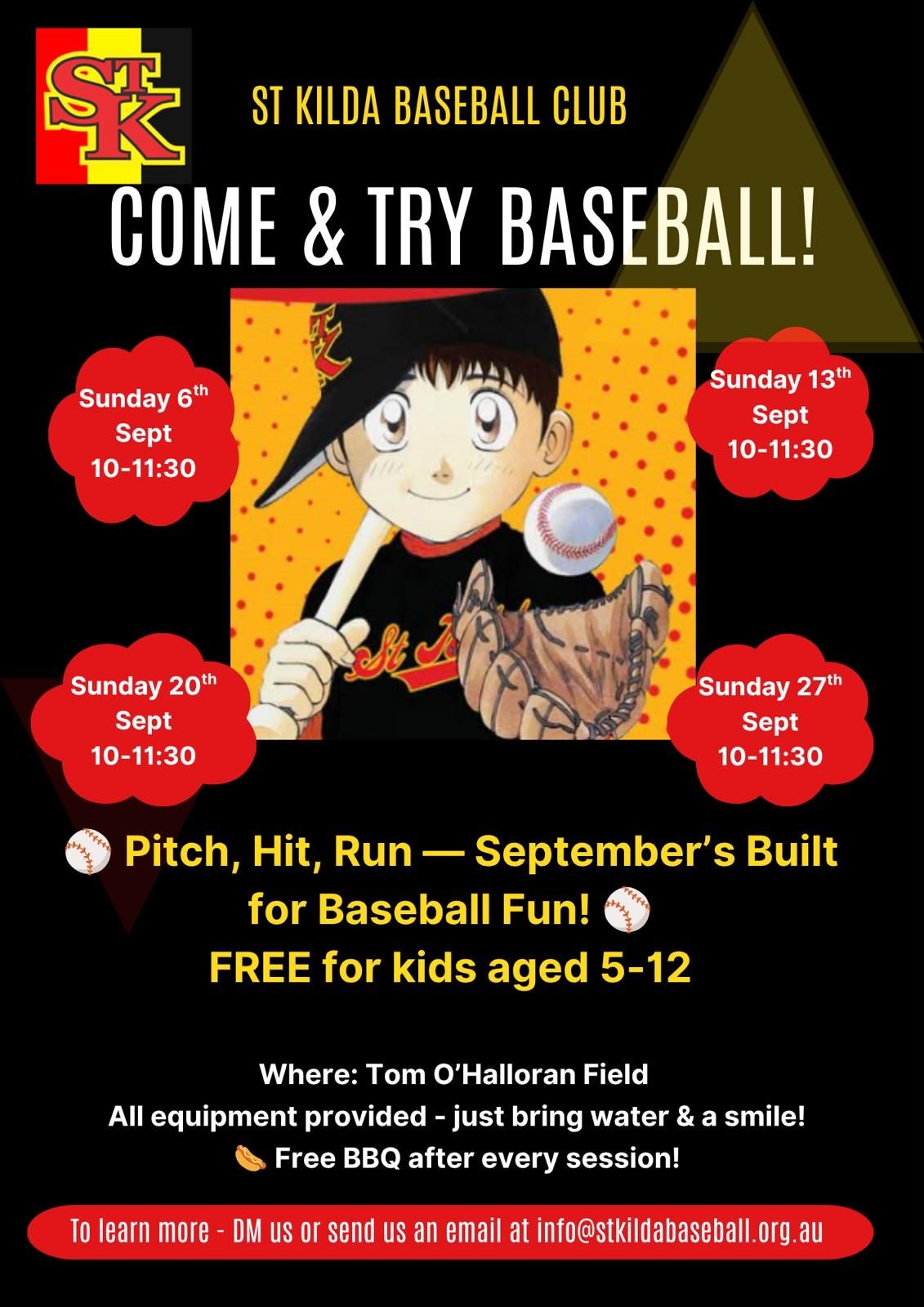
Baseball Club
Code Camp

Information about H5 bird flu in Victoria
Cases of H5 bird flu have been confirmed in birds across Australia, including in south-west Victoria.
Our school has steps to follow if sick or dead birds are found at or near our school.
If you see a sick or dead bird at or near the school, please let us know. If you find a sick or dead bird in the community, the advice from the Australian Government Department of Agriculture, Fisheries and Forestry is to:
- avoid contact and keep your distance
- record date, time, location and take photos
- report it to using an online form or through the Emergency Animal Disease Hotline: 1800 675 888.
For current information about reporting, refer to DEECA’s H5 bird flu page.
For more information, you can check out these bird flu resources from the Australian Government.
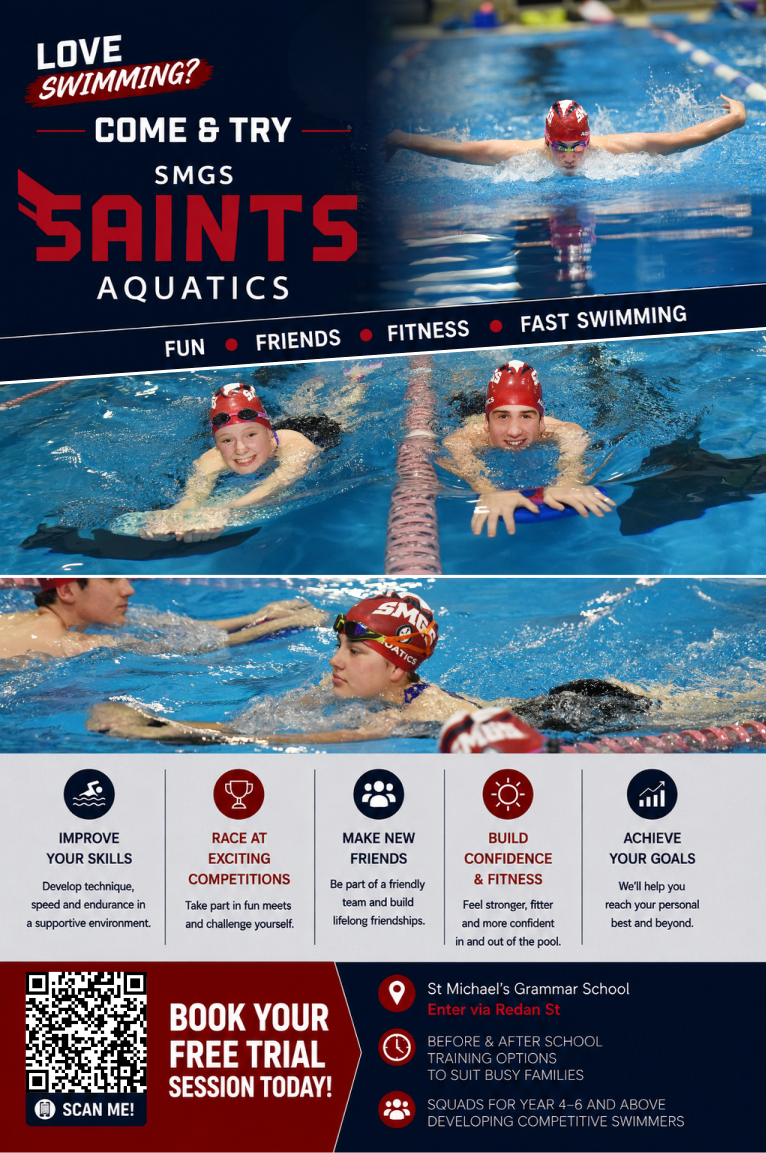
St Michael's Swimming Club
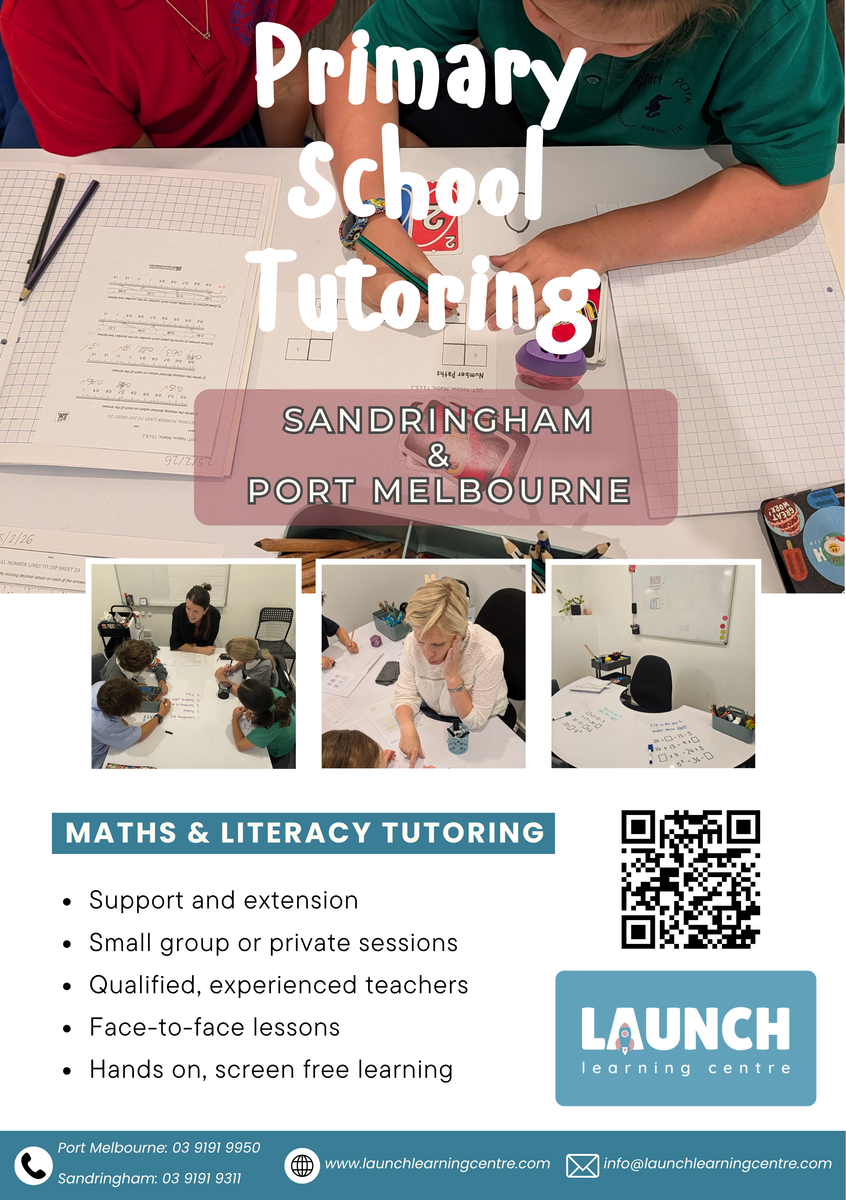
Launch Learning Centre - Tutoring Centre
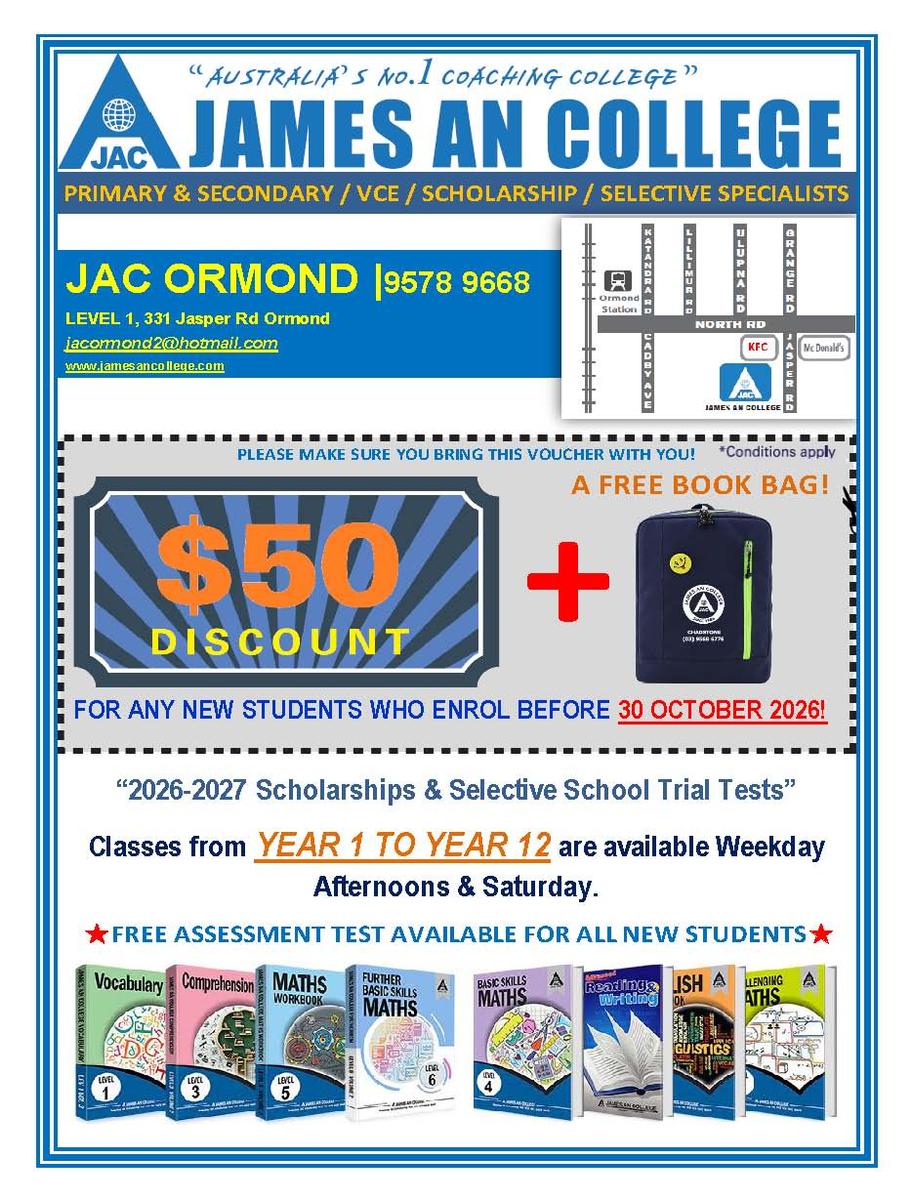
James An College Ormond
Protecting against diphtheria
There are diphtheria outbreaks happening in some parts of Australia, especially in regional and remote areas of the Northern Territory, Western Australia and South Australia. There have been no cases identified in Victoria to date.
Vaccination is the best way to protect against getting very sick from diphtheria. Everyone should stay up to date with their vaccinations.
If your family is travelling to a higher risk area, the Department of Health recommends that you:
- check your family’s diphtheria vaccinations
- consider getting vaccinated if you or your family have not had a diphtheria vaccine in the past 5 years.
You can check your diphtheria vaccination records:
- on your Medicare online account through MyGov or by contacting the Australian Immunisation Register on 1800 653 809
- on your personal health records, such as your childhood immunisation records
- by speaking to your GP, immunisation provider or Aboriginal Health Service.
You can also check if your family is up to date with other vaccinations before travel in Australia or overseas.
About diphtheria
Diphtheria is a serious infection. It can affect the skin or the nose, throat and airways. In severe illness, it can affect the heart, kidneys and nerves.
It is spread through close contact with an infected person, through skin sores, or droplets from coughs, sneezes and saliva. Sometimes it can spread through contact with contaminated items such as towels or shared objects.
People who are not fully immunised have higher risk of severe illness. Pregnant women, children aged under 5 years and those with weakened immune systems also have higher risk.
Free diphtheria vaccinations
Vaccination is free for:
- people aged less than 20 years who need a catch-up vaccination
- refugees and humanitarian entrants
- pregnant women
- some Aboriginal and Torres Strait Islander people.
For more information about eligibility, refer to the Department of Health’s diphtheria booster vaccination campaign.
Vaccination is available at your GP, local pharmacist, local council or Aboriginal Health Service. Call ahead to see if you are eligible for a free vaccine.
Please note that there are no restrictions on travel to [Northern Territory/Western Australia/South Australia] based on vaccination status.
Find out more
For more information, refer to:
- Better Health Channel for information on finding your immunisation records
- Department of Health for information about free booster vaccine eligibility
- your GP, local pharmacist, local council or Aboriginal Health Service
Sailaway Readers

Protecting against mosquito-borne diseases
Some areas in regional northern Victoria are experiencing a longer mosquito season this year due to recent flooding. While the overall risk is currently low, some mosquitoes may be carrying diseases that make people sick.
The best protection against mosquito-borne illness is to avoid mosquito bites. The free Japanese encephalitis vaccine is also available for more Victorians.
Free Japanese encephalitis vaccines
Japanese encephalitis virus is spread to humans through bites from infected mosquitoes. It can cause a rare but potentially serious infection of the brain.
The free Japanese encephalitis vaccine is available for:
- people aged 2 months or older who live or work in eligible high-risk local government areas in Victoria
- until Friday 31 July 2026, people who plan to visit high-risk areas in Victoria or interstate for outdoor recreation such as hiking, camping, caravaning or boating.
For more information:
- refer to the Department of Health’s Japanese encephalitis webpage for a list of high-risk areas
- speak to your GP or immunisation provider to check if your family is eligible for a free vaccine ahead of any planned travel during the coming months.
How to help prevent mosquito bites
To help protect against mosquito bites, families can:
- cover up as much as possible with long, loose-fitting, light-coloured clothing
- apply insect repellent that contains picaridin or DEET on exposed skin when outdoors
- limit outdoor activity if lots of mosquitoes are active
- clean up and remove containers and items around the home that may hold water where mosquitoes may breed.
Families with any health concerns should see their doctor or phone Nurse-on-Call: 1300 606 024 (available 24 hours).
Find out more
For more information on protecting against mosquito-borne diseases, families can refer to the following Better Health Channel pages:
- Mosquitoes can carry diseases
- Protect yourself from mosquito-borne disease, including a handy checklist to help reduce mosquito breeding sites at home and resources translated into other languages
- Japanese encephalitis.
Piano Lessons


Piano Teacher

Elwood College Homestay

Protecting against measles
Measles cases are rising in Victoria and around the world. Returned travellers make up most cases, but local spread has also been detected.
Vaccination is the most safe and effective way to protect yourself and others against measles. People need 2 doses of a measles-containing vaccine to be fully protected.
To help protect against measles, you should check your family’s measles vaccinations today. This is particularly important if you are:
· planning any travel
· were born during or after 1966
· were born overseas.
You can check your measles vaccination records: · on your Medicare online account through MyGov or by contacting the Australian Immunisation Register on 1800 653 809
· on your personal health records, such as your childhood immunisation records
· by speaking to your GP or immunisation provider.
About measles Measles is a viral infection. It spreads easily from airborne droplets, such as from coughing or sneezing, and nose and throat secretions.
Symptoms may include:
· fever
· feeling tired or unwell
· cough or runny nose
· sore and red eyes (conjunctivitis)
· diarrhoea – especially in infants.
This is usually followed by a red, blotchy, non-itchy rash that often starts on the face before spreading down the body.
Measles can cause serious illness and be life-threatening. People who are not fully immunised or have not had a previous measles infection are at increased risk.
Pregnant women, children aged under 5 years and those with weakened immune systems are at increased risk of severe illness and complications.
If your child develops measles symptoms, you should:
· keep your child home from school and seek medical care and testing
· call the health service and wear a face mask when travelling to and attending the health service
· let our school know if your child has measles, or is being tested for measles
· keep your child at home until well and advised by a health professional.
Free measles vaccines
Anyone who does not have 2 doses of measles vaccine, or is unsure, can get a measles vaccine.
Free vaccines are available for:
· infants aged 12 months to 18 months
· children and teenagers aged under 20 years
· adult refugees and humanitarian entrants.
Free vaccines are also available for anyone with or without a Medicare card if they are:
· born during or after 1966 who have not received 2 doses or are unsure, including people born overseas
· infants from 6 months and before 11 months of age before overseas travel.
Vaccination is widely available at your GP, local pharmacist, local council or Aboriginal Health Service. Call ahead to see if you are eligible for a free vaccine.
If your child has had new or catch-up vaccines, we encourage you to give our school an updated immunisation history statement.
Find out more
For more information, refer to: · the Better Health Channel web page How to find your immunisation records
Babysitting

Our contact information is HeidiMiles@caulfieldgs.vic.edu.au and JasmineGilbert@caulfieldgs.vic.edu.au. We are happy to babysit together or separately, thank you!!
Korean Classes

Sport Star Academy

Junior Cellists

Drama Classes - Elwood

Learn to Sail
Learn to sail these school holidays with Tackers at Albert Park lake!
Tackers is a fun introductory, games-based sailing program designed for kids aged 7-12 yrs. Participants learn how to sail small boats with the guidance and expertise of our Australian Sailing qualified instructors.
Tackers focuses on teaching sailing in a fun and engaging way where participants can sail with friends and make new friendships along the way.
Kids don’t need to have any sailing experience or club membership to participate.
Visit https://www.theboatshed.net.au/tackers for more information and/or to book a place.
French Classes

Holloway Bend Scouts

Elsternwick Park Tennis Lessons

Dance Classes

Strong Nation Brighton

Cubs &Scouts

TSR Combative Training
