Mathematics



















 Holy Family School

Maths Matters: Place Value
Ten digits, endless numbers
Here is a small miracle we use every day without noticing: with just ten digits, 0 to 9, we can write any number, from the 3 apples in a lunchbox to the 27 million people living in Australia. The secret is place value, and it is the foundation of almost everything your child learns in maths.
Why ten?
Hold up your hands and you have the answer. People have long counted on their fingers, so grouping in tens came naturally. Our number system is called a base ten system because it works on one simple rule:
When you get to ten of something, you swap it for one of the next place.
Ten ones make one ten. Ten tens make one hundred. Ten hundreds make one thousand. The pattern never ends, and it even keeps going to the right of the decimal point into tenths and hundredths.
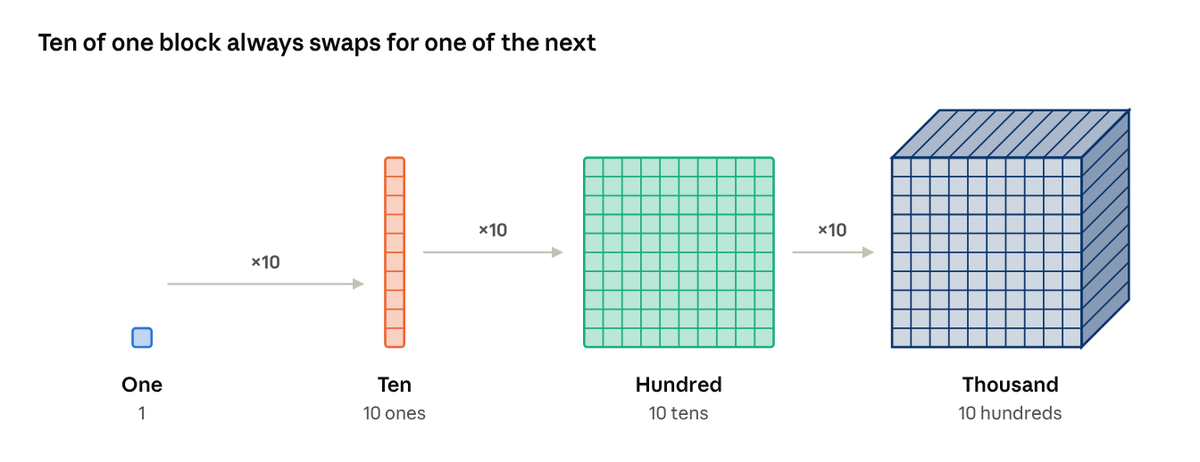
In the classroom we use MAB blocks to see this: ten small cubes line up to make a long, ten longs make a flat, and ten flats stack into a big cube.
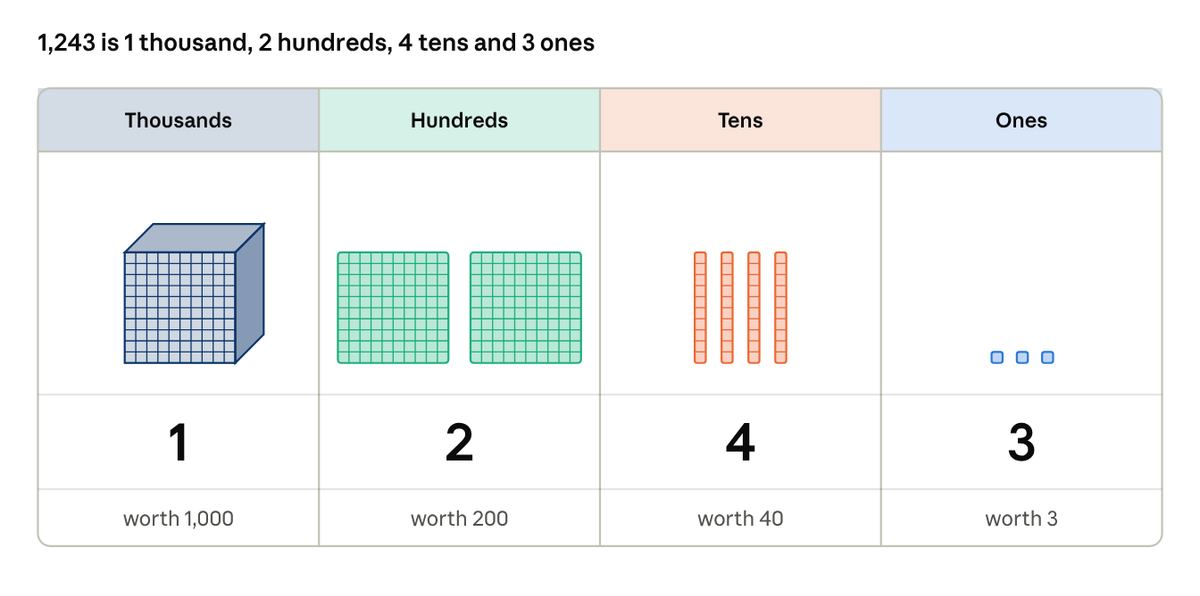
A place value chart gives each digit its own column, so you can see exactly how many blocks it stands for. Where a digit sits decides what it is worth.
Zero, the unsung hero
The Romans had no place value. They wrote 2026 as MMXXVI, which made sums very hard work. Our system relies on zero to hold an empty place, which is why 405 and 45 are completely different numbers. Next time your child writes a zero, they are using one of the cleverest ideas in history.
Bring it to life at home
These ideas work for any age. Make the numbers smaller or larger to suit your child.
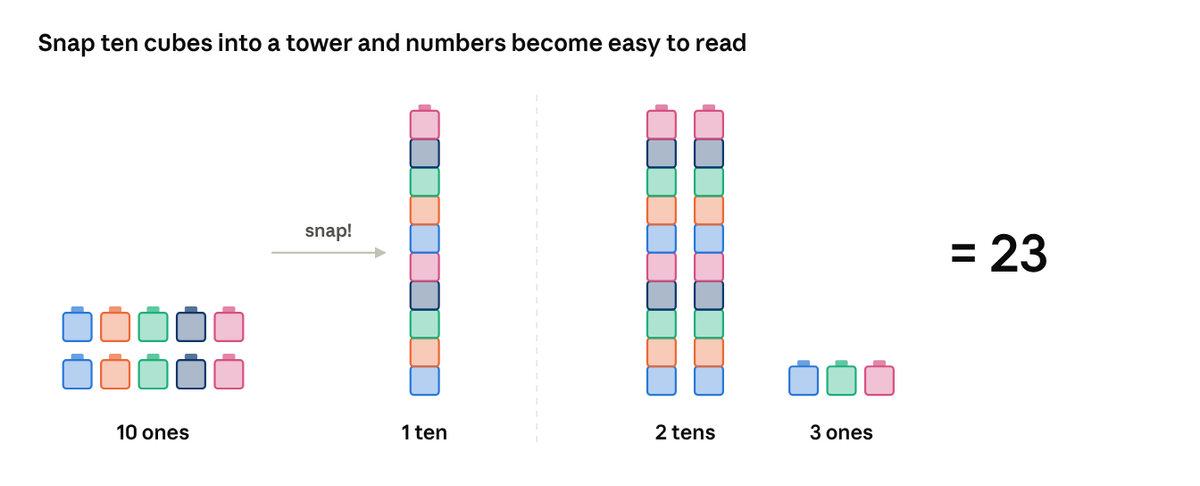
Unifix cubes (or Lego bricks) make this hands-on. Once ten cubes snap into a tower, a number like 23 is easy to see: two towers and three left over.
- Bundle it up: Count a pile of pasta, pegs or Lego and group it into tens. How many tens? How many left over?
- Biggest Number: Deal some playing cards (Ace = 1, picture cards = 0) and race to arrange them into the largest number. Then flip it and aim for the smallest.
- Number spotting: Find numbers on letterboxes, price tags, scoreboards and car odometers. Ask, "What is that digit worth?"
- Make it another way: Pick a number like 254. It is 2 hundreds, 5 tens and 4 ones, but it is also 25 tens and 4 ones. How many ways can you find?
- Money talk: Ten 10c coins make $1, and ten $1 coins make $10. Coins are base ten you can hold in your hand.
The best question of all is simply, "How do you know?" Explaining their thinking is where the real learning happens.
Warm regards,
Michelle Luong
Numeracy Leader
Learning & Teaching Leader