
Family Wellbeing

Wellbeing: The Power of Empathy
As we reach the end of another busy term, many of us, children and adults alike, can be feeling a little more tired, emotional or easily frustrated than usual. It makes this a particularly good time to think about empathy and the way we respond when someone around us is having a hard time.
R U OK? Day at Oakleigh Primary School 💛
This week, our school community came together to recognise R U OK? Day and continue building our students' understanding of connection, wellbeing and looking out for one another.
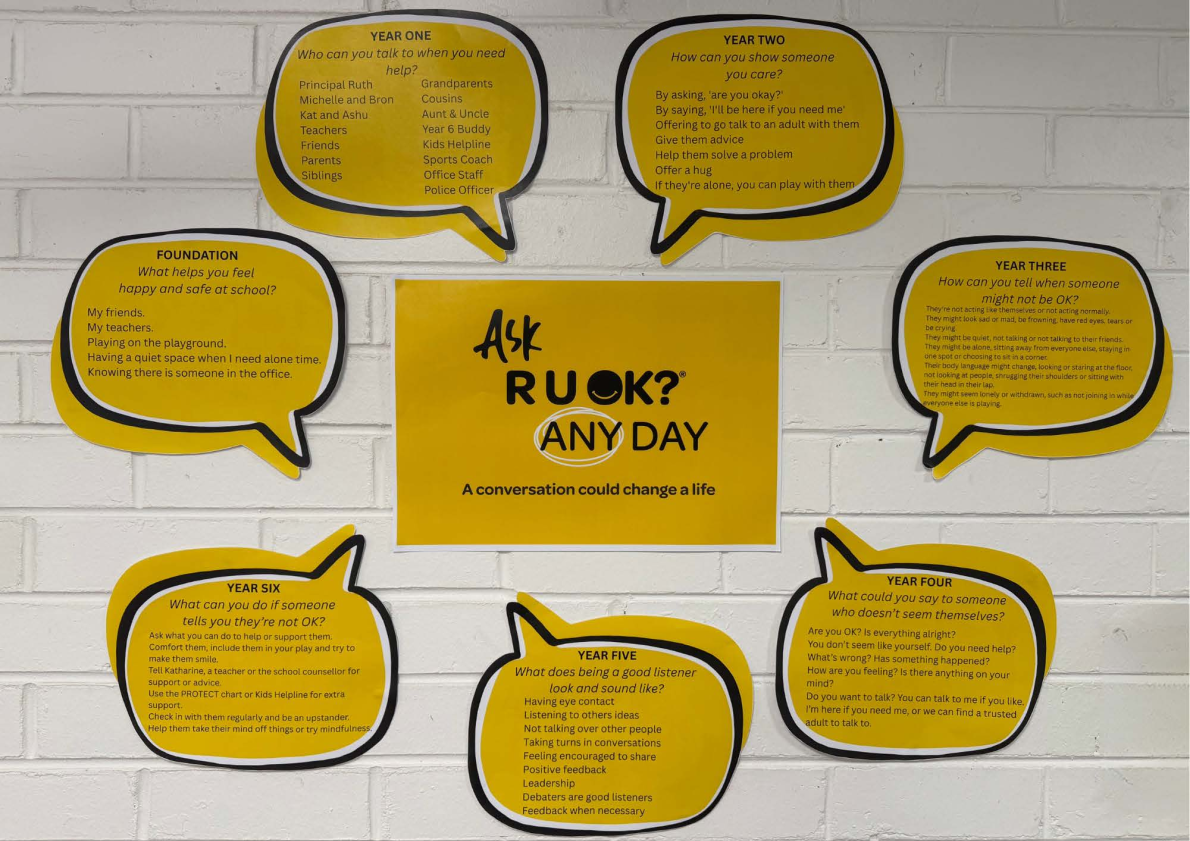
Across the school, students took part in activities and conversations exploring what helps us feel connected, supported and safe at school, and what we can do when we notice that someone else might need some extra support.
Students also contributed their ideas and reflections to our whole-school R U OK? Day display. It has been wonderful to see the thoughtful responses from students across all year levels and to hear their voices about what helps them and their peers feel supported.
These responses will come together as a colourful whole-school display, which will be ready for everyone to enjoy in Term 4. We encourage families to come in and have a look once it's up; there are some wonderful ideas from our students!
R U OK? Day also gives us an important reminder that asking “Are you OK?” is only the beginning. What we do next - how we listen and respond - matters too.
Empathy: listening to understand
Empathy is our ability to try to understand another person's feelings and perspective. It doesn't mean we have to agree with them, and it doesn't mean we need to solve their problem. Sometimes, the most helpful thing we can do is simply listen and let someone know that their feelings have been heard.
A wonderful short animation from Brené Brown explores the difference between empathy and sympathy and reminds us that when someone shares something difficult, our instinct can sometimes be to make it better:
“At least…”“Don't worry about it.”“You'll be fine.”
These responses usually come from a good place. But rather than immediately trying to find the positive or fix the problem, we can practise responding with curiosity and connection:
“That sounds really hard.” “I can understand why you felt that way.” “Do you want to tell me more?” “What do you need from me right now?”
Try it at home
This week, watch the short Brené Brown on Empathy video together and have a quick family conversation afterwards.
You might ask your child:
- What do you think empathy means?
- What was the difference between empathy and sympathy in the video?
- When you're upset, what helps you feel understood?
- What can we do when a friend or family member is having a hard time?
- Can you understand someone's feelings even if you don't agree with them?
For younger children, we can make it even simpler: “How do you think they might be feeling?” and “What could we do to show them we care?”
A little end-of-term challenge
Over the holidays, see if your family can practise one simple empathy habit:
Listen first. Fix second.
Sometimes our children aren't looking for us to make the feeling disappear. They simply need to know that someone is willing to sit beside them in it.
Learning to notice, understand and respond to the feelings of others is an important part of building strong friendships, managing conflict and creating a kind and connected school community.
Thank you to our students, staff and families for another wonderful term. We look forward to sharing our R U OK? Day display with you in Term 4!
Watch together: Brené Brown on Empathy