
Wellbeing at TPS
Dealing with Conflict: Helping Children Build Lifelong Skills
Hi families and carers,
As parents, we all want our children to get along with others, build positive friendships and feel happy at school. While we often hope to avoid conflict, the reality is that disagreements are a normal and healthy part of growing up.
Whether it's an argument with a sibling, a disagreement with a friend or frustration over not getting their own way, conflict provides valuable opportunities for children to develop the skills they'll use throughout their lives.
When children are supported to work through conflict in positive ways, they learn to:
- Communicate respectfully
- Understand different perspectives
- Regulate their emotions
- Solve problems collaboratively
- Build stronger and healthier relationships
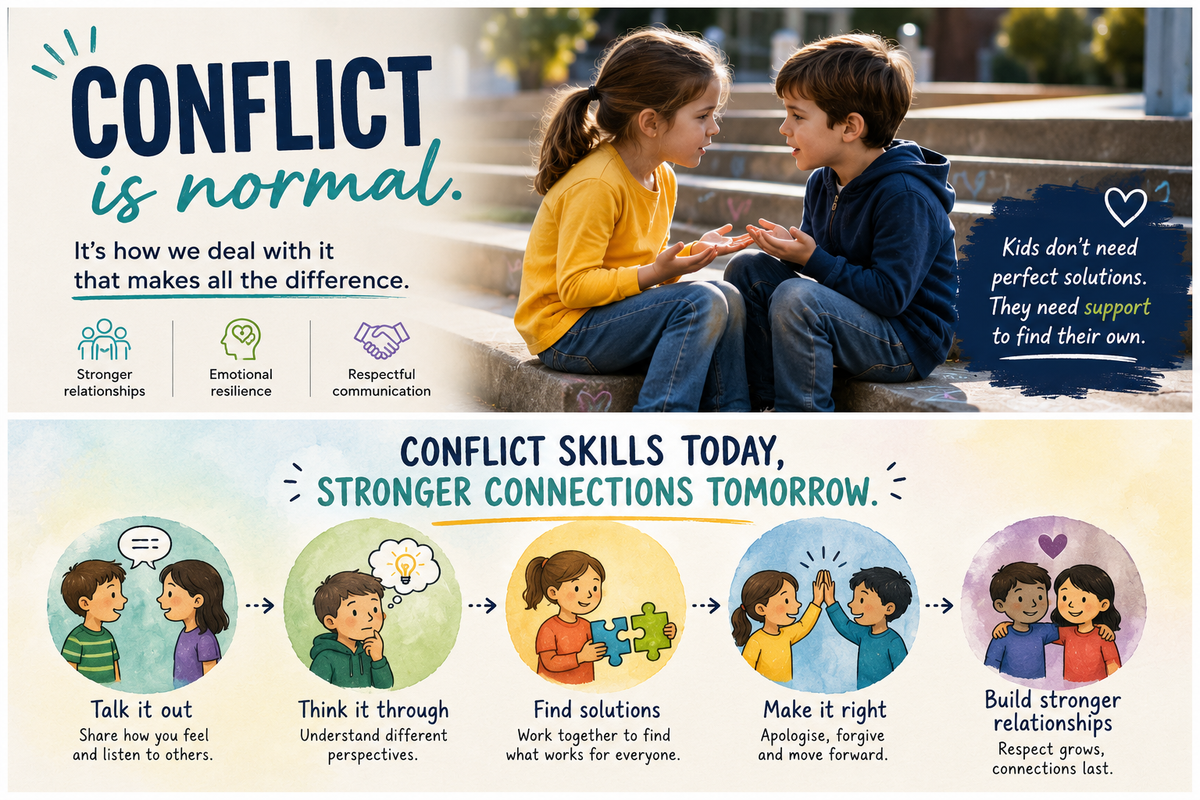
Research tells us that children learn how to manage conflict by watching the adults around them. The way we respond to disagreements at home has a powerful influence on how children handle conflict with their own peers. Remaining calm, listening with empathy and modelling respectful problem-solving teaches children that conflict doesn't have to damage relationships, it can actually strengthen them.
Simple Ways to Support Healthy Conflict Resolution
Stay calm first
Children often borrow our emotional state. Responding calmly helps them feel safe and makes it easier for everyone to think clearly.
Listen before solving
Encourage your child to explain what happened and how they are feeling. Sometimes children simply need to feel heard before they are ready to find a solution.
Help them name their feelings
Teaching children to recognise emotions such as frustration, disappointment or anger helps them develop emotional regulation and communicate more effectively.
Focus on solutions, not blame
Instead of asking "Who's right?", try asking:
- "What happened?"
- "How do you think the other person felt?"
- "What could you do differently next time?"
"How can we make things right?"
These conversations encourage responsibility, empathy and problem-solving.
Model respectful disagreement
Children learn that it's okay to disagree when they see adults expressing different opinions respectfully, apologising when needed and working towards solutions together.
Conflict Isn't Failure
It can be tempting to step in and solve every disagreement for our children. However, when adults provide guidance rather than immediately fixing the problem, children develop confidence in their own ability to navigate challenging situations.
Learning to resolve conflict respectfully is an important life skill that supports children's friendships, resilience, emotional wellbeing and future relationships.
At Teesdale Primary School, we regularly teach and model social and emotional skills that help students communicate, solve problems and repair relationships. When school and home work together using consistent messages, children are given the best opportunity to develop these essential lifelong skills.
If you are concerned that your child is frequently involved in conflict, struggles to regulate their emotions or finds friendships particularly challenging, please don't hesitate to reach out to your child's classroom teacher or our wellbeing team. We're here to support both students and families.
Helpful Resources
There are many excellent resources available, but some of the best I've found include:
Raising Children Network – Evidence-based strategies for helping children develop problem-solving, emotional regulation and healthy relationship skills.
SchoolTV – Dealing with Conflict – Practical advice and expert guidance to help families support children through everyday conflict and disagreements.
Beyond Blue – Helpful information on supporting children's emotional wellbeing and building resilience.
Speak soon,
Rhys Lindsay
Learning Specialist – Wellbeing