Year 3/4A






Year 3/4 Classroom News
It has been another busy and engaging time in 3/4A, with students exploring thought-provoking ideas in English, developing their mathematical skills and deepening their understanding of the natural world through Science!
English – Exploring Narratives Through Wonder
As part of our English narrative unit, students have been viewing the movie Wonder, based on the novel by R.J. Palacio. The story follows August “Auggie” Pullman, a boy with a facial difference who begins attending mainstream school for the first time. Through Auggie’s experiences, students have been exploring how characters respond to challenges, develop relationships and change throughout a story.
We have been examining important narrative elements, including character development, setting, plot, conflict and resolution. Students have considered how a character’s experiences influence their thoughts, feelings and actions, and how key events contribute to the development of a narrative. We have also discussed how filmmakers use dialogue, facial expressions, music and different perspectives to communicate emotions and help audiences connect with characters.
Beyond its narrative features, Wonder has provided valuable opportunities to discuss themes of kindness, empathy, acceptance, friendship and inclusion. Students have reflected on the importance of looking beyond appearances, considering other people's perspectives and recognising that everyone has their own challenges. The story reinforces the powerful message that small acts of kindness can make a significant difference in the lives of others.
These discussions are helping students make connections between the stories they experience and their own lives, while developing their ability to analyse characters, identify themes and understand how authors and filmmakers communicate meaningful messages. Students will use their growing understanding of narrative structure and character development to support their own narrative writing.
Mathematics – Time and Subtraction
In Mathematics, we have been developing our understanding of time and subtraction, with students building their confidence through a variety of practical activities and problem-solving tasks.
Our work on time has focused on reading and interpreting clocks, understanding the relationship between seconds, minutes and hours, and calculating elapsed time. Students have been practising how to determine the duration of events and work out start and finish times in everyday situations. These skills encourage students to apply mathematical reasoning to real-world problems, such as working out how long an activity lasts or calculating how much time remains before an event begins.
We have also been exploring subtraction strategies, with an emphasis on selecting efficient methods to solve calculations accurately. Students have been practising how to partition numbers, use number lines, apply place-value knowledge and solve subtraction problems involving larger numbers. We have encouraged students to explain their thinking, check the reasonableness of their answers and recognise that different strategies can be used to reach the same solution.
As we continue these units, students are being encouraged to build both their computational fluency and their confidence when tackling increasingly challenging mathematical problems.
Science – Investigating the Water Cycle
In Science, we have continued our exploration of the water cycle and the processes that move water around our planet. Students have been learning about evaporation, condensation, precipitation and collection, and how these processes work together as part of a continuous cycle.
We have discussed how the Sun provides the energy needed for evaporation, causing liquid water to change into water vapour. As water vapour rises and cools, condensation occurs, forming tiny water droplets that contribute to cloud formation. When these droplets combine and become heavy enough, water falls back to Earth as precipitation, such as rain. Water then collects in rivers, lakes, oceans and other parts of the environment, where the cycle can begin again.
Students have also been considering how temperature, the Sun and weather conditions influence the movement of water through the environment. We have explored how the water cycle connects to everyday experiences, including rainfall, puddles drying up and clouds forming in the sky.
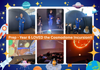
Last Friday, students had the exciting opportunity to participate in a Cosmodome incursion focused on the water cycle. This engaging learning experience provided an opportunity to extend our classroom investigations and explore scientific concepts in an interactive and memorable way. The incursion helped bring our learning to life, encouraging students to make connections between the scientific processes we have been studying and the world around them.
We look forward to continuing our Science investigations as students build their scientific vocabulary, ask questions, make observations and develop a deeper understanding of the natural processes that sustain life on Earth.
Looking Ahead
It has been wonderful to see students engaging with such a diverse range of learning experiences. Whether analysing the messages within Wonder, applying mathematical strategies to solve problems or investigating the processes that drive the water cycle, students are continuing to develop their knowledge, critical thinking and problem-solving skills.
Well done to 3/4A for their enthusiasm, curiosity and continued efforts across all areas of our learning program!