CHILD SAFETY IS EVERYONE'S RESPONSIBILITY


 Ripponlea Primary School
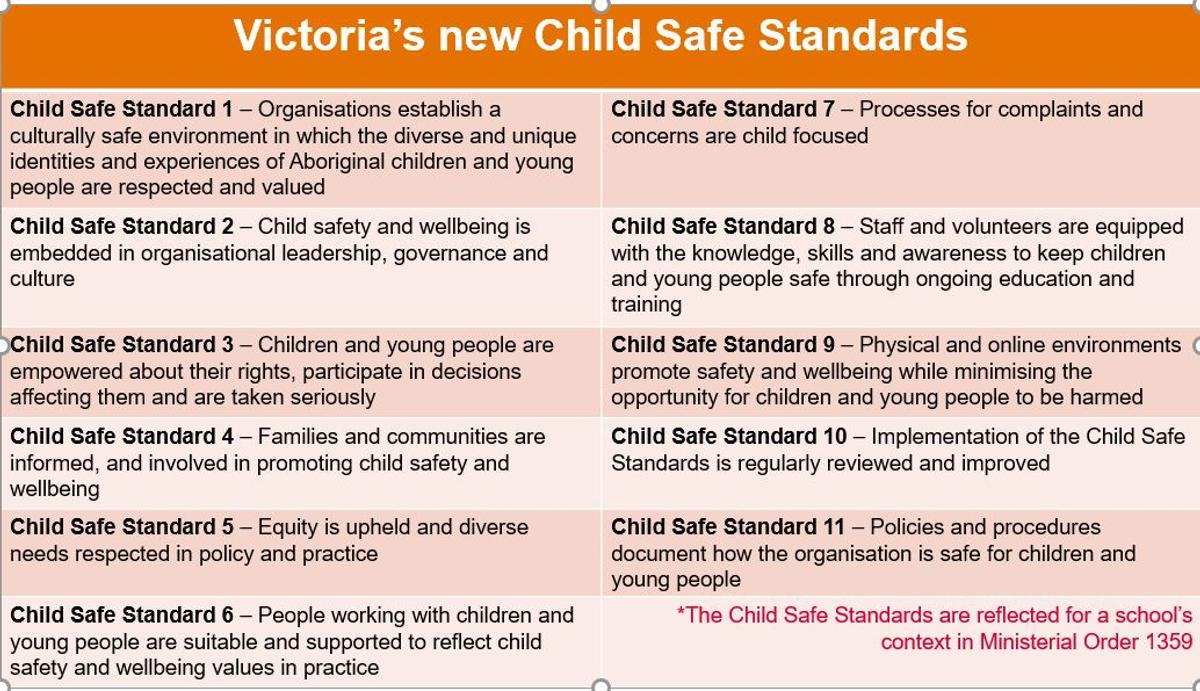
CHILD SAFE STANDARD 8
Child Safe Standard 8:
Child Safety – Staff and volunteers are equipped with the knowledge, skills and awareness to keep children and young people safe through ongoing education and training.
Under Ministerial Order 1359, Clause 12, all Victorian schools, including Ripponlea Primary School, must ensure staff, volunteers and School Council members receive appropriate child safety training and support.
1. Annual child safety training for all staff
At least once every year, all staff engaged in child-connected work must receive training covering eight mandatory areas.
| Mandatory training content | What RPS must ensure |
|---|---|
| 1. Child Safety and Wellbeing Policy | Staff understand the school's policy and their responsibilities |
| 2. Child Safety Code of Conduct | Staff understand appropriate professional boundaries and expected behaviour |
| 3. Complaints and reporting procedures | Staff know how to respond to concerns and allegations of child abuse |
| 4. Recognising child harm | Staff recognise indicators of abuse, including student-to-student harm |
| 5. Responding to child safety concerns | Staff know how to respond, report and support colleagues who disclose harm |
| 6. Cultural safety | Staff understand how to create culturally safe environments for all students |
| 7. Information sharing and recordkeeping | Staff understand their legal obligations for sharing and documenting information |
| 8. Identifying and managing risks | Staff understand how to minimise child safety risks while respecting students' rights |
2. Child safety training for volunteers
All volunteers engaged in child-connected work must receive training and information appropriate to their roles.
This includes, where applicable, parent helpers, excursion and camp volunteers, classroom volunteers and volunteer coaches.
3. Appropriate training content for volunteers
When deciding what training volunteers require, schools must consider whether it is reasonable and necessary to cover seven areas:
- Child Safety and Wellbeing Policy.
- Child Safety Code of Conduct.
- Recognising indicators of child harm.
- Responding to child safety concerns and supporting disclosures.
- Creating culturally safe environments.
- Information sharing and recordkeeping obligations.
- Identifying and managing child safety risks relevant to their role.
Volunteers do not necessarily need the same training as teaching staff. The content must be appropriate to their responsibilities.
4. Ongoing support for staff and volunteers
Schools must ensure staff and volunteers are supported to implement the Child Safety and Wellbeing Policy in accordance with their responsibilities.
At RPS, this is demonstrated through:
- Principal and Assistant Principal guidance on child safety concerns.
- Access to relevant policies, reporting procedures and the Four Critical Actions.
- Staff meetings and professional learning addressing child safety.
- Support for staff managing disclosures, allegations and serious incidents.
- Appropriate supervision and opportunities to seek guidance.
- Induction and ongoing support for new staff and volunteers.
5. Annual School Council training
All members of the school governing body must receive appropriate child safety training and guidance at least annually.
Training must address three areas:
- Individual and collective responsibilities for implementing the Child Safe Standards and managing child abuse risks.
- Child safety and wellbeing risks within the school environment.
- The school's child safety policies, procedures and practices.
For Ripponlea Primary School, this applies to School Council members, including parent representatives.