MHiPS


Hello from Mrs Loverso!
Welcome to term 3!
Problem Solving for Kids
I am not sure about you, but the school holidays in the Loverso household were a challenge.
Cold wintery weather is not our favourite, and our two sons were desperate to run around outside. Not being able to move their body, plus being out of routine, lead to a few too many disagreements and bad moods. I felt like the referee of a two week long soccer match, that ended in nil all. Lots of effort, long days for no one to get a win! So, if that was your reality too, you are not alone!
It got me thinking that solving problems is something that kids will often need help with despite the setting. Children might be working through social challenges, or even private worries- and it is our job as adults to help support, model and guide children to developing these skills in a healthy way.
There are multiple ways of supporting children through these types of challenges, whether personal or social, and at PPPS, we aim to use evidence based approaches to strengthening students’ emotional skills- in particular, emotional regulation.
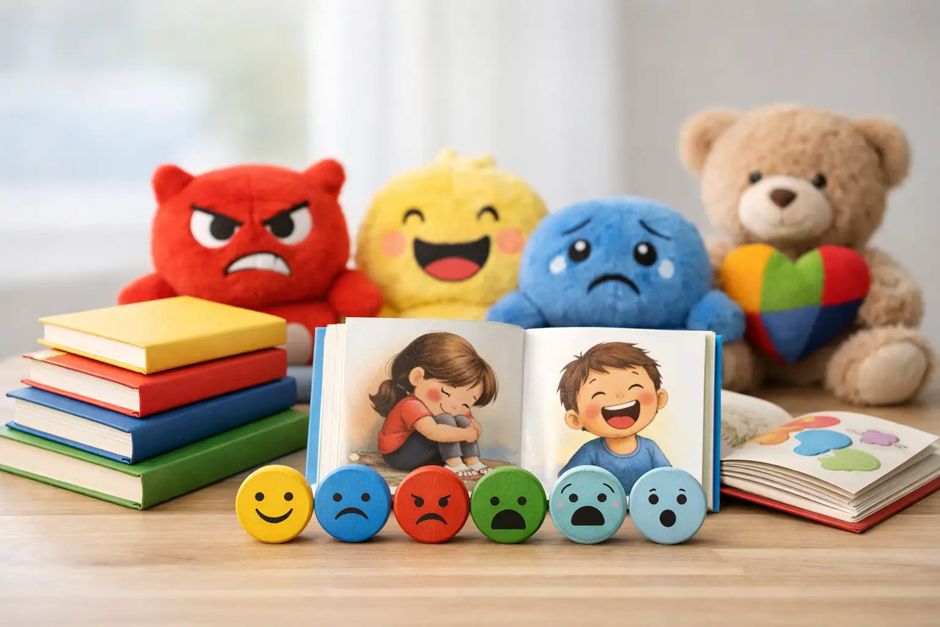
In our school’s social and emotional intervention programs we are creating a safe environment for students to experience some social difficulty and then regulate the emotions that come with that. Teaching students to regulate their emotions is a vital skill to becoming more resilient problem solvers.
Firstly, we support students to notice how they are feeling.
Second, we name the emotion. Young children specifically need support with this. They may not have the language to describe how each feeling feels, or even know the name of it.
Third, we set the limit or expectations. Having a feeling is not the problem. Challenging feelings like anger, frustration, sadness and worry aren’t problems in and of themselves – it’s the way we react to the feeling that is the problem. If my brother is mean to me, and I am offended and hurt, it doesn’t automatically give me the right to hit or kick him. Or if I am worried about a problem in the school yard, that doesn’t give me the right to be grumpy and mean to my friends. Reiterating to the student that their feeling is OK/valid is key to developing trust and empathy here.
Lastly, we support to solve the problem. Once the feelings have been established, the adult and child can brainstorm solutions together that are realistic, mutually satisfactory, and address the concerns of both parties (if it is a social problem). The adult will likely ask questions to prompt the child’s own problem solving skills. Saying things like “I wonder what we could have done better next time?,” “I wonder what his/her perspective was?,” “How did that make you feel?” etc. Guiding questions like these allow the child to think through the scenario and flex that problem solving part of the brain so they get better and better at solving issues when they arise.
According to The Playful Psychologist, co-regulation remains essential for children in early primary school. As kids move through primary school, they can engage with more explicit teaching around emotions and coping strategies, but very much still need an adult to show them the way!
Don’t underestimate your role in developing your child’s social and emotional skills. At PPPS we are working on integrating more of this problem solving language in our day to day practices, and especially in our intervention programs.
Sources:
https://www.gottman.com/ - How to Strengthen Your Child’s Emotional Intelligence
www.theplayfulpsychologist.com - Emotional Regulation Resources for Children: A Psychologist's Complete Guide