Teaching and Learning
Teaching and Learning:
As shared last week, over the past few weeks our teachers have attended professional learning sessions with Dr Ange Rogers. During these sessions, teachers explored the key skills and learning expectations students should achieve at each year level.
The learning focused on the “Instructional Hierarchy”, a framework that helps teachers match their teaching strategies to each student’s stage of learning.
The first two stages are:
- Acquisition – when students are learning a new skill or concept for the first time. At this stage, learning can feel challenging, and teachers provide clear, explicit instruction and support.
- Fluency – once students can complete a skill accurately, the focus shifts to building confidence, speed and automatic recall.
We spend time developing fluency skills at school, but this is also a great opportunity for families to support learning at home. Below are some simple activities you can do with your Prep–Year 2 child to help strengthen their fluency skills.
Prep: Part - Part - Whole Relationships
Prep students need to become fluent in Part - Part - Whole relationships to 10. However, this can also be used for Year 1 and 2 students to build up their automaticity.
→ Say to your child “6 is”
We are expecting that the child would be able to say that 6 is
- 1 and 5
- 2 and 4
- 3 and 3
- 5 and 1
- 4 and 2
- An even number
- 1 more than 5
- 1 less than 7
- 3 less than 10
- 3 more to make 10
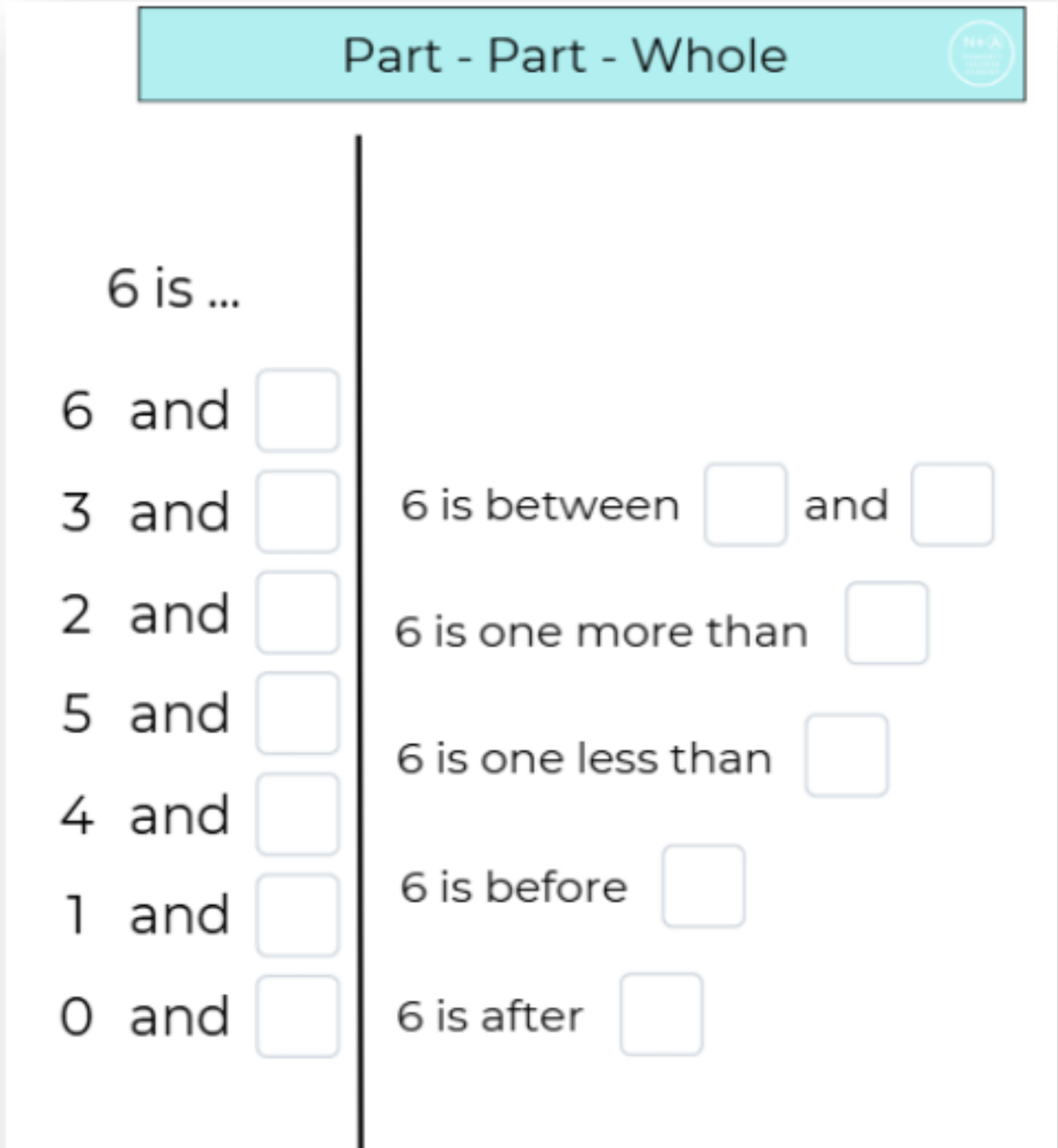
Another option is writing out something similar to this for your child to complete, just change the number each time.
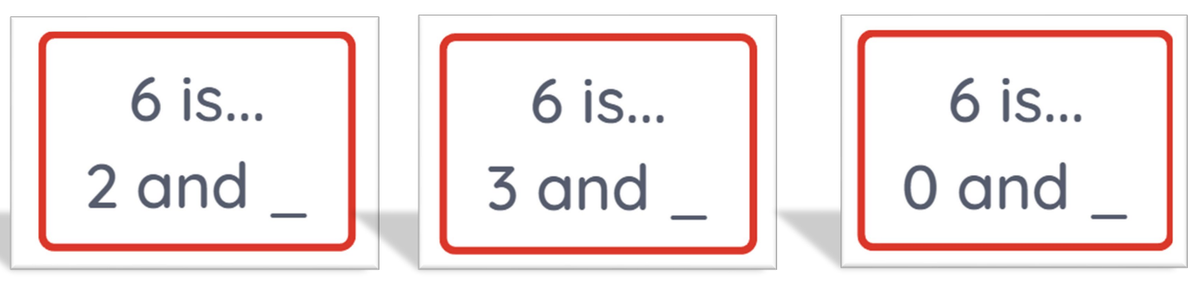
Or using some simple flashcards like these!
Year 1: Doubles Facts
Year 1 students need to become confident with their doubles facts. It is also important for our Year 2 students to keep practising these skills.
→ Use small objects or toys from around the house. Count out a small group and ask your child to make another group with the same number of objects. This helps children recognise doubles
You could also use a simple worksheet or flashcards for extra practice.
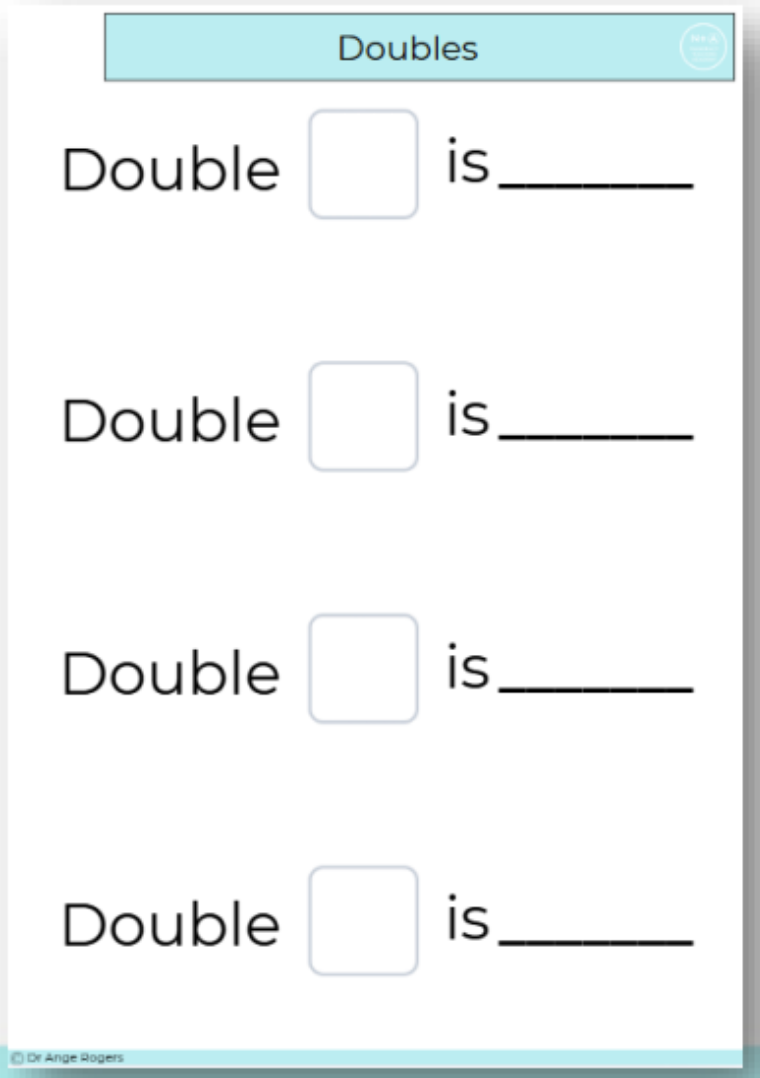
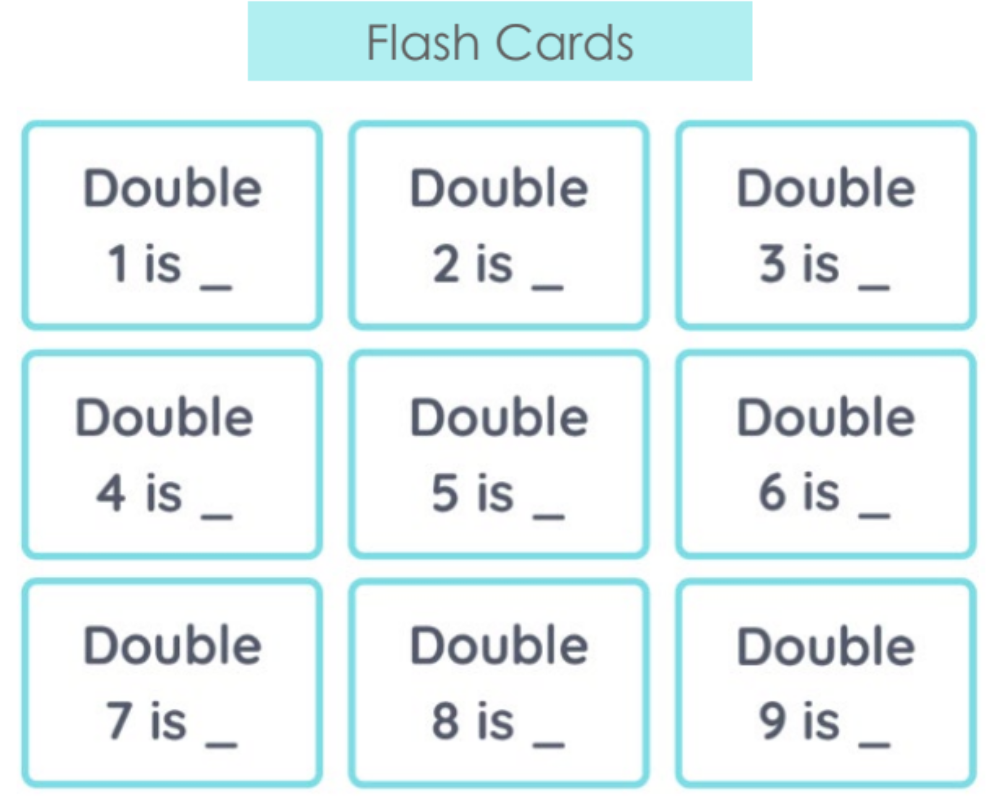
Another easy activity is to say, “Double 3 is…” and have your child finish the sentence.
Year 2: Bridging to ten
Year 2 students are learning how to use the bridging to ten strategy. This strategy helps students solve addition problems more easily, especially when working with two-digit numbers.
Students learn that 7, 8 and 9 are close to 10, and they can use this knowledge to make adding quicker and easier.
A fun game you could play at home is Bridge to Ten Bingo.
- Draw a grid and write 6 numbers between 10 and 19.
- Roll a dice (or use an online dice).
- Add 9 to the number you rolled by first making 10, then adding the remaining amount.
For example: If you roll a 5: 9 + 5 = 9 + 1 + 4= 14
If the answer is on your bingo grid, cross it off. Continue playing until all numbers are crossed off.
Please keep an eye out in upcoming newsletters for strategies and activities to help support your Years 3–6 children in building their fluency skills.
Danielle Phillips
Teaching and Learning Leader