Wellbeing

National Reconciliation Week
Each year from 27 May to 3 June, Australians recognise National Reconciliation Week — a time to reflect, learn and take meaningful steps towards a more respectful and united future. At school, we believe education plays a vital role in building empathy, understanding and respect for the rich histories, cultures and achievements of First Nations peoples.
Reconciliation is an ongoing commitment that extends beyond the classroom. Through learning experiences, stories and discussions, students are encouraged to reflect on fairness, listen to First Nations voices and act with kindness and respect towards others. Families can support this learning at home by engaging in conversations about equality, culture and the traditional Custodians of the land on which we live and learn.
As a school community, we remain committed to embedding reconciliation into everyday practice through Acknowledgements of Country, Indigenous perspectives across the curriculum and opportunities for students to deepen their understanding of Australia’s shared history.
Nationally Consistent Collection of Data on School Students with Disability (NCCD)
Dear Parents/Guardians
Each year, all Australian schools participate in the Nationally Consistent Collection of Data on School Students with Disability (NCCD).
The NCCD process recognises students who are receiving adjustments to support their participation and learning at school due to disability-related needs.
Teachers and support staff work collaboratively with families to identify and implement reasonable adjustments that support students in accessing the curriculum on the same basis as their peers. These adjustments may include targeted teaching strategies, modified learning tasks, assistive technology, social or wellbeing supports, or environmental adjustment
The information collected for the NCCD:
• helps schools better understand and support student needs
• informs government planning and funding for students with disability
• is confidential and de-identified before submission
A medical diagnosis is not required for a student to be included in the NCCD. Inclusion is based on the educational adjustments being provided at school and evidence collected over time.
Parents and carers do not need to apply for their child to be included in the NCCD. If your child is receiving adjustments at school, staff may discuss these supports with you as part of ongoing consultation processes.
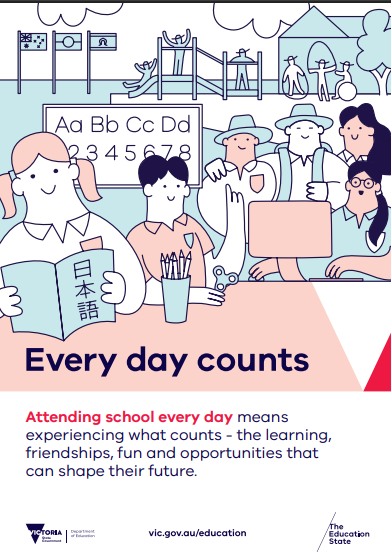
Every Day Counts – Attendance and Wellbeing
Regular school attendance plays an important role in every child’s learning, wellbeing and sense of belonging. Every day at school provides opportunities for children to build friendships, develop routines, strengthen emotional wellbeing and participate fully in classroom learning.
The Victorian Department of Education reminds families that every day counts. Missing school regularly can make it harder for children to keep up with learning, feel connected to their classmates and maintain confidence in the classroom.
Even small amounts of missed learning time can add up over the years. Research and attendance fact sheets highlight that when a child misses just 10 minutes each day, this can equal almost half a year of lost learning across their schooling journey.
Regular attendance helps children:
- develop positive learning habits and routines
- build friendships and social confidence
- strengthen resilience and emotional wellbeing
- stay connected to their teachers and peers
- feel a greater sense of belonging within the school community.
We understand there are times when students need to stay home due to illness or exceptional circumstances. However, whenever possible, arriving on time and attending school every day gives children the best opportunity to thrive both academically and socially.
Families can support strong attendance by:
- maintaining regular bedtime and morning routines
- planning holidays during school vacation periods
- scheduling appointments outside school hours where possible
- communicating with the school if support is needed
As a school community, we all play a role in supporting children to attend regularly, feel connected and experience success at school, because every day matters.
Angela Palombi
Deputy Principal/Wellbeing Leader