
Mathematics
Number Algebra Measurement Space Statistics
Mathematics
Number Algebra Measurement Space Statistics
In Mathematics, we will continue to build students' mathematical proficiencies of Understanding, Fluency, Problem Solving and Reasoning across all learning strands.
Number
Learning will continue to be supported through hands-on activities and practical experiences to develop and consolidate students’ understanding of mathematical concepts. Students will use physical and virtual materials to explore equal sharing and grouping, and develop their problem-solving skills through counting, addition and subtraction activities and games.
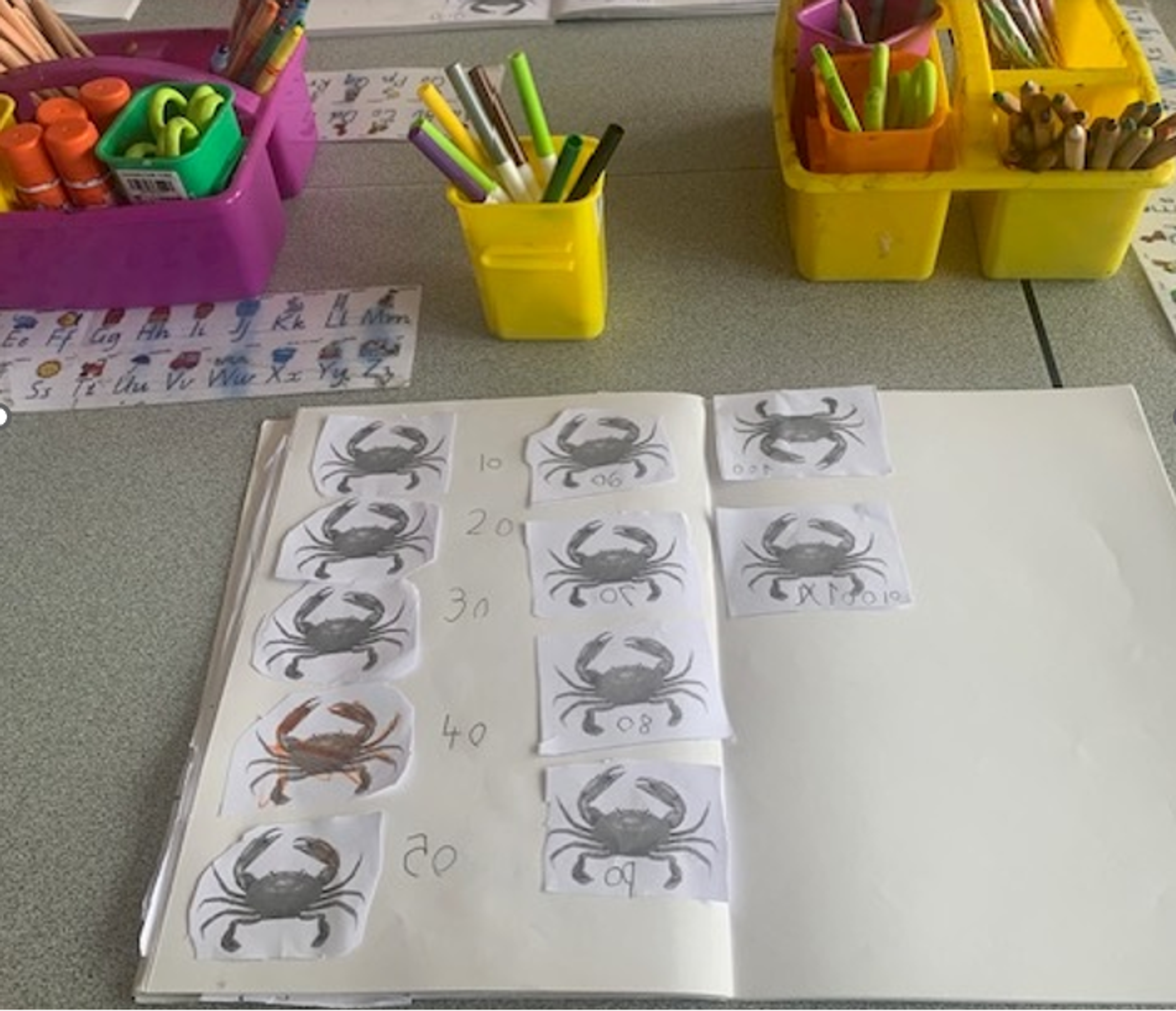
A focus will be placed on developing students’ ability to count forwards and backwards, recognise and complete number sequences, and use counting strategies to solve mathematical problems. Students will also explore our base-ten number system and develop their understanding of place value. Through practical activities, they will learn to make and represent numbers by bundling objects into groups of ten and using tens and ones to count, represent and record larger numbers.
Algebra
Students will develop their skip-counting skills by counting in 2s and 10s. They will also learn to follow short sequences of instructions and recognise, copy, continue and create repeating patterns using a variety of materials and representations.
Measurement
Students will learn to sort, compare and measure the mass and capacity of objects and estimate, measure and compare the length of different materials using informal units.
Statistics
Students will continue to develop their data collection skills by gathering information and recording it using tally marks. They will create simple graphs, including picture graphs, and develop their ability to interpret and analyse data by answering questions and discussing the information presented in their graphs.
Space
Students will sort, name and create familiar shapes; recognise and describe familiar 2D and 3D shapes within objects in the environment, giving reasons. They will describe the position and location of themselves and objects in relation to other people and objects within a familiar space.