
Principal's Update
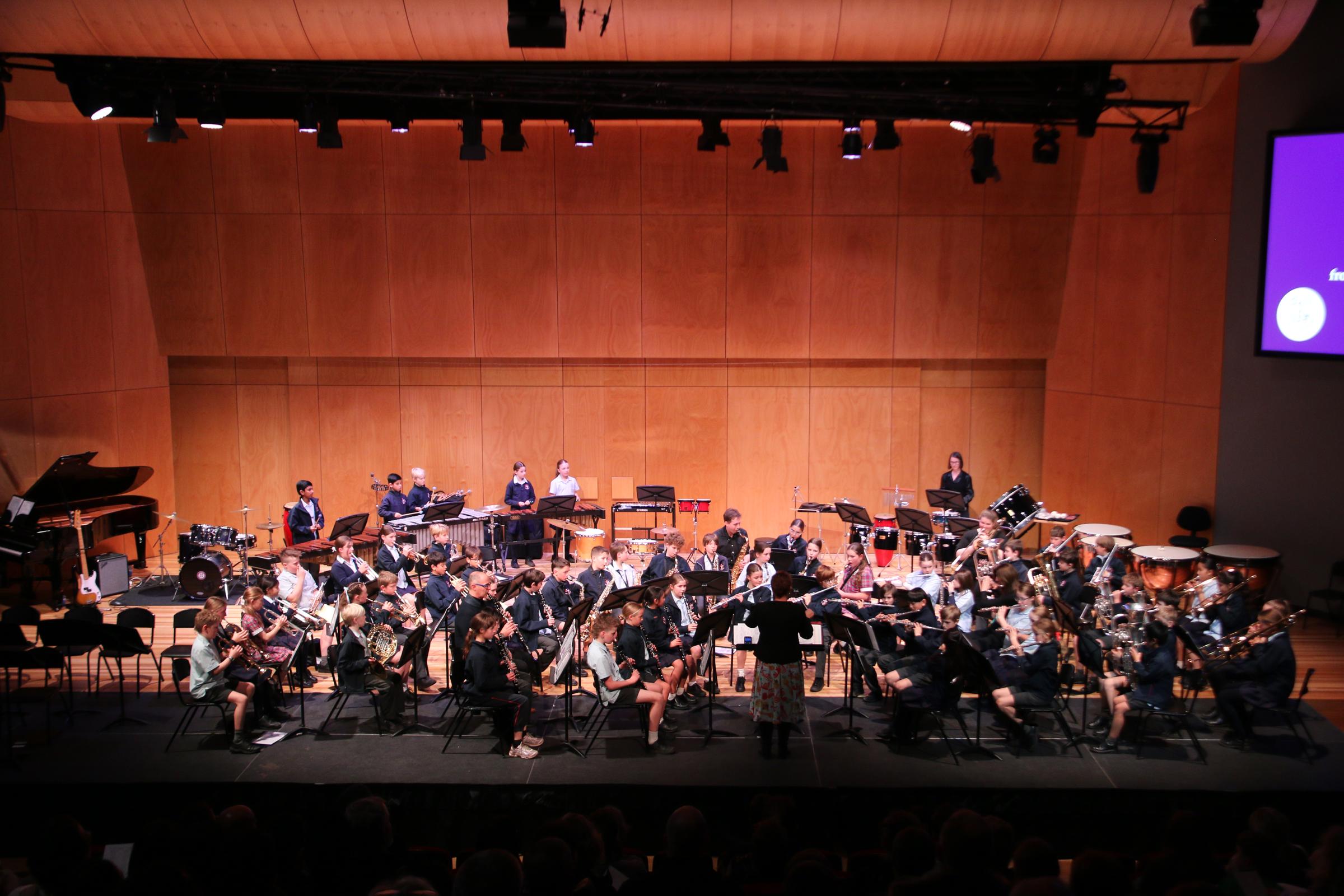
There have been a few contrasting experiences that I have been thinking deeply about in recent weeks: the significant impacts of Artificial Intelligence on our community and on education more broadly; the experience of witnessing art and theatre; and the world gathering around screens and in crowded stadiums for the 2026 FIFA World Cup. The Dark Mofo season in Hobart brought many opportunities to experience the wonder and awe that embodied experiences can bring. I felt this, too, while attending our Senior School musical, Legally Blonde: the immediacy, the expression, the joy and the light of our performers shining through and touching their audience.
It is also hard to miss the electric current of shared joy running through our global community during the World Cup. The 'beautiful game' brings us together in an undeniably physical, visceral way. We feel the collective intake of breath before a penalty kick, the thunderous roar of a stadium celebrating a goal and the shared sorrow of a narrow defeat.
In these moments, we are reminded of the beauty of our physical embodiment. To be human is to be present: to laugh, to cheer, to shout and to connect with each other. It is a powerful testament to what happens when we engage with one another face-to-face, experiencing the unpredictable, unscripted excitement of life.
Yet, outside the stadia and the theatre, another global shift is underway, one that feels far less human. Just recently, the Vatican released Pope Leo XIV's landmark encyclical, Magnifica humanitas (Magnificent Humanity). While the Pope's encyclical is not my usual reading material, it was commended to me and I was captured by the ways in which it offers a profound reflection on the impacts of the rise of Artificial Intelligence (AI). I was also struck by how deeply his message echoes with our own Quaker testimonies of Equality, Community and Simplicity.
The Pope warns against a growing "technocratic worldview" that treats the human person as a project "to be optimized" by algorithms and metrics of efficiency. When we reduce human worth to data points or abstract problem-solving, we lose sight of that which is sacred.
From a Friends' perspective, this speaks to the very core of our beliefs: we believe there is "that of God" in everyone. That Divine Light cannot be coded, quantified or simulated by a machine. It is found in our vulnerability, our conscience and our capacity for genuine relationships.
While the connection between AI and soccer might seem a little strange, these are some of the ways I have been thinking about the contrast between the AI models dominating our headlines and the World Cup matches dominating our screens.
The Gift of Imperfection
AI thrives on optimisation, machine-driven algorithms and predictability, but the joy of the World Cup comes from its beautiful unpredictability. It relies on human grit, flashes of creative genius and even human error, when a goal slips through or emotion gets the better of a player. A perfect machine cannot replicate the soul of a game played by brilliant, flawed human beings.
True Presence vs. Digital Isolation
The Pope cautions that a hyper-digital world risks creating a severe divide, separating us into silos of ideological bias and isolating us behind screens. In contrast, the World Cup demands engagement. It forces us out of our comfort zones to participate in a global community, reminding us that we are all part of the same human family.
Cultivating Compassionate Human-Centred Systems
This intersection of technology, humanity and community brings us to some vital questions. What should we be doing in our schools? If AI can now pass standardised tests instantly, what is worth learning? Pope Leo XIV explicitly calls for investment in critical education and, as a Quaker community, this aligns perfectly with our Purpose and Concerns.
Alongside essential knowledge, skills and capabilities, our classrooms must become compassionate systems: environments where we look beyond isolated data points to understand the interconnected web of human relationships. Here is how we can lean into the possibilities of AI while anchoring our students in their humanity.
Listening In to the Spirit, Leaning In to the Machine
Instead of banning AI, we teach students how to interact with it critically. We challenge them to "listen in" to their own moral conscience and "lean in" to the tool with discernment, spotting algorithmic bias and questioning data. AI should assist thought, never substitute for the human mind or conscience.
Prioritising the Human
A compassionate system prioritises what machines cannot replicate: empathy, systemic awareness and deep spiritual reflection. We must value the messy, collaborative process of a group project, a production in the making or a Gathering just as much as the final product.
Emphasising Physicality and Presence
In a hyper-digitised world, schools must double down on real-world, face-to-face dialogue and physical collaboration in classrooms, art rooms, the theatre, music ensembles and on the sports fields.
Listening In and Leaning In to the Promise of New Horizons
Ultimately, both the Pope's encyclical and our Quaker testimonies remind us that technological advancement is not inherently an enemy of the spirit. As we look to the future, we recognise that AI holds immense potential to improve life on our planet if guided by moral clarity.
Just as advanced sports medicine and video technology help protect the physical wellbeing of players on the pitch, AI can be harnessed as a powerful tool for global stewardship. We can imagine these algorithms being deployed not to isolate us but to solve complex climate challenges, eradicate systemic diseases and distribute resources more equitably to those who are marginalised. In the hands of a conscious community, AI can automate the mundane, freeing humanity from gruelling tasks and granting us more time for contemplation, critical analysis, community building and creative expression.
The Pope challenges us to build a "civilisation of love". For Friends', this means we do not fear the future, nor do we passively let technology dictate our lives. Instead, we are called to be active artisans and weavers of hope and love, starting in our classrooms by building compassionate systems that always put the human heart first.
In the Quiet and the Noise,
Esther Hill - Principal