
4. Artificial Intelligence

AU/NZ: ChatGPT's dominance slips as AI competition intensifies
👓 1 minute read
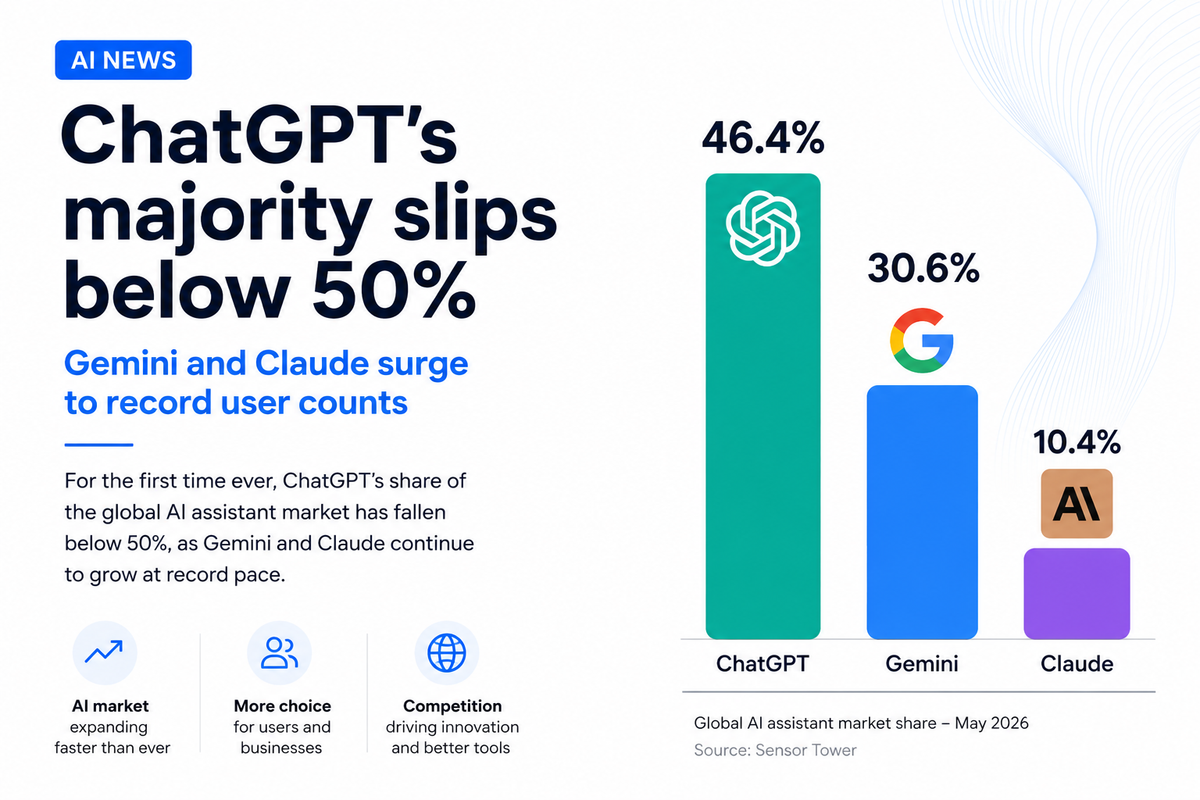
For the first time since generative AI assistants emerged, ChatGPT's share of the global market has fallen below 50 per cent. According to Sensor Tower data, ChatGPT's market share has declined to 46.4 per cent, not because it is shrinking, but because competitors are growing even faster.
Google Gemini has continued to gain users through its integration with Android, Search and Workspace, while Anthropic's Claude has experienced rapid growth, fuelled by enterprise adoption and the release of its latest models. Despite the changing landscape, ChatGPT remains the largest AI assistant by monthly users, increasing from 1.05 billion to 1.11 billion users over the past five months.
The takeaway for real estate professionals is straightforward: the AI market is becoming increasingly competitive. Rather than relying on a single platform, agencies should understand the strengths of multiple AI tools and choose the right one for each task, whether that's writing, research, coding, analysis or content creation.
From L&D: Missed the AI Accelerator webinars? Catch them on-demand and complete the new AI eLearning!
AU/NZ: Claude update: a stronger default model, and Fable 5 returns
👓 2 minute read
Two changes landed in Claude last week that are worth knowing.
Sonnet 5 is your new default
If you use Claude on a Free or Pro plan, your default model has quietly changed. Sonnet 5 replaced Sonnet 4.6 on 30 June, and there is nothing to switch on – your next conversation simply runs on the new model.
The practical difference is that Sonnet 5 handles more of the heavier work you may have been sending to Opus. Long documents, market research, appraisal preparation, spreadsheets and everyday writing all sit comfortably within its range, and it is noticeably better at finishing multi-step tasks rather than stopping partway. Because Sonnet uses less of your plan's usage limit than Opus, you should also find your allowance stretches further.
A simple rule of thumb for choosing a model:
Sonnet 5 – your everyday workhorse: listing copy, vendor reports, research, long documents and spreadsheets
Opus 4.8 – the hardest reasoning problems, and deep research you want to question and steer as you go
Haiku 4.5 – quick lookups and simple summaries
Fable 5 is back
Anthropic's most capable model, Fable 5, returned on 1 July after US export restrictions forced it offline for almost three weeks. It is available again across Claude on the web, Claude Code and Claude Cowork.
Two things to know.
First, access is generous but temporary: Pro, Max, Team and select Enterprise plans include Fable 5 for up to 50 per cent of weekly usage limits until 7 July, after which it moves to usage credits.
- Second, it has returned with tighter safety systems – mainly around cybersecurity tasks – so some technical requests may be redirected to Opus 4.8. For the writing, research and analysis work most of us do, that will rarely be an issue.
If you have a substantial piece of work on this week – a market report, a lengthy submission, a complex analysis – it is a good moment to try Fable 5 while it is included in your plan. For everything else, Sonnet 5 will serve you well without any change to how you work.
AU/NZ: Your CRM and AI tools could be creating privacy risks
👓 2 minute read

Here is a message worth every principal's attention: most agencies adopted AI and CRM technology far faster than they updated their privacy practices, and in 2026 regulators are watching closely.
The risks are broader than the obvious ones. Agencies are handling more personal information than ever – tenant applications, identification documents, landlord financials – and layering AI tools and automations over the top.
Common problems include staff pasting client conversations, contracts and dispute summaries into public AI tools, CRMs collecting more data than genuinely needed, offshore support staff with broad access to sensitive records, and old applications and ID copies kept for years without reason. The April 2026 2Apply ruling, in which the Privacy Commissioner criticised excessive data collection in tenancy applications, shows regulators are acting on this.
The key point: using AI or third-party software does not shift your legal responsibility. Regulators look at the agency that collects and controls the information, not the software provider. With expanded AML obligations bringing more identification data into your systems, privacy and AML compliance are now closely linked.
Four practical steps to take now:
- Review your CRM – what you collect, why, whether it is still needed and who can access it
- Put a written AI usage policy in place so staff know what can and cannot be uploaded, and which tools are approved
- Review third-party providers, including where data is stored and whether it goes offshore
- Strengthen your privacy framework – policies, collection notices, staff training and a data breach response plan
This is general information rather than legal advice, but the direction is clear: map where your clients' information goes before a regulator or a breach does it for you.
AU/NZ: Edit videos faster with AI
👓 2 minute read
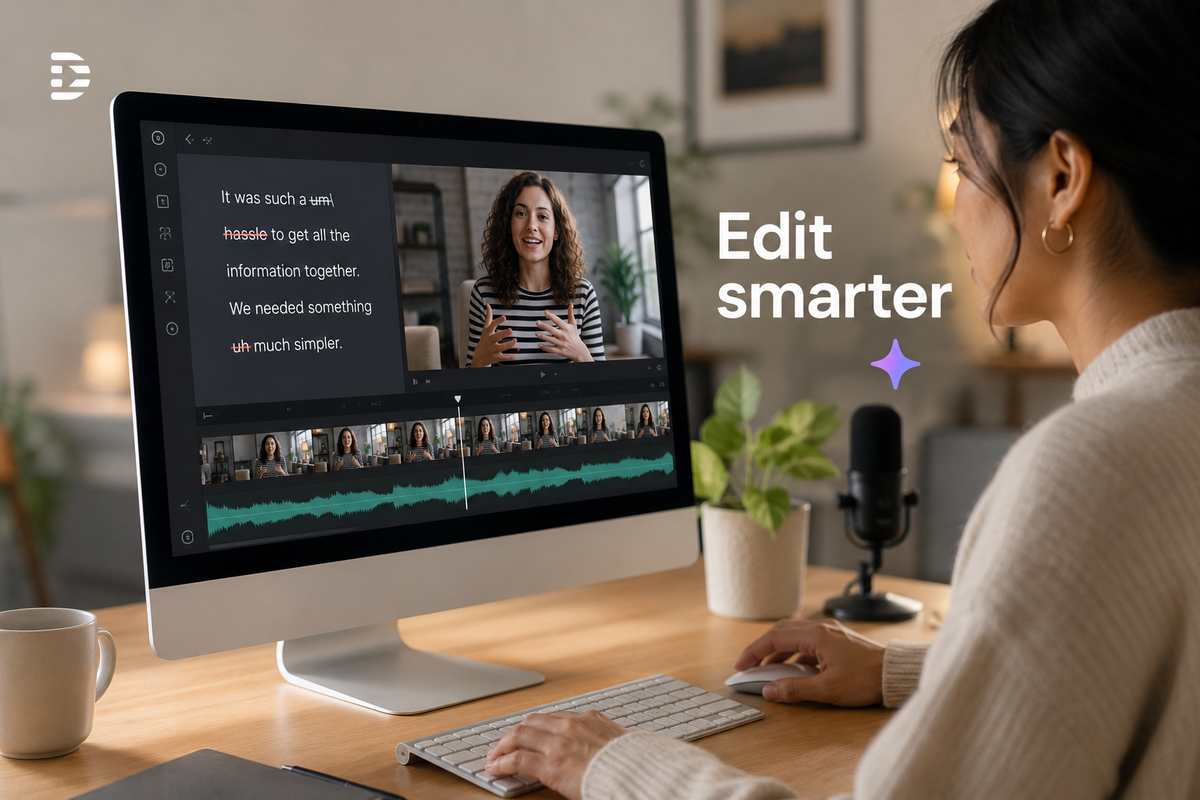
Creating polished video content no longer has to mean spending hours making tiny edits. Descript's latest AI tools can automatically tidy rough first takes by removing rambling, awkward pauses and unnecessary retakes, helping creators produce cleaner videos with far less effort.
The platform can also identify and remove filler words such as 'um', 'uh' and 'you know', while allowing users to edit video simply by editing the transcript – cut, paste and rearrange text, and the video updates automatically.
For agents producing market updates, listing videos or social media content, tools like these can significantly reduce editing time while improving the professionalism of the finished product. Descript also offers live webinars for users wanting to get more from the platform.