Wellbeing News
Mindful Moments: Simple Strategies for Finding Calm
Children experience many different emotions throughout their day. Excitement, frustration, disappointment, worry and tiredness are all normal parts of growing up. As children develop, we can help them build a toolkit of simple strategies they can draw on when they need a moment to reset. Mindfulness is one strategy that can help.
Mindfulness simply means paying attention to what is happening in the present moment. For children, this might involve noticing their breathing, tuning into their senses, recognising how their body is feeling or taking a few moments to slow down.
Mindfulness doesn't need to involve long periods of sitting quietly. Short, simple activities can be incorporated into everyday family life and can help children become more aware of what helps them feel settled and calm.
Simple strategies to try at home
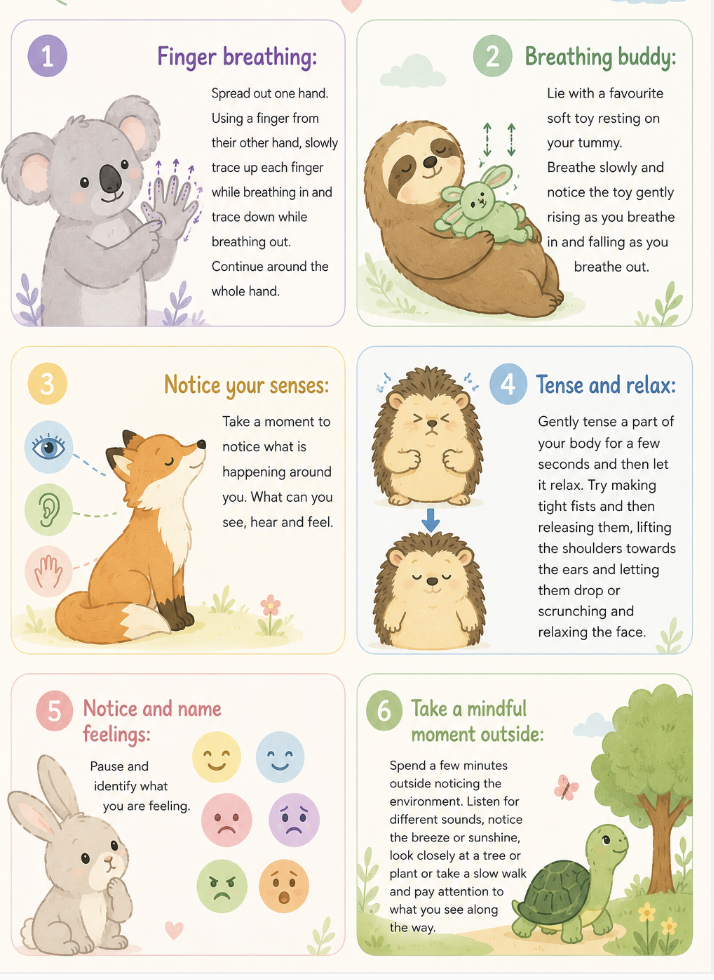
Finger breathing: Ask your child to spread out one hand. Using a finger from their other hand, slowly trace up each finger while breathing in and trace down while breathing out. Continue around the whole hand.
Breathing buddy: Have your child lie comfortably with a favourite soft toy resting on their tummy. Encourage them to breathe slowly and notice the toy gently rising as they breathe in and falling as they breathe out.
Notice your senses: Take a moment to notice what is happening around you. Ask your child to identify things they can see, hear and feel. This can be done while sitting outside, walking to school, in the car or at home.
Tense and relax: Encourage your child to gently tense a part of their body for a few seconds and then let it relax. Try making tight fists and then releasing them, lifting the shoulders towards the ears and letting them drop, or scrunching and relaxing the face.
Notice and name feelings: Help your child pause and identify what they are feeling. You might say, “I wonder if you're feeling disappointed?” or “What is your body telling you right now?” Learning to recognise emotions and body signals can help children begin to understand what they need.
Take a mindful moment outside: Spend a few minutes outside noticing the environment together. Listen for different sounds, notice the breeze or sunshine, look closely at a tree or plant, or take a slow walk and pay attention to what you see along the way.
Practise when things are calm. Calming strategies are often easier for children to learn whenthey are already feeling settled, rather than introducing something new when emotions are heightened.
Families might try incorporating a short mindful moment into an existing routine – three slow breaths before bed, finger breathing in the car, a quiet walk together or simply pausing to notice how everyone is feeling.
The aim isn't for children to feel calm or happy all the time. Instead, it is about helping them gradually develop a range of strategies and recognise: “I know some things I can try when I need help finding calm.”
Small moments of practice can help children build skills they can draw on as they grow.