
Online Safety Hub

Online Safety Hub
The Hub includes expert advice on the most pertinent cyber safety issues and frequently asked questions around platforms like TikTok, Fortnite, Instagram, and more. There are app reviews with age and safety recommendations, a range of guides and resources to help ensure healthy boundaries around screen time and gaming, and step-by-step instructions for using parental controls and filtering out inappropriate content.
How to create a family digital agreement

If you’re finding it difficult to set rules, regulations, and boundaries for technology in your household, a family agreement can be a great way to get started. Creating a digital family agreement helps you talk about technology together, and set guidelines for your online life in and out of the home. Read on to learn how it works, and get your free printable family digital agreement to help guide the conversation.
What is a family digital agreement?
When a child gets a device, like a new smartphone or tablet, lots of families like to create a document detailing how and when they can use it. The child will then read through the document and sign their agreement.
The problem that often comes with a signed contract like this, when your child or teen isn’t involved from the start, is that these rules and regulations are easily broken. Many families, and children especially, find it difficult to stick to everything listed on the document – and as they grow older, the rules need adapting, too.
This family digital agreement is designed to help you have useful, positive conversations about technology. You’ll come together to plan actionable ideas, and for your family’s smallest members, perhaps start thinking about what it means to have an online life.
How to make a family digital agreement
To help your family get stuck in, Qustodio’s “choose your own adventure” digital agreement guide is designed to help you easily create a family agreement that you can print out, fill in, and put up in a place where it’s visible to everyone – like the fridge, or a notice board.
The agreement has space to fill in the devices you use, spaces and times tech is off limits, blank spaces for rules you all agree on, and what you like doing with tech, to help prioritise more positive use.
If you don’t know where to begin, the agreement comes with age-based recommendations to consider and the risks your child needs to know about when starting the conversation.
What can a digital agreement do for my family?
Tech agreements are a great way for parents and children to plan their technology use and outline expectations for connection, behaviour, and online life. Creating an agreement helps get all of you on the same “page”, gives parents the space to outline risks, and opens up communication.
Making a digital family agreement:
✔ Allows you to reflect on how much your family uses technology as a whole, and implement positive change.
✔ Helps you establish healthy boundaries surrounding screen time and digital behaviour.
✔ Gives you the tools for an ongoing, respectful conversation about your tech use.
✔ Involves your child in the process, making it easier for them to accept and “buy into” rules in the long term.
How to use Qustodio’s “Choose your own adventure” digital agreement
Creating a digital agreement can seem like a big task if you don’t know where to start. Our template and accompanying guide make it easy: simply print the blank agreement form, and fill it in together.
Use the “Choose your own adventure” guide to tailor the agreement to your child’s age: 4-8, 9-11, 12-14, and 15+. For each stage, you’ll find:
- What your child’s digital world looks like
- The dangers and risks to watch for
- Tips for what to include as you fill out your digital agreement
- Healthy tech habits that signal your child is mature enough to handle different situations and tech responsibilities

What to do before getting started
Before you work on your digital agreement together, bear these tips in mind.
- Read through the guide before filling in the agreement, as a family. This will help prepare the discussion.
- Talk to kids beforehand about when you’ll be creating this agreement. Springing it on them out of the blue may make them more defensive.
- Find a space where you all feel comfortable and relaxed, ahead of the discussion. Reduce distractions and create a positive, welcoming environment.
- If the conversation starts to get a little heated, take a break and come back when you are all calmer and can think constructively again.
- Try to stray away from rewards and punishments that involve technology – for example, giving extra screen time for good behaviour. The goal is to create healthy digital habits over bargaining tools.
- Keep in mind your child’s biological age as well as their maturity level, personality, and any special circumstances (like learning differences or elements of neurodiversity) as you discuss and build the rules.
Revisiting your family agreement
When it comes to raising children, nothing’s set in stone. What works with kids one day fails the next, and the same is true for how we view technology. It’s a fast-paced, ever-changing world, so we need to always be ready to adapt.
This is why we don’t recommend creating and signing a tech contract that allows for little to no flexibility, or naming specific rewards and punishments for rules that could be broken. Kids will often be set up for failure this way.
Instead, use your family digital agreement as a springboard for regular communication, and revisit the written-down rules and ideas you’ve decided on together as your child grows. Once you’re all on the same page, you can start working towards digital wellbeing with a shared perspective, and face fewer struggles in the long term.
Good luck!
Reference: How to create a family digital agreement | Qustodio
Exploring the online experiences of boys and young men
For boys and young men, the internet can be a place where they seek connection, validation and guidance as they explore what it means to be a man today. However, it also exposes them to risks like harmful content, online exploitation and the growing influence of misogynistic ideologies.
This 45-minute webinar will help parents and carers understand:
- social and cultural influences shaping boys and young men
- how boys engage online, build relationships and how they may be vulnerable to manipulation or exploitation
the impact of social media, gaming, and influencers on their attitudes, behaviours and sense of identity.
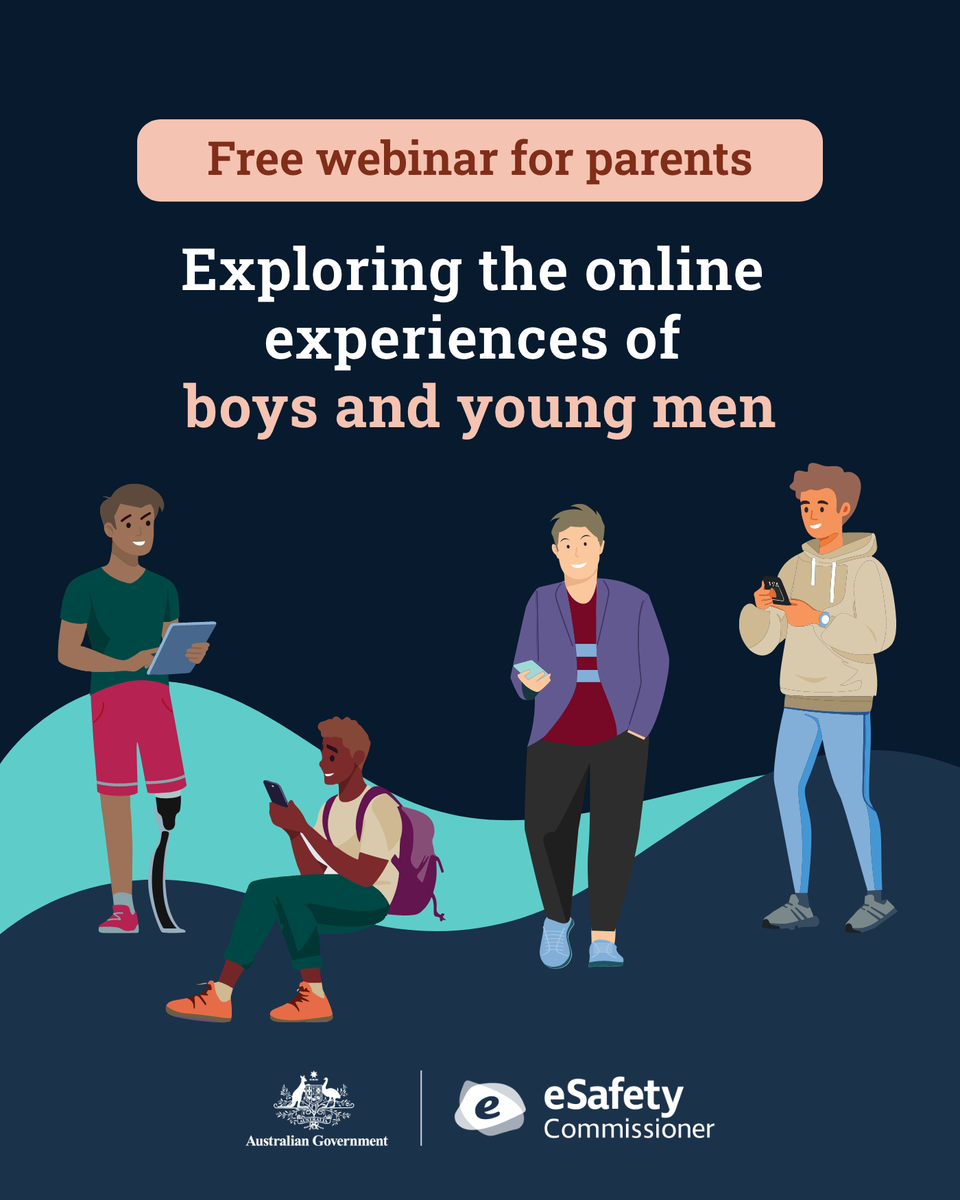
This presentation will share practical strategies to build critical thinking, challenge harmful narratives, and create open conversations that empower boys and young men to navigate the online world safely and respectfully.
Suitable for parents and carers of young people in upper primary and secondary school.
Term 3 (AEST)
13 August 2026, 12.30pm
Register here.