Level 1 & 2
REMINDERS & UPDATES
Hats
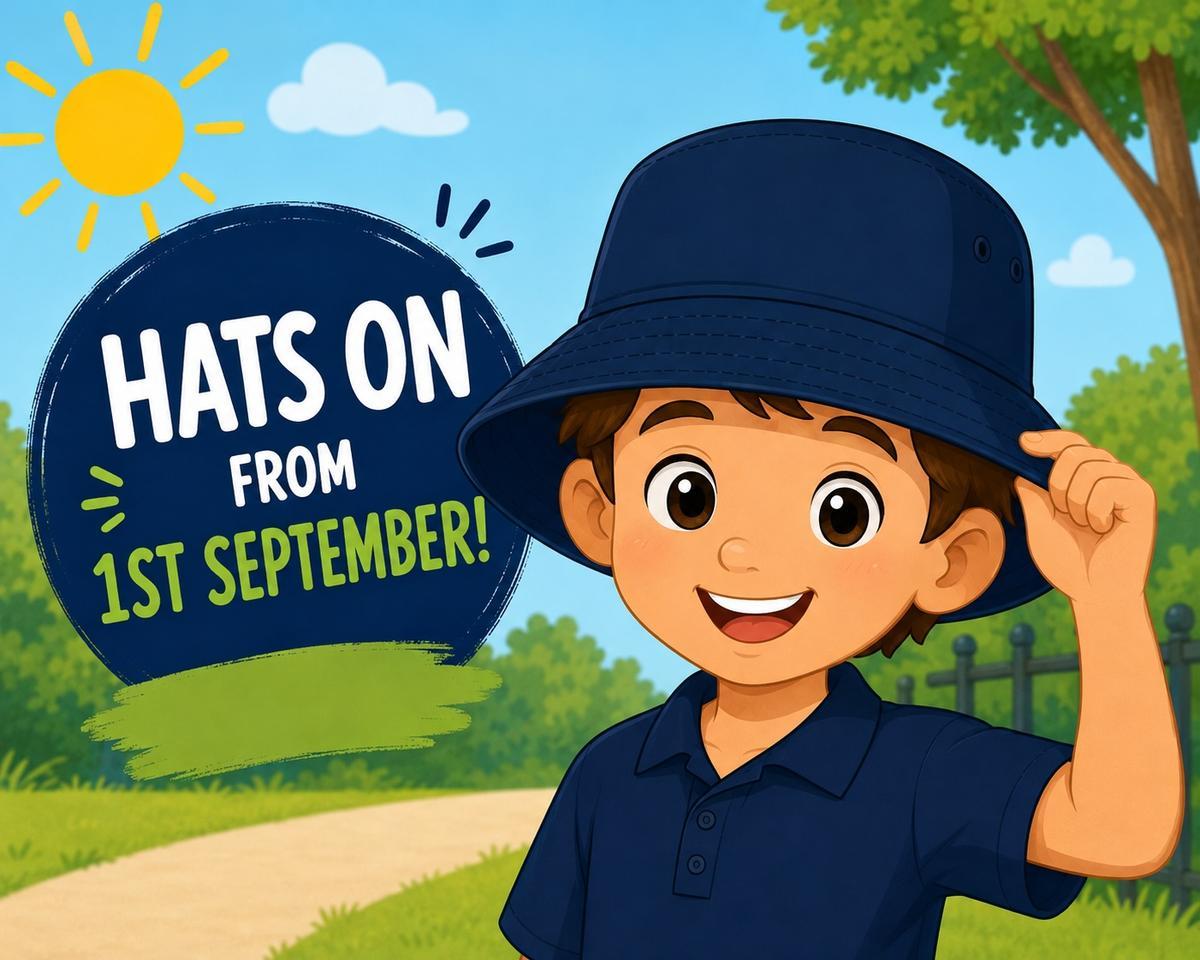
With spring here it’s time for hats to come back to school! Grade 1 and 2 students are reminded to bring their school hat back to school if they took it home over the holidays and to make sure they are wearing it during outdoor activities and break times.
iPad Reminders
- Our iPad program works best when all students who have their own iPad bring it to school each day. Please remind your child to make sure their iPad is charged and packed their school bag every morning.
Family Holidays
If you are intending on taking a holiday during the school term, please make sure you inform your classroom teacher and discuss an absence plan.
Term 4 Dates
3rd November - Melbourne Cup Day
11th November - Beauty and the Beast Junior Production
12th November - Beauty and the Beast Junior Production
16th - 20th November - 1/2 Swimming
16th December - Final Assembly
CURRICULUM THIS WEEK
Literacy
Thank you for your continued support with home reading. Reading together each night, even for just 10–15 minutes, is one of the most valuable ways you can support your child's learning. Regular reading helps build confidence, fluency, vocabulary and comprehension, while also fostering a lifelong love of books. We encourage students to continue recording their reading in their log books each evening, as this helps us celebrate their efforts and monitor their progress. Thank you for partnering with us to make reading a positive and enjoyable part of your child's daily routine.
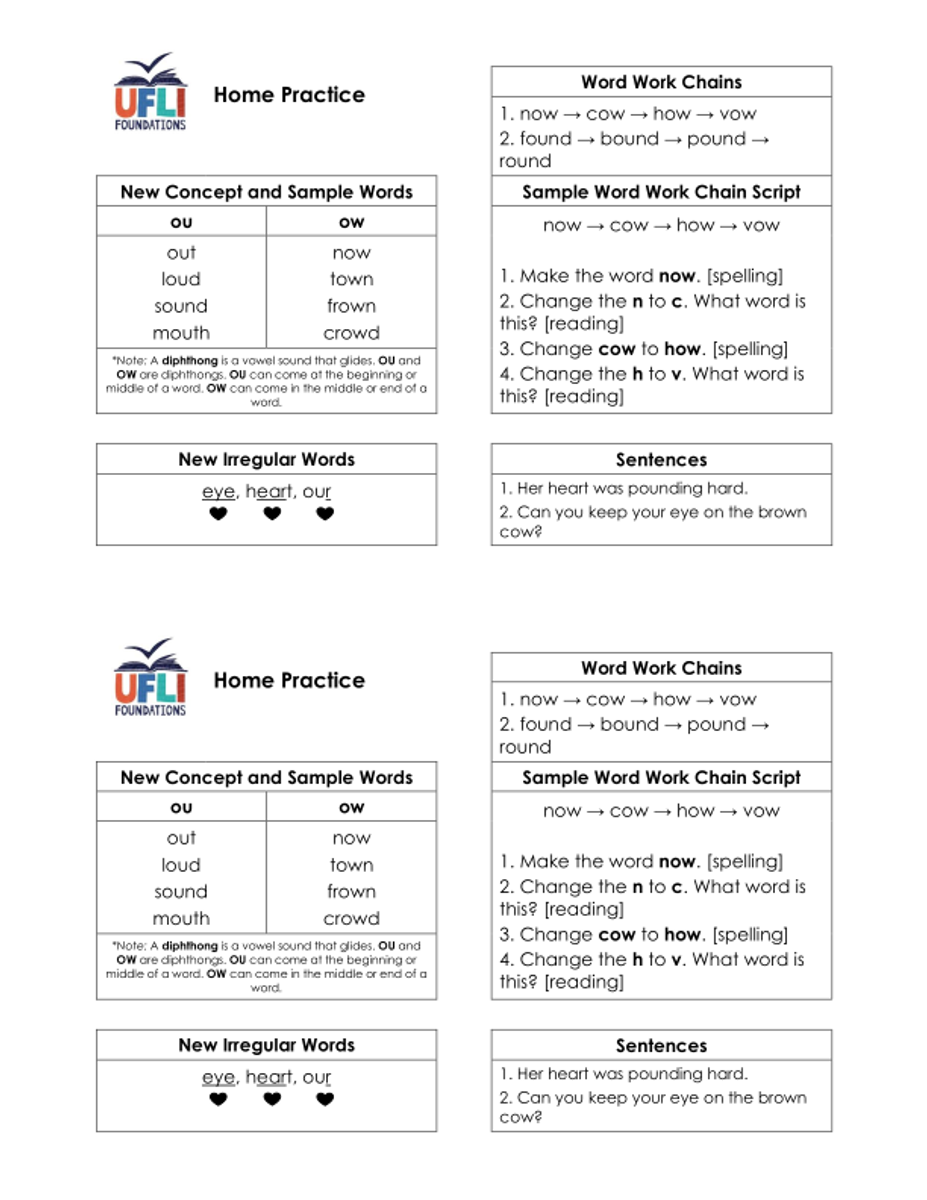
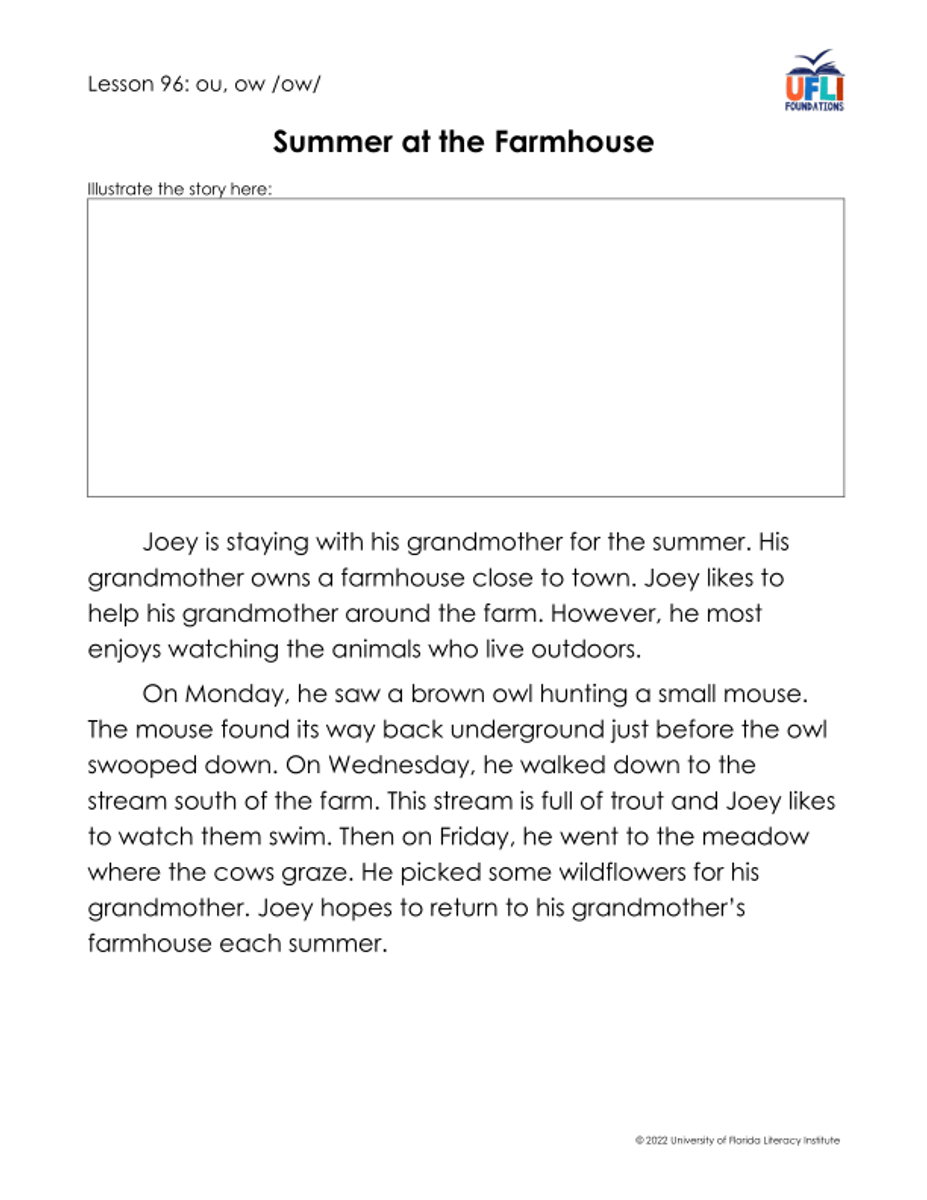
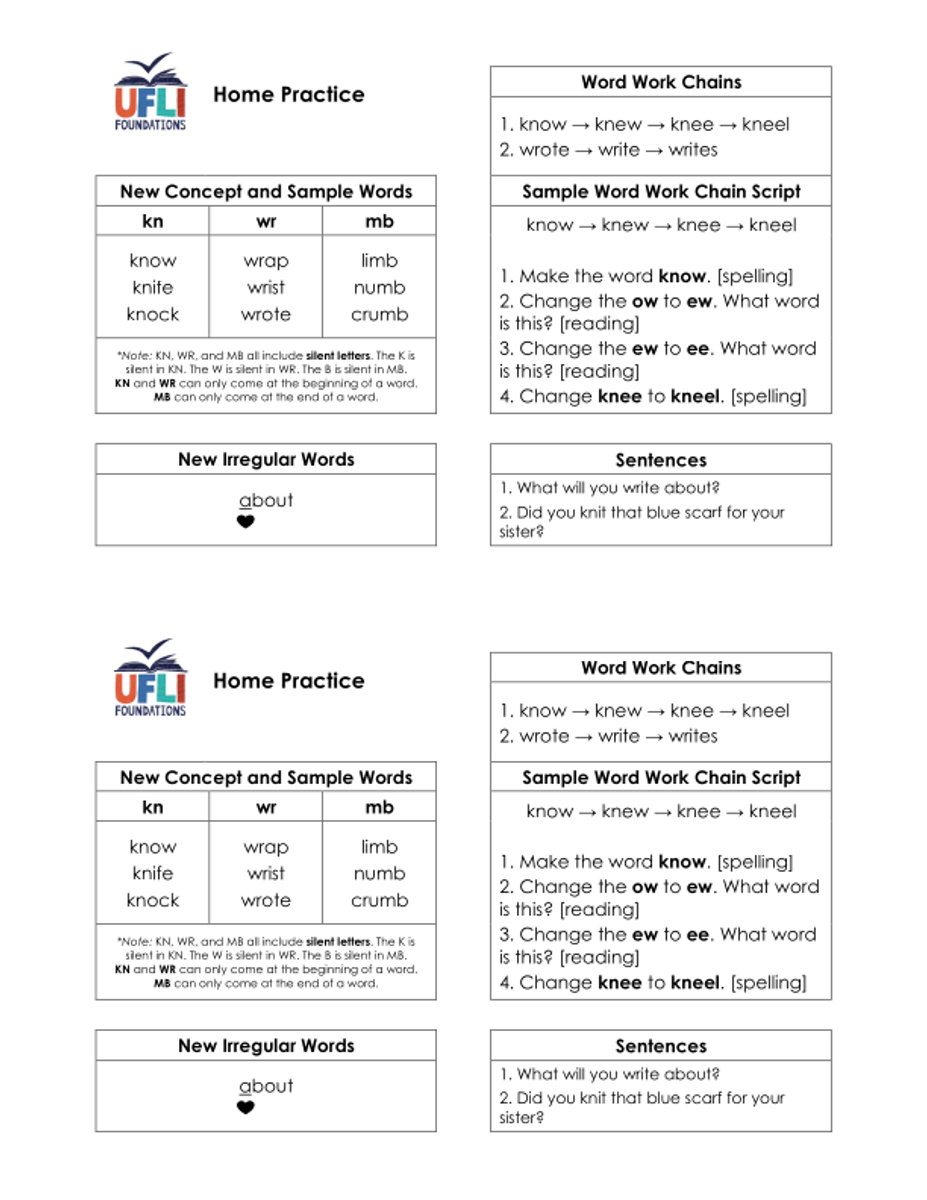
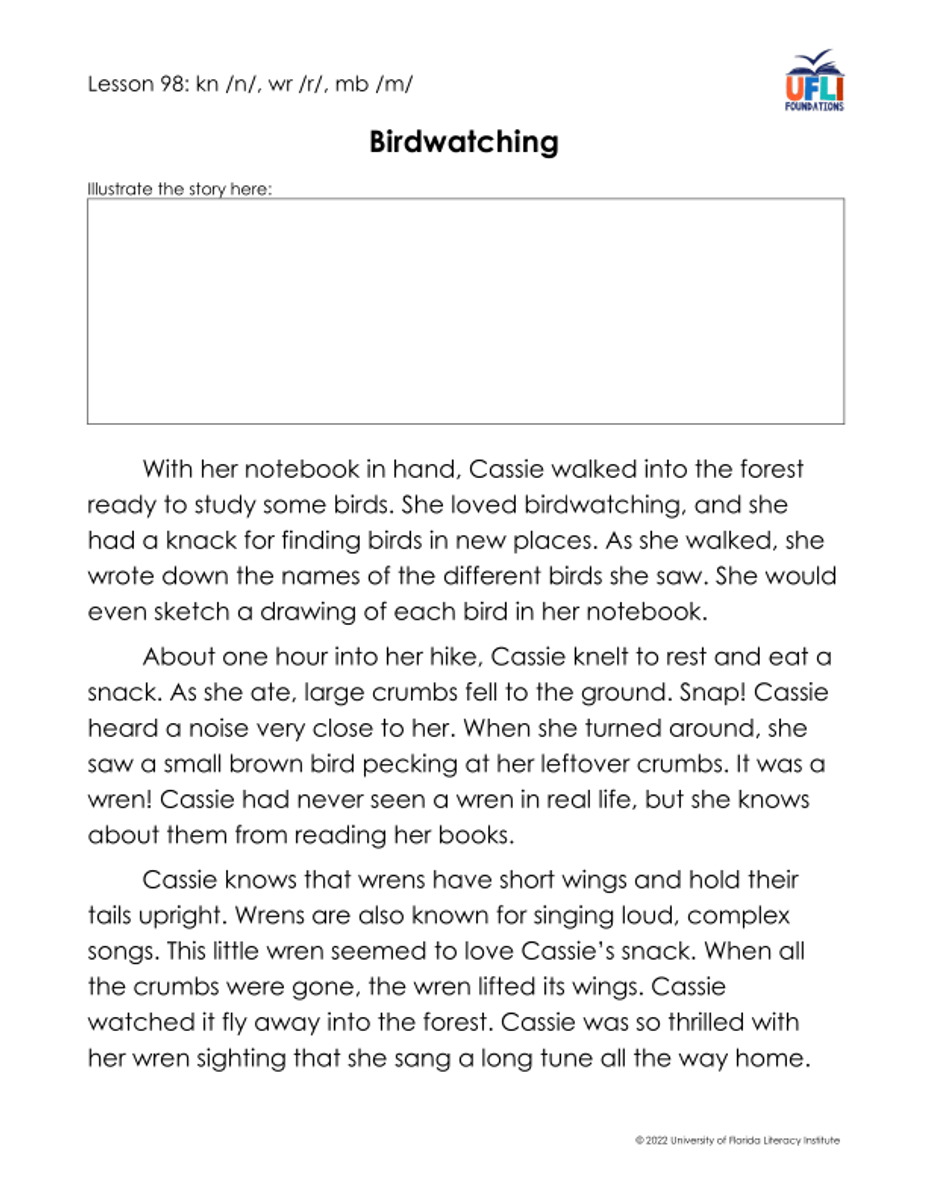
Grade 1 – This week, students will continue their phonics learning by exploring ou and ow for the /ow/ sound, in words such as cloud, shout, cow and town. We will also explore kn representing /n/, as in knee, wr representing /r/, as in write, and mb representing /m/, as in lamb. Students will practise reading and spelling words containing these patterns and applying their learning when reading and writing.
What can you do at home?
- Optional UFLI Home Practice pages
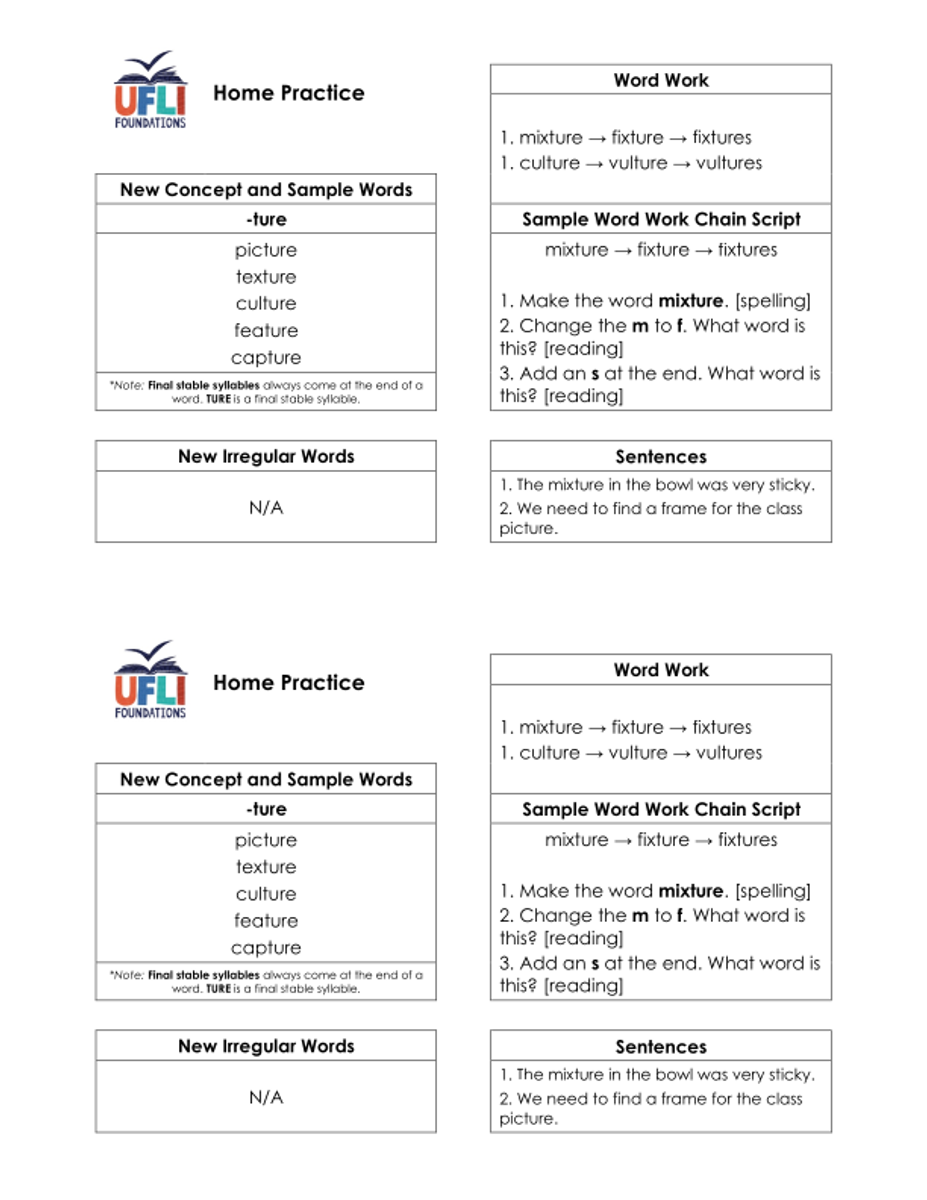
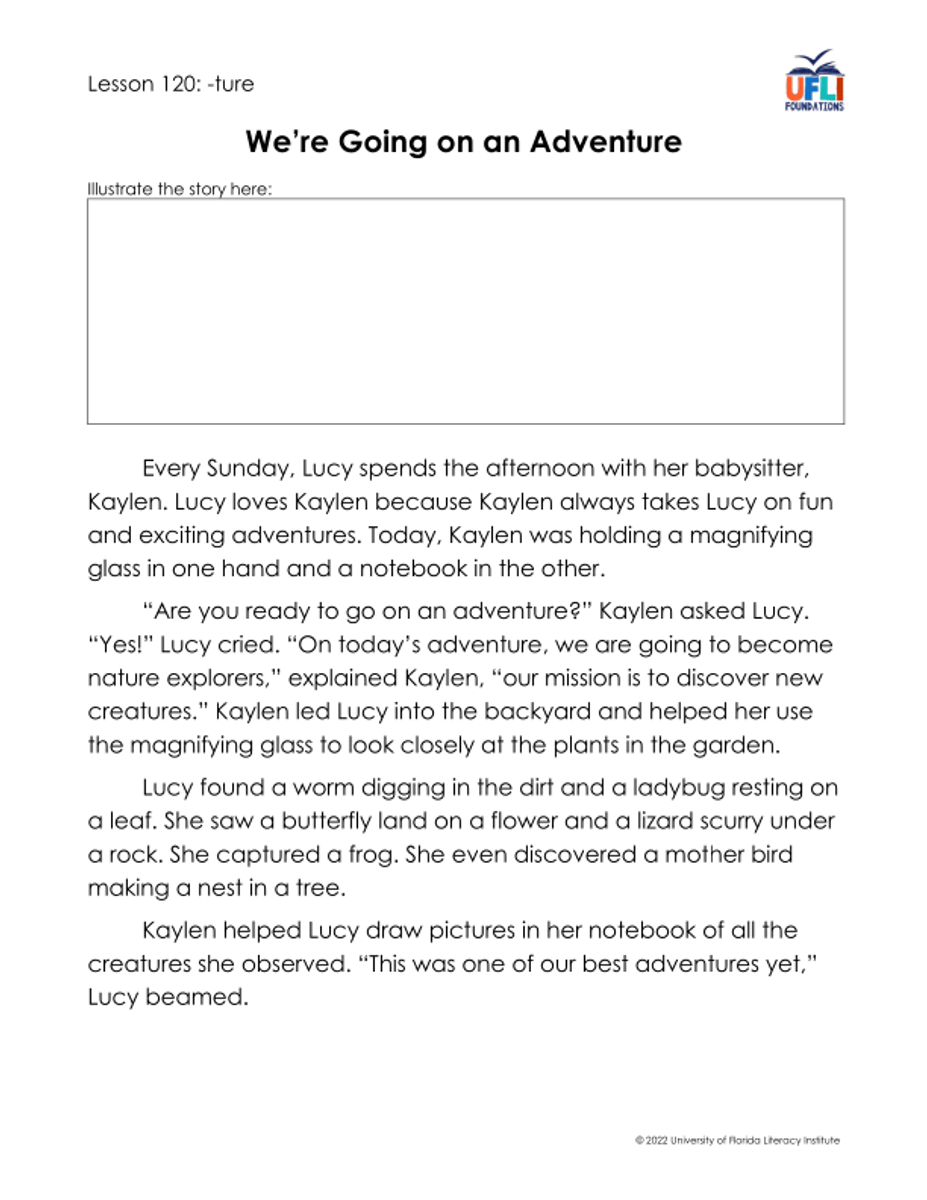
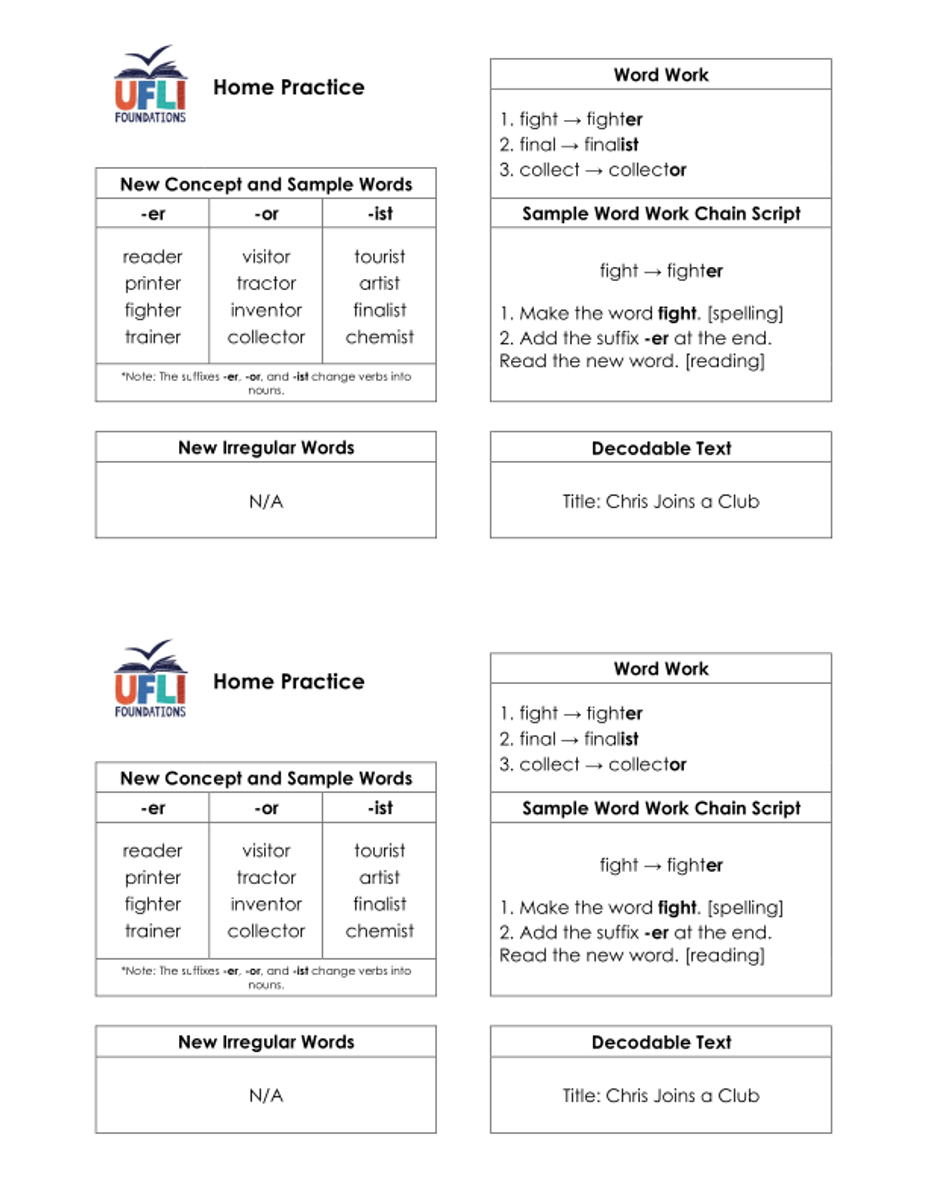
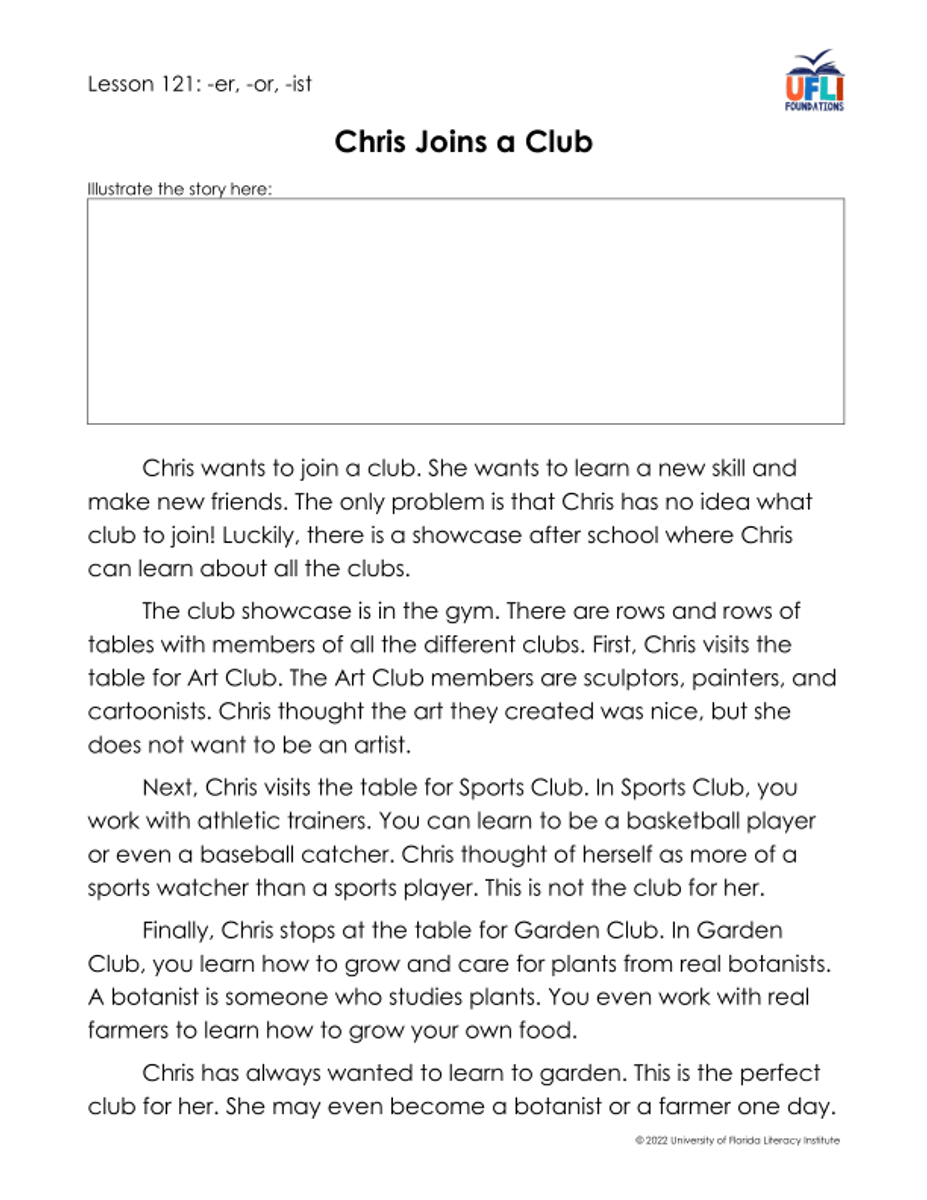
Grade 2 – This week, students will continue developing their phonics and spelling knowledge by exploring -ture in words such as picture, nature and adventure. We will also learn about the suffixes -er, -or and -ist, exploring how they can describe people who do particular jobs or activities, as in teacher, actor and artist. Students will practise reading and spelling words containing these patterns and explore how suffixes help us understand word meanings.
What can you do at home?
- Optional UFLI Home Practice pages
Writing
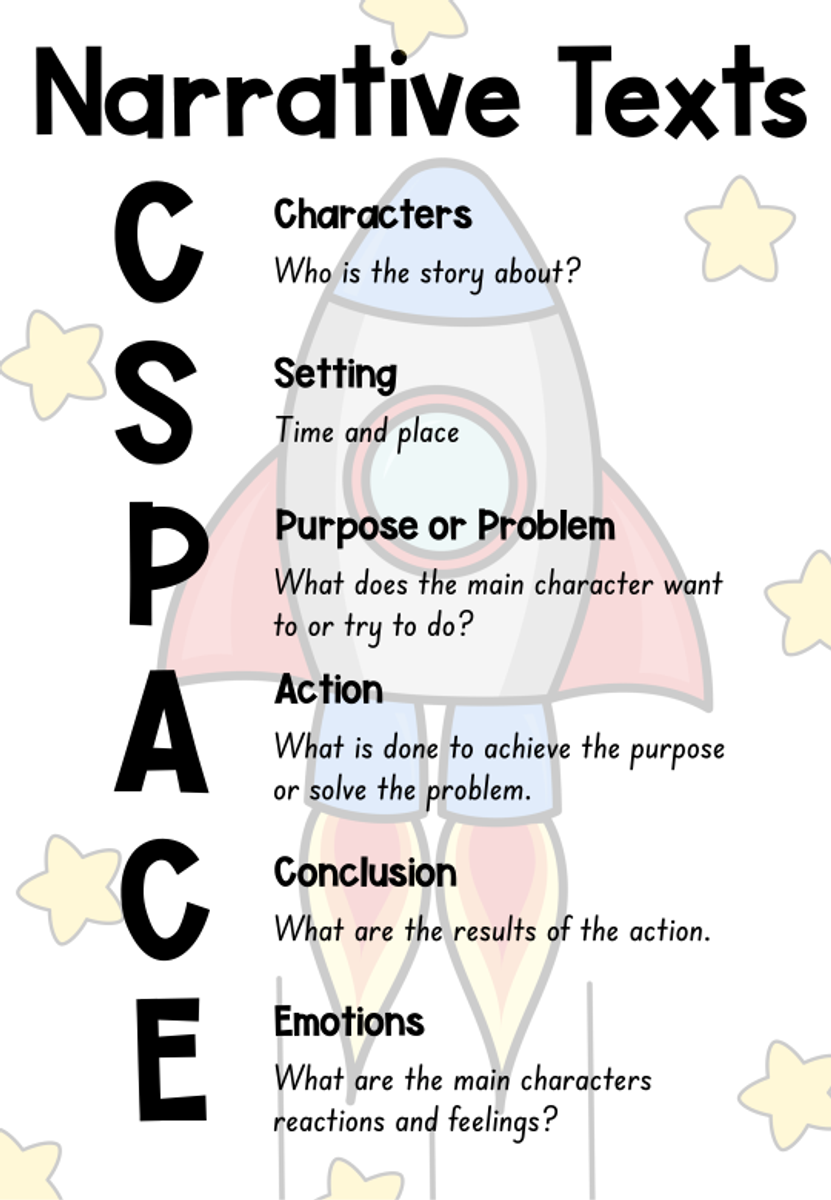
This week, students will analyse stories and use the CSPACE structure to plan, write and improve their own narratives, focusing on engaging their audience. We will explore how descriptive language, including interesting adjectives, strong action words and details about what characters can see, hear and feel, helps bring stories to life. Students will practise adding detail to their characters, settings and events to help readers picture what is happening and want to read on.
Maths
Grade One Students
Grade 1 students will continue exploring time, focusing on duration by comparing how long different activities take. Students will make their own clocks, explore how the numbers help us count by fives and learn about the hour and minute hands. We will also practise reading o’clock times and matching digital and analogue clocks.
What can you do at home?
- Continue working through allocated Math Seeds tasks that have been assigned to your child.
- Practise skip counting by 2s, 5s and 10s.
- Compare how long everyday activities take, such as brushing teeth or eating breakfast. Which takes longer? Which takes less time?
- Look for o’clock times on digital and analogue clocks and discuss where the hour and minute hands point.
- Continue practising left and right by describing where objects are or giving directions around your home.
Grade Two Students
Grade 2 students will explore data, focusing on creating and interpreting picture graphs and bar graphs. Students will collect data on familiar topics and represent their findings in graphs. We will practise answering questions about the data, identifying the most and least common responses and comparing different ways of displaying the same information.
What can you do at home?
- Continue working through allocated Mathletics tasks that have been assigned to your child.
- Practise skip counting by 2s, 5s and 10s from a non-zero starting point.
- Look for graphs in everyday life, such as on cereal boxes, in newspapers, on weather apps or in electricity bills. Talk about what information they show.
- Ask questions about the graphs you find, such as, “Which has the most?”, “Which has the least?” and “What does this graph tell us?”
WELLBEING
SWPBS
This week, students will focus on Be a learner in all settings by learning to tell the truth. We will explore how honesty helps us build trust, solve problems and learn from mistakes. Students will practise explaining what happened honestly, taking responsibility for their actions and asking for help when needed.
Cyber Safety
This week, students will learn to recognise the differences between unkind behaviour, conflict, deliberately mean behaviour and bullying, including in online interactions. We will explore how these experiences can affect others and practise showing empathy by considering their feelings. Students will learn ways to respond safely, describe what has happened clearly and seek support from a trusted adult.
What can you do at home?
Continue the Conversation at Home...
Here are some questions you might like to ask your child to reinforce our wellbeing learning:
- What was something that made you feel happy today?
- Did anything feel tricky today? What helped you get through it?
- What helps your brain and body feel calm when you're upset or worried?
- Who is someone you can talk to when you need help?
- What is one thing you're proud of yourself for today?
- How does telling the truth help us solve problems?
- What could you do if you made a mistake and felt worried about telling someone?
- How might someone feel if they experienced unkind behaviour?
- What could you do to support someone who is being treated unkindly?
- How could you explain what happened to a trusted adult?
Taking just a few minutes each day to talk about emotions, challenges and successes helps children build confidence, resilience and an understanding of how honesty, empathy and help-seeking support their wellbeing both at school and at home.
CBL
This week, students will continue exploring our Big Idea of Survival/Systems by taking a closer look at Mercury and Venus. We will learn about these planets, consider how they differ from Earth and share our wonderings about what it would take to survive there.
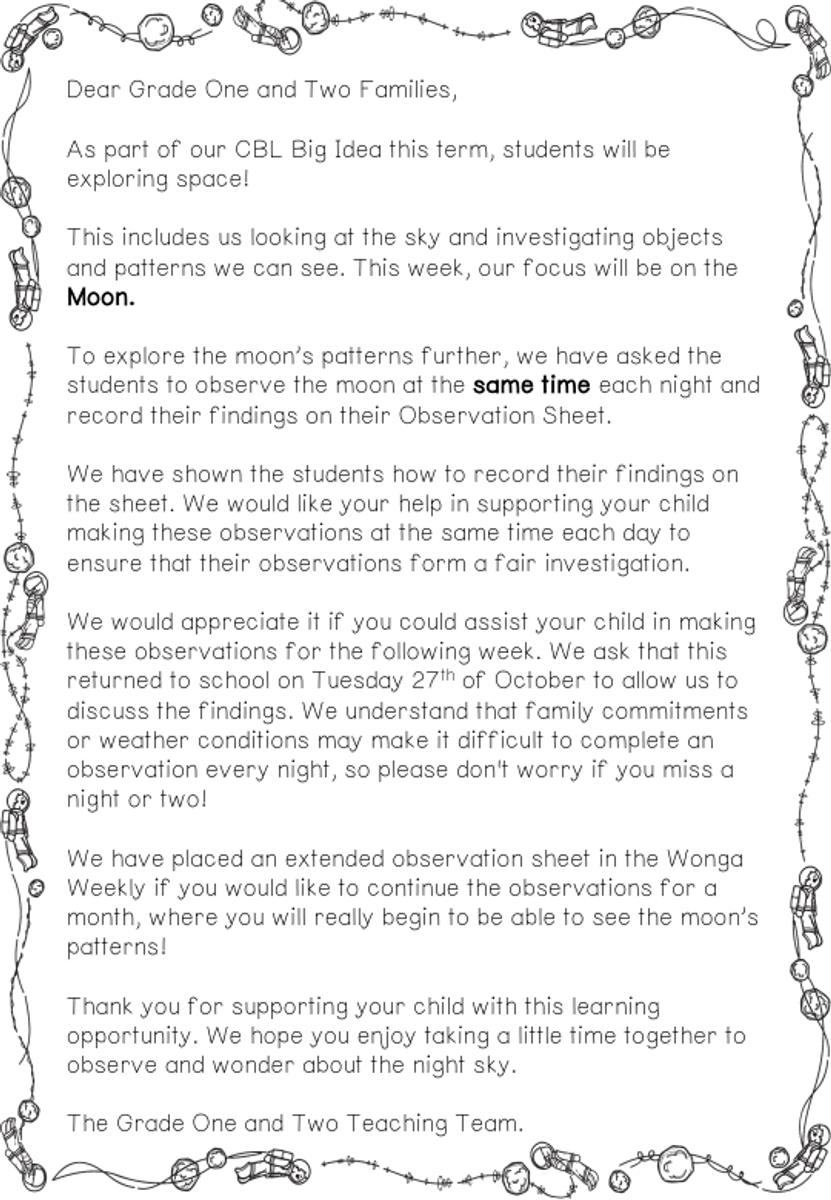
Families are encouraged to continue the optional Moon observation calendar at home. Keep looking up together, noticing changes in the Moon’s appearance and recording your observations to spark curiosity and conversation about space.
You can also access the Moon Observation task here:
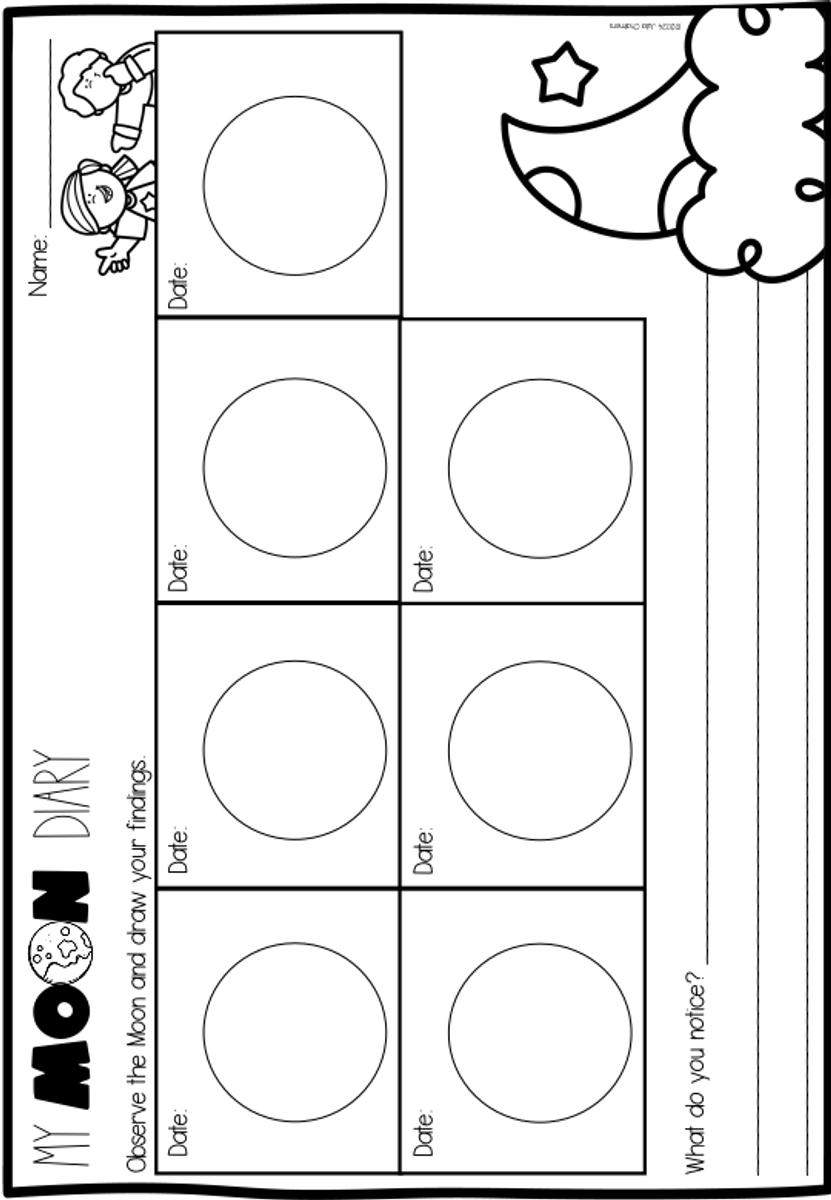
Weekly Observation
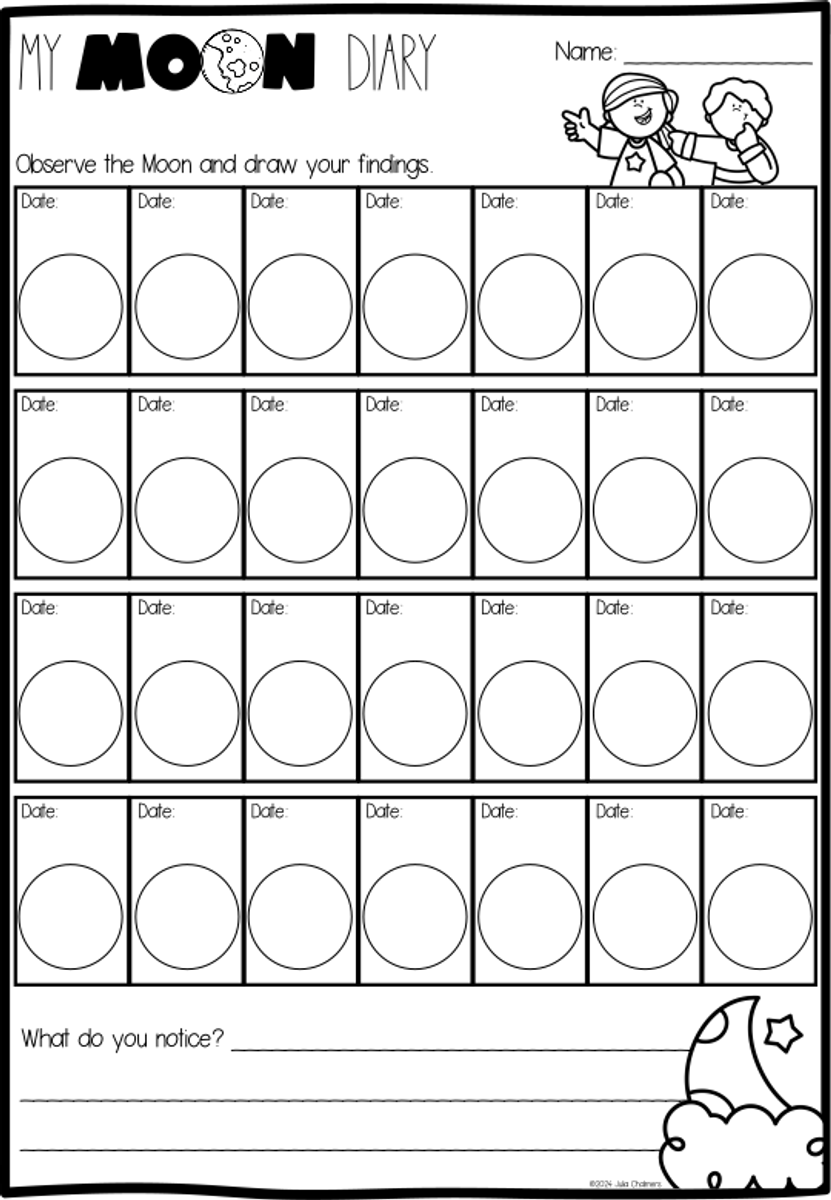
Month Observation
Weekly Observation
Month Observation
Guiding Questions that will support our learning over the term:
- What systems help us survive?
- Why is Earth different from other places in space?
What are scientific observations and how can I make them?
CHALLENGE
Inspire the Wonga Park community to ‘Look Up’ and wonder about space.