
Careers News

Regional Pathways Program
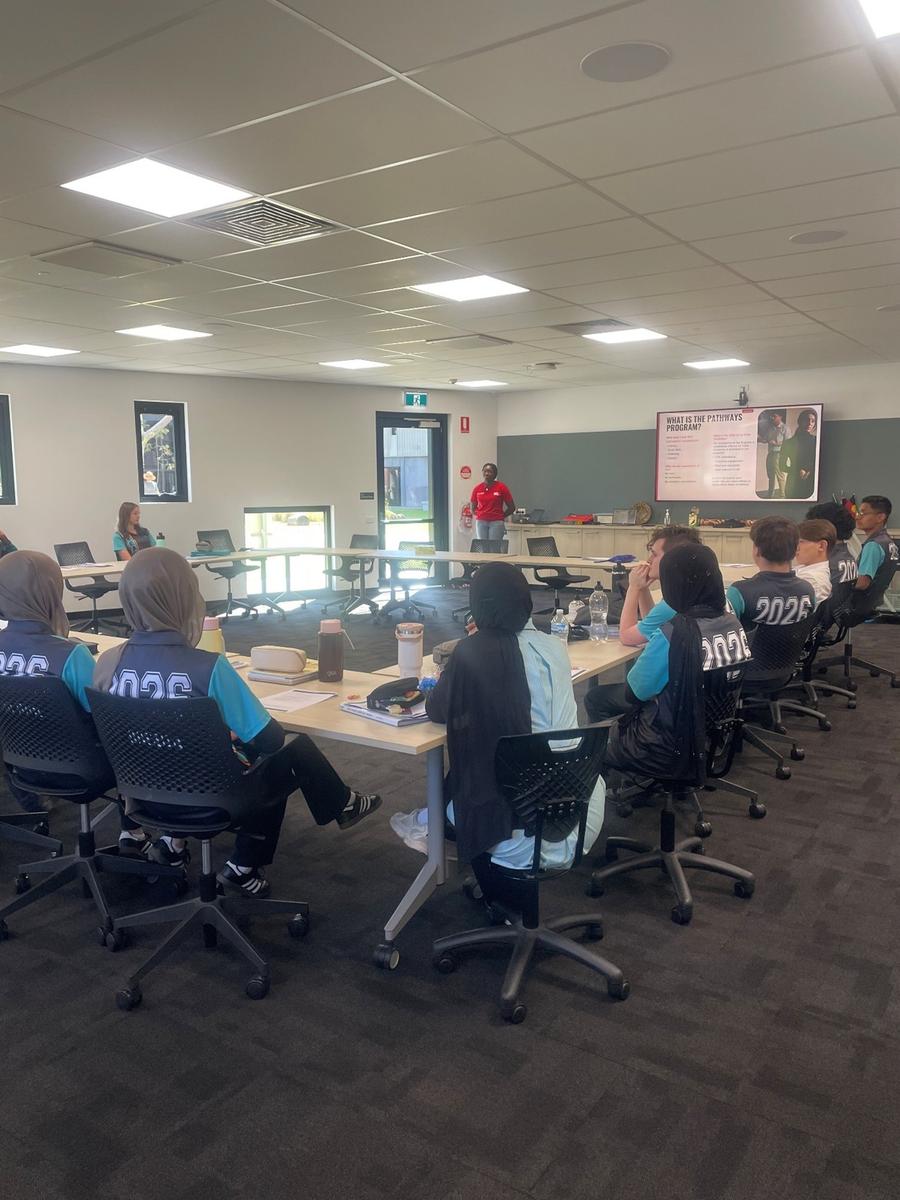
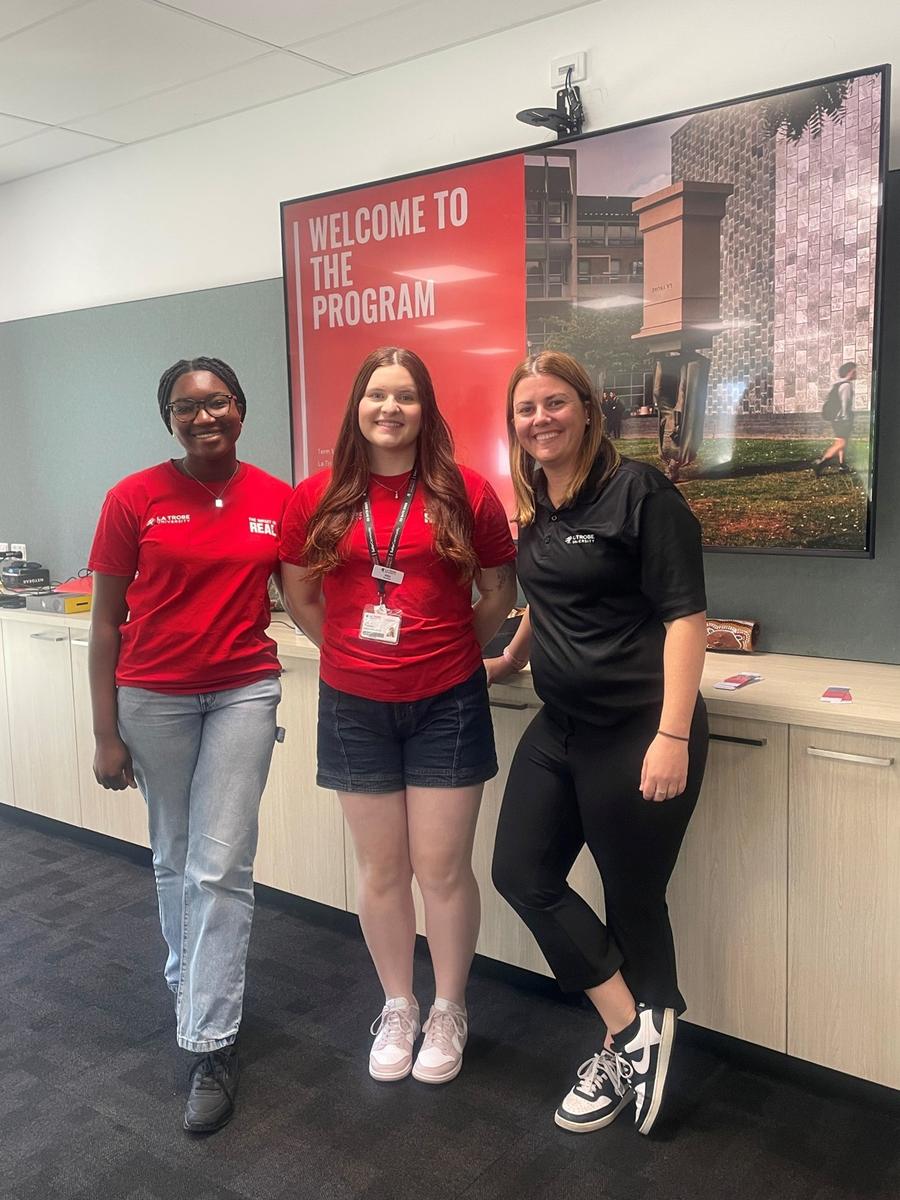
This week marked the exciting start of the much‑loved Year 12 Regional Pathways Program, formerly known as the Bradford Program, and what a start it’s been.
With 90 GSSC students enrolled, the program continues to be a standout opportunity for young people to receive holistic, hands‑on support from the dedicated La Trobe University team. Throughout the year, students will take part in fortnightly workshops covering everything from practical time‑management and study strategies to wellbeing, future planning, and the essential skills that set them up for success beyond school.
These sessions aren’t just informative - they’re engaging, interactive, and designed to build confidence as students shape their own pathways.
A huge thank‑you go to the La Trobe team and the philanthropic sponsors whose commitment makes this program possible year after year.
And of course, congratulations to our proactive students who have stepped up to embrace this opportunity. Your drive and enthusiasm will carry you far, no matter which path you choose next.
CAREER NEWS Friday 20 February
Dates to Diarise in Term 1
- Victorian Careers and Employment Expo – 19 to 21 March 2026

Bachelor of Artificial Intelligence
Gain the skills necessary to design, develop, and evolve software solutions that takes advantage of the latest advances in artificial intelligence.
Deakin’s Bachelor of Artificial Intelligence equips students with the knowledge and skills to design, develop and evolve software solutions that harness the latest advances in artificial intelligence (AI). Students get hands-on experience developing AI-driven software solutions with the support of academics who are leaders in this emerging field. Deakin’s world-class research in AI feeds directly into its classrooms, ensuring what students learn is at the cutting edge of industry expectations and capabilities.
Students have access to fully equipped computer labs with the latest software and technologies, ensuring they graduate with the specialist skills to design and build the intelligent systems of the future. Students also get to develop in-demand skills by working alongside experienced AI specialists during a professional work placement.Ultimately, this course focuses on developing skills in data science, data engineering, and machine learning. As a graduate, students will be well-equipped to work on the design, development and operation of AI-driven software solutions.
Career in Non-Emergency Patient Transport
Ambulance Victoria and Pro-Medic Services Victoria (PSV) provides Non-Emergency Patient Transport (NEPT) in Metropolitan Melbourne and Regional Victoria to both public and private hospitals, diagnostic facilities, and private individuals. On a recent SEEK advertisement for a role as a Patient Transport Officer (PTO), details of the key duties of the PTO were published, and include –
- Ensuring full compliance with organisational policies and procedures
- Acting as the primary carer in the assessment, treatment and transport management of patients
- Performing as part of a team to deliver high quality treatment in a timely, safe and efficient manner
- Ensuring compliance with patient care documentation requirements
- Adhering to all relevant regulations and clinical practice
- Maintaining currency of qualifications by undertaking training and updates as required
- Maintaining of work areas
The advertisement goes on to state that the successful candidate should be able to demonstrate -
- Ability to take a leadership role within the team to ensure high standards of patient care and safety
- Clear communication and good interpersonal skills
- Able to work reasonable additional hours if required
- Physically capable of performing patient transfers
PTO’s are not paramedics but, rather, they fulfill the vital role of transporting non-critical patients to hospitals, clinics, etc. To become a Patient Transport Officer (PTO), one needs to complete a minimum of that HLT31120 Certificate III in Non-Emergency Patient Transport. This course is offered at a few tertiary institutions in Victoria, as well as the Australian Paramedical College and St. John Ambulance Victoria, which is one of the largest providers of Non-Emergency Patient Transport in Victoria. Many graduates of this diploma choose to work part-time or casually in the industry while pursuing further study at university to become a paramedic.

Bachelor of Criminology and Policing
Crime is a complex phenomenon, which requires it to be viewed from various perspectives. In a joint venture with Victoria Police, the Bachelor of Criminology and Policing is the only course of its kind in Victoria.This course will provide students with the chance to apply to join the Victoria Police and if successful, continue their studies at the Victoria Police Academy, where they will gain practical experience and go on to work in the police force.How is this different from the Bachelor of Criminology? In the Bachelor of Criminology and Policing, students complete the same units as the ones offered in the Bachelor of Criminology, plus, they complete a Policing unit. For a comparison, take a look at the course maps for the Bachelor of Criminology and Policing and the Bachelor of Criminology. Graduate career opportunities include Advocacy, Anti-corruptions, Attorney-General’s departments, Corrections, Courts, Crime prevention, Department of Justice, Government agencies, Human rights, Juvenile justice, Legal support, Non-government agencies, Police, Policy development, Social welfare.The VCE requirements for entry are: Units 3 and 4: a study score of at least 25 in English (EAL) or at least 25 in English other than EAL. An additional entry requirement is the submission of the Supplementary Form providing information about interests and suitability for the course.

Career in Veterinary Nursing
SEEK * states that in addition to assisting with medical care, Veterinary Nurses provide vital information and support to pet owners and clients.
Some of the tasks a Veterinary Nurse might have to do include –
- Liaising with pet owners and clients on the level of care needed for optimum animal welfare.
- Assisting in medical procedures by sterilising surgical equipment, administering drugs and injections, and holding and maintaining animals during operations.
- Assisting in the day-to-day maintenance of the veterinary facilities by cleaning kennels and cleaning up after animals and surgeries.
Veterinary Nurses commonly have a passion for animals and their welfare. Students keen on finding out more might like to watch this Career Insights of a Veterinary Nurse.
Veterinary Nurses need to have a minimum of a Certificate IV in Veterinary Nursing, although qualifications can include diplomas and bachelor degrees. Some of these can be found at Box Hill Institute, Melbourne Polytechnic, and La Trobe University.

Cyber Security Courses in Victoria in 2026 One explanation for what cybersecurity might be is that cyber security is the protection of internet-connected systems, including hardware, software and data, from cyberattacks. In a computing context, security comprises cyber security and physical security - both are used by enterprises to protect against unauthorized access to data centres and other computerized systems. Note: Cyber Security is often also offered as a major or minor in Computer Science and IT degrees.
Below is a list of a number of courses, and students are encouraged to browse VTAC for a comprehensive list of all courses – including double-degrees – available.
INSTITUTION | COURSE NAME | VCE PREREQs | MAJOR STUDIES IN 2026 |
Box Hill Institute | Certificate IV in Cyber Security | n/a, but a Pre-Training Review and Language, Literacy & Numeracy Test | Cloud Services, Cyber Legislation, Ethical Hacking, Incident Management, Network Security, Penetration Testing, Programming, Risk Management, Security Monitoring, Website Security. |
Deakin University | Bachelor of Cyber Security | Units 3 and 4: a study score of at least 25 in English (EAL) or at least 20 in English other than EAL. | Cyber security (IOT Security, Access control, Digital forensics, Penetration testing, Cryptography, Analytics, Risk analysis, System vulnerabilities), Network security (minor only), Security management (minor only). |
Federation University | Bachelor of Information Technology (Cybersecurity) | Units 3 and 4: a study score of at least 20 in any English.
| Cyber Security. |
Holmesglen Institute | Certificate IV in Cyber Security | n/a, but a Pre-Training Review and Language, Literacy & Numeracy Test | Australian cyber law, Cloud security, Collecting and analysing data to identify cyber threats and vulnerabilities, Cyber Security Industry Project, Cyber ethics and workplace legislation, Data forensics, Data threat analysis, Developing risk mitigation policies, Introduction to Pen Testing, Intrusion testing, Managing System Security, Network Security firewall configuration, Networking skills for Cyber Security, Programming skills for Cyber Security, Risk Management, Securing Websites, Securing virtual environments, Security monitoring & Incident response, Working and communicating in a Cyber Security Operations Centre. |
La Trobe University* Also offered at La Trobe’s Sydney Campus | Bachelor of Cybersecurity | Units 3 and 4: a study score of at least 25 in English (EAL) or at least 20 in English other than EAL.
| Cybersecurity. |
Melbourne Polytechnic | Certificate IV in Cyber Security | n/a, but must successfully complete Year 12. | Programming using Python, Networking, Penetration testing, Securing a Server, Cloud security,, Website security and Network security. |
RMIT University | Bachelor of Cyber Security | Units 3 and 4: a study score of at least 25 in English other than EAL or at least 27 in EAL; Units 3 and 4: a study score of at least 20 in one of Maths: General Mathematics, Maths: Mathematical Methods or Maths: Specialist Mathematics. | Artificial Intelligence and Machine Learning, Bioinformatics, Blockchain Enabled Business, Blockchain Technologies, Business Analytics, Business Information Systems, CISCO Networking, Cloud Computing, Creative Computing, Cryptography, Cyber Security, Data Analysis, Data Science, Enterprise Systems Development, Entrepreneurship, Network Security. Note: the 4-year Bachelor of Cyber Security (Professional) is also offered. |
Swinburne University | Bachelor of Cyber Security | Units 3 and 4: a study score of at least 25 in English as an Additional Language (EAL) or at least 20 in English other than EAL. | Cyber security ethics law and policy, IT security, Introduction to programming, Malware analysis, Network administration, Network routing principles, Network security and resilience, Networks and switching, Secure remote access networks, Web development. |
Victoria University*Not Foundation Mathematics | Bachelor of Cyber Security | Units 3 and 4: a study score of at least 25 in English (EAL) or at least 20 in English other than EAL; Units 3 and 4: a study score of at least 20 in any Mathematics.* | Cyber security. |
Snapshot of Swinburne University in 2026
- Swinburne is student-focused and aims at students being engaged in their learning; be exposed to innovative teaching and given thorough preparation for the workforce.
- Swinburne is a large and culturally diverse organisation with a desire to innovate and bring about positive change. As a result, the institution is growing and evolving each year.
- Swinburne has been recognised as having one of the best design schools in the world by the QS World Rankings of Universities by Subject. The university was listed in the top 150 for the Art and Design subject area in 2025, and in the top 200 for Architecture and Built Environment – browse rankings.
- Swinburne regularly receives a 5-star ranking for student satisfaction as seen in the rankings link.
- Swinburne offers world-class higher education in health, arts, design, business, law, science, engineering, and technology - Schools and Departments.
- Swinburne is a university that makes Work Integrated Learning (also sometimes referred to as Industry Linked Projects) a major assessment component for students and is guaranteed in all bachelor degrees - Work Integrated Learning.
- Swinburne aims at producing job-ready students and Industry Based Learning (IBL) is offered to all eligible undergraduate students in the form of 6-12 month Professional Placements with industry partners with a long history of collaboration with Swinburne.
- Swinburne is the only Australian university with guaranteed access to the world's largest and most productive optical/infra-red telescopes — the twin Keck Observatory telescopes located near the summit of Mauna Kea, Hawaii W.M. Keck Observatory and Parkes Radio Telescope.
- Swinburne has a campus in Malaysia with many of the courses offered in Australia offered there – many Australian students choose to study a semester or more at the campus in Malaysia - Sarawak Campus, Malaysia.
- Swinburne has partnerships with over 100 overseas institutions across more than 20 countries, allowing for Australian students to go for a semester abroad, or complete part of their studies at one of these institutions - Student Exchange Program.
- Swinburne offers a number of study tours and a great number of those are specific to students studying business - Overseas Study Tours.
- Swinburne offers an Aviation degree and part of the training in this course includes access to a Flight Simulator Laboratory with aviation simulators to immerse trainee and experienced pilots in challenging fight scenarios whilst monitoring every aspect of their performance with cutting edge measurement tools. The results allow them to predict how new cockpit technologies and procedures will work in the real world. Swinburne offers a bachelor degree designed specifically to train students as a commercial pilot - Aviation. Swinburne has partnered with Qantas to offer a new pilot pathway program that qualifies Swinburne's flight crew of the future to fly with QantasLink, the airline’s regional brand.
- Swinburne has one of the largest university Psychology Clinics in Australia, not only offering low-cost counselling, psychological assessment, and group therapy treatment, but also quality teaching and research - Psychology Clinic.
For a comprehensive list of all courses offered at Swinburne, browse Courses at Swinburne