
Wellbeing
Amanda Wilson | Assistant Principal
Jess Norder | Mental Health and Wellbeing Leader

Wellbeing
Amanda Wilson | Assistant Principal
Jess Norder | Mental Health and Wellbeing Leader
Wellbeing
Students have been engaging in meaningful social emotional learning, immersing themselves in opportunities to help-seek, advocate for themselves and others, and develop self-awareness and social awareness through collaboration, role plays and relatable scenarios.
The Rights, Resilience and Respectful Relationships Team, (RRRR,) met to discuss wellbeing curriculum, to reflect on lesson content and resources, and share experiences of inclusive approaches to social emotional learning. The RRRR Team also made some initial plans for R U OK? Day. This day is integral for spreading awareness of the importance of supporting mental health and looking out for each other, encouraging us to recognise signs when a friend may not be ok. There will be more information to come on this in September.
Bullying, No Way! Week
It is ‘Bullying, No Way! Week from 17th to the 24th of August. This week draws attention to bullying prevention; recognising how important education in social emotional learning is for preventing bullying from occurring. At HPS we have a number of programs to scaffold the development of social emotional skills.
Social emotional development is a continuum. Sometimes, a student develops their language or numeracy skills at a different rate to their social emotional skills. Similarly to the way a student might need support in Maths or English, others might need a little extra support developing their skills in forming or maintaining friendships, communicating their needs, understanding facial expressions, tone and body language, recognising social cues, or strengthening their capacity for emotional regulation and emotional literacy.
Sometimes this difference in social/emotional development can result in varying levels of self-esteem, self-confidence, empathy and compassion, or a difference in their friendship style. Everyone looks for unique ingredients in their friendships that ‘fill their cup.’
Emotional literacy and knowing what emotions feel like in their body, self-advocacy and help-seeking are integral for bullying prevention. As trusted adults, we can help students to understand themselves and to take responsibility for their choices and actions.
In RRRR lessons, we have been learning about power imbalances. Students have recognised that honesty and communication are fundamental pillars of a healthy relationship. It’s helpful for children to trust that it’s ok to make a ‘mistake,’ and that each mistake can be a learning opportunity to repair a relationship. Behaviour is learnt, just like Maths and English.
(King. A., 2026, School Wide Positive Behaviour Support, Department of Education.)
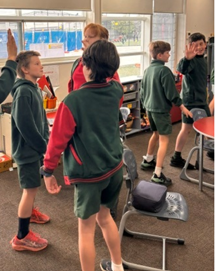
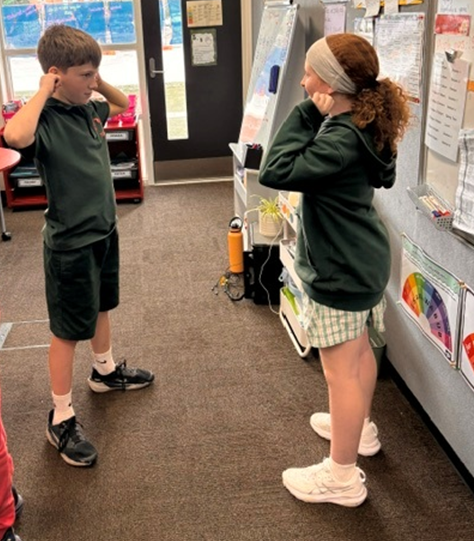
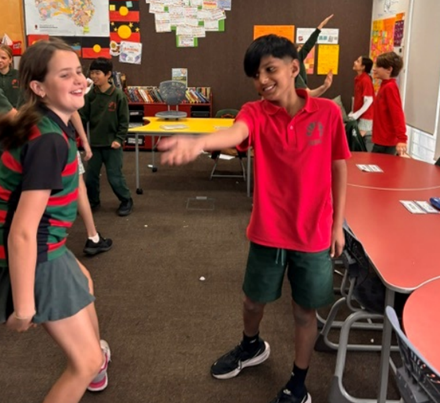
Learning about power imbalances and trying to ‘mirror,’ someone in a friendship in Year 5
Bullying is a complex social issue that harms people. Teachers, parents and carers, students and the whole school community need to understand what bullying is so that if it happens, they can recognise, report and respond to it quickly and effectively.
Bullying is an ongoing and deliberate misuse of power in relationships through repeated verbal, physical and/or social behaviour that intends to cause physical, social and/or psychological harm. It can involve an individual or a group misusing their power, or perceived power, over one or more persons who feel unable to stop it from happening. Bullying can happen in person or online, via various digital platforms and devices and it can be obvious (overt) or hidden (covert). Bullying behaviour is repeated, or has the potential to be repeated, over time (for example, through sharing of digital records).
Bullying of any form or for any reason can have immediate, medium and long-term effects on those involved, including bystanders. Single incidents and conflict or fights between equals, whether in person or online, are not defined as bullying.
(Australian Government, www.bullyingnoway.gov.au)
Bullying has three parts:
Power imbalance, Intention and Repetition (targeted.)
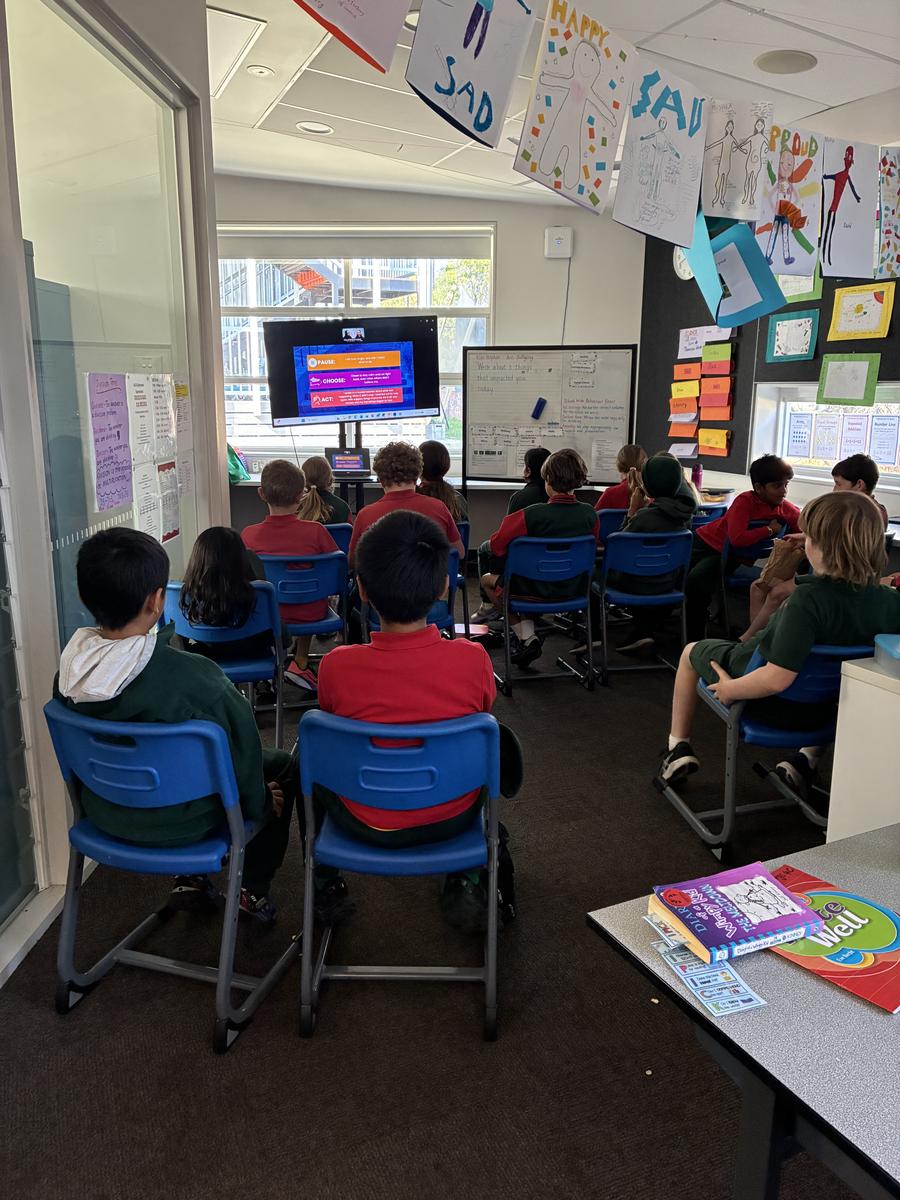
This week, our students took part in an online lesson about bullying prevention from KidsHelpline, and they participated in anti-bullying activities to draw attention to the importance of practicing our School Norms of Collaboration, Aspiration, Integrity and Resilience. A school’s culture and the values our students hold, have the capacity to prevent bullying. When bullying does not receive traction because students act with Integrity as Upstanders, it is less likely to eventuate. Emotional literacy, communication skills and collaborative team building activities, also support this.
What is an ‘Upstander’?
An upstander is someone who sees wrong, unfair, or mean behaviour and chooses to act. Instead of walking away or staying silent like a bystander, an upstander speaks up, supports the person who is hurt, or finds help to stop the problem. The Upstander metaphorically says, “I have your back.”
Creating a culture of Upstanders who advocate for themselves and others respectfully, supports bullying prevention.
https://www.vic.gov.au/i-have-your-back
Jess Norder- Mental Health and Wellbeing Leader
Amanda Wilson- Assistant Principal
The Upstanders, by Jonathan Pepi- Leader of The Upstanders
On Wednesday the 12th of August, our Year 5 Upstanders enjoyed an inspiring and highly interactive session when Sarah Bowers visited as part of the Upstanders Program. Her workshop blended creativity, movement, and social‑emotional learning, giving students practical ways to show empathy, and to support one another in everyday school life.
As The Upstanders prepare for their upcoming forum, Sarah’s intention is to visit the schools associated with the program and create choreographed songs and dances that embrace the theme of ‘Empathy’. Working alongside Sarah, students helped shape a
song‑and‑dance routine that celebrated Courage, Kindness, and Speaking up for Others. The room was filled with excitement as students practised and performed the routine, showing teamwork, confidence, and a willingness to try something new.
Sarah also guided students through a series of role plays designed to highlight what empathy looks like, and importantly, what it does not look like, in a school environment. Students watched and acted out both an example and a non‑example of empathetic behaviour. These short scenes helped students recognise the difference between noticing someone’s feelings and actively responding with care. In the following weeks, students of The Upstanders Program will perform some of these examples for the other students at Assembly.
The Peacemakers, by Michelle Kahui, Frances Kent and Alice Dowling
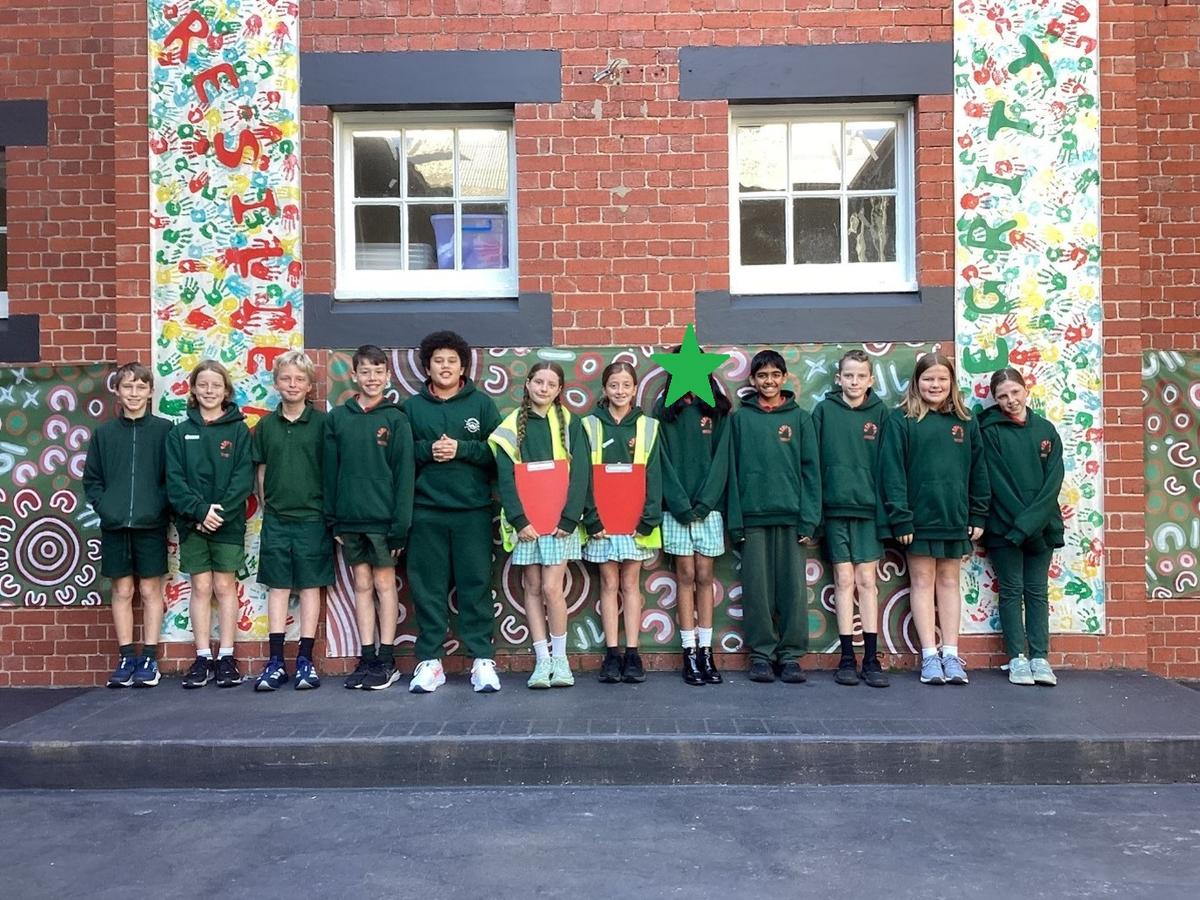
Your Peacemakers: Oscar Moran, Oscar Sharland, Alex Lefebure, Isla Fox, Leo Wright-Duncan, Alice Dowling, Sienna De Boer, Gevin Subasinghe, Anya Shaik, Jack O’Donnell, Oliver Collins, Frances Kent
‘Hi I’m Frances, one of your 2026 Peacemakers, I will always be ready to help you solve a problem or give out a few words of encouragement. I joined The Peacemakers program because this school and the students are important to me and I want to have an opportunity in the yard to be someone that people can come to. I want to help solve the problems of younger students and make the Hampton Primary School environment a happy welcoming place.’- Frances
‘
Hi, I'm Alice and I am also one of the 2026 Peacemakers. The reason I chose to be a Peacemaker is so that I can help younger children in the yard because I know it can be challenging when fights occur. It is also important for people to learn how to solve situations as it can be a lifelong skill. I will always be ready to help as it is important for everyone to be inclusive and welcomed.’- Alice
Who are we?
Peacemakers are a group of Year 6 leaders who have chosen to use their time to help out our school and make all the students feel safe, comfortable and welcome. It is the Peacemakers job to help out students in the yard and make the school atmosphere alive and happy. The Peacemakers will be there to turn your frowns upside down!
What we do:
Peacemakers help around the yard every lunchtime. They will be wearing bright yellow jackets and will be holding clipboards. Their job is to be there to help sort out any situations in the yard, and they will always be there to hear about other students' problems without taking sides or judging them. Anyone who comes to The Peacemakers for help will be listened to and will help to see both sides of an issue. So, if there is a time when a student is in a hard situation, they should look out for the yellow vests and come to The Peacemakers for help.
How it started:
This year, The Peacemakers is being run by Michelle Kahui who teaches across all the Year 6 classes, so she knows how we learn and thrive. Michelle provided a great session for us to practise and learn what being a Peacemaker is about. We all agreed we will commit to this program to make our school happier. The Peacemaker program is based on the work of Marg Armstrong and her views to use Peer Mediation and Restorative Practices to assist other students. This group of year sixes were brought together because we were inspired by Marg’s words and wanted to take action. We are always ready to solve a problem, assist younger students and make everyone feel like they belong. We can’t wait to see you in the yard!
By Alice Dowling and Frances Kent