
Curriculum
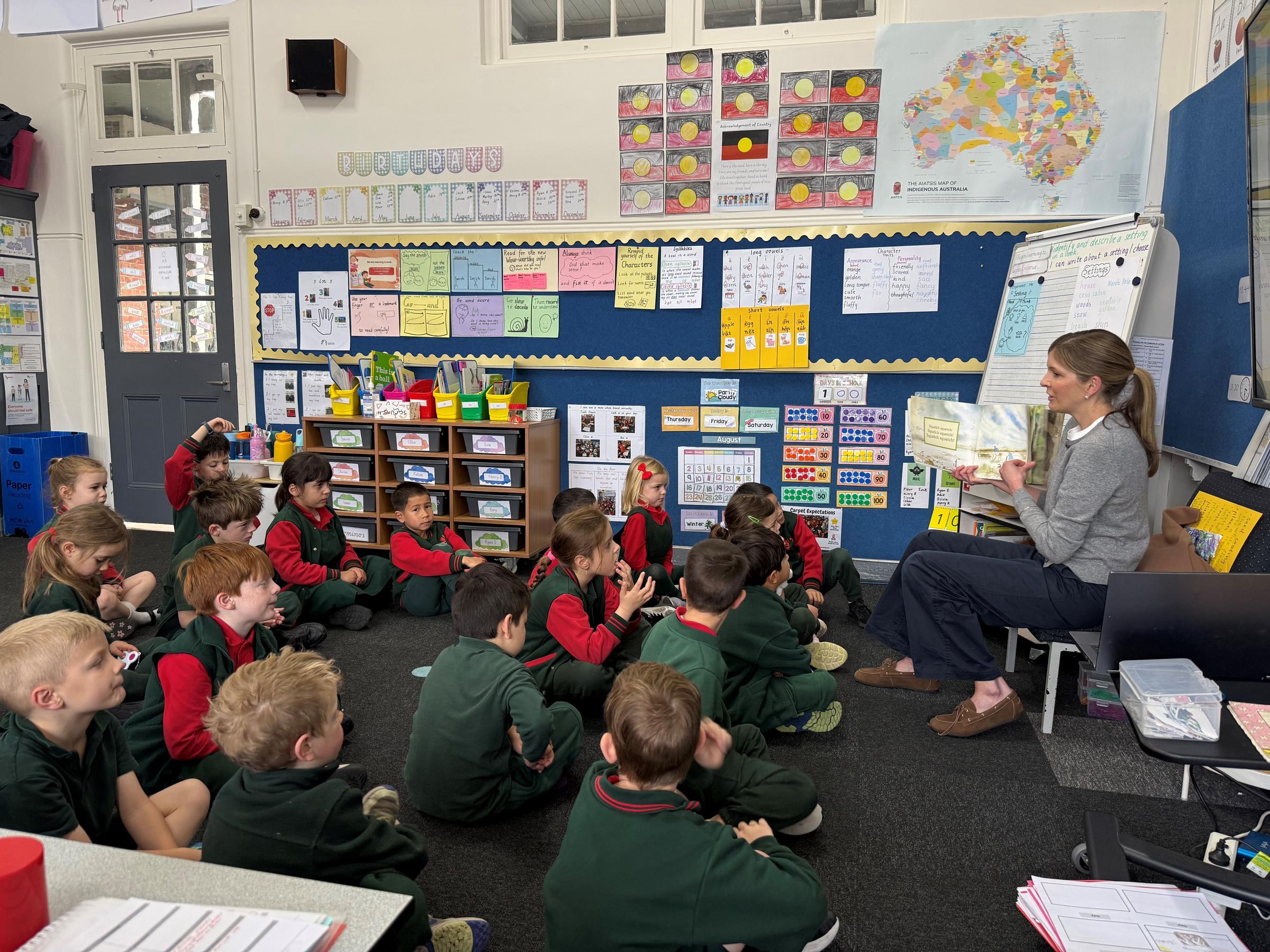
Cameron Azer | Assistant Principal Image: Foundation A
Curriculum
Cameron Azer | Assistant Principal Image: Foundation A
Research has shown that there are six key components that contribute to successful beginning reading. Because of the importance of these components, they have become known as the 'Big Six’: oral language, phonological awareness, phonics, vocabulary, fluency and comprehension.
Oral Language:
Oral language is the foundation of all literacy skills. If young children experience rich oral language by talking with and listening to adults and other children, they will have a large ‘bank’ of spoken vocabulary, words they understand when used in spoken communication.
Phonological Awareness:
Phonological awareness is the ability to hear the sounds within language. Children with good phonological awareness can hear:
Phonics:
Phonics builds on phonological awareness. During phonics lessons at school, children learn to connect the sound or phoneme to the letter of the alphabet or group of letters that is used to represent it.
Vocabulary:
When children have a large ‘spoken’ vocabulary, meaning they use and understand lots of different words, they are well placed to recognise and understand those words when they see them when reading.
Words can be broken up into three groups, sometimes called ‘Tiers’.
Tier 1 vocabulary is the words most frequently used when speaking and writing; words like the, and, was, some and ‘everyday’ words like dog, happy, play, go. These words are also called ‘high frequency’ or ‘sight words’ because readers will see them in lots of different texts and need to be able to recognise them automatically, by sight. Many Tier 1 words can’t be ‘sounded out’, their spelling doesn’t directly correspond to the way we say them; for example, was is pronounced /woz/, this is another reason they need to be learnt ‘by sight’.
Tier 2 and Tier 3 vocabulary contains more sophisticated and subject-specific words. Children who hear a wide range of words used in talking and reading books aloud will be better able to understand those words when they begin to read them in books.
Fluency:
Reading fluency refers to the ease with which children read. When reading aloud, fluency is affected by accuracy, rate and expression. To assist children to practise reading fluently in the early years of school, teachers often ask them to read aloud easier or familiar books. This lets children read confidently as they automatically and accurately recognise words, read at a rate that sounds more like spoken language, and use a range of expression, intonation, pauses and rhythm.
Fluency makes oral reading lively and allows the author’s message to be communicated clearly. Reading fluently gives young readers confidence in their own ability as readers and helps them to be interested and motivated, and to enjoy reading.
Comprehension:
Comprehension or understanding what we read is the whole aim of reading. Good readers comprehend in different ways depending on the book, article or website they are reading. Some of the ways readers comprehend include:
For further supports on how you can continue to support your child/dren at home please see the following resource:
https://www.literacyhub.edu.au/for-families/resources-to-support-reading-at-home/