Learning & Teaching
Maths News…
Mathematics in Prep: Sharing and Grouping

Sharing and Grouping
The Prep children are exploring the concept of Sharing and Grouping in Mathematics. This involves representing practical situations where they share a collection of objects equally and use counting strategies to ensure fairness.
At Home:
You can support your child at home by engaging them in everyday sharing activities such as;
Sharing Snacks
- Use snacks like grapes, crackers, or biscuits.
- Ask your child to share the snacks equally among family members.
- Example: “Can you share these 10 crackers so everyone gets the same amount?”
Toy Sorting
- Gather a small collection of toys (e.g., cars, dolls, blocks).
- Ask your child to group them equally into containers or by category.
- Example: “Can you put 12 blocks into 3 groups?”
Teddy Bear Picnic
- Set up a pretend picnic with stuffed toys.
- Have your child share out pretend food equally among the “guests.”
- Example: “There are 6 sandwiches. How many will each teddy get if there are 3 teddies?”
Sock Sorting
- Use a pile of socks and ask your child to group them in pairs.
- Count how many pairs they can make.
Dice Roll Sharing
- Roll two dice to get a total number.
- Ask your child to share that number equally among a set number of “groups” (e.g., 2 plates, 3 boxes).
- Example: Roll a 4 and a 3 → 7 total. “Can you share 7 buttons between 2 plates?”
Sharing with Cups
- Use cups and small objects like marbles or coins.
- Ask your child to share the objects equally among the cups.
- Example: “How can we share 8 coins equally into 4 cups?”
Mathematics Learning 1-2:Time
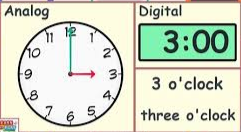
In Maths, the children in Years 1–2 are learning about Time. They are developing their understanding of how we measure and describe time in everyday life. Children are learning to read and represent time using analogue and digital clocks. They will practise telling time to the hour, half-hour, quarter-hour and five-minute intervals, as appropriate to their year level. Children will also explore the language we use to describe time, including o’clock, half past, quarter past, quarter to, minutes and hours.
Children will develop their ability to sequence events, use calendars and timelines, and solve simple problems involving the duration of activities and everyday events.
How can you support learning at home?
- Read the time on an analogue or digital clock.
- Ask, “What time do we need to leave?” and “How long until we leave?”
- Talk about what happens before, after and between different events.
- Help read and use a family calendar.
- Estimate how long everyday activities will take and then check the actual time.
- Use a timer when cooking, playing games or completing an activity.
- Ask your child to work out how long it is between two times.
- Create a simple daily or weekly timetable together.
Encourage your child to use mathematical language such as o’clock, half past, quarter past, quarter to, minutes, hours, before, after and duration when talking about time.
Here is a link to support children at home: Exploring Time
Mathematics Learning 3-4: Mass and Capacity
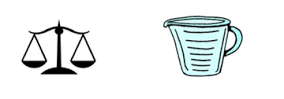
In Maths, the children in Years 3-4 are learning about Mass and Capacity. They are developing their understanding of how to measure, compare and estimate the weight of objects and the amount that containers can hold. The children are learning to select appropriate metric units, such as grams (g), kilograms (kg), millilitres (mL) and litres (L), and use these units to solve practical measurement problems.
Through hands-on investigations, the children are comparing and measuring the mass of everyday objects and exploring the capacity of different containers. They are learning to use measuring tools accurately, estimate measurements and explain their reasoning. Children are also developing their ability to compare measurements and choose the most appropriate unit for different situations.
How You Can Support Learning at Home
You can help reinforce these concepts by encouraging your child to engage in everyday measurement activities, such as:
* Measuring ingredients while cooking or baking using grams and millilitres.
* Comparing the mass of household objects and discussing which are heavier or lighter.
* Exploring different containers and predicting which will hold more or less liquid.
* Reading labels on food and drink containers to identify measurements in grams, kilograms, millilitres and litres.
* Discussing why certain units are more suitable for measuring different objects and amounts.
Mathematics Learning 5-6: Time
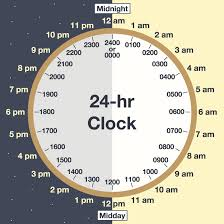
In Measurement, the children in Years 5–6 are focusing on Time. They are developing their understanding of both 12-hour and 24-hour time and learning to convert between the two formats. The children will measure, calculate and compare elapsed time, solve real-world problems involving time, and interpret timetables, schedules and itineraries. Through these experiences, they will develop the skills needed to plan activities, determine the duration of events and journeys, and apply their understanding of time to everyday situations.
How You Can Support Learning at Home:
Families can support this learning by involving children in everyday activities that require time calculations. Some ideas include:
* Reading and interpreting timetables for public transport, sporting events or television programs.
* Planning a family outing and calculating travel times and arrival times.
* Comparing 12-hour and 24-hour time on digital devices, clocks and schedules.
* Discussing how long everyday activities take and estimating elapsed time.
* Encouraging children to calculate start times, finish times and the duration of events.
* Using calendars and planners to organise family activities and appointments.