Careers























 Elisabeth Murdoch College

Year 9 Morrisby
On Wednesday 14th October we ran our Morrisby Career Profiling for the whole cohort. Students were tested on the way they solve verbal, numerical, abstract and mechanical problems, and completed questionnaires about their personal interests and preferences. The profiling takes about two hours, and students worked diligently throughout the allocated time.
We congratulate all students for their effort and application.
During week seven, students will be allocated a timeslot to meet with consultants who are specially trained in analysing the Morrisby results. These timeslots will appear on your Compass schedule soon.
Prior to that, students will have access to their Morrisby profile and will undertake some unpacking lessons in SAP where students can engage in some preliminary self-analysis and career exploration.
Year 10 Mock Job Interviews
Our Year 10 Pathways to Success students outdid themselves with this Semester's Mock Job Interviews. The interviews are held across two events, one here at EMC and one at Ebenezer Retirement Village. Students prepare in class for 7 common interview questions, and get to practice their skills during the events.


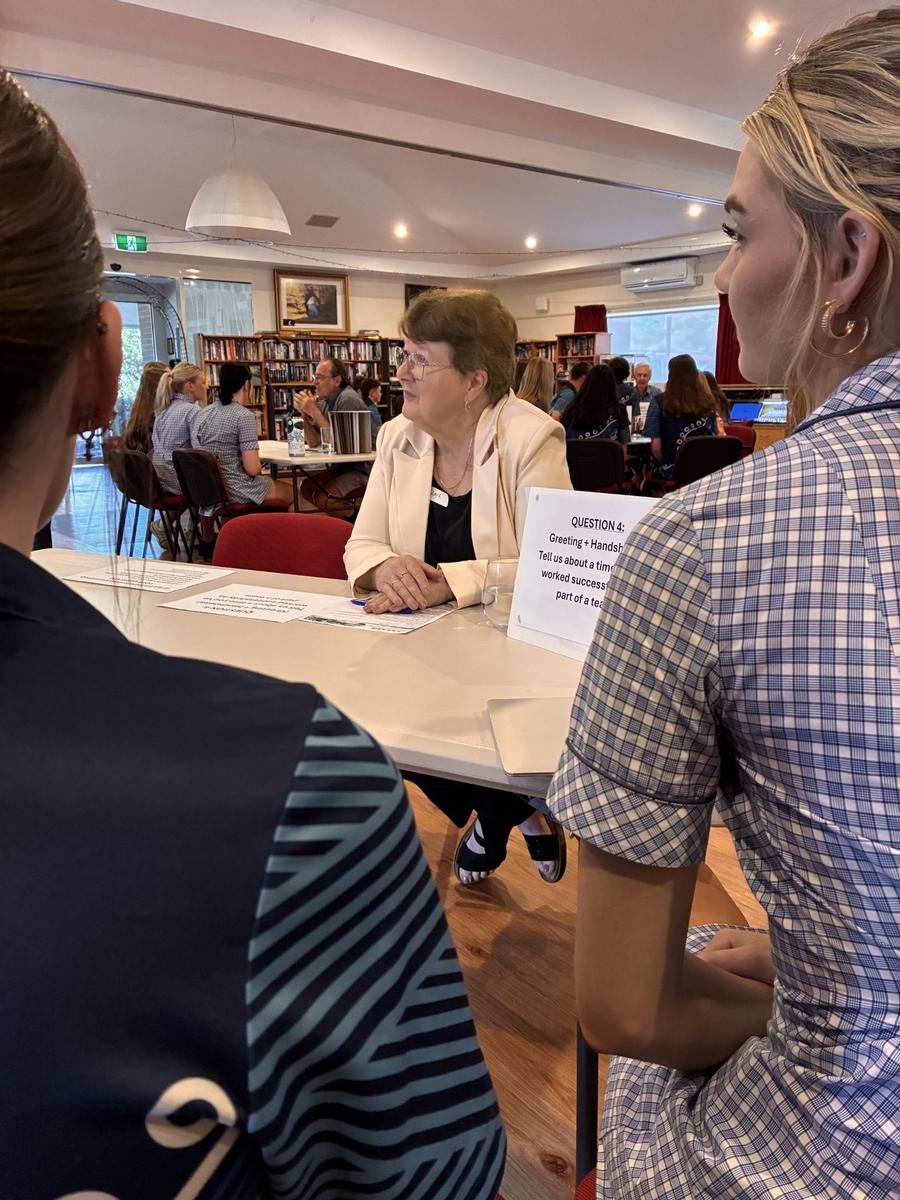

The Pathways team would like to thank all the amazing Community Members who volunteered their time to be our "pretend employers" for the events:
Ebenezer Retirement Village residents, Faith, Brett and Neil from Headstart, Jo from the Community Centre, Lisa from Frankston Council, Jalen and team from Frankston Youth Services, Steve from Grace Church, Chloe - Alumni, Harry and team from Connect Church.
THE BENEFITS OF ACCELERATING A SUBJECT IN HIGH SCHOOL

Weigh up benefits of accelerating a subject in high school, from lighter workloads to a calmer, more balanced year 12.
Year 12 has a reputation for being stressful, and for many students, that reputation is well earned. Exams, assignments, and the pressure to perform as well as making post school decisions and getting “life ready” can all land at once.
Accelerating a subject, which means studying it ahead of your year level, is one way for some students to take a bit of that pressure off. It isn’t the right choice for everyone, but for the right student, it could help senior school feel far more manageable. Here’s a closer look at some of the benefits for the right candidates.
A lighter workload in year 12
Studying five or six senior subjects all at once, alongside exams and assessments for every one of them, is a lot to juggle. One of the clearest benefits of acceleration is that it spreads your workload across more years instead of cramming it all into your final one. If you complete a senior subject in year 10 or 11, you won’t need to study it again in year 12. That leaves more time and mental energy for your remaining subjects.
Room to take on more subjects
Acceleration also opens the door to studying a wider range of subjects than you otherwise could. If you’re keen to tackle the maximum number of subjects completing any of those subjects sooner could free up a space for competing subjects in your timetable down the track.
This could be particularly useful for students who want to keep multiple pathways open, such as combining sciences with a language, or humanities with mathematics. Rather than having to choose between subjects you love, acceleration sometimes lets you fit more of them in over your whole schooling, rather than squeezing them into just two years.
What it can mean for your ATAR
This part varies depending on where you live, so it’s worth checking the specific rules for your state or territory. That said, in most parts of Australia, subjects completed early can still count towards your ATAR calculation, the same as if you’d studied them in year 12. In New South Wales, for example, your ATAR is based on an aggregate of your best subject results, gathered over a period of up to five years, so accelerated subject units from year 10 counts just as much as units from year 12. In Victoria, VCE study scores from an accelerated subject are scaled in the year they’re completed and can still contribute fully to your ATAR later on.
Because these rules differ by state and can change over time, it’s best to confirm the details with your school or your state’s tertiary admissions centre before assuming how it will affect you. What tends to hold true everywhere, though, is that finishing a subject early means one less thing competing for your attention in your final exam season, which could make it easier to perform well across the board.
Experience high level studies earlier
Completing a senior subject early gives you a taste of what senior-level assessment feels like, including exam conditions and the pace of the work. This could help you to prepare for year 12 and get started feeling familiar with the level of work and expectations rather than overwhelmed, since you’ll have already been through it once.
Some students also use an accelerated subject to apply for university credit or advanced standing, particularly if they go on to study something related at the same institution. This won’t apply to every subject or every university, so it’s worth doing your research or asking universities directly if this matters to you. If uni credits are what you’re interested in, you can explore university enhancement at school programs as well.
Which subjects are most commonly accelerated
Mathematics is one of the most popular subjects to accelerate, and schools often have dedicated pathways for it. This is partly because maths builds in a clear, structured way from one year to the next, so a student who is ahead can usually move into the next stage without much disruption. Some schools run maths acceleration from year 8 or 9 onwards, feeding into extension subjects in later years.
Content-heavy subjects such as biology, geography, business studies and psychology are also popular choices. These subjects don’t rely as much on skills you build slowly over several years. Instead, they’re more about learning and using information within a shorter space of time, which makes them easier to fit into a compressed schedule. Languages are another common option too, especially if you’re already a fluent speaker or you’ve been learning the language outside school for years.
Subjects that are harder to accelerate
Not every subject lends itself to acceleration in the same way. Sciences like chemistry and physics tend to be trickier, since they rely on layers of practical skills and technical knowledge built up gradually, and rushing through them can leave gaps that show up later.
English is another subject schools might be cautious about accelerating. It usually requires a level of maturity in analysing texts and forming arguments that develops with age, and because it’s a prerequisite for most university courses, many schools prefer students to take the extra time rather than fast-track it. Subjects built around a folio or ongoing creative process, such as visual arts, drama, music and design technology, can also be difficult to accelerate, since the skills involved are usually developed through sustained practice rather than compressed study.
None of this means these subjects are off-limits. It simply means your school may look more closely at your readiness before agreeing to accelerate in them, and it’s worth asking directly what their approach is.
Who tends to do well with acceleration
Acceleration usually suits students who are already excelling in their current year level and are asking for more. If you’d just like to accelerate to keep up with someone else in your cohort, then it might not be the best option for you. If you’re an independent learner who manages their time well and really enjoys the subject (rather than just being good at it), then you might find accelerating subjects a rewarding rather than draining experience and it could be an option to consider.
It’s worth being honest with yourself, if you’re already stretched thin with commitments outside school, are running full steam to keep up with assignments and assessments in your current year level, or if the main reason you’re considering acceleration is pressure from family or friends, it’s worth pausing. Acceleration should feel like an opportunity, not another obligation on the pile.
Before you approach your school
If you think acceleration could work for you, you’ll need to have approval and support from your school. It will help if you go into that first conversation prepared. Think about why you want to accelerate your chosen subject and be able to explain your reasoning. Show how you’ll manage the increased workload around your other subjects and other commitments, as well as being able to let them know what support you have in place and what extra support you’ll need from them to succeed. It’s also worth asking your school about their specific process, since requirements and timelines vary between schools as much as they do between states.
Talking to your careers advisor or a teacher you trust before you apply can help you go in with realistic expectations, rather than finding out partway through that it wasn’t quite what you expected.
Ready to plan your subject pathway?
Acceleration can be an advantage for the right students, easing pressure later on and opening up more subject choices along the way.
THE SCIENTISTS BEHIND THE FOOD YOU EAT!

Behind every product on the shelf is a team of scientists working on how it's made, how it tastes, and whether it's safe to eat. Here's a look at five careers responsible for the science most people never think about.
Every packet, carton, and takeaway container on the shelf has been through the hands of several scientists before it reaches you. From the way a product is designed to how it’s tested, processed, and checked for safety, there’s a surprising amount of science behind something as ordinary as breakfast. Here’s a look at five careers doing that work.
Food Technologist
Turning a recipe that works in a small kitchen into something that can be made safely and consistently at scale is the job of a Food Technologist. That means choosing the right processing methods, such as heat treatment, freezing, or packaging systems, and solving the problems that come up when a product behaves differently in a full production line than it did in early testing. Food Technologists work closely with engineers and production teams, and they’re often the ones adapting existing products or developing new ones in response to changing tastes, such as plant-based alternatives.
Entry usually comes through a qualification in food technology or food science, which typically includes a strong practical or laboratory component alongside the theory. Some people also move into the role from an engineering or production background and specialise once they’re working in food manufacturing.
Sensory Scientist
A Sensory Scientist studies how people actually experience food and drink, covering taste, smell, texture, and appearance. Much of the work involves designing and running tests, from training panels of tasters to describe products using precise and consistent language, to running broader consumer trials and interpreting the results with statistical methods. That information then feeds back to product developers, helping them understand exactly what needs to change if a product isn’t landing the way it should.
Most Sensory Scientists come from a science background, often food science, psychology, or chemistry, and then build specific training in sensory evaluation methods on top of that. It’s a role that suits someone who’s naturally curious about why people like what they like, not just what’s in a product.
Food Microbiologist
Food Microbiologists study the bacteria, yeasts, and moulds that show up in food, and the work splits into two quite different directions. One side is about safety, testing for harmful organisms and investigating contamination issues before they become a problem. The other is about the beneficial microbes behind fermented foods like yoghurt, cheese, and sourdough, where understanding the science means being able to improve flavour, texture, and shelf life on purpose rather than by accident.
Getting into the role usually means a qualification in microbiology or a related biological science, often starting out in a laboratory-based position within a food safety team before moving into more specialised research work.
Nutritional Scientist
Rather than working directly with patients, a Nutritional Scientist researches how food and nutrients affect the body more broadly, often through studies that look at diet and health outcomes across a population. That research could inform food labelling guidelines, support new product formulations, or feed into public health policy, depending on where the role sits.
This is a distinct pathway from clinical dietetics, which involves direct patient care and usually requires separate accreditation. A Nutritional Scientist role typically starts with a qualification in nutrition science, which overlaps closely with biology and biochemistry, and can lead into industry research, academia, or government health roles.
Food Safety Auditor
A Food Safety Auditor inspects production facilities and processes to check they’re meeting safety and quality standards, reviewing documentation, identifying risk points, and working with manufacturers to fix issues before they become bigger problems. It’s a role that combines scientific knowledge with a sharp eye for detail, since a single overlooked step in a process can affect an entire batch of product.
Many Food Safety Auditors start out in quality assurance roles within food manufacturing, often with a qualification in food science or microbiology, and move into auditing once they’ve built up practical experience and additional certification in food safety standards.
What you’d need to get started
All five of these careers build on a foundation of science subjects at school, particularly chemistry and biology, alongside a genuine curiosity about how things work at a small scale. Comfort with detailed, methodical work matters across the board, whether that’s running a lab test correctly or documenting a production process accurately.
Communication also turns up more than you’d expect. Scientific findings only create change if someone can explain them clearly to a product developer, a production manager, or a regulator who isn’t a scientist themselves, so being able to translate technical detail into something practical is genuinely useful across every one of these roles.
FIVE NICHE CAREERS IN NANOTECHNOLOGY

Nanotechnology already shapes sunscreen, medical treatments, and the batteries in your devices, and it supports a wider range of careers than most students realise. This breaks down five nanotechnology-focused roles, what each one involves, and what it actually takes to get started.
A single strand of DNA is about 2 nanometres wide, roughly 40,000 times thinner than a human hair. Nanotechnology works at that scale, engineering materials and devices atom by atom, and it already shapes things like sunscreen, medical treatments, phone screens, and the batteries in your devices.
Here’s a look at five careers worth considering.
Nanotechnology Research Assistant/Technician
Nanotechnology Research Assistants and Technicians support the hands-on side of nanotechnology research, preparing samples, running experiments, and recording results under the guidance of senior scientists. Precise, detail-focused work matters here, since even a small error in measurement or contamination can affect an entire experiment.
It’s often the most accessible entry point into the field, since positions can be reached through a laboratory-based qualification rather than a full science degree. Many technicians build on this foundation over time, moving into more advanced roles as their experience and study level grows.
Nanomaterials Engineer
Nanomaterials Engineers design and test new materials engineered at the nanoscale, adjusting the way atoms and molecules are arranged to create materials that are stronger, lighter, or more conductive than their traditional counterparts. Their work feeds into industries like construction, electronics, and manufacturing, wherever a small change in material properties can make a big difference to performance.
A science or engineering degree with a materials or chemistry focus is the usual pathway in. Nanomaterials Engineers often specialise further as they build experience in a particular industry.
Nanomedicine Researcher
Nanomedicine Researchers develop nanoscale tools for medicine, including drug delivery systems designed to target specific cells in the body and diagnostic tools that can detect disease earlier than traditional methods. The work sits at the intersection of biology, chemistry, and engineering.
It’s demanding, and usually means years of study and research experience before you’re leading your own projects. If you’re interested in both science and healthcare, it’s one of the more direct ways to combine the two.
Nanomaterials Safety Officer
Nanomaterials Safety Officers assess and manage the risks involved in working with and manufacturing nanomaterials, since particles this small can behave differently in the body and the environment compared to their larger-scale counterparts. The role includes testing exposure levels, setting handling procedures, and making sure a workplace meets safety standards.
A science background is generally expected, often combined with further training in occupational health and safety. It suits you if you care about the practical, real-world side of new technology.
Nanotechnology Process Engineer
Nanotechnology Process Engineers take nanomaterials and processes that have been proven in a lab and work out how to scale them up for industrial manufacturing, without losing the properties that made them useful in the first place. It’s a role that blends science with problem-solving and logistics, since manufacturing at scale introduces challenges that don’t show up in small lab batches.
An engineering degree is the typical starting point, and experience in a manufacturing or production environment is highly valued alongside it.
What you’d need to get started
There’s no single pathway into nanotechnology, since these five roles range from a laboratory-based qualification through to a full science or engineering degree. What they share is a foundation in the physical sciences, so senior subjects in chemistry, physics, or maths give you a solid base regardless of which direction you end up taking.
Beyond subject choice, a few things matter across all five roles:
- A high level of attention to detail, since small errors matter more at this scale
- Comfort following precise procedures and safety protocols
- Curiosity about how materials and systems behave, not just what they do
- The patience to work on problems that can take months or years to solve
None of these roles require you to have it all figured out before you start. Lab-based positions can be a practical way to build experience and work out whether the field suits you, before committing to further study in a specific direction.