Learning & Teaching
Mathematics Learning in Prep: Addition and Subtraction
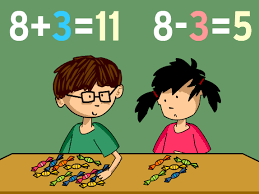
The children have been exploring addition and subtraction through hands-on learning experiences, games and problem-solving activities. They are developing their understanding that addition combines groups together, while subtraction involves taking away or finding the difference between quantities.
The children are using a range of strategies to solve problems, including counting collections, using ten-frames, part-part-whole models, number lines and concrete materials. They are also learning to explain their mathematical thinking and share the strategies they use to find solutions.
The children are beginning to recognise number patterns, make connections between addition and subtraction, and solve simple number stories based on real-life situations.
How You Can Help at Home
Count Everyday Objects
Ask your child to count collections of items such as toys, blocks, fruit or cutlery. Encourage them to explain how they know how many there are.
Practise Addition and Subtraction Stories
Create simple real-life problems:
- "You have 5 grapes and I give you 2 more. How many do you have now?"
- "There are 8 toys on the floor and 3 are put away. How many are left?"
Play Number Games
Use cards, dice or board games to practise counting, adding and subtracting small amounts.
Use Ten-Frames
Draw a simple ten-frame and use counters, buttons or small objects to represent numbers and solve addition and subtraction problems.
Look for Maths Everywhere
Talk about numbers during daily routines such as shopping, cooking or setting the table. Ask questions like:
- "How many more do we need?"
- "How many are left?"
- "What happens if we add one more?"
Mathematics Learning in Years 1–2: Shapes
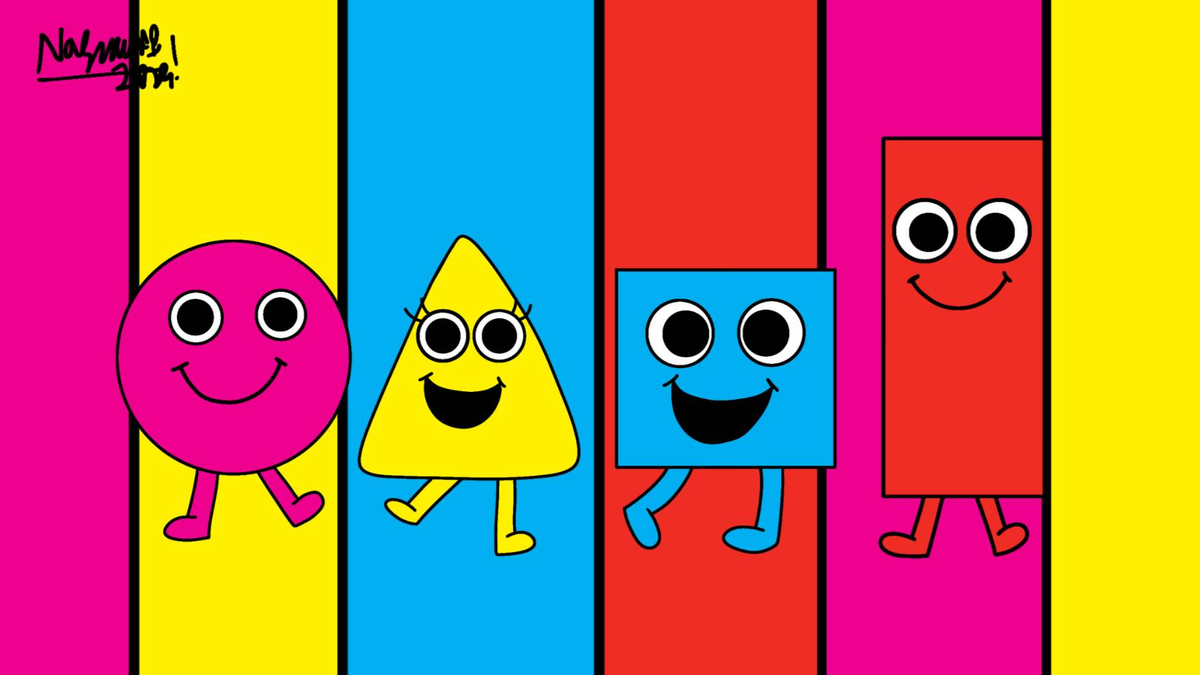
The children have been exploring two-dimensional (2D) shapes and three-dimensional (3D) objects. They are learning to identify, describe and compare shapes and objects by their features, such as sides, corners, edges, faces and vertices.
Through hands-on investigations, the children are sorting, classifying and creating shapes while exploring how shapes are used in everyday life. They are developing their mathematical vocabulary and learning to explain their thinking when describing and comparing different shapes and objects.
The children are also exploring how simple shapes can be combined to create more complex designs and are making connections between the shapes they learn about in the classroom and those they see in their environment.
How You Can Help at Home
Go on a Shape Hunt
Look for shapes around your home or neighbourhood. Ask your child:
- Can you find a circle?
- Can you find a rectangle?
- What shapes can you see in signs, buildings or playground equipment?
Sort Household Objects
Collect everyday items and sort them by shape.For example:
- boxes
- cans
- balls
- containers
Discuss how the objects are similar and different.
Build with Shapes
Use blocks, LEGO, magnetic tiles or recycled materials to create structures and talk about the shapes used.
Draw and Create Pictures
Encourage your child to create pictures using shapes such as circles, triangles, squares and rectangles.
Talk About Shape Features
Ask questions such as:
- How many sides does this shape have?
- Does it have any corners?
- Can it roll or stack?
- What makes it different from another shape?
Mathematics Learning in Years 3–4: Multiplication and Division
The children have been developing their understanding of multiplication and division and the relationship between these two operations. They are learning to recall multiplication facts and use them to solve a variety of multiplication and division problems.
Through hands-on activities, problem-solving tasks and mathematical discussions, the children are exploring different strategies, including arrays, equal groups, skip counting, number lines and fact families. They are learning to apply efficient strategies to solve problems and explain their mathematical thinking using appropriate vocabulary.
The children are also investigating how multiplication and division are connected and how understanding one operation can help solve problems involving the other.
How You Can Help at Home
Practise Multiplication Facts
Help your child practise multiplication facts through games, flashcards or quick-fire challenges. Building fluency with multiplication facts helps children solve more complex problems efficiently.
Look for Equal Groups
Ask your child to identify equal groups in everyday situations:
- 4 plates with 3 biscuits on each plate
- 5 rows of 2 chairs
- 6 packets with 4 stickers in each packet
Ask:
- How many altogether?
- How do you know?
Explore Division in Real Life
Use everyday objects to practise sharing and grouping:
- Share 20 grapes equally between 4 people.
- Group 24 blocks into groups of 6.
Discuss:
- How many groups are there?
- How many are in each group?
Play Card and Dice Games
Use cards or dice to create multiplication and division challenges. Encourage your child to explain the strategy they used to find the answer.
Talk About Mathematical Thinking
Ask questions such as:
- How did you work that out?
- Is there another way to solve it?
- How do multiplication and division connect?
By practising these skills in everyday situations, children develop confidence, fluency and a deeper understanding of multiplication and division.
Mathematics Learning in Years 5–6: Fractions
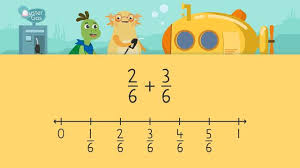
The children have been developing their understanding of fractions, with a particular focus on adding and subtracting fractions. They are learning to recognise equivalent fractions and use this knowledge to solve problems involving fractions with the same and related denominators.
Through hands-on activities, visual models and problem-solving tasks, the children are exploring a range of strategies for adding and subtracting fractions. They are using fraction walls, number lines, diagrams and concrete materials to deepen their understanding and explain their mathematical thinking. The children are learning how to find common denominators, simplify fractions where appropriate and check that their answers are reasonable.
How You Can Help at Home
There are many simple and meaningful ways to support your child's learning about fractions at home:
Practise Fraction Calculations
Ask your child simple addition and subtraction questions such as:
- 1/4 + 2/4
- 5/8 - 3/8
- 3/4 + 1/2
Encourage them to explain how they found their answer.
Use Visual Models
Draw fraction bars, circles or number lines to help your child visualise fraction calculations and compare different fractions.
Explore Equivalent Fractions
Discuss how fractions can be renamed.
For example:
- 1/2 = 2/4 = 4/8
- 3/4 = 6/8
Understanding equivalent fractions helps children when adding and subtracting fractions with different denominators.
Encourage Mathematical Thinking
Ask questions such as:
- How do you know your answer is correct?
- Can you show that another way?
- What equivalent fractions could you use?
- Does your answer make sense?
By exploring fractions in everyday situations and discussing mathematical thinking, children develop confidence and a deeper understanding of adding and subtracting fractions.
Literacy News
Welcome back to all our children for a productive Term 3. Please find below what each Hub group will be working towards this month.
Prep:
In Reading: Our Prep children will continue to strengthen their reading skills by decoding words with sounds they have learnt in class. The next sounds children will be learning include:
j qu v w x y z zz ff ll ss. Children will learn the tricky words: too she he for her be and my which will help them when reading texts.
You can encourage your prep child/ren to smooth blend sounds together such as jjjaam = jam.
In writing our prep children will use their sound knowledge to spell cvc words with accuracy. They will practice their letter formation to ensure that they can write neatly and legibly.
We will be focusing on expanding simple sentences and making sure to include who, what, when and where when writing.
1-2:
In Literacy: Our Grade 1/2 Children are learning about alternative spelling sounds when reading and writing words. The children have learnt about adjacent consonants which include sounds such as fl, sp, str, gr, st , cr , br sw and fr. They have used this knowledge to read and multisyllable words with the same spelling pattern.
To strengthen our children's writing, they will be learning how to expand sentences by including who, what, where and when (prepositions). Children will learn how to combine sentences using the Conjunctions ‘and , because’
3/4
In Literacy this month, our 3-4 children will engage in a Novel Study. The text we will be looking at is called ‘Iron Man’ by Ted Hughes. In this story, children will investigate the themes of bravery, inclusion, acceptance and friendship. Children will use what they have learnt to support their writing.
Children will expand sentences using the conjunctions Because / but / so. They will learn how to summarise sentences in a short version and learn how to use coordinating and subordinating conjunctions.
5/6
In Literacy this month, the 5-6 children will be studying the novel: Tom Appleby -Convict boy. In this text, children will be exposed to historical and cultural contexts where they will explore the themes of resilience, adaptability, and the search for belonging. Children will use what they have learnt and apply this in their writing. Children will expand sentences using the conjunctions: because, but and so. They will write paragraphs using a tool called ‘Single Paragraph Outline’ that will help them write summaries about a particular topic.
Handwriting: This term our senior school children will be learning how to touch type using the software program: Typing Club. Children will work through courses and learn the initial positioning of their fingers on the qwerty keyboard. We are very excited!
What can you do at home?
Play "Smooth-Blending" I-Spy: When you are in the car or cooking, say: "I spy with my little eye, a d-o-g." Encourage them to slide the sounds together ("dddooog") to guess the word "dog". Do this with the new sounds they are learning: j, qu, v, w, x, y, z, zz, ff, ll, ss (e.g., j-a-m, w-e-t).
Tricky Word Hide-and-Seek: Write their tricky words (too, she, he, for, her, be, my) on post-it notes. Hide them around the room. When they find one, they have to read it aloud to "claim" it.
Sensory Letter Formation: Preps are working on neat writing. Have them practice drawing their letters in a shallow tray of rice, sand, or shaving cream, or draw them with chalk on the driveway.
Build-a-Sentence Dinner Talk: At dinner, say a tiny sentence like "The dog ran." Ask your child to help you expand it using the Who, What, When, or Where rule.
The "Because, But, So" Game: Give them a simple starting sentence and have them finish it three different ways:
- The boy went to the park because... (he wanted to play soccer).
- The boy went to the park, but... (it started to rain).
- The boy went to the park, so... (he got some exercise).
The 10-Word Summary: After they read a chapter of their home reader or a book they love, challenge them to summarize what happened in exactly 10 words or less. This is a highly effective way to practice summarizing without the dread of writing a long paragraph.

Library News
Just a reminder that if you find any St Gabriel library books or Take Home Books at home.. Could you please send them back to school so that other children can borrow them.
Thank you!